
Gas Heat That Keeps Up With a Parkesburg Winter.
Instant, clean heat for the borough's older rowhouses and the farmhouses just outside town—find the right gas fireplace or insert and get matched with a trusted local dealer.
Every Project Starts From One of These Five Situations
Reliable heat, without tending a woodpile.
Parkesburg sits at just 538 feet in the rolling farmland of western Chester County, where winters are real but not brutal—average lows around 22°F and roughly 5,300 heating degree days, a fraction of what a place like Burlington, VT sees in a typical season. The borough's housing stock is a mix of early-1900s rail-town rowhouses and Victorians with existing masonry fireplaces, plus larger farmhouses scattered through the surrounding townships. Gas fireplaces have become the default upgrade for a lot of these homes, simply because they deliver heat the moment you want it, without the ash, the storage, or the chimney maintenance a wood setup demands.
Gas service in Parkesburg is a bit of a patchwork. PECO Energy, which supplies electricity to every home here, also runs natural gas lines through parts of eastern Chester County—but out toward Parkesburg and the surrounding rural townships, propane is often the more practical option, especially for properties off the main gas corridors. Either way, a properly sized gas fireplace or insert gives you zone heat for the living room on a cold night, a backup heat source during a PECO outage, and none of the split-and-stack routine that wood heating asks for.
Three steps. No salesperson until you're ready.
Tell us about your project
Your zip code, your situation, and the fuel you're leaning toward—or let the answers point you to one.
See what's actually available
The brands dealers within 100 miles genuinely carry—real options, never a catalog mirage.
Get your dealer & Project Guide
A trusted local dealer, plus the free Project Guide & Parts List that names every component of the job.
Frequently Asked Questions
How much does a gas fireplace installation cost in Parkesburg?
Most gas fireplace and insert installations in the Parkesburg area run somewhere between $3,800 and $10,500, with the low end covering a direct-vent insert dropped into an existing masonry fireplace where a gas line is already nearby, and the high end covering new construction or a remodel that needs framing, venting, and a fresh gas or propane line run from the meter or tank. Homes on propane sometimes see slightly higher costs if a new tank or regulator setup is needed. A local dealer will walk your specific house before quoting a firm number.
Can I convert my existing fireplace to gas?
Yes—and given how many of Parkesburg's older rowhouses and Victorians still have their original brick fireboxes, this is one of the more common projects local installers handle here. A gas insert typically slides into the existing opening and uses a stainless liner run up the old masonry chimney, so you keep the look of the fireplace while gaining real, controllable heat output. Cost depends mostly on whether the home already has a gas line nearby or needs propane service extended, but it's usually the most cost-effective way to modernize an old hearth without touching the chimney's exterior.
Should I plan for natural gas or propane?
It depends on where in the borough or township you live. PECO Energy supplies natural gas to parts of eastern Chester County, but coverage thins out heading west toward Parkesburg, and a lot of the farmhouses and properties outside the original town grid run on propane instead. If you're not sure what's available at your address, your local gas fireplace dealer can check for you—and most fireplace models can be configured for either fuel, so it rarely limits which unit you can choose. Propane just means budgeting for a tank if one isn't already on the property.
Will a gas fireplace still work if the power goes out?
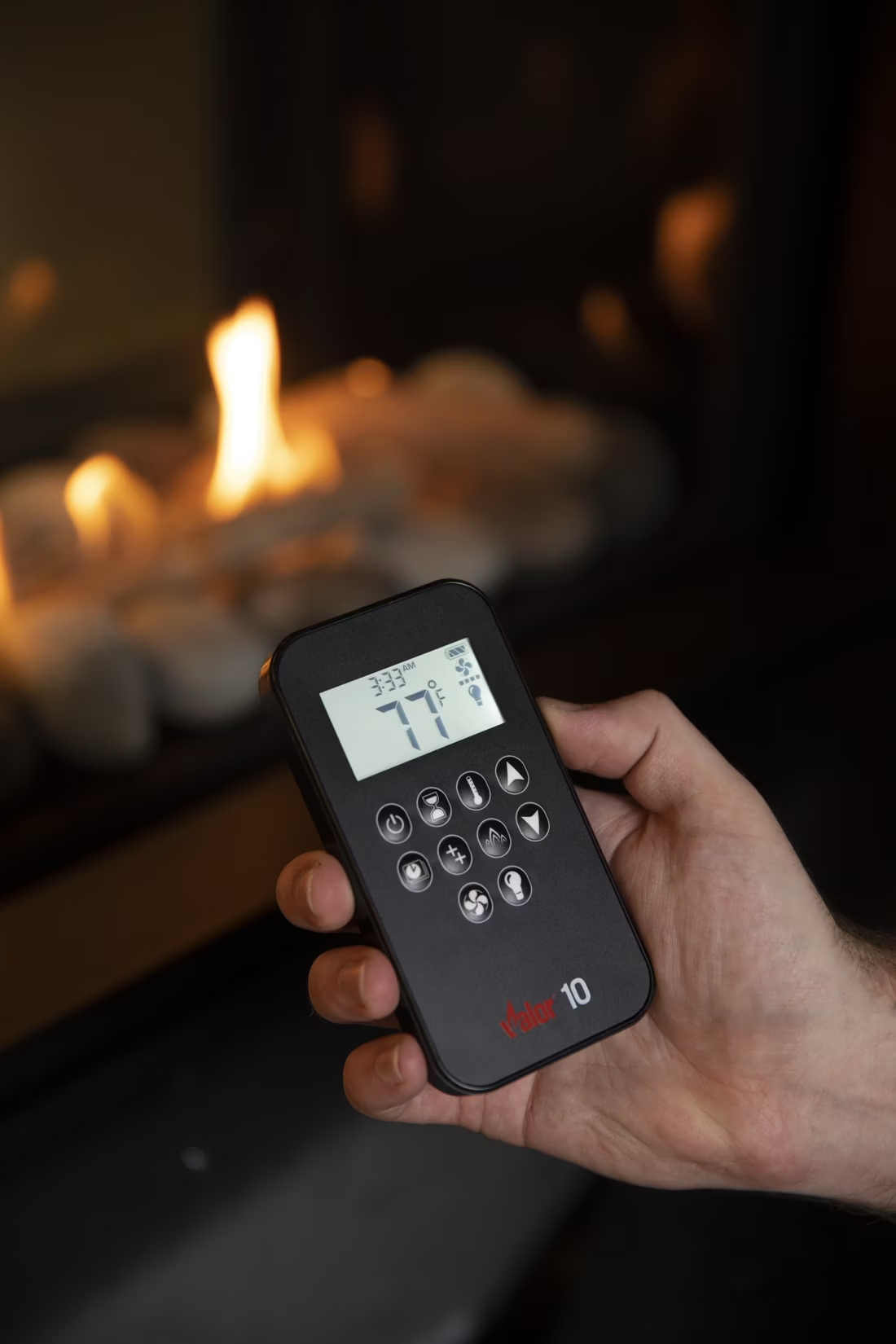
Most modern gas fireplaces will, with one caveat. Units with standing pilot or IPI (intermittent pilot ignition) systems typically run on a small battery backup that kicks in automatically when PECO's grid drops—you just need to keep fresh batteries in the unit, since it's easy to forget until a storm actually knocks the power out. Valor fireplaces skip the battery question entirely: their pilot assembly generates its own electricity through the thermocouple, so the fireplace runs regardless of grid power. Ask your dealer about the ignition system on any unit you're considering, especially if you're buying this as backup heat for winter outages.
What's the difference between a gas fireplace, insert, and stove?
A gas fireplace is a built-in unit set into a framed wall opening—the right call for new construction or a room that never had a hearth. A gas insert is built to slide into an existing masonry firebox, which fits a lot of Parkesburg's older homes with fireplaces they no longer burn wood in. A gas stove is a freestanding cabinet-style unit that sits out on the floor, closer in footprint to a wood stove, and works well in a room without any existing fireplace opening. For most borough homes with an old brick hearth already in place, an insert is the straightforward answer.
Do I need a permit for a gas fireplace in Parkesburg?
Generally yes—a building permit and a gas line permit are standard for new gas fireplace or insert installs, whether that's handled through Parkesburg Borough or Chester County's building department depending on your address. The gas line connection itself needs to be done by a licensed gas-fitter, which is one reason it's worth going through a hearth dealer who coordinates the permit, the gas work, and the final inspection together rather than juggling separate contractors yourself.
Vented or vent-free—which makes sense for my house?
Vented (direct-vent) gas fireplaces pull combustion air from outside and exhaust it back outside through sealed venting—they're the standard recommendation almost everywhere, including here. Vent-free units burn fuel directly into the room air without any exterior venting; they're legal in Pennsylvania but come with strict room-size minimums and require an oxygen depletion sensor, and they release some water vapor and combustion byproducts into the living space. For Parkesburg's older, sometimes tighter rowhouse rooms, a direct-vent unit is usually the more comfortable and lower-maintenance choice, though your dealer can walk through both if you're weighing it.
How often does a gas fireplace need servicing?
Once a year is the standard recommendation for any gas appliance, including direct-vent fireplaces and inserts. A technician checks the burner, pilot assembly, gas connections, and venting, and cleans the glass and interior—a lighter job than a wood chimney sweep, but not one to skip. Local service providers typically charge in the $150 to $250 range for an annual inspection, usually best scheduled in early fall before the unit gets heavy winter use.
Gas vs. wood—which fits a Parkesburg home better?
Wood heat is still part of life in the farmhouses scattered through the townships around Parkesburg, where oak, hickory, maple, and cherry are the common local species and there's room to store and season cordwood. But inside the borough itself, tighter lots and older rowhouse construction make wood setups less practical, which is a big reason gas has become the default for in-town upgrades. Gas gives you instant, thermostat-controlled heat with none of the ash or storage, while wood offers lower fuel costs and heat that doesn't depend on the gas or propane line staying intact. If you already have a working chimney and space for a woodpile, it's worth comparing both with a local dealer—plenty of nearby homes use gas in the main living space and keep a wood option for backup.
What's the difference between an insert and a zero-clearance fireplace?
An insert is a fireplace that slides into a pre-existing wood-burning fireplace—if you don't have one, there's nothing to insert it into. A zero-clearance fireplace is built into a framed wall, which makes it the answer for remodels and new construction. Simple test: existing masonry fireplace means insert; blank or framed wall means zero-clearance.
Is my gas fireplace wasting gas?
If it was installed more than 15 years ago, probably. Older gas fireplaces keep a standing pilot light burning all the time, and that little flame can cost a couple hundred dollars a year. Newer models use pilot-on-demand ignition—the pilot lights only when you use the fireplace and goes out when you turn it off.
Can I install a fireplace myself?
If you're putting a fire in your house on purpose, it's best to work with an expert. Unless you're genuinely experienced in framing, gas line, vent pipe, and the national code on clearances to combustibles, have a professional do it—and ideally the same company that sells you the fireplace, so warranty, service, and liability all live under one roof.
How much should I budget for a fireplace?
For an average home—covering the fireplace, the vent pipe, and basic installation—a budget between $3,900 and $5,500 gives you a lot of options across wood, gas, and pellet. By the time you add finish work, gas line, and electrical, the average complete installation lands between $5,000 and $12,000 all-in. In a remodel or new build, a good rule is to put about 2.5% of the total project cost toward the fireplace.
Nearby Dealers
Hearth shops serving Parkesburg and the surrounding area. Every listing shows whether it is a WhyFire partner, a dealer we have verified as authorized for the brands we recommend, or a local business carrying hearth products. No manufacturer pays for placement. How we verify dealers →
Ds Stoves
Keystone Custom Decks
Peak Distribution
Sauder's Hardscape Supply
Halco Grills And Fireplaces
Hillside Acres Stoves
Duvall's Lawn & Garden Inc.
Halligan's Hearth And Home
Comfort Home & Hearth
Kring's Hearth & Home - Lancaster
Penn Stone
Delaware Brick
Ah Angersterin Inc
Athenia Mason Supply Wilmington LLC
First State Hearth Services
Wertz & Co,Inc
A Chimney King
Find your gas fireplace in Parkesburg.
Tell us about your home and we'll match you with a trusted local dealer and send over your free Project Guide & Parts List—the exact parts, including the vent kit, for your gas fireplace project in Parkesburg.
Find Your Fireplace →