
Real Heat, No Chimney, for Paoli's Historic Homes.
Zone heat for Main Line homes without venting, gas lines, or masonry work. Find the right electric unit and connect with a trusted local dealer.
Every Project Starts From One of These Five Situations
The simplest way to add real heat to an old Chester County home.
Paoli sits along Philadelphia's Main Line in Chester County, where winters are moderate by national standards—a heating season on par with a place that sees average winter lows around 23°F, nowhere close to what homeowners deal with in a place like Burlington, Vermont. That milder profile is exactly why electric fireplaces make sense here: most Paoli households need supplemental zone heat for a den, sunroom, or finished basement, not a primary system built to survive a week of single-digit nights.
A lot of Paoli's housing stock is older stone and colonial construction tied to the town's Revolutionary War-era history, and much of it comes with masonry fireplaces that no longer have a safe, lined flue for burning wood. An electric insert drops into that existing opening with no venting, no gas line, and no chimney inspection—typically just a dedicated 120V or 240V circuit. PECO Energy serves the area at a residential rate around $0.1474 per kWh, so running a 1,500-watt unit for a few hours in the evening adds a modest, predictable amount to the bill rather than a full heating expense.
Three steps. No salesperson until you're ready.
Tell us about your project
Your zip code, your situation, and the fuel you're leaning toward—or let the answers point you to one.
See what's actually available
The brands dealers within 100 miles genuinely carry—real options, never a catalog mirage.
Get your dealer & Project Guide
A trusted local dealer, plus the free Project Guide & Parts List that names every component of the job.
Frequently Asked Questions
How much does it cost to install an electric fireplace in Paoli?
Plug-in electric fireplaces and inserts that use a standard household outlet typically run $200 to $900 for the unit itself, with no installation labor required beyond setting it in place. Built-in wall units, mantel-surround fireplaces, and inserts wired into a dedicated circuit run higher—generally $1,200 to $3,500 installed—once an electrician adds a circuit and a carpenter builds or modifies a surround. For Paoli's older stone homes, retrofitting an insert into an existing masonry opening usually lands in that same middle range, since the opening already exists and the main cost is the electrical work.
Do I need a permit for an electric fireplace in Paoli?
Paoli is split between Tredyffrin and Willistown townships in Chester County, and a plug-in unit that uses an existing outlet doesn't require a permit. A hardwired built-in fireplace or an insert that needs a new dedicated circuit does require an electrical permit through whichever township covers your address, since it's treated as new electrical work. Local dealers who handle these installs generally coordinate the permit and inspection as part of the job, so it's not something homeowners have to manage on their own.
Can I put an electric insert into my home's existing fireplace opening?
In most cases, yes—and it's one of the more common projects among Paoli's older stone and colonial homes. If your fireplace already has an unused or unlined chimney, an electric insert fits into the existing masonry opening and gives you flame effect and heat without needing to repair or reline the flue. It's a straightforward way to bring a decorative but non-functional fireplace back into daily use, and it avoids the cost of chimney relining that a wood or gas conversion would require.
What will it actually cost to run an electric fireplace with PECO's rates?
At PECO's residential rate of about $0.1474 per kWh, a typical 1,500-watt electric fireplace costs roughly 22 cents an hour to run on high heat. Used a few hours a night through a Chester County winter, that adds up to somewhere between $15 and $30 a month depending on how often it's on and what setting it's used at. Most units also let you run the flame effect with the heater off, which uses a fraction of that—useful for ambiance on the milder days that make up much of Paoli's heating season.
How much space can an electric fireplace actually heat?
Most electric fireplaces and inserts are rated to comfortably heat 400 to 1,000 square feet, which covers a typical den, living room, or finished basement in a Paoli home. They're built as zone heaters, not whole-house furnaces—the idea is to take the load off central heat in the room you're actually using, not replace your HVAC system. For an older stone home with drafty original windows, an electric fireplace in the main living area can meaningfully cut how often the furnace kicks on during shoulder-season evenings.
Electric vs. gas fireplace—which makes more sense for my Paoli home?
Gas fireplaces put out more real heat and work well as a primary supplemental source, but they need either a gas line or propane tank and venting work, which can be a bigger job in an older stone home. Electric fireplaces skip all of that—no gas line, no venting, no masonry modification—which makes them the simpler and often cheaper option for adding a fireplace to a room that doesn't already have one. If your goal is ambiance plus modest zone heat in a den or bonus room, electric is usually the practical choice; if you're looking to meaningfully offset winter heating costs in a larger space, a gas insert is worth pricing out too.
Is an electric fireplace safer than a space heater?
Yes, generally. Electric fireplaces are UL-listed appliances with cool-touch glass, tip-over shutoff, and overheat protection built in, and they're designed to run for extended periods without supervision the way a portable space heater isn't recommended to. For households with kids, pets, or older wiring common in Paoli's historic housing stock, a properly installed electric fireplace on its own circuit is a more predictable, lower-risk way to add heat to a room than relying on plug-in space heaters.
What types of electric fireplaces are available for a Paoli home?
There are three main formats: built-in wall units that recess into a framed wall for a clean, modern look; inserts sized to slide into an existing masonry fireplace opening, which is common in Paoli's older stone homes; and freestanding electric stoves that mimic a wood stove's shape and can go anywhere near an outlet. A local dealer can walk you through which format fits your specific room and existing fireplace opening, if you have one.
What about wood-burning fireplaces—are they still an option in Paoli?
Many of Paoli's older stone and colonial homes still have original wood-burning fireplaces, but new wood stove installations are uncommon in this part of Chester County—it's a dense, established Main Line suburb rather than a rural area where cutting and storing firewood is practical. When homeowners here want to bring an old, unused fireplace back to life, an electric insert is by far the more common route: no chimney relining, no ash, no wood storage, and it works in townhomes and properties where burning permits or HOA rules would complicate a wood-burning setup.
Does an electric fireplace need a vent or chimney?
No—that's its superpower. An electric fireplace needs a wall and an outlet, period. No vent pipe, no gas line, no clearances to design around, which is why it works in bedrooms, offices, apartments, and walls where venting a gas or wood unit would be impractical or impossible. Installation is typically the simplest and least expensive of any fireplace type.
Can I put a TV above my fireplace?
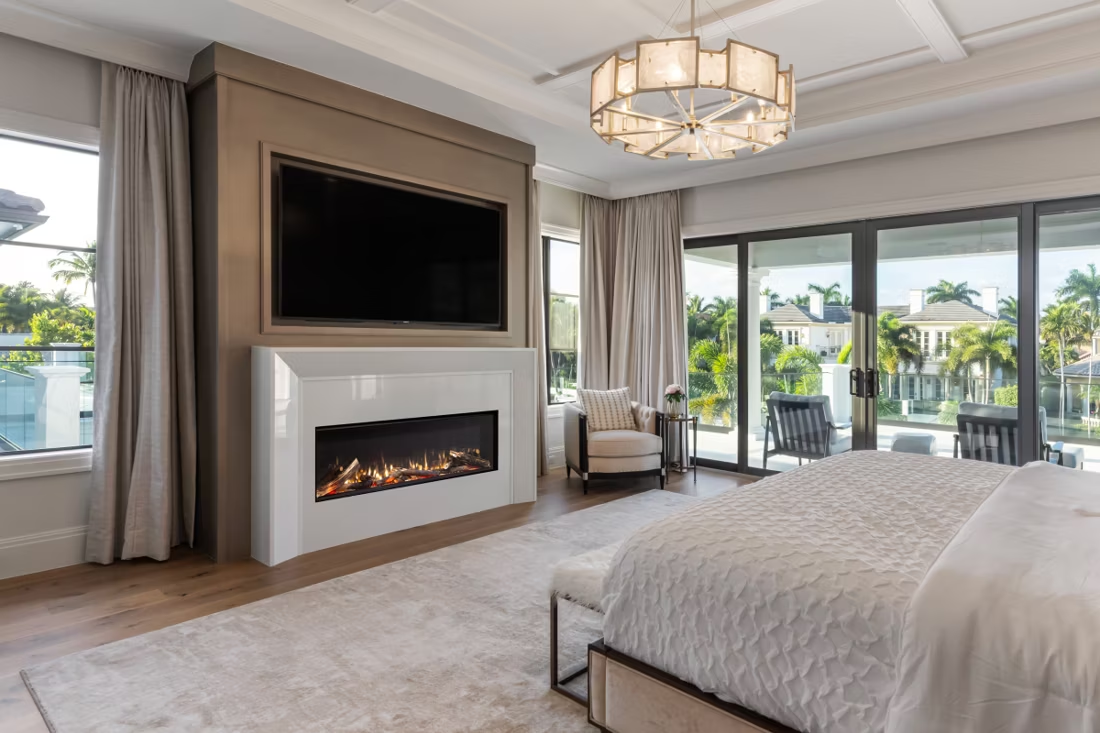
Yes—with an asterisk. Fireplaces are hot and TVs don't like heat. Either put a mantel between them to deflect rising warmth, or choose a fireplace with heat-management technology that creates a cool zone on the wall above—the wall stays around 125 degrees, barely warm, while the room still gets full heat. If you like clean lines and don't want a mantel, heat management is the answer.
Does a fireplace add value to my home?
On average, a fireplace adds back to the home about the same amount you spent installing it. Add the monthly savings from heating the rooms you actually use instead of the whole house—often hundreds of dollars a year—and the value case is strong before you even count what a fire does for how your family uses the room.
What is an in-home preview and do I need one?
It's a visit where a hearth professional measures your space, confirms the model you picked actually works in your home, and walks the specs—framing, gas line, venting, finish work—before anything is ordered. Some details you just can't know until you see the house. Never make a down payment without one; it's the single most-skipped step that burns buyers.
Nearby Dealers
Hearth shops serving Paoli and the surrounding area. Every listing shows whether it is a WhyFire partner, a dealer we have verified as authorized for the brands we recommend, or a local business carrying hearth products. No manufacturer pays for placement. How we verify dealers →
Halligan's Hearth And Home
Halco Grills And Fireplaces
Comfort Home & Hearth
Norristown Chimney
Ambler Fireplace And Patio
Maple Glen Mechanical
Independence Propane
Ambler Fireplace & Patio - Chalfont
Sequoia Supply Hatfield Showroom
Krings Hearth & Home - Bechtelsville
Ah Angersterin Inc
Athenia Mason Supply Wilmington LLC
Kester Fireplace
Electric Service in Paoli
An electric fireplace's heater draws about 1,500 watts—pennies per hour at local rates.
Peco Energy Co
Find your electric fireplace in Paoli.
Tell us a bit about your home and we'll match you with a trusted local dealer and send over a free Project Guide & Parts List—the exact unit, any surround or circuit work, and what it'll take to get it installed in your Paoli home.
Find Your Fireplace →