
Add Warmth to Any Room in Oxford—No Chimney Required.
Zone heat and real flame effect for Oxford's older farmhouses and newer builds alike—no venting, no gas line, no masonry work. Find the right unit and connect with a trusted local dealer.
Every Project Starts From One of These Five Situations
Simple, flexible heat for Chester County homes.
Oxford sits in the rolling farmland of southern Chester County, just a few miles north of the Mason-Dixon Line, at about 555 feet elevation. Winters here are real but moderate by national standards—average lows around 22°F and roughly 5,357 heating degree days, nowhere near the brutal cold of a place like Duluth, MN, but enough to make a cold bonus room, converted attic, or drafty farmhouse addition genuinely uncomfortable without supplemental heat.
That's where electric fireplaces earn their keep in Oxford. Many homes in the borough date back to the 1800s, with old masonry fireplaces that were never built for efficient heat and would cost thousands to reline for wood or gas use. An electric insert drops into that same opening with zero venting and no chimney work. PECO Energy serves the area at roughly 14.7 cents per kWh, which keeps day-to-day operating costs predictable for homeowners using electric heat to warm a single room rather than the whole house.
Three steps. No salesperson until you're ready.
Tell us about your project
Your zip code, your situation, and the fuel you're leaning toward—or let the answers point you to one.
See what's actually available
The brands dealers within 100 miles genuinely carry—real options, never a catalog mirage.
Get your dealer & Project Guide
A trusted local dealer, plus the free Project Guide & Parts List that names every component of the job.
Frequently Asked Questions
How much does an electric fireplace installation cost in Oxford?
Plug-in electric fireplace inserts and mantel packages typically run $300 to $1,200 installed, since most just need a standard outlet and no electrician. Built-in wall units or linear fireplaces that require a dedicated 20-amp circuit run higher—usually $1,500 to $4,000 once you factor in electrician labor, wiring, and any surrounding trim or drywall work. Oxford Borough's older housing stock, much of it dating to the 1800s, often needs a licensed electrician to add capacity to the panel before a built-in unit goes in, which local dealers typically coordinate as part of the install.
Will an electric fireplace actually heat a room in Oxford's winters?
For zone heating, yes. Most electric fireplaces put out around 4,600–5,000 BTU (a 1,500-watt heater) and are effective for rooms in the 300–1,000 sq ft range with reasonable insulation. Given Oxford's winter lows averaging in the low-to-mid 20s, an electric unit works well as the primary heat source for a converted sunroom, finished basement, or home office, but it isn't sized to replace central heat in a full farmhouse or two-story colonial during a cold snap.
What does it cost to run an electric fireplace with PECO Energy rates?
At PECO's residential rate of about 14.74 cents per kWh, a typical 1,500-watt electric fireplace costs roughly 22 cents per hour to run on the heat setting. Used for a few hours each evening—the way most Oxford homeowners use them, as supplemental heat rather than 24/7 heating—that works out to about $1 to $2 a day. Running the flame effect alone without heat draws only 30-100 watts, so ambiance-only use costs pennies.
Do I need a permit to install an electric fireplace in Oxford?
Plug-in electric fireplaces that use an existing outlet generally don't require a permit. Built-in units that need a new dedicated circuit typically require an electrical permit through Oxford Borough's building and code enforcement office, since it involves panel and wiring work. There's no venting, gas line, or chimney inspection involved either way—one of the practical advantages of electric over wood or gas in a borough with a lot of older, code-sensitive housing stock.
What's the difference between an electric insert, built-in unit, and mantel package?
An electric insert is designed to slide into an existing fireplace opening—a common fit for Oxford's older homes with masonry fireplaces that were never efficient to begin with. A built-in unit is framed into a wall like a linear TV-style fireplace, popular in newer construction or remodels. A mantel package pairs a freestanding or recessed electric unit with a surround and mantel shelf, giving the look of a traditional fireplace where none previously existed. For homeowners with an old, rarely-used masonry firebox, the insert is usually the simplest and most cost-effective option.
Can I convert my old masonry fireplace to electric?
Yes, and it's a common project in a town like Oxford where a good share of the housing stock predates 1900. An electric insert fits directly into the existing firebox opening, plugs into a nearby outlet or a newly added circuit, and requires no chimney liner, no sweep, and no gas line. It's a practical fix for a fireplace that's been decorative-only for years—you get real flame appearance and usable heat without touching the masonry or the flue.
Electric vs. wood stove—which makes more sense for my Oxford home?
Chester County has plenty of oak, hickory, maple, and cherry available locally, and a wood stove delivers serious heat output and keeps working during a power outage—a real consideration on a rural Oxford property where outages can run longer than in town. Electric fireplaces can't provide heat without power, but they install almost anywhere with no chimney, no ash, and no wood handling, and they're far less expensive up front. For a primary heat source on a larger property, wood often wins. For a bonus room, finished basement, or simple ambiance upgrade, electric is usually the more practical call.
Electric vs. pellet stove—what's the real tradeoff?
Pellet stoves burning regional brands like Energex, Hamer Pellet Fuel, or Greene Team Pellet Fuel produce more real heat output than an electric unit and can handle a larger space, but they still need electricity to run the auger and blower—so like electric, they go down in an outage unless paired with a battery backup. Pellet stoves also mean hopper loading, ash cleanup, and pellet storage. Electric fireplaces skip all of that: no fuel to buy or store, no venting, and instant on-off operation, at the cost of lower total heat output. For light supplemental heat and easy operation, electric is the simpler choice.
What features should I look for in an electric fireplace for Oxford's climate?
Look for a unit with a true thermostat (not just a high/low switch) so it cycles instead of running constantly, and a heat-only-when-needed setting so you can run the flame effect in shoulder-season months without wasting electricity. Brands like Dimplex and Napoleon offer models with realistic flame technology and app or remote control, which suits Oxford's swing-season weather—cool mornings in October and April where you want ambiance without full heat output. A local dealer can walk you through wattage and sizing options based on the specific room you're heating.
Can I put a TV above my fireplace?
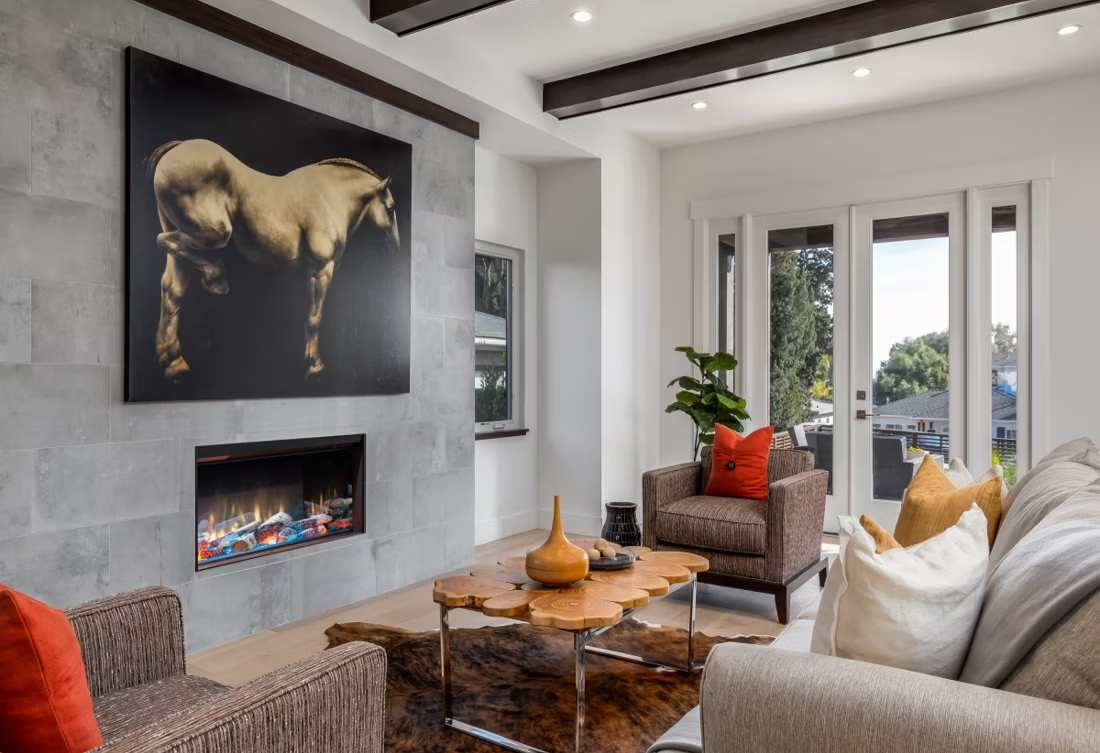
Yes—with an asterisk. Fireplaces are hot and TVs don't like heat. Either put a mantel between them to deflect rising warmth, or choose a fireplace with heat-management technology that creates a cool zone on the wall above—the wall stays around 125 degrees, barely warm, while the room still gets full heat. If you like clean lines and don't want a mantel, heat management is the answer.
Do electric fireplaces actually produce heat?
Yes—most put out around 4,800–5,000 BTUs from a standard outlet, which comfortably warms a bedroom, office, or den as a comfort-zone heater. What they won't do is carry a whole house the way wood, gas, or pellet can. Think of electric as ambiance-first with honest supplemental heat: flames on with no heat in July, flames plus warmth in January.
Can I install a fireplace myself?
If you're putting a fire in your house on purpose, it's best to work with an expert. Unless you're genuinely experienced in framing, gas line, vent pipe, and the national code on clearances to combustibles, have a professional do it—and ideally the same company that sells you the fireplace, so warranty, service, and liability all live under one roof.
Can a fireplace actually lower my heating bill?
Yes—by creating a comfort zone. A furnace heats every square foot of the house just to warm the one room you're in; a gas fireplace on low burns roughly a sixth of the gas a typical furnace does. Set the furnace around 55–60 degrees as a baseline, then heat the rooms your family actually uses. Families who heat this way commonly save $20–$60 a month.
Nearby Dealers
Hearth shops serving Oxford and the surrounding area. Every listing shows whether it is a WhyFire partner, a dealer we have verified as authorized for the brands we recommend, or a local business carrying hearth products. No manufacturer pays for placement. How we verify dealers →
Duvall's Lawn & Garden Inc.
Hillside Acres Stoves
Starks Chimney Services
The Stove Store
Johnson Fitness And Wellness
Closer To The Hearth
Ds Stoves
Peak Distribution
Delaware Brick
First State Hearth Services
Ah Angersterin Inc
Athenia Mason Supply Wilmington LLC
Maryland Dream Kitchens And Baths, LLC
Wertz & Co,Inc
Keystone Custom Decks
Sauder's Hardscape Supply
Comfort Home & Hearth
Clearwater Pool & Spa
Halco Grills And Fireplaces
Halligan's Hearth And Home
Electric Service in Oxford
An electric fireplace's heater draws about 1,500 watts—pennies per hour at local rates.
Peco Energy Co
Find your electric fireplace in Oxford.
Tell us a bit about your home and we'll put together a free Project Guide & Parts List—the right electric fireplace or insert, the exact parts needed, and a trusted local Oxford-area dealer to install it.
Find Your Fireplace →