
Instant heat and real ambiance—without touching your chimney.
No chimney, no venting, no gas line—just plug-in or hardwired heat and ambiance for Oakmont's older homes. Find the right unit and connect with a trusted local dealer.
Every Project Starts From One of These Five Situations
Electric fits the borough's older housing stock.
Oakmont is a compact, historic borough along the Allegheny River in Allegheny County, with a housing stock that's mostly early-to-mid 20th century—narrow lots, older masonry, and homes that were never built with chimney chases wide enough for a modern wood or pellet appliance. Winters here average a 19°F low with roughly 5,811 heating degree days, cold enough to want supplemental heat in a den or sunroom, but Oakmont also sits inside a federal non-attainment area for air quality, which is part of why wood and pellet stoves are essentially absent from the local dealer network—permitting and neighborhood approval for solid-fuel appliances is a much heavier lift here than in the more rural parts of the county.
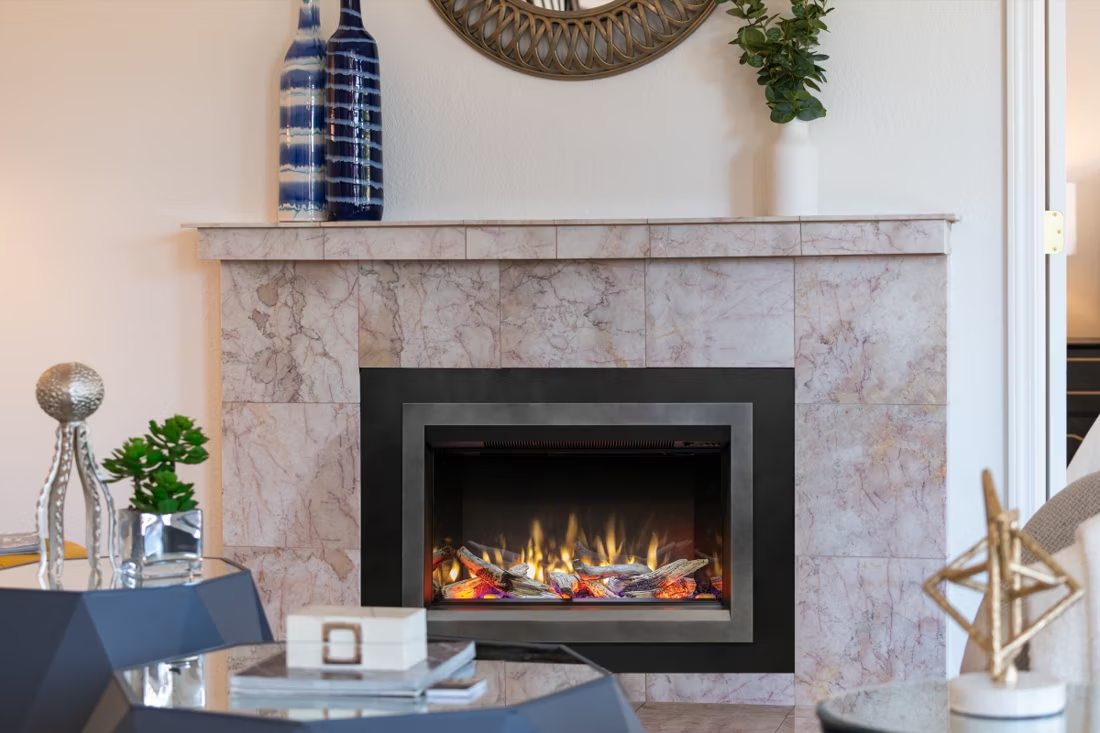
That's where electric fireplaces do their best work. A plug-in insert or a built-in linear unit needs no chimney, no venting penetration through a historic brick facade, and no combustion air intake—which matters in a borough where exterior alterations often draw scrutiny. Duquesne Light Co. and Pennsylvania Power Co. serve homes in Oakmont, with residential rates running about 19.5 cents per kWh—a bit above the national average, so most homeowners here use electric fireplaces as targeted zone heat for a family room or converted porch rather than as a whole-house heat source. Installation is also the fastest and least invasive of any hearth option: a basic 120V insert plugs into an existing outlet, while a larger built-in unit may need a dedicated 240V circuit run by a licensed electrician.
Three steps. No salesperson until you're ready.
Tell us about your project
Your zip code, your situation, and the fuel you're leaning toward—or let the answers point you to one.
See what's actually available
The brands dealers within 100 miles genuinely carry—real options, never a catalog mirage.
Get your dealer & Project Guide
A trusted local dealer, plus the free Project Guide & Parts List that names every component of the job.
Frequently Asked Questions
How much does an electric fireplace installation cost in Oakmont?
A plug-in electric fireplace insert in Oakmont typically costs $300 to $1,200 installed, since most units run on a standard 120V outlet and require no electrician. A larger built-in linear electric fireplace—the kind set into a wall or custom mantel surround—runs $1,500 to $3,500 once you include a dedicated 240V circuit, framing, and finish work. Local hearth dealers can walk you through both options and tell you honestly which fits your wall and your electrical panel.
Why don't more Oakmont homes have wood or pellet stoves?
Wood and pellet stoves are essentially off the table for most Oakmont homes. The borough sits within a federal non-attainment area for air quality, and its housing stock—narrow lots, older masonry chimneys not sized for modern EPA-certified stoves, tight setbacks between homes—makes solid-fuel installations impractical and, in many cases, unapprovable. Oak, hickory, maple, and cherry are the common firewood species in the more rural parts of Allegheny County, but inside Oakmont itself, electric and gas have become the practical hearth choices.
Do I need a permit to install an electric fireplace in Oakmont?
A plug-in electric fireplace insert doesn't require a permit—it's treated like any other appliance you plug into a wall outlet. A built-in electric fireplace that needs a new 240V circuit typically does require an electrical permit, which your electrician will pull through Oakmont Borough or Allegheny County depending on the scope of work. There's no combustion appliance to inspect and no chimney to bring up to code, which is one reason electric installs move faster than gas or wood projects.
How much does it cost to run an electric fireplace in Oakmont?
At Duquesne Light's residential rate of about 19.5 cents per kWh, a typical 1,500-watt electric fireplace running on its heat setting costs roughly $0.29 per hour. Used for a few hours each evening in a family room—say 4 hours a night—that works out to around $35 a month in electricity. Most Oakmont homeowners run these as supplemental zone heat rather than continuously, so actual costs are usually lower than that.
Should I get an electric fireplace or a gas fireplace?
Both are common in Oakmont, and the choice usually comes down to what your home already has. If your house has gas service and you want a fireplace that produces real heat output for a larger space, a gas insert is worth pricing out. If you don't have gas run to the room you're heating, don't want the expense of a new gas line, or you're finishing a basement or sunroom where venting is impractical, electric is almost always the simpler and cheaper path—no gas line, no venting, and a fraction of the install cost.
What's the best type of electric fireplace for an Oakmont home?
For Oakmont's older housing stock, a built-in linear electric fireplace—recessed into a wall or a custom mantel—tends to look the most intentional in a renovated living room or finished basement, and brands like Dimplex, Napoleon, and SimpliFire all make models sized for standard stud-bay widths. For a quicker, lower-cost option, a freestanding electric stove or a mantel-package unit can go straight into an existing fireplace opening without any construction. A local dealer will look at your wall dimensions and electrical panel before recommending either.
Will an electric fireplace heat my whole house?
No, and this is worth being clear about. With Oakmont's winters averaging a 19°F low and around 5,811 heating degree days a year, a single electric fireplace is not going to replace your furnace. Most units are rated for 400 to 1,500 square feet of supplemental heat in a single room, and they're most effective as zone heat for the room you actually spend time in—a family room, a converted porch, a finished basement—while your existing heating system covers the rest of the house.
Is electric heat a good fit for Oakmont's older homes?
This is actually where electric fireplaces do their best work in Oakmont. Many of the borough's homes are early 20th-century construction with finished basements, enclosed porches, or additions that were never built with a chimney chase. Since electric units need no venting and often just need a 120V or 240V outlet, they're a practical way to add real heat and ambiance to a space where a wood or gas installation would require major construction—or wouldn't be approvable at all given the borough's historic character.
Electric vs. wood—which makes sense for an Oakmont home?
For most Oakmont homeowners this isn't really a close call. Wood heat requires a chimney sized for a modern EPA-certified stove, clearance most narrow borough lots don't have, and it runs against the grain of the area's non-attainment air quality status. Electric requires none of that—no combustion, no smoke, no permitting hurdle beyond a possible electrical permit for a 240V circuit. Some Oakmont-area homeowners who love wood heat split the difference with a second property outside the borough where solid-fuel burning is more practical, but for the home you live in day to day, electric is almost always the realistic answer here.
Can I put a TV above my fireplace?
Yes—with an asterisk. Fireplaces are hot and TVs don't like heat. Either put a mantel between them to deflect rising warmth, or choose a fireplace with heat-management technology that creates a cool zone on the wall above—the wall stays around 125 degrees, barely warm, while the room still gets full heat. If you like clean lines and don't want a mantel, heat management is the answer.
Does an electric fireplace need a vent or chimney?
No—that's its superpower. An electric fireplace needs a wall and an outlet, period. No vent pipe, no gas line, no clearances to design around, which is why it works in bedrooms, offices, apartments, and walls where venting a gas or wood unit would be impractical or impossible. Installation is typically the simplest and least expensive of any fireplace type.
Can a fireplace actually lower my heating bill?
Yes—by creating a comfort zone. A furnace heats every square foot of the house just to warm the one room you're in; a gas fireplace on low burns roughly a sixth of the gas a typical furnace does. Set the furnace around 55–60 degrees as a baseline, then heat the rooms your family actually uses. Families who heat this way commonly save $20–$60 a month.
What is an in-home preview and do I need one?
It's a visit where a hearth professional measures your space, confirms the model you picked actually works in your home, and walks the specs—framing, gas line, venting, finish work—before anything is ordered. Some details you just can't know until you see the house. Never make a down payment without one; it's the single most-skipped step that burns buyers.
Nearby Dealers
Hearth shops serving Oakmont and the surrounding area. Every listing shows whether it is a WhyFire partner, a dealer we have verified as authorized for the brands we recommend, or a local business carrying hearth products. No manufacturer pays for placement. How we verify dealers →
Halls Pools & Fireplaces
Fireplace And Patio Place
All Seasons Fireplace & Home
Northern Woodworking
Fireplace & Patioplace
A Capital Roofing
Howell Craft Inc.
Suburban Insulation
Fireplace And Patio Place
The Stove Place
Tri-State Stoves
Home Improvement Center
Electric Service in Oakmont
An electric fireplace's heater draws about 1,500 watts—pennies per hour at local rates.
Duquesne Light Co
Pennsylvania Power Co
Find your electric fireplace in Oakmont.
Tell us about your Oakmont home and we'll match you with a trusted local dealer and send a free Project Guide & Parts List—the exact parts, including any electrical work needed, for your electric fireplace project.
Find Your Fireplace →