
Gas Heat Built for Beaver County's Cold, Damp Winters.
Reliable, instant warmth for the older river-town homes of New Brighton—find the right gas fireplace or insert and connect with a trusted local dealer.
Every Project Starts From One of These Five Situations
Steady heat for a river valley that sees real winter.
New Brighton sits along the Beaver River just above its meeting with the Ohio, at a modest 804 feet of elevation but squarely in climate zone 5A. Winters here bring an average low around 19°F and roughly 5,958 heating degree days a year—not as brutal as a place like Buffalo, NY, but enough to keep furnaces and secondary heat sources running steadily from late October into April, with the damp river-valley air making the cold feel deeper than the thermometer suggests.
Many of New Brighton's homes date back to the borough's 19th- and early-20th-century industrial heyday—foursquares, Victorians, and brick rowhomes with existing masonry fireplaces that were built for coal or wood but are now prime candidates for a gas insert conversion. On a lot this size, with attached and closely spaced housing common throughout the borough, a sealed direct-vent gas unit is often the more practical fit than a wood-burning setup: no cordwood storage, no chimney creosote buildup, and heat at the flip of a switch during a January cold snap.
Three steps. No salesperson until you're ready.
Tell us about your project
Your zip code, your situation, and the fuel you're leaning toward—or let the answers point you to one.
See what's actually available
The brands dealers within 100 miles genuinely carry—real options, never a catalog mirage.
Get your dealer & Project Guide
A trusted local dealer, plus the free Project Guide & Parts List that names every component of the job.
Frequently Asked Questions
How much does a gas fireplace installation cost in New Brighton?
Most gas fireplace and insert installations in New Brighton run between roughly $4,000 and $9,500, with the final number driven by the venting path and whether new gas line work is needed. A gas insert dropped into one of the borough's existing masonry fireplaces—common in the older homes near downtown and along Third Avenue—with a stainless liner run through an already-serviceable chimney tends to land on the lower end. A new direct-vent fireplace built into a wall for a home without an existing chimney, or one requiring a longer gas line run from the meter, pushes toward the higher end. A local installer will give you a firm number after seeing the space in person.
Can I convert my home's existing fireplace to gas?
Yes, and it's one of the most common projects for New Brighton's older housing stock. Many of the borough's foursquares and Victorians were built with a working masonry fireplace, and converting it to a gas insert with a stainless steel liner is usually straightforward as long as the flue is in decent structural shape. A chimney inspection is the first step—some of these chimneys haven't seen a real fire in decades and need repointing or a liner regardless of fuel type. Once that's confirmed, the insert itself typically installs in a day or two.
Do I need natural gas, or is propane more common here?
Most homes in New Brighton are already on natural gas service, since river towns like this one in Beaver County were piped for gas well before many surrounding rural townships. If your home already has a gas water heater or furnace, adding a fireplace usually just means running a new branch line from the existing service. Propane is really only the practical choice for homes on the outer edges of Beaver County that never got natural gas service—inside the borough, gas fireplace installs almost always run on the existing natural gas line.
Will my gas fireplace still work if the power goes out?
In most cases, yes. Winter storms moving through the Ohio Valley can knock out power from Duquesne Light or Pennsylvania Power for hours at a stretch, and a gas fireplace with intermittent pilot ignition (IPI) will keep working through that using a small battery backup inside the unit—just remember to check those batteries each fall. Valor fireplaces take it a step further: their pilot assembly generates its own electricity through the thermocouple, so there's no battery to maintain or forget. For a home that loses power during a February ice storm, that's a real difference in whether the fireplace lights when you need it most.
What's the difference between a gas fireplace, insert, and stove?
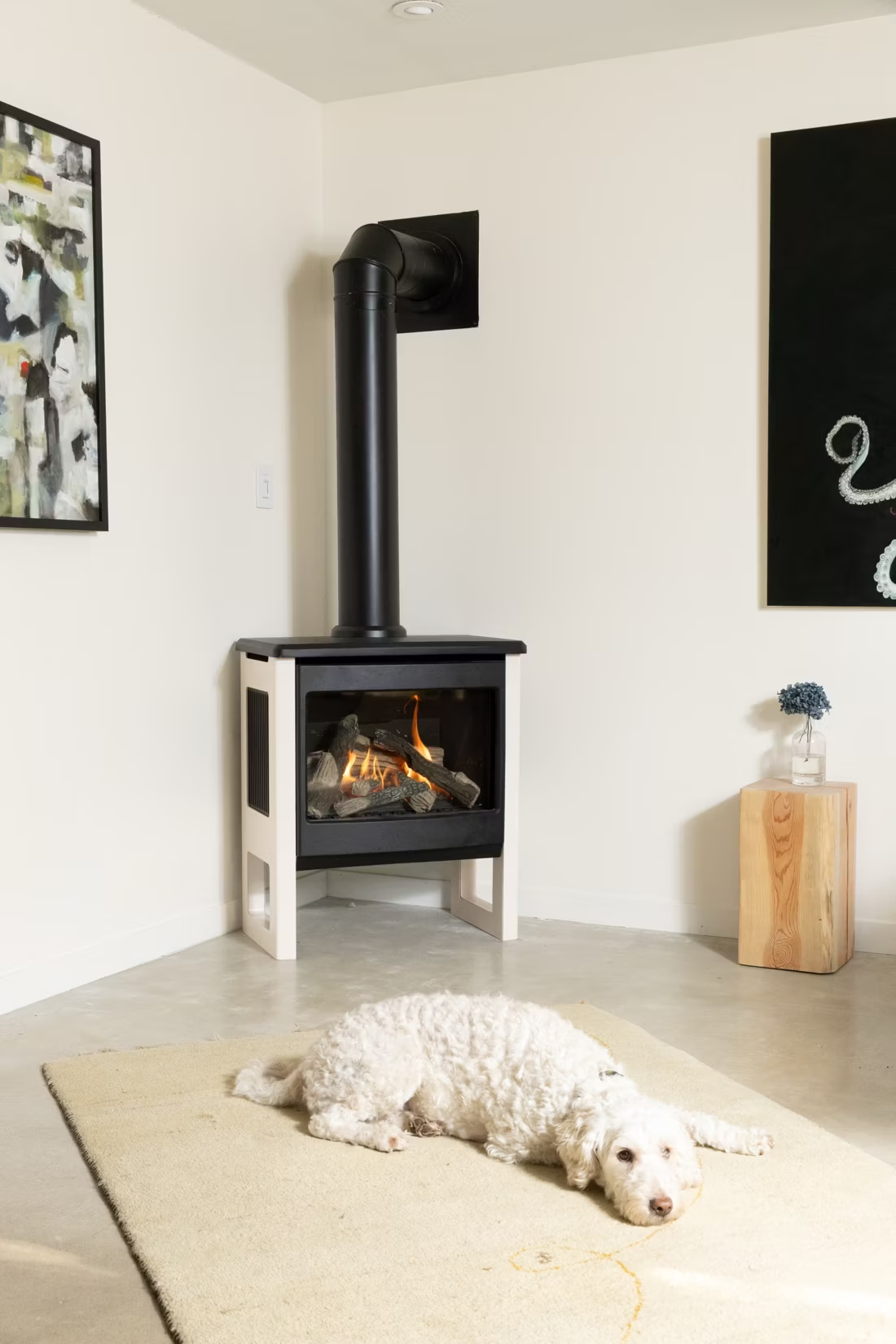
A gas fireplace is a fully built-in unit framed into a wall—the right choice for new construction or a room without an existing hearth. A gas insert is built to slide into an existing masonry fireplace opening, which fits a large share of New Brighton's older homes perfectly. A gas stove is a freestanding cast-iron or steel unit that sits on the floor, useful in a home without any existing fireplace opening at all, or as a supplemental heat source in a converted den or sunroom. For most homeowners here with a fireplace already in place, the insert is the natural fit.
Do I need a permit to install a gas fireplace in New Brighton?
Yes—the Borough of New Brighton requires a building permit for gas fireplace installations, and the gas line connection itself needs to be run or inspected by a licensed gas fitter. Most established local hearth dealers handle the permitting and coordinate the gas line work as part of the installation, so you're not left managing separate trades and inspections yourself. Given how many homes in the borough have older gas piping from decades past, a licensed fitter checking line pressure and condition before hookup is worth insisting on regardless of what the permit requires.
Should I get a vented or vent-free gas fireplace?
Vented (direct-vent) gas fireplaces pull combustion air from outside and exhaust it back outside through a sealed pipe—they're the standard, code-friendly choice almost everywhere, including New Brighton. Vent-free units burn gas directly into the room air and are legal in Pennsylvania under strict room-sizing and ventilation rules, but they release some moisture and combustion byproducts indoors, which matters more in the tighter, older homes common in this borough. For most New Brighton installs, a direct-vent unit is the safer and more commonly installed option, and it's what most local dealers will steer you toward for a primary heat source.
How often does a gas fireplace need to be serviced?
Plan on an annual inspection, ideally before the heating season ramps up in October. A technician checks the burner, pilot assembly, venting, and gas connections, and cleans the glass and interior—a much lighter job than sweeping a wood chimney, but still important since a dirty or misaligned burner can produce soot or an inefficient flame. Expect to pay somewhere in the $125 to $200 range for a standard annual service call from a local gas appliance technician.
Is wood or pellet heat an option in New Brighton, or is gas really the standard?
Gas is the standard for the borough. New Brighton's tighter lots and closely built rowhomes and foursquares don't leave much room for cordwood storage, and there's no local pellet dealer network the way there is in more rural parts of western Pennsylvania—pellet fuel just isn't a practical local option here. That said, oak, hickory, maple, and cherry are all common in the wooded parts of Beaver County outside the borough, and a handful of homeowners on larger rural lots still run wood stoves as backup heat. Inside New Brighton proper, though, a gas insert or fireplace is by far the more common and more practical choice for both primary and supplemental heat.
Is my gas fireplace wasting gas?
If it was installed more than 15 years ago, probably. Older gas fireplaces keep a standing pilot light burning all the time, and that little flame can cost a couple hundred dollars a year. Newer models use pilot-on-demand ignition—the pilot lights only when you use the fireplace and goes out when you turn it off.
What's the difference between radiant and convective fireplace heat?
Most fireplaces are a thin metal box—they heat fine, but you rely on the fan to move the warmth into the room. Radiant models use a thick cast-ceramic firebox, about an inch and a quarter thick, that soaks up the fire's heat and radiates roughly 25–30% more warmth into the room with no fan running. If you watch TV in the same room or want heat in a power outage, radiant is worth asking about.
What is an in-home preview and do I need one?
It's a visit where a hearth professional measures your space, confirms the model you picked actually works in your home, and walks the specs—framing, gas line, venting, finish work—before anything is ordered. Some details you just can't know until you see the house. Never make a down payment without one; it's the single most-skipped step that burns buyers.
Does a fireplace add value to my home?
On average, a fireplace adds back to the home about the same amount you spent installing it. Add the monthly savings from heating the rooms you actually use instead of the whole house—often hundreds of dollars a year—and the value case is strong before you even count what a fire does for how your family uses the room.
Nearby Dealers
Hearth shops serving New Brighton and the surrounding area. Every listing shows whether it is a WhyFire partner, a dealer we have verified as authorized for the brands we recommend, or a local business carrying hearth products. No manufacturer pays for placement. How we verify dealers →
Buck Stove & Fireplace
Soot Seekers Chimney Service
Suburban Insulation
Fireplace And Patio Place
Northern Woodworking
Builders Wholesale
The Stove Place
Home Improvement Center
Kushners Garden & Patio
Buckeye Valley Chimney Service
Find your gas fireplace in New Brighton.
Tell us a bit about your home and we'll put together a free Project Guide & Parts List—the right gas fireplace or insert, the vent kit it needs, and a trusted local New Brighton dealer to install it.
Find Your Fireplace →