
Modern Gas Heat for Nazareth's Historic Homes.
Instant, reliable heat for Lehigh Valley winters, built to fit Nazareth's historic stone and brick homes. Find the right unit and get matched with a trusted local dealer.
Every Project Starts From One of These Five Situations
Clean, on-demand heat for cold Lehigh Valley nights.
Nazareth sits in Northampton County's Lehigh Valley at just 483 feet elevation, but don't let the modest elevation fool you—winters here average lows near 22°F and the borough logs roughly 5,516 heating degree days a year, putting it in the same general heating-load territory as Buffalo, NY. The heating season runs solidly from October through April, and homeowners in the 18064 zip code need equipment that can carry real BTU load through a Lehigh Valley winter, not just take the chill off a fall evening.
Nazareth's core is a tight grid of 18th- and 19th-century Moravian-settlement stone and brick rowhomes, many built with shared walls and narrow lots that make wood-burning chimney work impractical or costly to bring up to code. That's part of why gas has become the dominant hearth upgrade here—a direct-vent gas fireplace or insert can usually be installed without touching a shared wall's structure, running off either a natural gas line (available through much of the borough) or a propane tank (more common out in Lower Nazareth and Upper Nazareth Townships), and delivers real heat at the flip of a switch. For a downtown rowhome or a newer build out past the old Nazareth Speedway grounds, gas fits the local housing stock in a way wood often can't.
Three steps. No salesperson until you're ready.
Tell us about your project
Your zip code, your situation, and the fuel you're leaning toward—or let the answers point you to one.
See what's actually available
The brands dealers within 100 miles genuinely carry—real options, never a catalog mirage.
Get your dealer & Project Guide
A trusted local dealer, plus the free Project Guide & Parts List that names every component of the job.
Frequently Asked Questions
How much does a gas fireplace installation cost in Nazareth?
Most gas fireplace installations in Nazareth run $4,500 to $10,500, with the spread driven mainly by venting path and gas supply. A direct-vent insert going into one of the borough's existing masonry fireplaces—common in the stone rowhomes near Main Street—sits toward the lower end if a gas line is already nearby. A new built-in unit in a room addition, or a home relying on a new propane tank instead of piped gas, runs toward the higher end once the gas-fitter's line work and venting are factored in. Local installers will give you a firm number after walking your specific chimney or wall configuration.
Can I convert an existing wood-burning fireplace to gas?
Yes, and it's a common project in Nazareth's older stone and brick homes, many of which still have their original masonry fireboxes. A gas insert with a stainless liner run up the existing flue is usually the most straightforward path, typically $4,500 to $9,000 depending on the insert and whether the home is on natural gas or needs a propane hookup. Given how many Nazareth rowhomes share party walls, converting rather than rebuilding a wood-rated chimney is often the more code-friendly and less disruptive route.
Is natural gas or propane more common for fireplaces in Nazareth?
It depends on where in the area you are. Much of Nazareth Borough proper has natural gas service, which makes hookup straightforward if your home already runs gas appliances. Head out into Lower Nazareth Township or Upper Nazareth Township, where lots are larger and development is newer, and propane delivery is more common. Either fuel works in the same fireplace or insert—your installer sets the orifice and regulator for whichever you have, so the choice usually comes down to what's already running to your house.
Will a gas fireplace still work if the power goes out?
Most will, with one caveat. Units with intermittent pilot ignition (IPI) include a battery backup—usually AA batteries in the unit—that keeps the igniter working when Metropolitan Edison service drops during an ice storm. Valor fireplaces go a step further: their pilot assembly generates its own electricity through the thermocouple, so there's no battery to remember at all. Given that Lehigh Valley ice storms can knock out power for a day or more in older parts of the borough, ask your local dealer about the ignition system before you buy—it matters more here than the glass style does.
What's the difference between a gas fireplace, insert, and stove?
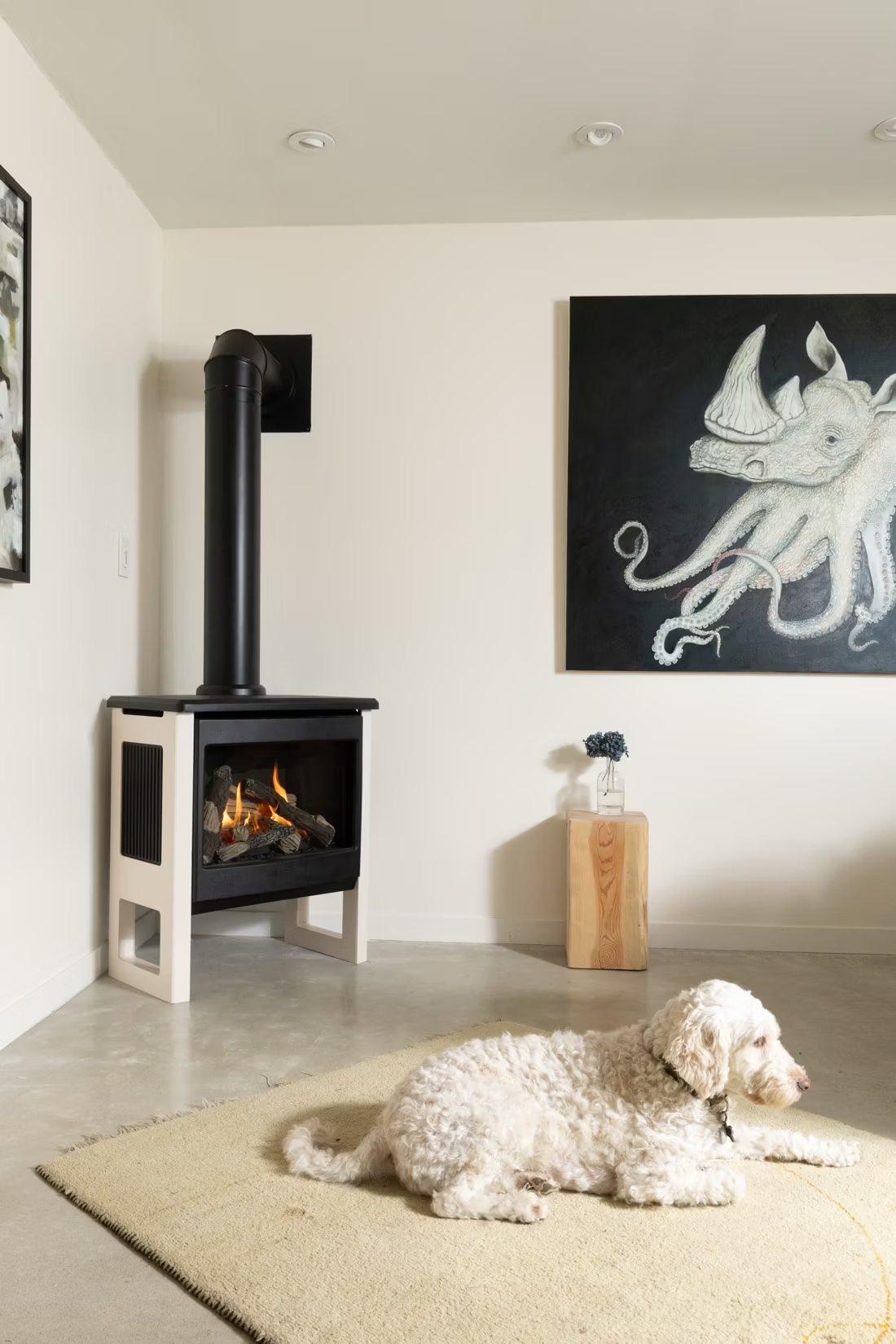
A gas fireplace is a fully framed-in, built-to-spec unit for new construction or a remodel. A gas insert is built to slide into an existing masonry firebox—the natural choice for Nazareth's many older stone and brick homes with a fireplace already in place. A gas stove is a freestanding cast-iron or steel unit that sits on the floor and vents out a wall or through the roof, useful in a room with no existing chimney or fireplace opening at all. For most Nazareth rowhomes with an existing hearth, an insert is the simplest and least invasive upgrade.
Do I need a permit for a gas fireplace installation in Nazareth?
Yes. Nazareth Borough enforces Pennsylvania's Uniform Construction Code (UCC), which requires a building permit for the fireplace installation and a separate mechanical/gas permit for the gas line work, pulled through Nazareth Borough Code Enforcement. Most hearth retailers coordinate both permits and the required inspection as part of the installation price, and because gas line work needs a licensed gas-fitter, working with a shop that handles the whole job—venting, gas line, and permitting together—saves you from coordinating separate trades yourself.
Are vent-free gas fireplaces allowed in Nazareth?
Pennsylvania permits vent-free (unvented) gas fireplaces under the UCC, but they come with strict room-size and oxygen-depletion-sensor requirements, and they're not a fit for every room. Direct-vent units—which pull combustion air from outside and exhaust it back outside through a sealed pipe—are far more common in this market and are what most Nazareth installers recommend by default, especially in the tighter, older rowhome floor plans downtown where indoor air quality margins are already thin. Ask your local retailer to walk through both options for your specific room before deciding.
How often does a gas fireplace need to be serviced?
Plan on an annual inspection, typically $125 to $225 in the Lehigh Valley market. A technician checks the burner, pilot or ignition system, venting, and gas connections, and cleans the glass—a much shorter visit than a wood chimney sweep, but not one to skip, since a dirty pilot assembly or a failing thermocouple is the most common reason a gas fireplace stops lighting reliably by its second or third winter.
Why do most Nazareth homeowners choose gas over wood?
Housing stock is the biggest reason. Nazareth's downtown is a dense grid of 18th- and 19th-century Moravian-era stone and brick rowhomes with shared walls and narrow lots—bringing an old chimney up to current wood-burning clearance and liner code is often expensive or structurally impractical. Gas sidesteps that problem: a direct-vent unit can usually run through an exterior wall or existing flue without major structural work, and it lights instantly rather than requiring stacked, seasoned oak or hickory, both common regionally but awkward to store on a small in-town lot. For homeowners with acreage out in the townships who have room to store wood, that calculus can look different, but inside the borough, gas is by far the more practical fit.
What's the difference between an insert and a zero-clearance fireplace?
An insert is a fireplace that slides into a pre-existing wood-burning fireplace—if you don't have one, there's nothing to insert it into. A zero-clearance fireplace is built into a framed wall, which makes it the answer for remodels and new construction. Simple test: existing masonry fireplace means insert; blank or framed wall means zero-clearance.
Why is my open fireplace making my house colder?
Open fireplaces suck—literally. As the fire burns, it consumes air your furnace already paid to heat and pulls it out through the chimney, so the house is actually colder after the fire goes out than before you lit it. An insert fixes this: it seals the chimney, puts fixed glass across the front, and turns that hole in your house into a real heat source.
Does a fireplace add value to my home?
On average, a fireplace adds back to the home about the same amount you spent installing it. Add the monthly savings from heating the rooms you actually use instead of the whole house—often hundreds of dollars a year—and the value case is strong before you even count what a fire does for how your family uses the room.
How much should I budget for a fireplace?
For an average home—covering the fireplace, the vent pipe, and basic installation—a budget between $3,900 and $5,500 gives you a lot of options across wood, gas, and pellet. By the time you add finish work, gas line, and electrical, the average complete installation lands between $5,000 and $12,000 all-in. In a remodel or new build, a good rule is to put about 2.5% of the total project cost toward the fireplace.
Nearby Dealers
Hearth shops serving Nazareth and the surrounding area. Every listing shows whether it is a WhyFire partner, a dealer we have verified as authorized for the brands we recommend, or a local business carrying hearth products. No manufacturer pays for placement. How we verify dealers →
East Lawn Supply Co., Inc.
Hinton & Sons Inc.
Glen-Gery Brick
Keller Enterprises
Abe Fence / Landscape Supply
Penn Hearth Llc.
Krings Hearth & Home - Schnecksville
Stoves N Stuff Ltd
Kozy By The Fire
Forest Inn Masonry Supply
Progressive Propane
Atlantic Building Prodcuts Inc
Liberty Oil & Propane
S.o.s Wood Stoves, Inc
Find your gas fireplace in Nazareth.
Tell us about your home and we'll match you with the right gas fireplace, insert, or stove for Nazareth's housing stock, then connect you with a trusted local dealer who'll hand you a free Project Guide & Parts List, including the exact vent kit and parts for your install.
Find Your Fireplace →