
Plug-In Warmth for Mountain Top's Long, Cold Winters.
No chimney, no gas line, no venting—just a real heat source that plugs into what your home already has. Find the right unit for a Mountain Top winter and connect with a trusted local dealer.
Every Project Starts From One of These Five Situations
No chimney required, no gas line needed.
Mountain Top sits at 1,406 feet along the escarpment above the Wyoming Valley, exposed to wind and cold that's noticeably sharper than down in Wilkes-Barre. With a long, demanding winter heating season and average winter lows near 16°F—a climate load closer to Madison, Wisconsin than to most of Pennsylvania—this is a place where supplemental heat isn't a luxury, it's a practical add-on to whatever's already running the furnace.
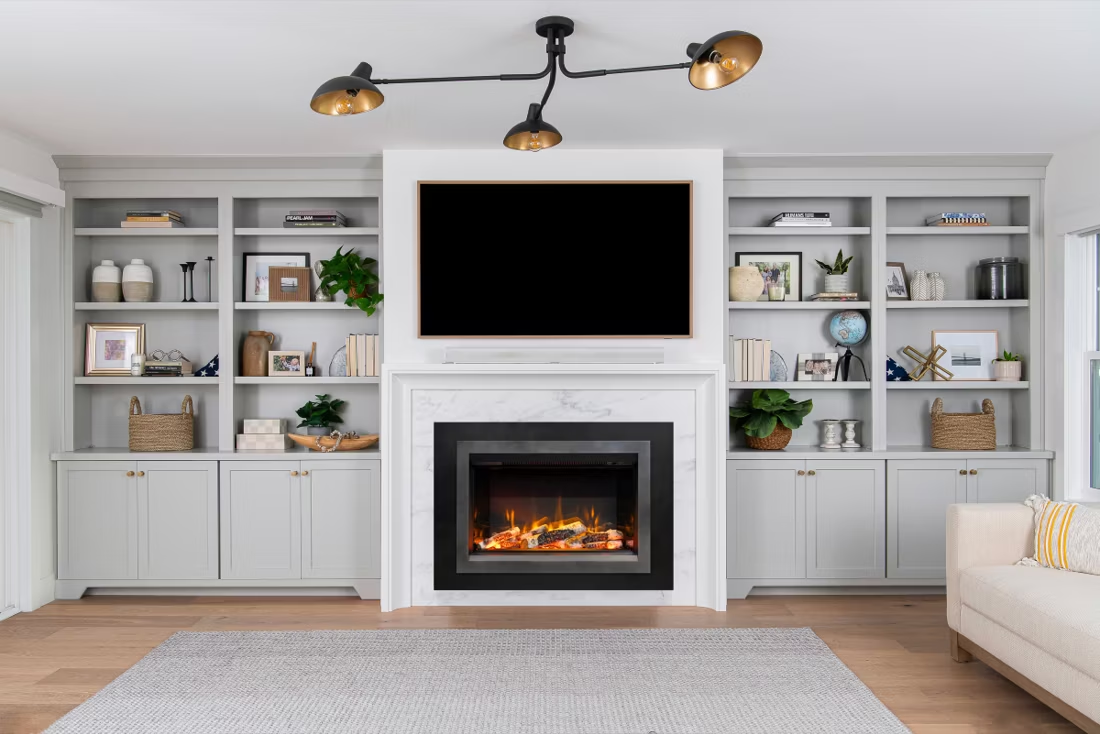
That's part of why electric fireplaces do well here even though wood stoves and pellet stoves see little demand in Mountain Top's newer subdivisions. An electric unit plugs into an outlet already served by PPL Electric Utilities, needs no chimney, no gas line, and no combustion venting, and can go into a finished basement, a bedroom, or a living room addition without touching the structure of the house. For zone heat in the room you actually live in, paired with your existing furnace or heat pump for the rest of the house, electric is often the simplest upgrade available to a Mountain Top homeowner.
Three steps. No salesperson until you're ready.
Tell us about your project
Your zip code, your situation, and the fuel you're leaning toward—or let the answers point you to one.
See what's actually available
The brands dealers within 100 miles genuinely carry—real options, never a catalog mirage.
Get your dealer & Project Guide
A trusted local dealer, plus the free Project Guide & Parts List that names every component of the job.
Frequently Asked Questions
How much does it cost to install an electric fireplace in Mountain Top?
Plug-in electric stoves and mantel inserts are the least expensive route—typically $300 to $1,500 including setup, since they run off a standard 120-volt outlet you likely already have. Built-in wall units or larger mantel packages that need a dedicated 20-amp circuit run higher, generally $1,500 to $3,500 once a licensed electrician is involved. Custom surrounds or multi-room installations push past that. Because there's no combustion appliance or chimney involved, electric is consistently the lowest-cost hearth upgrade available to Mountain Top homeowners.
Do I need a permit for an electric fireplace in Mountain Top?
Most plug-in electric fireplaces need no permit at all—they draw from an existing outlet the same way a space heater or television would. If you're installing a built-in unit that requires a new dedicated circuit, the electrical work itself typically needs a permit and inspection through your local township building office (Mountain Top spans parts of Wright Township and Rice Township, so check which jurisdiction your address falls under). There's no venting, chimney, or gas line to inspect, which keeps the process considerably simpler than a wood or gas installation.
Can an electric fireplace actually heat my home through a Mountain Top winter?
With average lows around 16°F and a long, demanding winter heating season, Mountain Top winters are genuinely demanding. Most electric fireplaces produce around 4,600 to 5,200 BTU (roughly 1,500 watts), enough to comfortably warm a single room of 400 to 1,000 square feet as zone heat—not a whole-home replacement for your furnace or heat pump. Most homeowners here use one to heat the room they spend the most time in during the evening, letting them turn the thermostat down elsewhere in the house.
What's the difference between an electric fireplace, insert, and stove?
An electric insert is built to slide into an existing masonry or wood-burning fireplace opening, giving you flame visuals and heat without touching your chimney (which then simply becomes decorative). An electric fireplace is a self-contained unit, often wall-mounted or built into a mantel surround, designed for rooms without an existing fireplace. An electric stove is a freestanding cabinet-style unit that mimics a wood stove's look and can sit almost anywhere near an outlet. For a lot of Mountain Top's ranch and split-level homes without existing fireplaces, the wall-mounted or mantel-style unit is the most common choice.
What does an electric fireplace cost to run with PPL Electric's rates?
At PPL Electric Utilities' residential rate of roughly $0.1234 per kWh, a typical 1,500-watt electric fireplace run on high for about 5 hours an evening costs close to $0.90 to $1.00 a day, or around $27 to $30 a month through the coldest stretch of winter if you use it nightly. Most units let you run the flame effect without the heater engaged, which pulls only 30 to 50 watts—pennies a day—so you can keep the ambiance going year-round without the heating cost.
Will my electric fireplace still work if the power goes out?
No—unlike a wood stove or many gas fireplaces, an electric unit has no function without power, since the flame effect and any heat output both depend on electricity. Given how often winter storms roll through Luzerne County, some Mountain Top homeowners pair an electric fireplace for daily convenience with a battery-backed gas unit or a generator for outages. If outage backup matters most to you, it's worth discussing a gas option with a local dealer alongside your electric plans.
Why aren't wood or pellet stoves more common in Mountain Top?
It's not a lack of good firewood—the oak, hickory, maple, and cherry forests around Mountain Top produce some of the best cordwood in northeastern Pennsylvania. The issue is infrastructure: most homes in Mountain Top's subdivisions were built without masonry chimneys or the clearances a wood stove needs, so retrofitting one means installing a full Class A chimney system from scratch, a substantial project. Pellet stoves hit a similar wall—even though regional suppliers like Energex, Hamer Pellet Fuel, and Greene Team serve the broader NEPA market, pellet appliances still need dedicated venting, so uptake in Mountain Top specifically stays low. Electric and gas are the more practical paths for most houses here.
What features matter most in an electric fireplace for a cold climate like this?
Look for a unit with a built-in thermostat and adjustable heat settings rather than a single on/off heater—that lets you dial in real supplemental warmth on the coldest nights and dial it back to ambiance-only the rest of the time. A remote or app control is worth having if the unit is going into a bedroom or finished basement. Multi-color LED flame effects are mostly cosmetic, but a realistic flame with adjustable brightness matters if the unit is doubling as your evening TV-room focal point. A local dealer can walk you through which models hold up best to daily winter use versus occasional accent use.
Electric vs. gas fireplace—which makes more sense for a Mountain Top home?
Gas fireplaces in this part of Luzerne County typically run on propane rather than natural gas, since there's no natural gas main serving most of Mountain Top—that means a propane tank, a gas line, and venting work on top of the fireplace itself. Electric skips all of that: it plugs into wiring you already have, courtesy of PPL Electric, with no fuel deliveries and no venting to maintain. Gas will out-heat electric on the coldest days and can be built with battery-backup ignition for storm outages, but electric wins on installation simplicity and upfront cost. Many homeowners here choose electric for secondary rooms and save gas consideration for a primary living space where more heat output matters.
Does an electric fireplace need a vent or chimney?
No—that's its superpower. An electric fireplace needs a wall and an outlet, period. No vent pipe, no gas line, no clearances to design around, which is why it works in bedrooms, offices, apartments, and walls where venting a gas or wood unit would be impractical or impossible. Installation is typically the simplest and least expensive of any fireplace type.
Do electric fireplaces actually produce heat?
Yes—most put out around 4,800–5,000 BTUs from a standard outlet, which comfortably warms a bedroom, office, or den as a comfort-zone heater. What they won't do is carry a whole house the way wood, gas, or pellet can. Think of electric as ambiance-first with honest supplemental heat: flames on with no heat in July, flames plus warmth in January.
Can I install a fireplace myself?
If you're putting a fire in your house on purpose, it's best to work with an expert. Unless you're genuinely experienced in framing, gas line, vent pipe, and the national code on clearances to combustibles, have a professional do it—and ideally the same company that sells you the fireplace, so warranty, service, and liability all live under one roof.
What is an in-home preview and do I need one?
It's a visit where a hearth professional measures your space, confirms the model you picked actually works in your home, and walks the specs—framing, gas line, venting, finish work—before anything is ordered. Some details you just can't know until you see the house. Never make a down payment without one; it's the single most-skipped step that burns buyers.
Nearby Dealers
Hearth shops serving Mountain Top and the surrounding area. Every listing shows whether it is a WhyFire partner, a dealer we have verified as authorized for the brands we recommend, or a local business carrying hearth products. No manufacturer pays for placement. How we verify dealers →
Harry's Lawn & Garden Center
S & T Coombe
Liberty Oil & Propane
Spring Hill Services
Electric Service in Mountain Top
An electric fireplace's heater draws about 1,500 watts—pennies per hour at local rates.
Ppl Electric Utilities Corp
Find your electric fireplace in Mountain Top.
Tell us a bit about your home and we'll put together a free Project Guide & Parts List for your electric fireplace—the right unit, the exact parts, and a trusted local dealer who can install it.
Find Your Fireplace →