
Real Flame Look, Zero Venting, Right Near Messiah College.
Electric fireplaces aren't the primary heat source for most Cumberland County homes, but for rentals, dorm-adjacent housing, and rooms without a chimney, they're often the simplest option on the table. We'll help you figure out if one makes sense for your space and help you find a local dealer who installs them correctly.
Every Project Starts From One of These Five Situations
Not the default heat source in Cumberland County—but a real option for the right room.
Messiah College sits in a Climate Zone 5A pocket of south-central Pennsylvania at about 483 feet of elevation, with an average winter low near 25°F and a solidly long heating season stretching well into spring. That's a real winter—colder than Philadelphia, milder than a place like Duluth, MN or International Falls, MN—but it's mild enough, and gas service common enough in this part of the county, that most homes here lean on gas or a heat pump for primary heat rather than electric resistance. That's why electric doesn't show up as a standard heating fuel in this area the way it might in a rental unit in a warmer climate or a condo without flue access.
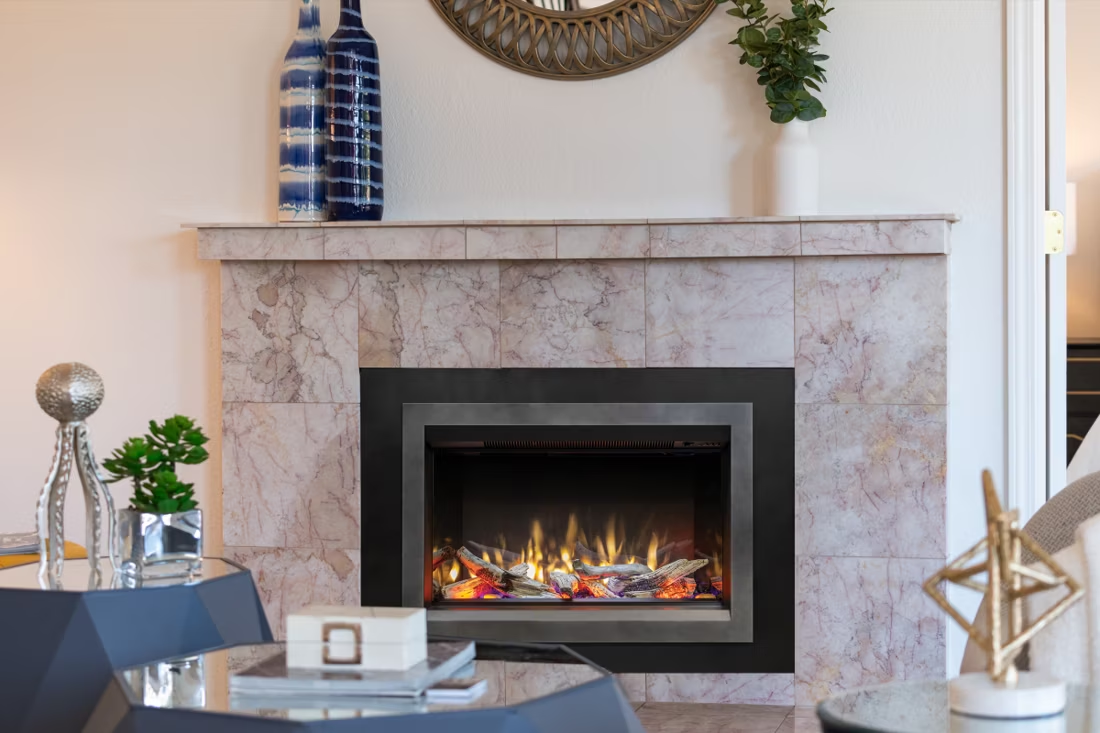
Where electric fireplaces earn their keep here is in specific situations: a Messiah University-area rental where the landlord won't allow venting modifications, a finished basement room with no existing chimney, a bedroom or home office that just needs supplemental warmth on a shoulder-season evening, or simply a homeowner who wants the visual of a fire without the gas line or masonry work. A trusted local dealer can tell you honestly whether a plug-in electric unit solves your actual problem, or whether a gas insert or heat pump makes more sense for whole-room heat in a Cumberland County winter.
Three steps. No salesperson until you're ready.
Tell us about your project
Your zip code, your situation, and the fuel you're leaning toward—or let the answers point you to one.
See what's actually available
The brands dealers within 100 miles genuinely carry—real options, never a catalog mirage.
Get your dealer & Project Guide
A trusted local dealer, plus the free Project Guide & Parts List that names every component of the job.
Frequently Asked Questions
Are electric fireplaces common in the Messiah College area?
Not as a primary heat source, no. With average winter lows around 25°F and a solidly long heating season stretching well into spring, most homes here rely on natural gas or heat pumps to actually heat rooms through winter, and electric resistance heat is expensive to run as anything more than a supplement. Where electric fireplaces do show up is as secondary, plug-in comfort units—a family room that runs a bit cold, a converted garage or sunroom, or rental housing near Messiah University where a tenant wants ambiance without touching the building's venting or gas lines. If you're looking for your home's primary heat, talk to a local dealer about gas options first; if you're solving for one room or one aesthetic, electric is worth a look.
What does an electric fireplace cost to install and run near Messiah College?
Installation cost depends heavily on the unit type. A freestanding or insert-style plug-in electric fireplace needs no permit and no venting—you're looking at the cost of the unit itself, often a few hundred to around $2,000 depending on size and features. A built-in wall unit with custom surround or cabinetry work runs higher once carpentry and a dedicated electrical circuit are involved. As for operating cost, electric heat here isn't cheap by the hour: residential electric rates in the area run from about $0.1234/kWh with PPL Electric Utilities up to about $0.1442/kWh with Adams Electric Cooperative, so a 1,500-watt unit run for several hours a day adds up faster than most people expect. That's exactly why most homes use these for supplemental warmth or ambiance rather than as an all-day heat source.
Should I get an electric fireplace or a gas fireplace instead?
For most homes near Messiah College, gas is the more practical choice if you want real, meaningful heat output—natural gas service is standard in this part of Cumberland County, and a direct-vent gas insert or fireplace will heat a room far more efficiently and cheaply per hour than electric resistance heat, especially given local electric rates. Electric wins on simplicity: no gas line, no venting, no permit for a plug-in unit, and it can go virtually anywhere with an outlet, including a rented apartment or a room where running gas line isn't practical. If you're renovating and have gas access, ask a local dealer to price both; if you're in a rental or a room with no gas or venting path, electric is likely your only realistic option.
Do I need a permit for an electric fireplace here?
Most plug-in freestanding or insert electric fireplaces don't require any permit—they run off a standard household outlet just like a space heater. If you're having a built-in unit hardwired on a dedicated circuit, that electrical work typically does require a permit through your local township building office in Cumberland County, since it's an electrical modification rather than a fuel-burning appliance install. A licensed electrician or your installing dealer can tell you which category your specific unit falls into before work starts.
What type of electric fireplace makes sense for my home—insert, wall-mount, or freestanding?
An electric insert is built for an existing masonry fireplace opening—if you have an old wood-burning fireplace you no longer use, an insert covers the firebox and gives you flame effect and some heat without touching the chimney. A wall-mount unit is a flatter, TV-style fireplace that hangs on a wall with no fireplace opening required—common in newer builds or rooms being finished from scratch. A freestanding electric stove looks like a small wood stove and can sit anywhere near an outlet, which makes it the easiest option for a rental near Messiah University or a room where you don't want to modify walls at all. A local dealer can walk you through which fits your specific room.
Will an electric fireplace still work if the power goes out?
No—and this is the one real tradeoff worth understanding before you buy. Electric fireplaces need power to run the heater element and flame effect, so during a winter outage they go dark along with everything else in the house. If backup heat during storm-related outages matters to you, a gas fireplace with a standing pilot, or one of the newer gas units that generates its own electricity through the pilot's thermocouple, is a better match for that need. Electric is best understood as a supplemental comfort feature, not an emergency heat plan.
What's the difference between an electric fireplace insert and a plug-in log set?
A true electric insert is a sealed unit designed to sit inside your existing fireplace opening, with a heater, fan, and LED flame display built into a housing sized to your firebox. A plug-in electric log set is a much simpler, lower-cost product—decorative logs with a basic light effect and sometimes a small heater, meant more for looks than actual room heat. If you want a fireplace that meaningfully warms a room in a Cumberland County winter, an insert with a real heater element is the better investment; if you just want the visual of glowing logs in an unused fireplace, the log set is the cheaper route.
Can an electric fireplace actually heat a room on a cold night here?
A quality electric fireplace with a 1,500-watt heater can comfortably take the edge off a single room—roughly 400 to 1,000 square feet depending on insulation—which covers most bedrooms, home offices, and family rooms. What it won't do is heat a whole house through a stretch of nights in the 20s, which is a realistic overnight low here given the area's average winter low near 25°F. Think of it as zone heat for the room you're actually sitting in, not a replacement for your furnace or heat pump.
Why isn't wood or pellet heat a bigger option in this area?
Messiah College sits in a small, densely built college-town area of Cumberland County without the kind of forest land access or cutting permit infrastructure you'd see farther out in rural Pennsylvania, and a lot of the housing stock near the university is rental or multi-family, where wood stove installs and chimney work aren't practical or permitted by landlords. Pellet stoves face a similar issue—they still require venting and a dedicated appliance install that doesn't fit most rental or apartment situations here. Electric and gas are simply the more workable fuels for this specific mix of housing, which is part of why electric fireplaces, despite their limited heat output, still get chosen for rooms where nothing else is an option.
Can I put a TV above my fireplace?
Yes—with an asterisk. Fireplaces are hot and TVs don't like heat. Either put a mantel between them to deflect rising warmth, or choose a fireplace with heat-management technology that creates a cool zone on the wall above—the wall stays around 125 degrees, barely warm, while the room still gets full heat. If you like clean lines and don't want a mantel, heat management is the answer.
How much does an electric fireplace cost to run?
With the heater on, a typical unit draws about 1,500 watts—at average electric rates that's roughly 20 cents an hour. Run the flame effect alone and it costs pennies; the flames are LED-driven and use about as much power as a light bulb. There's no pilot light, no fuel delivery, and essentially no maintenance.
Does a fireplace add value to my home?
On average, a fireplace adds back to the home about the same amount you spent installing it. Add the monthly savings from heating the rooms you actually use instead of the whole house—often hundreds of dollars a year—and the value case is strong before you even count what a fire does for how your family uses the room.
Can a fireplace actually lower my heating bill?
Yes—by creating a comfort zone. A furnace heats every square foot of the house just to warm the one room you're in; a gas fireplace on low burns roughly a sixth of the gas a typical furnace does. Set the furnace around 55–60 degrees as a baseline, then heat the rooms your family actually uses. Families who heat this way commonly save $20–$60 a month.
Nearby Dealers
Hearth shops serving Messiah College and the surrounding area. Every listing shows whether it is a WhyFire partner, a dealer we have verified as authorized for the brands we recommend, or a local business carrying hearth products. No manufacturer pays for placement. How we verify dealers →
We’ve paused dealer listings for this connection today. Enter your zip or postal code above to find dealers near you, or come back tomorrow.
Popular Electric Brands
Where each brand came from, what's inside it today, and every current model. No brand pays to be here. Not every dealer carries every brand, so enter your zip code to see what's sold near Messiah College.
Fireplace Xtrordinair
Fireplace Xtrordinair, now often called FireplaceX, is the fireplace brand of Travis Industries, Inc., of Mukilteo, Washington.
5 electric models →DaVinci
DaVinci Custom Fireplaces is a brand of Travis Industries, Inc., of Mukilteo, Washington, the company behind Lopi and Fireplace Xtrordinair.
5 electric models →Kozy Heat
Kozy Heat was founded in 1976 by Dudley Hussong in Lakefield, Minnesota, and incorporated as Hussong Manufacturing Co., Inc. in 1978.
3 electric models →Forge & Flame
Forge & Flame is the stove brand Hearth & Home Technologies introduced in August 2023 to bring Vermont Castings, Harman, and Quadra-Fire under one name.
1 electric model →Electric Service in Messiah College
An electric fireplace's heater draws about 1,500 watts—pennies per hour at local rates.
Ppl Electric Utilities Corp
Adams Electric Cooperative Inc
Find your electric fireplace near Messiah College.
Tell us about your room, your outlet situation, and whether you're renting or renovating, and we'll help you find a local dealer and send over a free Project Guide & Parts List—the right unit, the exact parts, and what it'll take to get it installed correctly.
Find Your Fireplace →