
Simple, Safe Heat for Manheim's Older Homes.
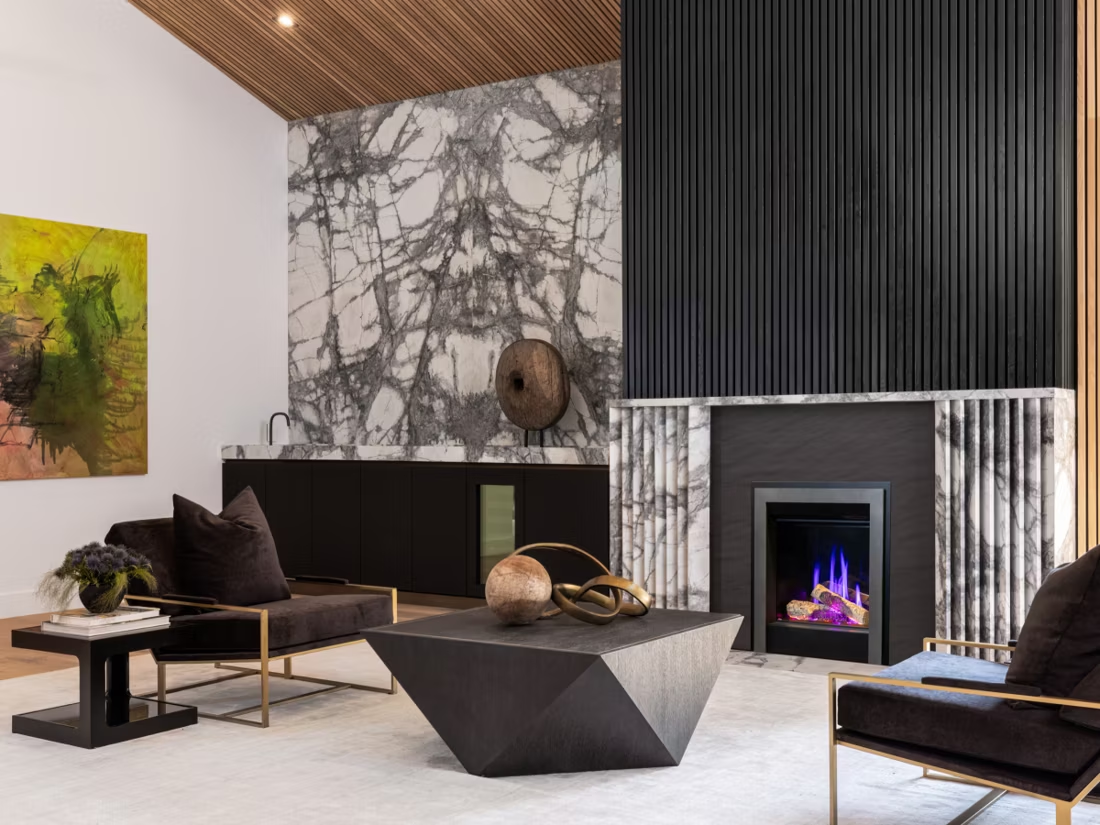
No chimney, no gas line, no structural work—just plug-in warmth for the borough's rowhomes, additions, and finished basements. Find the right unit and connect with a trusted local dealer.
Every Project Starts From One of These Five Situations
No flue, no fuel deliveries, no fuss.
Manheim is a small Lancaster County borough of about 5,000 people, laid out around its 18th-century town square and still full of the narrow rowhomes and stone farmhouses that predate central heating ductwork reaching every room. Many of these older homes have a bricked-up or nonfunctional fireplace, no existing masonry chimney at all, or additions and finished basements that were never plumbed for gas. Wood-burning appliances are genuinely uncommon here given tight lot lines and limited chimney clearance in the borough's older housing stock—an electric fireplace sidesteps that problem entirely, since it needs nothing more than a wall outlet or a dedicated circuit.
PPL Electric Utilities serves the Manheim area at a residential rate around 12.3 cents per kWh—reasonable enough that running a 1,500-watt electric fireplace on heat mode for a few hours most evenings during Manheim's real winter cold (average lows near 19°F, roughly 5,747 heating degree days a year) adds up to a modest monthly cost. Electric units won't replace a furnace across 5,747 HDD of Pennsylvania Dutch Country winter, but they're an efficient way to zone-heat the room you're actually using—a sunroom, a converted attic bedroom, a finished basement—without touching the rest of the house.
Three steps. No salesperson until you're ready.
Tell us about your project
Your zip code, your situation, and the fuel you're leaning toward—or let the answers point you to one.
See what's actually available
The brands dealers within 100 miles genuinely carry—real options, never a catalog mirage.
Get your dealer & Project Guide
A trusted local dealer, plus the free Project Guide & Parts List that names every component of the job.
Frequently Asked Questions
How much does an electric fireplace installation cost in Manheim?
Plug-in electric inserts and mantel packages typically run $300 to $1,500 installed, since most units simply plug into an existing 15-amp outlet with no electrician required. Built-in or wall-mounted units that need a dedicated circuit run higher, often $1,000 to $2,500, once an electrician runs new wiring and a local carpenter frames the surround. Manheim's older rowhomes sometimes need a panel check before adding a dedicated circuit, since some borough homes still have older 100-amp electrical service—your installer or electrician will flag this during the estimate.
Can I put an electric insert into my existing (unused) fireplace?
Yes, and it's one of the more common projects in a borough like Manheim where a lot of older masonry fireplaces have been closed off or capped for years. An electric insert slides into the existing firebox opening, plugs in or gets hardwired, and requires no venting, no chimney liner, and no chimney sweep—you get the look of a working fireplace back without reopening a flue that may not be safe to use anyway. Sizing to the actual firebox opening matters here, so a local dealer will usually want the exact dimensions before recommending a model.
Do I need a permit to install an electric fireplace in Manheim?
A standard plug-in unit on an existing 15- or 20-amp circuit generally doesn't require a permit. If your installer adds a new dedicated circuit or does a hardwired built-in installation, that electrical work typically does require a permit through Manheim Borough, and any licensed electrician doing the work will pull it as part of the job. There's no air-quality curtailment or burn-ban consideration with electric heat, unlike wood or pellet appliances—one less thing to track through a Lancaster County winter.
How much does it cost to run an electric fireplace in Manheim?
At PPL Electric Utilities' residential rate of about 12.3 cents per kWh, a typical 1,500-watt electric fireplace running on heat mode costs roughly 18 cents an hour. Running it for four hours a night, five nights a week through a cold stretch adds up to about $15-16 a month—a fraction of what it costs to heat a whole house with electric resistance heat. On ambiance-only mode (flame effect, no heater engaged), the draw is closer to 30-50 watts, essentially pennies a day.
Will an electric fireplace actually heat my room, or is it just for looks?
A properly sized 1,500-watt electric fireplace insert or freestanding unit will genuinely heat a room in the 300-450 square foot range as supplemental zone heat, which covers most single rooms in Manheim's older, smaller-footprint rowhomes. It won't carry a whole house through a January cold snap with lows near 19°F—that's still a job for your furnace or heat pump. Think of it as the thing you turn on in the room you're actually sitting in, so you can turn the thermostat down elsewhere.
Electric vs. gas fireplace—which makes more sense for a Manheim home?
Gas is the better choice if you want real heat output across a larger room, want the appliance to work with certain models during a power outage, and don't mind the upfront cost of a gas line or propane tank. Electric is the better choice for homes without an existing gas line, for renters or homeowners who don't want to touch the structure, for rooms where running new gas piping isn't practical (an added sunroom or finished basement, both common in Manheim), and for anyone who wants zero combustion byproducts and no annual gas appliance service. A lot of Manheim homeowners end up choosing electric specifically because it's the lowest-disruption option for an older house.
Can an electric fireplace serve as backup heat during a power outage?
No—electric fireplaces need power to run, so they're out during an outage, which is worth knowing given that Lancaster County does see occasional winter storm outages. Wood stoves are genuinely uncommon in Manheim's borough housing stock due to limited chimney access and tight lots, so most homeowners here who want true outage-proof backup heat look at propane appliances instead. If backup heat during outages is a priority, it's worth discussing a propane option with a local dealer alongside your electric fireplace plans.
What's the difference between an electric insert, a built-in, and a freestanding electric fireplace?
An electric insert drops into an existing fireplace opening and is the most common choice for Manheim's older homes with an unused masonry firebox. A built-in electric fireplace is designed to be framed into a wall during a remodel or new construction, giving a flush, seamless look but requiring some carpentry. A freestanding or mantel-package unit needs no construction at all—it sits against a wall like a piece of furniture and plugs straight in, which makes it the fastest option for renters or anyone who wants heat this winter rather than after a remodel.
How much maintenance does an electric fireplace need?
Very little compared to wood or gas. There's no chimney to sweep, no annual gas line inspection, and no ash or soot to clean up. Maintenance is mostly dusting the unit, occasionally cleaning the glass front, and replacing an LED module every several years if the flame effect dims—most units are rated for 20,000-plus hours of LED life. It's a meaningful part of the appeal for anyone who wants fireplace ambiance in a Manheim home without adding a yearly service call to the list.
Does an electric fireplace need a vent or chimney?
No—that's its superpower. An electric fireplace needs a wall and an outlet, period. No vent pipe, no gas line, no clearances to design around, which is why it works in bedrooms, offices, apartments, and walls where venting a gas or wood unit would be impractical or impossible. Installation is typically the simplest and least expensive of any fireplace type.
Can I put a TV above my fireplace?
Yes—with an asterisk. Fireplaces are hot and TVs don't like heat. Either put a mantel between them to deflect rising warmth, or choose a fireplace with heat-management technology that creates a cool zone on the wall above—the wall stays around 125 degrees, barely warm, while the room still gets full heat. If you like clean lines and don't want a mantel, heat management is the answer.
Can I install a fireplace myself?
If you're putting a fire in your house on purpose, it's best to work with an expert. Unless you're genuinely experienced in framing, gas line, vent pipe, and the national code on clearances to combustibles, have a professional do it—and ideally the same company that sells you the fireplace, so warranty, service, and liability all live under one roof.
What is an in-home preview and do I need one?
It's a visit where a hearth professional measures your space, confirms the model you picked actually works in your home, and walks the specs—framing, gas line, venting, finish work—before anything is ordered. Some details you just can't know until you see the house. Never make a down payment without one; it's the single most-skipped step that burns buyers.
Nearby Dealers
Hearth shops serving Manheim and the surrounding area. Every listing shows whether it is a WhyFire partner, a dealer we have verified as authorized for the brands we recommend, or a local business carrying hearth products. No manufacturer pays for placement. How we verify dealers →
Kring's Hearth & Home - Lancaster
Penn Stone
North Forge Home Heating
Peak Distribution
Ds Stoves
Firestarters Custom Fireplace & Stove
Sauder's Hardscape Supply
Keystone Custom Decks
Se Outdoor & Design
Hillside Acres Stoves
H2 LLC
Electric Service in Manheim
An electric fireplace's heater draws about 1,500 watts—pennies per hour at local rates.
Ppl Electric Utilities Corp
Find your electric fireplace in Manheim.
Tell us a bit about your home and we'll put together a free Project Guide & Parts List for your Manheim electric fireplace project, then match you with a trusted local dealer who can install it right.
Find Your Fireplace →