
Instant heat for Loyalhanna's long Laurel Highlands winters.
Propane-fueled comfort for a Westmoreland County community with no natural gas main—find the right fireplace or insert and connect with a trusted local dealer.
Every Project Starts From One of These Five Situations
Propane-fueled comfort where there's no gas main.
Loyalhanna sits in the Laurel Highlands foothills of Westmoreland County, at roughly 1,150 feet elevation, where winter lows average 21°F and the heating season runs close to 5,855 degree days a year—enough to keep a furnace or fireplace working steadily from October through April. That's not International Falls, Minnesota territory, but it's a real six-month heating climate, and the older farmhouses and log-and-frame homes scattered through this small community of around 3,400 people were mostly built with wood heat in mind, not gas.
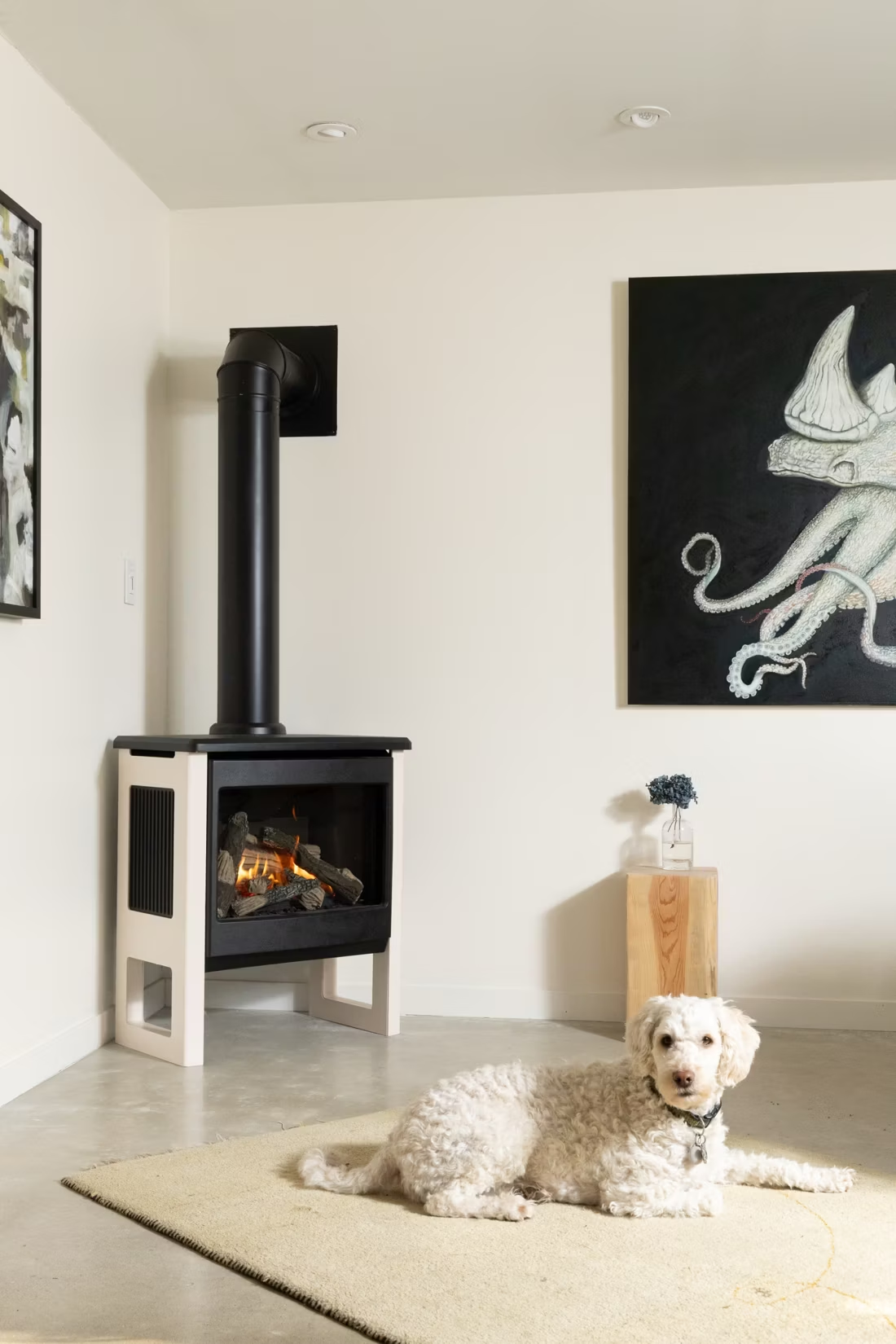
There's no natural gas utility serving Loyalhanna directly—West Penn Power Company and Pennsylvania Electric Co. handle electric service here, but piped natural gas simply doesn't reach this stretch of rural Westmoreland County. That means when local homeowners say 'gas fireplace,' they almost always mean propane: a tank on the property feeding a direct-vent fireplace, insert, or freestanding stove. It's a well-proven setup for this area—instant heat with no wood to split or haul, and with the right ignition system, a fireplace that still works when an ice storm takes down the power lines, which happens most winters in the Laurel Highlands.
Three steps. No salesperson until you're ready.
Tell us about your project
Your zip code, your situation, and the fuel you're leaning toward—or let the answers point you to one.
See what's actually available
The brands dealers within 100 miles genuinely carry—real options, never a catalog mirage.
Get your dealer & Project Guide
A trusted local dealer, plus the free Project Guide & Parts List that names every component of the job.
Frequently Asked Questions
How much does a gas fireplace installation cost in Loyalhanna?
Because Loyalhanna runs on propane rather than piped natural gas, installation costs typically include the appliance, venting, and either a gas line to an existing propane tank or a new tank setup. Most direct-vent propane fireplace and insert installations in this part of Westmoreland County run somewhere between $3,500 and $9,500, with the lower end covering a straightforward insert into an existing masonry fireplace that's already near a propane line, and the higher end covering new construction, longer gas line runs, or a first-time propane tank installation. A local propane-certified hearth dealer can give you a firm number after seeing your chimney or wall layout.
Can I convert my existing wood fireplace to gas?
Yes, and it's a common project in this part of Westmoreland County, where many homes have older masonry fireplaces originally built for oak, hickory, or cherry cordwood. A propane insert slides into that existing firebox, uses the chimney as a chase for a stainless liner, and eliminates the ash and creosote that come with burning local hardwoods. The trade-off is that you lose the ability to burn wood for free heat during a long outage unless you keep a battery-backup ignition system on the propane unit—worth discussing with your installer given how often Laurel Highlands ice storms knock out power.
Do I need natural gas, or does propane work for a gas fireplace?
In Loyalhanna, propane is really the only option—there's no natural gas main serving this community, so any 'gas fireplace' here runs on propane delivered and stored in an above- or below-ground tank. Regional propane suppliers that serve much of rural Westmoreland County, such as AmeriGas and Suburban Propane, can set up a new tank or work with one already on the property. Nearly every gas fireplace and insert on the market today can be configured for propane; your installer sets the correct orifice and regulator for the fuel type before it's ever lit.
Will my gas fireplace work during a power outage?
Most direct-vent propane fireplaces with intermittent pilot ignition (IPI) include a battery backup—typically standard AA batteries built into the unit—that keeps the fireplace lighting on demand when the power drops. That matters in Loyalhanna, where West Penn Power's lines through the Laurel Highlands can go down for a day or more during a winter ice storm. Valor fireplaces take a slightly different approach: their pilot generates its own electricity through a thermocouple, so there's no battery to remember to replace. Ask your local dealer which ignition system is on any unit you're considering—it's a meaningful difference here.
What's the difference between a gas fireplace, gas insert, and gas stove?
A gas fireplace is a fully built-in unit framed into a wall—the right choice for new construction or a remodel without an existing hearth. A gas insert drops into an existing masonry firebox, which describes a lot of the older homes around Loyalhanna that were originally built around wood-burning fireplaces. A gas stove is a freestanding cast-iron or steel unit that sits out in the room on its own hearth pad, closer in footprint to a wood stove. For homeowners here with an existing chimney and firebox, an insert is usually the most cost-effective path; a stove works well in a room with no existing masonry at all.
Do I need a permit to install a gas fireplace in Loyalhanna?
Most likely yes—a building permit and, because it's propane, sign-off on the gas line and tank setback distances (governed by NFPA 58) are standard requirements in Westmoreland County. Since Loyalhanna doesn't have its own building department, permitting runs through your local township office, and requirements can vary slightly by township within the 15661, 15650, and 15620 zip codes. A hearth dealer who regularly installs propane units in this area will already know which township office to call and can usually pull the permit as part of the job.
What's the difference between vented and vent-free gas fireplaces?
Direct-vent propane fireplaces draw combustion air from outside and exhaust it back outside through a sealed pipe—they're the standard choice and what most local dealers install first. Vent-free (ventless) propane units burn without any exterior venting at all, which sounds appealing in an older Loyalhanna home with no existing flue, but Pennsylvania restricts their use with strict room-size and oxygen-sensor rules, and they release combustion moisture and byproducts into the living space. For a primary heat source in a farmhouse or cabin here, direct-vent is almost always the better call; vent-free stays limited to small supplemental units in larger rooms.
How often should my gas fireplace be serviced?
Plan on an annual inspection, ideally before the first cold snap in October or November. A technician checks the burner, pilot assembly, propane line connections, and venting, and cleans the glass and firebox—this matters even more with propane, since regulator and line issues are the most common cause of service calls in rural Westmoreland County. Most local propane and hearth service providers charge in the $150 to $250 range for a standard annual visit.
Gas vs. wood—which makes more sense for a Loyalhanna home?
Wood is still a strong option here—oak, hickory, maple, and cherry are all common locally, split firewood is easy to source, and a wood stove keeps working with zero power. Propane gas offers instant on-off convenience, no ash or creosote, and—with a battery-backup ignition—heat that still works during a West Penn Power outage. Given how many homes in this area already have an older masonry fireplace built for wood, a lot of homeowners end up running both: wood in a main room for ambiance and backup heat, and a propane insert or stove somewhere they want heat at the flip of a switch without tending a fire.
What's the difference between an insert and a zero-clearance fireplace?
An insert is a fireplace that slides into a pre-existing wood-burning fireplace—if you don't have one, there's nothing to insert it into. A zero-clearance fireplace is built into a framed wall, which makes it the answer for remodels and new construction. Simple test: existing masonry fireplace means insert; blank or framed wall means zero-clearance.
Is my gas fireplace wasting gas?
If it was installed more than 15 years ago, probably. Older gas fireplaces keep a standing pilot light burning all the time, and that little flame can cost a couple hundred dollars a year. Newer models use pilot-on-demand ignition—the pilot lights only when you use the fireplace and goes out when you turn it off.
Can I install a fireplace myself?
If you're putting a fire in your house on purpose, it's best to work with an expert. Unless you're genuinely experienced in framing, gas line, vent pipe, and the national code on clearances to combustibles, have a professional do it—and ideally the same company that sells you the fireplace, so warranty, service, and liability all live under one roof.
How much should I budget for a fireplace?
For an average home—covering the fireplace, the vent pipe, and basic installation—a budget between $3,900 and $5,500 gives you a lot of options across wood, gas, and pellet. By the time you add finish work, gas line, and electrical, the average complete installation lands between $5,000 and $12,000 all-in. In a remodel or new build, a good rule is to put about 2.5% of the total project cost toward the fireplace.
Nearby Dealers
Hearth shops serving Loyalhanna and the surrounding area. Every listing shows whether it is a WhyFire partner, a dealer we have verified as authorized for the brands we recommend, or a local business carrying hearth products. No manufacturer pays for placement. How we verify dealers →
Fireplace And Patio Place
A Capital Roofing
Bantly Hardware
Halls Pools & Fireplaces
Clear Water Pools LLC
Find your gas fireplace in Loyalhanna.
Tell us about your home and we'll match you with a trusted local dealer and send over a free Project Guide & Parts List—the exact fireplace or insert, venting, and propane setup your Loyalhanna project needs.
Find Your Fireplace →