
Warm up a room in Lorane without a chimney or gas line.
Zone heat and ambiance for Berks County winters, no venting or gas line required. Find the right unit and connect with a trusted local dealer.
Every Project Starts From One of These Five Situations
Supplemental warmth that plugs into your existing wiring.
Lorane is a small unincorporated community in Exeter Township, Berks County, just outside Reading—a mix of older farmhouses and newer subdivisions where oil and propane furnaces do most of the heavy lifting through a winter that averages 23°F lows and adds up to a solid, sustained heating season. That's meaningfully milder than places like Burlington, Vermont, with its much longer, harsher winters, but still enough cold to make a chilly home office, finished basement, or bonus room worth heating on its own rather than running the whole system to warm one space.
Metropolitan Edison (Met-Ed) serves electric accounts throughout this part of Berks County at a residential rate around 15.45 cents per kWh—inexpensive enough that a 1,500-watt electric fireplace on high costs roughly 23 cents an hour, a rounding error next to a full heating cycle on the furnace. The appeal isn't primary heat; it's supplemental warmth and ambiance that plugs into a standard outlet or a dedicated circuit, with no masonry chimney, no gas line, and no annual sweep to schedule. That makes electric a common answer in Lorane's finished basements, rental units, and older homes where retrofitting a vented gas or wood-burning unit isn't practical.
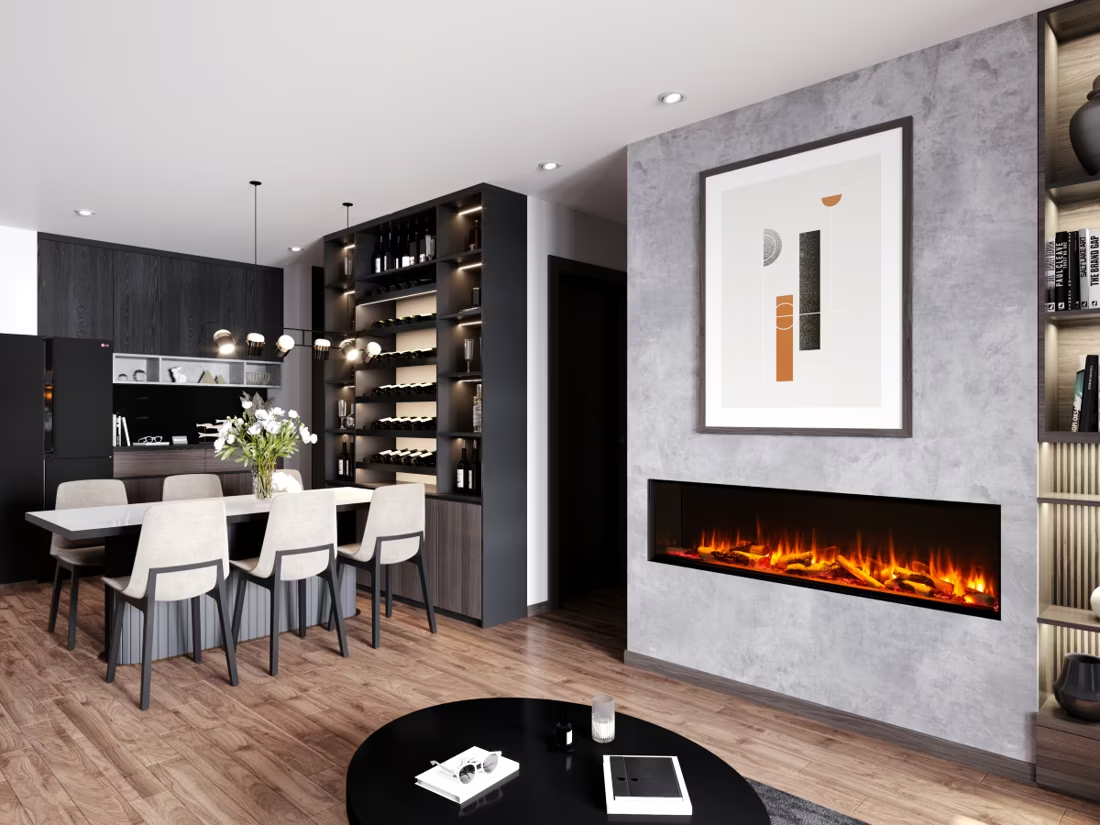
Three steps. No salesperson until you're ready.
Tell us about your project
Your zip code, your situation, and the fuel you're leaning toward—or let the answers point you to one.
See what's actually available
The brands dealers within 100 miles genuinely carry—real options, never a catalog mirage.
Get your dealer & Project Guide
A trusted local dealer, plus the free Project Guide & Parts List that names every component of the job.
Frequently Asked Questions
How much does it cost to install an electric fireplace in Lorane?
Most electric fireplace projects in the Lorane area fall into two categories. A plug-in insert or mantel package that uses an existing standard outlet typically runs $300 to $800 installed, since there's no electrical work beyond setting the unit and trim. A built-in wall unit or larger insert that needs a dedicated 20-amp or 240-volt circuit run by a licensed electrician usually lands between $1,200 and $2,800 in Berks County, depending on how far the circuit has to travel from the panel. Because there's no venting, chimney, or gas line involved, electric is consistently the least expensive fireplace category to install.
What size electric fireplace do I need for my room?
Electric fireplaces are rated in BTUs, and most units top out around 4,600 to 5,200 BTUs regardless of physical size—enough to noticeably warm a 400 to 450 square foot room but not enough to replace a furnace in a larger open floor plan. For a finished basement rec room or a bedroom addition typical of Lorane's newer construction, a single mid-size insert or wall-mount unit is usually enough. For open-concept living rooms, some homeowners install two smaller units rather than one oversized one, since electric heat output doesn't scale up the way gas BTU ratings do.
Do I need a permit to install an electric fireplace in Lorane?
A plug-in unit that uses an existing outlet doesn't require a permit. If your installer needs to run a new dedicated circuit—common for built-in wall units—that electrical work falls under Exeter Township's building and electrical permitting, and it needs to be pulled by a licensed electrician. There's no combustion involved, so none of the chimney, venting, or clearance-to-combustible rules that apply to gas or wood installations come into play here. It's the simplest permitting path of any fireplace fuel.
Electric vs. gas fireplace—which makes more sense for a Lorane home?
Gas fireplaces produce real heat output—often 20,000 to 40,000 BTUs—and can meaningfully offset a furnace during a cold snap, but they require venting and, if you're not already on natural gas service, a propane tank. Electric fireplaces top out around 5,000 BTUs, so they're built for ambiance and zone heating rather than replacing a heating system, but installation is dramatically simpler and cheaper since there's no gas line or venting to plan around. In Lorane, where many homes already run on oil or propane furnace heat, electric is the more common choice for a finished basement, a rental unit, or a room where running new gas line just isn't worth it.
Will an electric fireplace still work if the power goes out?
No—electric fireplaces are entirely dependent on grid power, so a Met-Ed outage takes the fireplace down along with your lights. That's the tradeoff for the convenience and low installation cost. If backup heat during a winter storm outage is a priority for your Lorane home, a wood or gas unit with a battery-backup ignition is a better fit for that specific need; electric works best as a supplemental or ambiance choice rather than an emergency heat source.
What's the best type of electric fireplace for a home in Lorane?
For most homes in this part of Berks County, a wall-mount or built-in insert with a realistic flame effect and a 1,500-watt heater element covers the common use cases—finished basements, primary bedrooms, and home offices that don't already have adequate heat. Freestanding electric stoves are a good fit for older farmhouses around Exeter Township where a wood stove footprint already exists but the owner wants to skip the wood handling and chimney maintenance. Mantel packages work well for anyone wanting a focal point in a living room without construction.
How much does it cost to run an electric fireplace in Lorane?
At Met-Ed's residential rate of about 15.45 cents per kWh, a typical 1,500-watt electric fireplace running on its heat setting costs roughly 23 cents per hour, or around $5.50 for a full 24-hour day if left running continuously—though most people use them for a few hours in the evening rather than around the clock. Running on flame-only mode with the heater off uses only a few watts and costs pennies per day, which is why many owners run the flame effect for ambiance without the heat during Lorane's milder shoulder-season evenings.
Does an electric fireplace need venting?
No. Electric fireplaces produce no combustion byproducts, so there's no chimney, no flue, no fresh-air intake, and no clearance-to-combustible rules to work around. That's the main reason they're popular in Lorane's finished basements and interior rooms that have no practical way to run a chimney or gas line to an exterior wall. Installation is essentially electrical work and carpentry—mount or recess the unit, add trim, and plug it in or wire the circuit.
Is wood heat common in Lorane, or is electric the more practical choice?
Berks County has plenty of oak, hickory, maple, and cherry in its wood supply, and older farmhouses around Exeter Township sometimes still have a working wood stove or fireplace insert. But for most homes in and around Lorane—particularly newer construction, rentals, and finished basements—electric is the more practical fit: no cutting permits, no seasoned wood to store, no annual chimney sweep, and none of the ash and smoke management that comes with burning wood. If you already have a masonry fireplace and want the traditional look without the maintenance, an electric insert is a common upgrade path.
Can I put a TV above my fireplace?
Yes—with an asterisk. Fireplaces are hot and TVs don't like heat. Either put a mantel between them to deflect rising warmth, or choose a fireplace with heat-management technology that creates a cool zone on the wall above—the wall stays around 125 degrees, barely warm, while the room still gets full heat. If you like clean lines and don't want a mantel, heat management is the answer.
Do electric fireplaces actually produce heat?
Yes—most put out around 4,800–5,000 BTUs from a standard outlet, which comfortably warms a bedroom, office, or den as a comfort-zone heater. What they won't do is carry a whole house the way wood, gas, or pellet can. Think of electric as ambiance-first with honest supplemental heat: flames on with no heat in July, flames plus warmth in January.
Does a fireplace add value to my home?
On average, a fireplace adds back to the home about the same amount you spent installing it. Add the monthly savings from heating the rooms you actually use instead of the whole house—often hundreds of dollars a year—and the value case is strong before you even count what a fire does for how your family uses the room.
How much should I budget for a fireplace?
For an average home—covering the fireplace, the vent pipe, and basic installation—a budget between $3,900 and $5,500 gives you a lot of options across wood, gas, and pellet. By the time you add finish work, gas line, and electrical, the average complete installation lands between $5,000 and $12,000 all-in. In a remodel or new build, a good rule is to put about 2.5% of the total project cost toward the fireplace.
Nearby Dealers
Hearth shops serving Lorane and the surrounding area. Every listing shows whether it is a WhyFire partner, a dealer we have verified as authorized for the brands we recommend, or a local business carrying hearth products. No manufacturer pays for placement. How we verify dealers →
A Chimney King
Krings Hearth & Home - Bechtelsville
Keystone Custom Decks
Sauder's Hardscape Supply
Scandia Stoves Of Pa Inc.
Pennsburg Ace Hardware
Independence Propane
Halligan's Hearth And Home
Peak Distribution
Ds Stoves
Halco Grills And Fireplaces
Electric Service in Lorane
An electric fireplace's heater draws about 1,500 watts—pennies per hour at local rates.
Metropolitan Edison Co
Find your electric fireplace in Lorane.
Tell us about the room you're heating and we'll match you with a trusted local dealer in the Reading/Berks County area, plus a free Project Guide & Parts List—the exact unit, any electrical work needed, and your recommended installer.
Find Your Fireplace →