
Steady Heat for Lewisburg's Long Winters, No Wood Required.
With a long, cold winter heating season along the West Branch Susquehanna, Lewisburg homes need reliable heat. Find the right gas fireplace or insert, and connect with a trusted local dealer.
Every Project Starts From One of These Five Situations
Reliable heat that fits Lewisburg's historic homes.
Lewisburg sits at just 452 feet along the West Branch Susquehanna River in Union County, but its climate zone 5A rating and a long, cold winter heating season put it in the same cold-climate territory as Buffalo, NY. Winter lows average 19°F, and the borough's well-preserved Federal-style brick homes near Bucknell University were mostly built long before central heating was standard. Many still have original masonry fireplaces that draw poorly and lose more heat up the flue than they add to a room.
Because Lewisburg's downtown lots are compact and many properties sit within the borough's historic district, wood storage and new chimney construction are impractical for a lot of homeowners—which is part of why wood stoves are uncommon here despite the cold winters. Gas fills that gap well: a direct-vent insert can use an existing masonry chimney, deliver instant heat at the flip of a switch, and avoid the woodpile altogether. Electric service throughout the borough runs through PPL Electric Utilities at roughly $0.1234 per kWh, which matters if you're comparing a gas unit's standing pilot or blower draw against an electric fireplace as a secondary option.
Three steps. No salesperson until you're ready.
Tell us about your project
Your zip code, your situation, and the fuel you're leaning toward—or let the answers point you to one.
See what's actually available
The brands dealers within 100 miles genuinely carry—real options, never a catalog mirage.
Get your dealer & Project Guide
A trusted local dealer, plus the free Project Guide & Parts List that names every component of the job.
Frequently Asked Questions
How much does a gas fireplace installation cost in Lewisburg?
Most gas fireplace or insert installations in Lewisburg run between roughly $4,500 and $10,500, with the spread driven mainly by venting complexity and whether a gas line already reaches the room. A direct-vent insert dropped into an existing masonry fireplace in one of Lewisburg's older downtown homes, with gas already run to a nearby appliance, tends to land on the lower end. A new built-in unit in an addition or a home without existing gas service—requiring a longer line run and fresh framing—pushes toward the higher end. Your local installer will pull the necessary permit through the Lewisburg Borough or Union County building office as part of the job.
Can I convert my existing wood fireplace to gas?
Yes, and it's a common project in Lewisburg's historic housing stock. A gas insert fits into the existing masonry opening, uses a stainless liner run up the original chimney for venting, and typically costs somewhere in the $4,500–$9,000 range depending on the insert and whether new gas piping is needed. For homes in the borough's historic district, this route also avoids the exterior changes that a new chimney or sizable venting project might otherwise require review for, since you're working within the existing masonry footprint.
Do I need natural gas service, or is propane more common in Lewisburg?
It depends on where in Union County you are. Homes within Lewisburg borough proper are more likely to have natural gas service already running to the house for a furnace, water heater, or range, which makes adding a fireplace straightforward. Properties out toward the surrounding townships and rural Union County more commonly rely on propane, delivered and stored in a tank on the property. Nearly every gas fireplace model on the market can be configured for either fuel—your installer sets the correct orifice and regulator during install, so the choice comes down to what's already serving your address.
Will my gas fireplace still work if the power goes out?
Most will, with the right ignition system. Units with intermittent pilot ignition (IPI) run on a battery backup that kicks in automatically when line power drops, so the fireplace still lights on demand during a winter outage. Valor fireplaces take a different approach: their pilot assembly generates its own electricity through a thermocouple, so there's no battery to remember at all. In a Susquehanna Valley ice storm that knocks out PPL Electric service for a stretch, that distinction is worth asking about when you're comparing units with a local dealer.
What's the difference between a gas fireplace, insert, and stove?
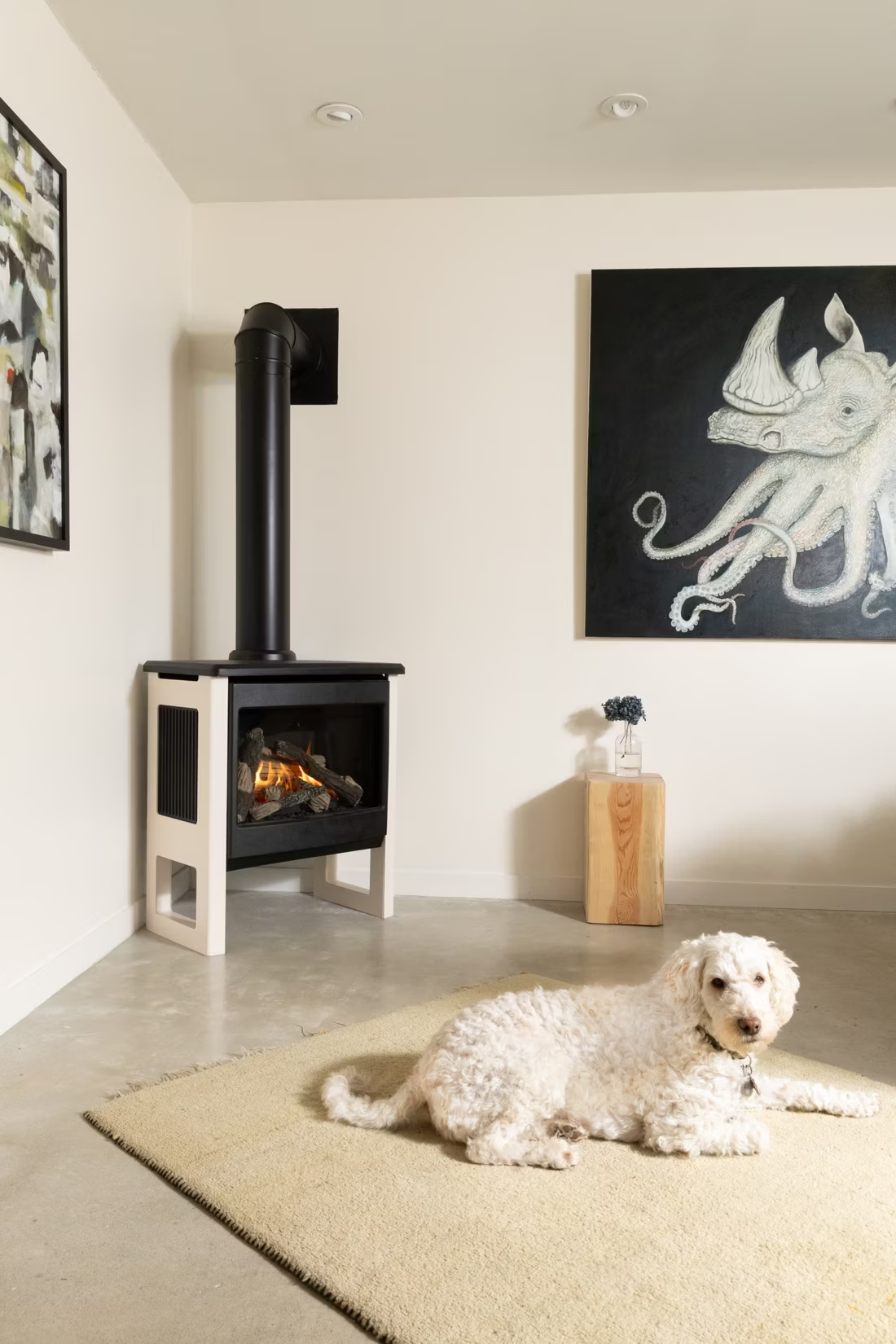
A gas fireplace is a fully built-in unit framed into a wall—the right call for new construction or a remodel without an existing hearth. A gas insert is sized to slide into an existing masonry fireplace opening, which describes a large share of homes in Lewisburg's older neighborhoods. A gas stove is freestanding, sitting on its own hearth pad rather than inside a fireplace opening, and works well in a room that never had a fireplace to begin with. For most Lewisburg homeowners working with an existing brick fireplace, an insert is the natural fit.
Do I need a permit for a gas fireplace installation in Lewisburg?
Yes—a building permit and gas line permit are typically both required for a new gas fireplace or insert installation, whether the work falls under Lewisburg Borough or Union County jurisdiction depending on your address. The gas line connection itself needs to be run by a licensed gas-fitter. A certified local hearth dealer will usually coordinate the permitting, the gas line work, and the final inspection as part of the installation, rather than leaving you to manage separate trades.
Should I get a vented or vent-free gas fireplace?
Vented (direct-vent) units draw combustion air from outside and exhaust it back outside through a sealed pipe—they're the standard choice and work in any room regardless of size. Vent-free units burn without external venting and release some combustion byproducts into the room, so Pennsylvania limits their use with strict room-size and ventilation requirements. Given how many Lewisburg homes are smaller, older rooms with limited natural ventilation, direct-vent units are what most local dealers recommend by default—they heat well without the air-quality tradeoffs of a vent-free unit in a tight, older room.
How often does a gas fireplace need to be serviced?
Plan on an annual inspection, ideally in early fall before regular winter use starts. A technician checks the burner, pilot assembly, venting, and gas connections, and cleans the glass and interior—a much quicker visit than a wood chimney sweep, but just as important for safety and efficiency. Expect to pay somewhere in the neighborhood of $150–$250 for a standard annual visit from a local hearth service provider.
Why don't more Lewisburg homes have wood or pellet stoves?
Despite a long, cold winter heating season and cold-enough winters to make wood heat theoretically appealing, wood and pellet stoves are uncommon in Lewisburg. Much of the borough sits within a historic district of compact lots and older brick rowhomes where wood storage space and new chimney or venting work are hard to fit in, and species like oak, hickory, maple, and cherry that grow throughout Union County aren't matched by convenient in-town wood supply chains. Pellet stoves face a similar hurdle—regional brands like Energex, Hamer Pellet Fuel, and Greene Team Pellet Fuel are sold nearby, but pellet appliances still need clearance and venting that many downtown Lewisburg floor plans don't easily accommodate. Gas sidesteps both problems: it uses the chimney or wall space you already have, without a woodpile or pellet bags to manage.
Can I put a TV above my fireplace?
Yes—with an asterisk. Fireplaces are hot and TVs don't like heat. Either put a mantel between them to deflect rising warmth, or choose a fireplace with heat-management technology that creates a cool zone on the wall above—the wall stays around 125 degrees, barely warm, while the room still gets full heat. If you like clean lines and don't want a mantel, heat management is the answer.
Why is my open fireplace making my house colder?
Open fireplaces suck—literally. As the fire burns, it consumes air your furnace already paid to heat and pulls it out through the chimney, so the house is actually colder after the fire goes out than before you lit it. An insert fixes this: it seals the chimney, puts fixed glass across the front, and turns that hole in your house into a real heat source.
Does a fireplace add value to my home?
On average, a fireplace adds back to the home about the same amount you spent installing it. Add the monthly savings from heating the rooms you actually use instead of the whole house—often hundreds of dollars a year—and the value case is strong before you even count what a fire does for how your family uses the room.
How much should I budget for a fireplace?
For an average home—covering the fireplace, the vent pipe, and basic installation—a budget between $3,900 and $5,500 gives you a lot of options across wood, gas, and pellet. By the time you add finish work, gas line, and electrical, the average complete installation lands between $5,000 and $12,000 all-in. In a remodel or new build, a good rule is to put about 2.5% of the total project cost toward the fireplace.
Nearby Dealers
Hearth shops serving Lewisburg and the surrounding area. Every listing shows whether it is a WhyFire partner, a dealer we have verified as authorized for the brands we recommend, or a local business carrying hearth products. No manufacturer pays for placement. How we verify dealers →
Fired Up Fireplaces
Passonetti's Mechanical
Glick Inc.
Sensenig Gas Appliance
Ace Fireplace, Stoves & Outdoor Living
The Warm Up Shop Inc.
Jerry The Fix It Guy
Stolz Stove Sales
Find your gas fireplace in Lewisburg.
Tell us a bit about your home and we'll put together a free Project Guide & Parts List—the right gas fireplace or insert, the exact venting parts you'll need, and a trusted local dealer in the Lewisburg area to install it.
Find Your Fireplace →