
Add real heat to any room in Leola—no chimney required.
From stone farmhouses to newer builds off Route 23, electric heat drops into almost any Leola room without venting, gas lines, or masonry work. Find the right unit and connect with a trusted local dealer.
Every Project Starts From One of These Five Situations
The simplest way to add heat to an old farmhouse.
Leola sits in Upper Leacock Township, in the heart of Lancaster County's Pennsylvania Dutch farm country, where a lot of the housing stock is old—stone farmhouses, converted bank barns, and additions tacked onto homes built long before central heat existed. Winters here average a low around 22°F with roughly 5,129 heating degree days a year—real cold, but nowhere near what a place like Burlington, Vermont deals with. That's exactly the kind of climate where electric heat earns its keep: not as a whole-house solution, but as fast, targeted warmth in a sunroom, finished basement, or bedroom addition that the furnace never quite reaches.
PPL Electric Utilities serves Leola and the surrounding townships, and at a residential rate around $0.1234 per kWh, running a 1,500-watt electric unit for a few hours most evenings costs less than people expect. Because there's no combustion, there's no chimney to build, no gas line to run, and—for a simple plug-in unit—usually no building permit to pull, which matters in a township with a lot of historic and agricultural-zoned properties where exterior venting work can get complicated fast.
Three steps. No salesperson until you're ready.
Tell us about your project
Your zip code, your situation, and the fuel you're leaning toward—or let the answers point you to one.
See what's actually available
The brands dealers within 100 miles genuinely carry—real options, never a catalog mirage.
Get your dealer & Project Guide
A trusted local dealer, plus the free Project Guide & Parts List that names every component of the job.
Frequently Asked Questions
How much does an electric fireplace installation cost in Leola?
A plug-in electric insert or freestanding unit is the cheapest path—often just the cost of the unit itself, since it runs on a standard 120V outlet with no professional install required. Wall-mounted units typically run a few hundred dollars more once you factor in mounting and hiding or extending wiring. Built-in electric fireplaces framed into a wall or mantel surround cost the most, since that work involves carpentry and sometimes a dedicated 240V circuit—an electrician in the Leola area will usually handle that portion. A local hearth or electrical dealer can give you a firm number once they know which style you're after.
Do I need a permit to install an electric fireplace in Leola?
In most cases, no. Because electric units don't burn fuel, Upper Leacock Township's building code office typically doesn't require a permit for a plug-in insert or a wall-mounted unit on an existing circuit. Where it changes is with built-in installations that involve new framing, a dedicated 240V line, or structural changes to a wall—that work usually needs an electrical permit, and it's worth a quick call to the township building office before work starts, especially on older stone or historic properties where any wall modification can draw extra scrutiny.
How much does it cost to run an electric fireplace in Leola?
At PPL Electric's residential rate of about $0.1234 per kWh, a typical 1,500-watt electric fireplace costs roughly 18-19 cents an hour to run on high heat. Used for supplemental heat a few hours an evening through a Leola winter, that works out to somewhere around $15-$30 a month depending on how often it's on—far less than most homeowners assume, and a fraction of what it costs to raise the thermostat on a whole-house furnace to warm up one cold room.
What's the difference between an electric fireplace insert, wall-mounted unit, and built-in?
An electric insert is built to drop into an existing fireplace opening—a straightforward option for a Leola farmhouse with an old wood-burning firebox that's no longer used. A wall-mounted unit hangs on the wall like a flat-screen TV and needs no fireplace opening at all, which works well in additions or finished basements. A built-in electric fireplace is framed into a wall or custom mantel surround for a more permanent, seamless look—it costs more because it involves carpentry, but it reads as a real architectural feature rather than an appliance.
Can an electric fireplace actually heat a room in Leola, or is it just for looks?
Most electric fireplaces put out around 4,500-5,000 BTUs on a 1,500-watt heater setting, which is enough to comfortably warm a small to medium room—a bedroom, home office, or sunroom—especially useful during Leola's shoulder-season cold snaps before the furnace kicks on for good. On the coldest nights, when lows drop into the teens and 20s, an electric unit works best as zone heat layered on top of your existing furnace rather than as the sole heat source for the whole house.
Electric vs. wood—which is right for my Leola home?
Wood is the better choice if you want real heat during a power outage or you're working with local oak, hickory, maple, or cherry and want the ambiance and radiant warmth of an actual fire—common in older Lancaster County farmhouses with existing chimneys. Electric is the better choice if you don't have a chimney, don't want to deal with venting or wood handling, or you're heating a converted barn, addition, or basement where installing a flue isn't practical or allowed. The tradeoff to know up front: electric units don't work when the power's out, which matters here given how winter storms occasionally knock out power across rural Lancaster County.
Electric vs. pellet stove—which makes more sense for Leola?
Pellet stoves, running on regional bagged pellets from brands like Energex, Hamer Pellet Fuel, or Greene Team, put out significantly more heat and can serve as a real primary or supplemental heat source for a larger area of the house—but they need venting, a hopper to refill, and electricity to run the auger and blower, so they're not an outage backup either. Electric fireplaces skip the venting and pellet bags entirely, trading heat output for simplicity. If you want serious BTUs for a drafty older home, pellet wins. If you want quick, no-fuss ambiance and zone heat for one room, electric is the easier install.
Will my electric fireplace work during a power outage?
No—electric fireplaces are entirely dependent on grid power, so when PPL Electric service goes down, so does the unit. This is the main tradeoff against wood heat in a rural area like Leola, where ice storms and heavy snow can take out power for hours or occasionally longer. If backup heat during outages is a priority, many local homeowners pair an electric fireplace for everyday convenience with a wood stove or insert elsewhere in the house for the nights the power doesn't cooperate.
What size electric fireplace do I need for my home in Leola?
For a bedroom or home office under about 300 square feet, a compact 1,000-1,500 watt insert or wall unit is usually plenty. For a larger family room or open-concept addition, look at a 1,500-watt unit with a wider viewing area, and consider that the heater function will realistically supplement—not replace—your existing furnace on Leola's coldest days. A local dealer can walk your space and tell you whether a smaller accent unit or a larger heat-rated model makes more sense for how you actually plan to use it.
Can I put a TV above my fireplace?
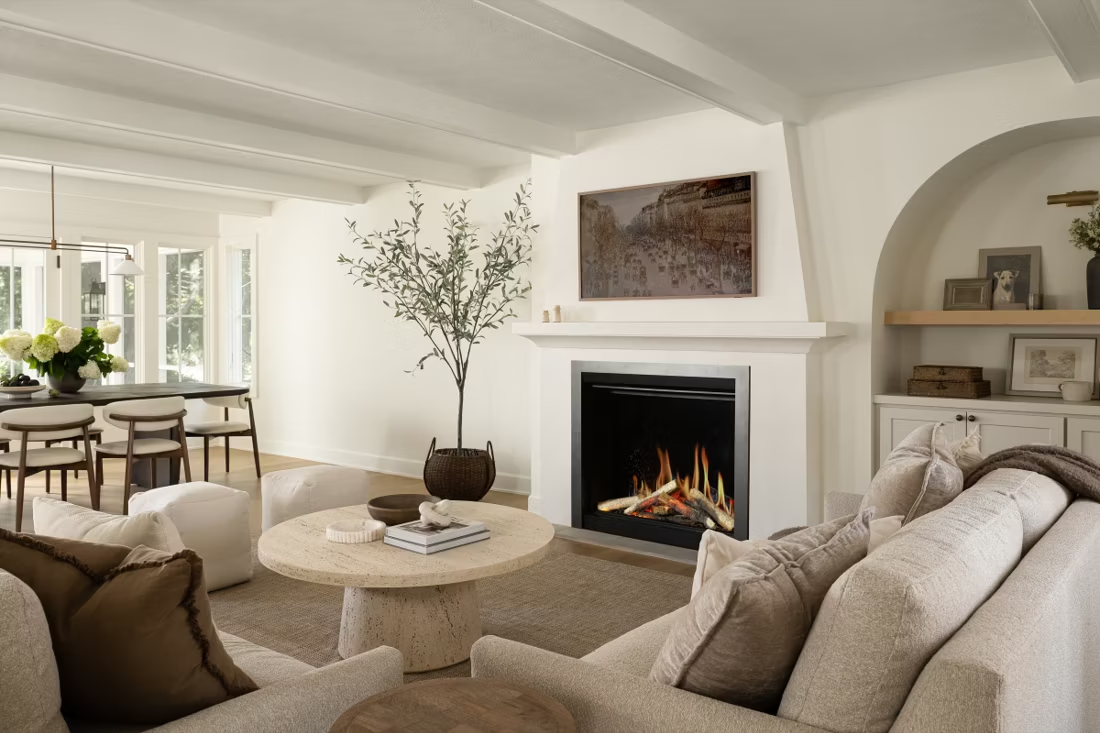
Yes—with an asterisk. Fireplaces are hot and TVs don't like heat. Either put a mantel between them to deflect rising warmth, or choose a fireplace with heat-management technology that creates a cool zone on the wall above—the wall stays around 125 degrees, barely warm, while the room still gets full heat. If you like clean lines and don't want a mantel, heat management is the answer.
Do electric fireplaces actually produce heat?
Yes—most put out around 4,800–5,000 BTUs from a standard outlet, which comfortably warms a bedroom, office, or den as a comfort-zone heater. What they won't do is carry a whole house the way wood, gas, or pellet can. Think of electric as ambiance-first with honest supplemental heat: flames on with no heat in July, flames plus warmth in January.
What is an in-home preview and do I need one?
It's a visit where a hearth professional measures your space, confirms the model you picked actually works in your home, and walks the specs—framing, gas line, venting, finish work—before anything is ordered. Some details you just can't know until you see the house. Never make a down payment without one; it's the single most-skipped step that burns buyers.
Does a fireplace add value to my home?
On average, a fireplace adds back to the home about the same amount you spent installing it. Add the monthly savings from heating the rooms you actually use instead of the whole house—often hundreds of dollars a year—and the value case is strong before you even count what a fire does for how your family uses the room.
Nearby Dealers
Hearth shops serving Leola and the surrounding area. Every listing shows whether it is a WhyFire partner, a dealer we have verified as authorized for the brands we recommend, or a local business carrying hearth products. No manufacturer pays for placement. How we verify dealers →
Peak Distribution
Kring's Hearth & Home - Lancaster
Ds Stoves
Penn Stone
Sauder's Hardscape Supply
Keystone Custom Decks
Hillside Acres Stoves
A Chimney King
H2 LLC
Electric Service in Leola
An electric fireplace's heater draws about 1,500 watts—pennies per hour at local rates.
Ppl Electric Utilities Corp
Find your electric fireplace in Leola.
Tell us a bit about your home and we'll match you with the right electric fireplace, insert, or wall unit—and connect you with a trusted local dealer who can install it correctly.
Find Your Fireplace →