
Warmth and ambiance in Lebanon County, without the chimney.
From stone farmhouses in North Annville Township to condos in downtown Lebanon, electric fireplaces add real zone heat and a genuine flame look to rooms that were never built for venting. Find the right unit and connect with a trusted local dealer.
Every Project Starts From One of These Five Situations
The easiest fireplace upgrade for an older county.
Lebanon County sits in the Lebanon Valley between Blue Mountain and South Mountain, a mix of working farmland, historic stone farmhouses, and boroughs like Lebanon, Palmyra, Annville, Myerstown, and Cornwall. At climate zone 5A with a solid, sustained winter heating season and average winter lows around 22°F, the county sees a real heating season—cold enough that supplemental heat matters in drafty rooms, but not so extreme that whole-home electric heat is the norm. Many of the county's older farmhouses were built around oak, hickory, maple, or cherry cordwood heat, and plenty of those chimneys are still standing but no longer lined, inspected, or worth the cost of bringing up to code for a wood or gas appliance.
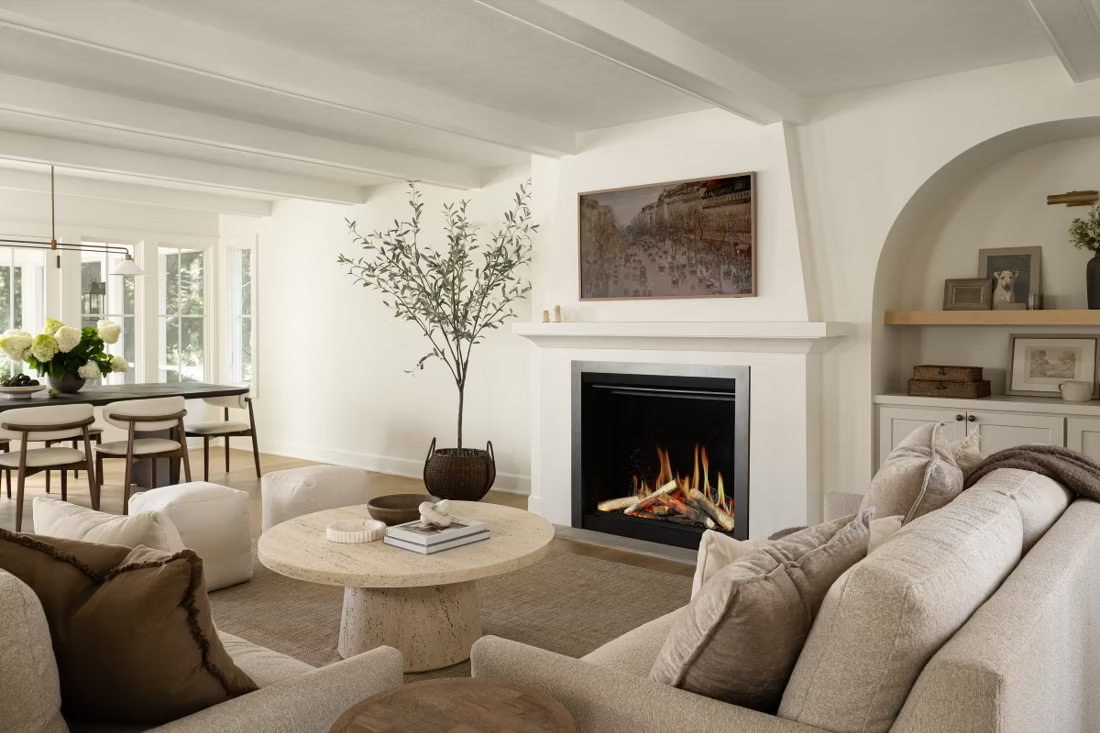
That's exactly where electric fireplaces earn their place. A plug-in insert or built-in unit needs no chimney, no gas line, and in most cases no structural work—which makes it the practical choice for a converted farmhouse parlor near Cornwall, a finished basement in Palmyra, or a rental condo in a Lebanon borough building where venting simply isn't an option. Electricity in the county comes primarily through PPL Electric Utilities and Met-Ed, depending on where you're located, and either provider handles a standard electric fireplace circuit without issue. For homeowners who still want whole-home wood or pellet heat, regional pellet brands like Energex, Hamer Pellet Fuel, and Greene Team Pellet Fuel are sold through local farm and feed stores—but for a single room, a hallway, or a bedroom that just needs supplemental warmth and the look of a fire, electric is usually the simpler answer.
Three steps. No salesperson until you're ready.
Tell us about your project
Your zip code, your situation, and the fuel you're leaning toward—or let the answers point you to one.
See what's actually available
The brands dealers within 100 miles genuinely carry—real options, never a catalog mirage.
Get your dealer & Project Guide
A trusted local dealer, plus the free Project Guide & Parts List that names every component of the job.
Frequently Asked Questions
How much does an electric fireplace installation cost in Lebanon County?
Plug-in electric fireplace inserts—the kind that slide into an existing masonry opening or a simple cabinet cutout—typically run $200 to $600 for the unit, with little to no installation labor since they run off a standard outlet. Built-in electric fireplaces with a custom mantel, surround, or wall-mount installation usually run $1,500 to $4,000 installed once framing, trim carpentry, and a dedicated 20-amp circuit are factored in. Costs run toward the higher end for older stone farmhouses around Cornwall or Mount Gretna where an electrician needs to run new wiring through plaster or fieldstone walls. A local dealer can give you a firm number after seeing the room.
Will an electric fireplace actually heat my room, or is it just for looks?
Most electric fireplaces include a built-in fan-forced heater rated around 4,600–5,000 BTU, enough to noticeably warm a single room of 400 square feet or less—a bedroom, den, or finished basement space. Given Lebanon County's solid, sustained winter heating season and winter lows that average in the low 20s, an electric unit works well as zone heat for a room you use often, letting you turn down the thermostat elsewhere. It is not a replacement for whole-home heat in a county this cold; homeowners looking for primary heat typically pair electric fireplaces with a working furnace or boiler rather than relying on them alone.
Do I need a permit to install an electric fireplace in Lebanon County?
A simple plug-in insert generally doesn't require a permit since there's no gas line, venting, or structural change involved. Built-in units that require new electrical circuits, wall openings, or mantel construction may need an electrical permit, particularly if you're in a borough like Lebanon or Myerstown with active code enforcement, or in a township such as South Annville or North Cornwall where a building permit is required for framing work. Most local dealers who handle built-in installations will tell you upfront whether your specific project needs a permit and can coordinate with a licensed electrician if a new circuit is required.
Wood vs. electric—which makes sense for my Lebanon County home?
Wood heat has deep roots here—oak, hickory, maple, and cherry are all common local species, and plenty of county farmhouses still burn cordwood as primary or backup heat, especially valuable during winter storms when the power goes out. Electric fireplaces can't provide that same outage backup since they require power to run. But for a room without an existing chimney, or a homeowner who doesn't want to deal with ash, creosote, or annual chimney sweeps, electric delivers a real flame look and genuine supplemental warmth with none of the maintenance. Many county homeowners end up with both: wood or pellet heat for the main living space, electric for a bedroom, sunroom, or basement that never had venting to begin with.
Electric vs. gas fireplace—which is right for my home?
Gas fireplaces need either a natural gas line—generally only available in and around the boroughs like Lebanon, Palmyra, and Myerstown—or a propane tank, which is common in the county's more rural townships. Gas delivers higher heat output and can be sized to actually contribute to whole-room heating in a cold winter. Electric skips the fuel line entirely, installs faster, and costs less upfront, but tops out around 5,000 BTU—enough for ambiance and light zone heat, not a serious heat source on its own. If your home already has gas service and you want real heat output, gas is usually the better fit; if you want a fast, low-cost upgrade to a room without existing utilities, electric wins.
Where's the best place to install an electric fireplace in an older Lebanon County home?
Bedrooms, finished basements, and rooms without an existing chimney are the most common spots—exactly the areas where running a wood flue or gas line would be impractical or expensive. In the county's older stone farmhouses, homeowners often install an electric insert into a decorative but non-functional fireplace opening that was long ago sealed off from the original chimney, restoring the look of the hearth without touching the old masonry. In newer construction or condo units in the boroughs, wall-mounted electric units are popular since they need no hearth or floor clearance at all.
What's the difference between an electric insert, a built-in, and a mantel package?
An electric insert is designed to slide into an existing fireplace opening, whether that's a real masonry firebox or a factory-built zero-clearance box—it's the most common retrofit option for older homes. A built-in electric fireplace is a linear or traditional unit installed into new framing, typically during a renovation, and finished with tile, stone, or shiplap surround. A mantel package pairs a freestanding or recessed electric unit with a pre-built mantel surround, requiring no framing at all—just a wall outlet and, ideally, a stud to anchor the mantel. For most Lebanon County retrofits into an old fireplace opening, an insert is the simplest path; for new construction or a feature wall, a built-in or mantel package gives more design flexibility.
Will my electric fireplace work during a power outage?
No—electric fireplaces require power to run both the flame effect and the heater, so they shut off completely during an outage. That's an important distinction for Lebanon County, where winter storms can knock out power for hours or occasionally days in the more rural parts of the county. If backup heat during outages matters to you, a wood stove or insert is the more resilient choice, and many homeowners here keep one as backup heat even while using electric fireplaces for everyday ambiance and zone heating elsewhere in the house.
What features should I look for in an electric fireplace?
Look for a realistic flame technology—ember bed LEDs and multi-layer flame projection from brands like Dimplex, Napoleon, and Amantii tend to look far more convincing than older single-color LED units. A separate heater control (so you can run the flame effect without the heat in warmer months) is worth having, along with a thermostat setting rather than just high/low heat modes for more even room temperature. If you're installing into an existing fireplace opening, measure your firebox carefully—insert sizing is the most common mistake, and a local dealer can confirm fit before you buy rather than after.
Can I put a TV above my fireplace?
Yes—with an asterisk. Fireplaces are hot and TVs don't like heat. Either put a mantel between them to deflect rising warmth, or choose a fireplace with heat-management technology that creates a cool zone on the wall above—the wall stays around 125 degrees, barely warm, while the room still gets full heat. If you like clean lines and don't want a mantel, heat management is the answer.
Does an electric fireplace need a vent or chimney?
No—that's its superpower. An electric fireplace needs a wall and an outlet, period. No vent pipe, no gas line, no clearances to design around, which is why it works in bedrooms, offices, apartments, and walls where venting a gas or wood unit would be impractical or impossible. Installation is typically the simplest and least expensive of any fireplace type.
How much should I budget for a fireplace?
For an average home—covering the fireplace, the vent pipe, and basic installation—a budget between $3,900 and $5,500 gives you a lot of options across wood, gas, and pellet. By the time you add finish work, gas line, and electrical, the average complete installation lands between $5,000 and $12,000 all-in. In a remodel or new build, a good rule is to put about 2.5% of the total project cost toward the fireplace.
Should the dealer who sells my fireplace also install it?
Ideally, yes. A fireplace project involves vent pipe, gas line, electrical, and often tile or stone. Hire three or four separate trades and you own the liability and the game of telephone between them. One company selling and installing means one accountable party, start to finish—ask about factory training, on-time completion records, and what happens if an inspection fails.
Stove and Fireplace Dealers in Lebanon County
Listings include WhyFire partner dealers, dealers we have verified as authorized for the brands we recommend, and established local businesses that carry hearth products. Every listing shows which one it is. The ones marked Preferred run on WhyFire's software, so they can show you real pricing and book your appointment right here. No manufacturer pays for placement. How we verify dealers →
North Forge Home Heating
Kring's Hearth & Home - Lancaster
Dewald & Lengle Hardware Inc.
Penn Stone
Cressona Agway Store
Sauder's Hardscape Supply
Find your electric fireplace in Lebanon County.
Tell us a bit about your home and we'll match you with a trusted local dealer and a free Project Guide & Parts List—the right electric fireplace or insert for your space, the exact parts needed, and who to call in Lebanon County to install it.
Find Your Fireplace →