
Instant heat for Kennett Square's chilly Chester County winters.
Direct-vent gas fireplaces and inserts built for the borough's historic twin homes and Victorians—sized right, vented correctly, and installed by a trusted local dealer.
Every Project Starts From One of These Five Situations
Clean heat that respects the historic streetscape.
Kennett Square sits in southern Chester County at just 337 feet of elevation, in a climate zone (4A) that delivers a steady, moderate cold rather than the extremes of the Rockies or the northern Plains—winter lows average around 23°F and the borough logs roughly 5,358 heating degree days a year, comparable to nearby West Chester or Wilmington. It's not Duluth-cold, but the heating season runs long, from late October well into April, and a fireplace that only looks good isn't much use through five months of that.
Kennett Square's housing stock is part of why gas has become the default here. The borough's historic district is full of 19th-century twin homes, brick Victorians, and rowhouses built with masonry fireplaces designed for coal or wood—many of which sit unused today. A direct-vent gas insert into one of those existing flues is often the cleanest path to real heat without altering the exterior brick the Historic District Commission is protective of. Chester County's farmland around Kennett Square—mushroom houses more than woodlots—also means there's little of the forest infrastructure, cutting permits, and firewood suppliers that support wood heat elsewhere in Pennsylvania, which is part of why gas and electric are the two fuels that actually make sense for most homes here.
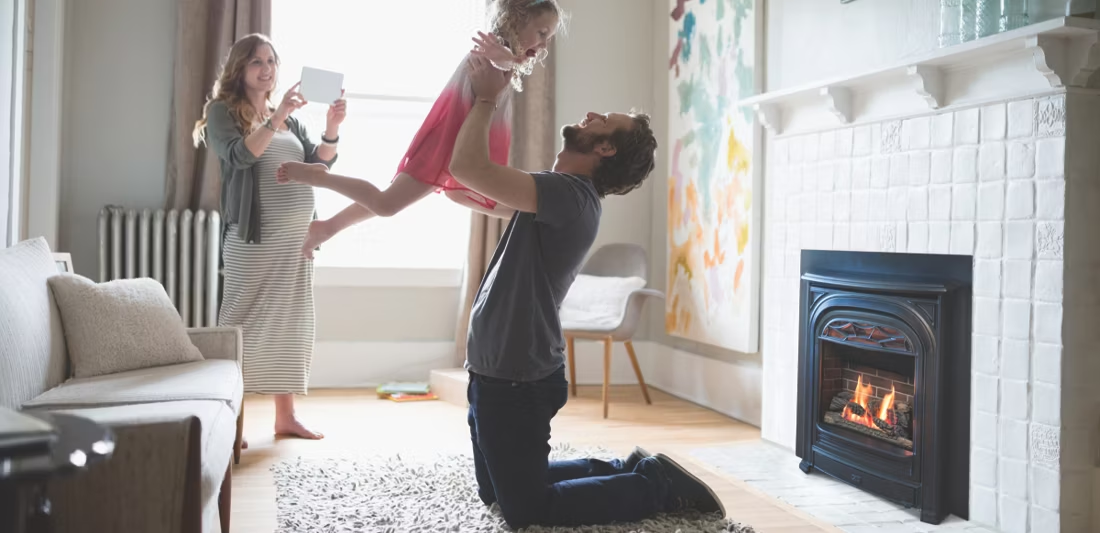
Three steps. No salesperson until you're ready.
Tell us about your project
Your zip code, your situation, and the fuel you're leaning toward—or let the answers point you to one.
See what's actually available
The brands dealers within 100 miles genuinely carry—real options, never a catalog mirage.
Get your dealer & Project Guide
A trusted local dealer, plus the free Project Guide & Parts List that names every component of the job.
Frequently Asked Questions
How much does a gas fireplace installation cost in Kennett Square?
Most direct-vent gas insert installations into an existing masonry fireplace in one of Kennett Square's historic twin homes or Victorians run in the $4,000 to $8,000 range, depending on the insert model and whether the existing flue needs a stainless liner. A new built-in gas fireplace in a remodel or addition—with fresh framing, venting through an exterior wall, and a new gas line—typically runs higher, often $7,000 to $12,000, especially if the gas main has to be extended from the street. A local dealer will give you a firm number after seeing the chimney and the gas service to the house.
Can I convert my home's existing wood-burning fireplace to gas?
In Kennett Square, this is one of the most common projects, precisely because so many of the borough's older twin homes and Victorians still have their original coal- or wood-era masonry fireplaces sitting cold and unused. A gas insert with a stainless liner run up the existing flue lets you keep the historic mantel and firebox opening intact—which matters if your property falls inside the borough's Historic District—while getting real, efficient heat. Expect this conversion to land in the $4,500 to $8,500 range depending on chimney condition and gas line access.
Do I need natural gas service, or is propane more common here?
It depends on the block. Much of downtown Kennett Square has natural gas service, but a number of properties on the borough's edges and in the surrounding township rely on propane, delivered and stored in a buried or above-ground tank. Either fuel works in nearly any direct-vent fireplace or insert—the burner orifice and regulator are simply set up for whichever gas you have. If you're not sure what's available at your address, that's one of the first things a local installer will check before quoting the job.
Will my gas fireplace still work if the power goes out?
Most direct-vent gas fireplaces with intermittent pilot ignition (IPI) keep running during an outage because they use a small battery backup—typically AA batteries built into the unit—to fire the igniter and control board. Valor fireplaces go a step further: their pilot assembly generates its own electricity through the thermocouple, so there's no battery to remember or replace. Given how many Chester County winter storms bring down power lines along the older tree-lined streets near downtown, that's a real consideration worth asking your dealer about.
Gas fireplace, insert, or gas stove—what's the difference?
A gas fireplace is a fully framed-in unit, used for new construction or when you're opening up a wall for one. A gas insert slides into an existing masonry firebox and uses the chimney you already have—the natural choice for most of Kennett Square's historic housing stock. A gas stove is a freestanding cast-iron or steel unit that sits on the floor and vents through a wall or existing flue, which can work well in a smaller twin home where there's no full fireplace opening to begin with. For most borough homeowners with an original masonry fireplace, the insert path is simplest and preserves the historic mantel.
Do I need a permit to install a gas fireplace in Kennett Square?
Yes—a building permit and a gas line permit are both required for a new gas fireplace or insert, and the gas line work has to be done by a licensed contractor. If your property sits within the borough's Historic District, any change visible from the street—including a new vent cap on the front or side of the house—may also need a sign-off from the Historic District Commission before the borough issues the permit. Reputable local installers who work in Kennett Square regularly are familiar with this extra step and typically build it into the project timeline.
What's the difference between vented and vent-free gas fireplaces?
Vented (direct-vent) units draw combustion air from outside and exhaust the byproducts back outside through a sealed pipe—they're the cleanest, safest option and the one most local installers recommend as a primary heat source. Vent-free units burn gas directly into the room and are legal in Pennsylvania, but only within strict room-size and ventilation rules, and they're generally treated as supplemental rather than primary heat. For a borough with older, tighter-built homes like Kennett Square, direct-vent is the more common and more comfortable choice—it doesn't add moisture or combustion byproducts to a house that may already have limited air exchange.
How often does a gas fireplace need to be serviced?
Plan on an annual inspection, ideally before the start of the heating season each fall. A technician checks the burner, pilot assembly, venting, and gas connections, and cleans the glass—a much lighter job than a wood chimney sweep, but still important on units that see daily use from October through April. Most local hearth companies that install gas fireplaces in Kennett Square also offer this service, and it typically runs $150 to $250.
Why don't more homes in Kennett Square use wood or pellet stoves?
It comes down to geography as much as anything. Chester County around Kennett Square is mushroom-farming country and open agricultural land, not forest—there's no nearby public land with cutting permits and no established firewood supply chain the way there is in more forested parts of Pennsylvania, even though oak, hickory, maple, and cherry all grow in the county's remaining woodlots. Pellet fuel is technically available through regional distributors like Energex and Hamer, but there isn't much local demand or dealer support for pellet appliances in a borough this size. Add in the Historic District's scrutiny of new exterior chimneys and vent penetrations, and gas—with its clean direct-vent option—ends up being the practical answer for most homes here, with electric fireplaces on PECO-served circuits covering ambiance-only or apartment installs.
Can I put a TV above my fireplace?
Yes—with an asterisk. Fireplaces are hot and TVs don't like heat. Either put a mantel between them to deflect rising warmth, or choose a fireplace with heat-management technology that creates a cool zone on the wall above—the wall stays around 125 degrees, barely warm, while the room still gets full heat. If you like clean lines and don't want a mantel, heat management is the answer.
Why is a fireplace insert so efficient?
An insert does two things: it seals the chimney completely, so you stop losing air you already paid to heat, and it radiates warmth into the room through the firebox and glass. Most add a heat-exchange fan that pulls cool room air underneath, wraps it around the hot firebox, and pushes it back out warm. Your home is more efficient before you've even lit the first fire.
Can I install a fireplace myself?
If you're putting a fire in your house on purpose, it's best to work with an expert. Unless you're genuinely experienced in framing, gas line, vent pipe, and the national code on clearances to combustibles, have a professional do it—and ideally the same company that sells you the fireplace, so warranty, service, and liability all live under one roof.
Can a fireplace actually lower my heating bill?
Yes—by creating a comfort zone. A furnace heats every square foot of the house just to warm the one room you're in; a gas fireplace on low burns roughly a sixth of the gas a typical furnace does. Set the furnace around 55–60 degrees as a baseline, then heat the rooms your family actually uses. Families who heat this way commonly save $20–$60 a month.
Nearby Dealers
Hearth shops serving Kennett Square and the surrounding area. Every listing shows whether it is a WhyFire partner, a dealer we have verified as authorized for the brands we recommend, or a local business carrying hearth products. No manufacturer pays for placement. How we verify dealers →
Delaware Brick
Ah Angersterin Inc
Athenia Mason Supply Wilmington LLC
Comfort Home & Hearth
Wertz & Co,Inc
First State Hearth Services
Halco Grills And Fireplaces
Halligan's Hearth And Home
Closer To The Hearth
Johnson Fitness And Wellness
The Stove Store
Duvall's Lawn & Garden Inc.
Find your gas fireplace in Kennett Square.
Tell us about your home and we'll match you with a trusted local dealer and a free Project Guide & Parts List—the exact parts, vent kit, and installer recommendation for your Kennett Square gas project.
Find Your Fireplace →