
Real Warmth for Jenkintown's Older Homes.
Direct-vent gas heat that works with Jenkintown's Victorian twins and narrow lots—find the right unit and connect with a trusted local dealer.
Every Project Starts From One of These Five Situations
Instant heat that fits a walkable borough.
Jenkintown is a small, dense borough of about 4,700 people just north of Philadelphia, built out mostly with Victorian twins, brick rowhomes, and pre-war single-families on tight lots. Winters here are moderate by national standards—an average low around 27°F and a heating season noticeably milder than what a place like Burlington, VT sees, but cold enough from December through February that supplemental heat matters, especially in older homes with drafty single-pane windows and undersized furnaces.
Wood heat is uncommon in Jenkintown proper—small lots leave little room for stacking and seasoning cordwood, and many properties sit close enough to neighbors that clearance and smoke considerations make it impractical, even though there are no air quality restrictions on the books here. Gas is the practical choice instead. PECO serves nearly all of the 19046 zip code with both electric and natural gas, so most homes already have a gas line nearby, and older houses with existing masonry fireplaces are frequently retrofitted with direct-vent gas inserts rather than rebuilt for wood.
Three steps. No salesperson until you're ready.
Tell us about your project
Your zip code, your situation, and the fuel you're leaning toward—or let the answers point you to one.
See what's actually available
The brands dealers within 100 miles genuinely carry—real options, never a catalog mirage.
Get your dealer & Project Guide
A trusted local dealer, plus the free Project Guide & Parts List that names every component of the job.
Frequently Asked Questions
How much does a gas fireplace installation cost in Jenkintown?
Most gas fireplace projects in Jenkintown run somewhere between $4,500 and $10,000, with the spread driven mainly by whether you're converting an existing masonry fireplace or starting fresh. A gas insert dropped into an existing firebox in one of the borough's Victorian twins, with a gas line already run to that side of the house, sits toward the lower end. New construction, finished-basement installs, or homes where the gas line has to be extended from the street tend to land higher. Older Jenkintown homes sometimes carry an extra line-item for updating knob-and-tube or undersized electrical near the fireplace location, which a local installer will flag during the walkthrough.
Can I convert my existing wood fireplace to gas?
Yes, and it's one of the more common projects in Jenkintown's older housing stock. Many of the borough's Victorian twins and pre-war singles have a masonry fireplace that was rarely used even for wood, and a gas insert with a stainless liner run up the existing flue turns it into real, everyday heat. Because PECO gas service already reaches most addresses in the 19046 zip code, the main cost variable is how far the nearest gas line sits from the fireplace—a short run inside a finished wall costs less than routing a new line through a century-old foundation.
Do I need natural gas to install a gas fireplace, or can I use propane?
Natural gas is the default in Jenkintown—PECO provides gas service throughout nearly all of the borough, and if your home already has a gas furnace, water heater, or range, adding a fireplace on the same line is straightforward. Propane is rarely needed here given how complete PECO's gas footprint is within the borough limits, but it remains an option for the occasional property on the fringes without a nearby main. Most fireplace models can be set up for either fuel with the correct orifice, so the choice usually comes down to what's already running to your house.
Will my gas fireplace work during a power outage?
Most modern gas fireplaces will, with the right ignition system. Units with IPI (intermittent pilot ignition) run on battery backup and light on demand even with the power out—worth having in Jenkintown, where an ice storm or a downed line along the Old York Road corridor can take out power for a stretch. Valor's fireplaces go a step further: the pilot's thermocouple generates its own electricity, so there's no battery to remember or replace. Ask your local dealer which ignition system is on any unit you're considering, especially if you're counting on the fireplace as backup heat.
What's the difference between a gas fireplace, gas insert, and gas stove?
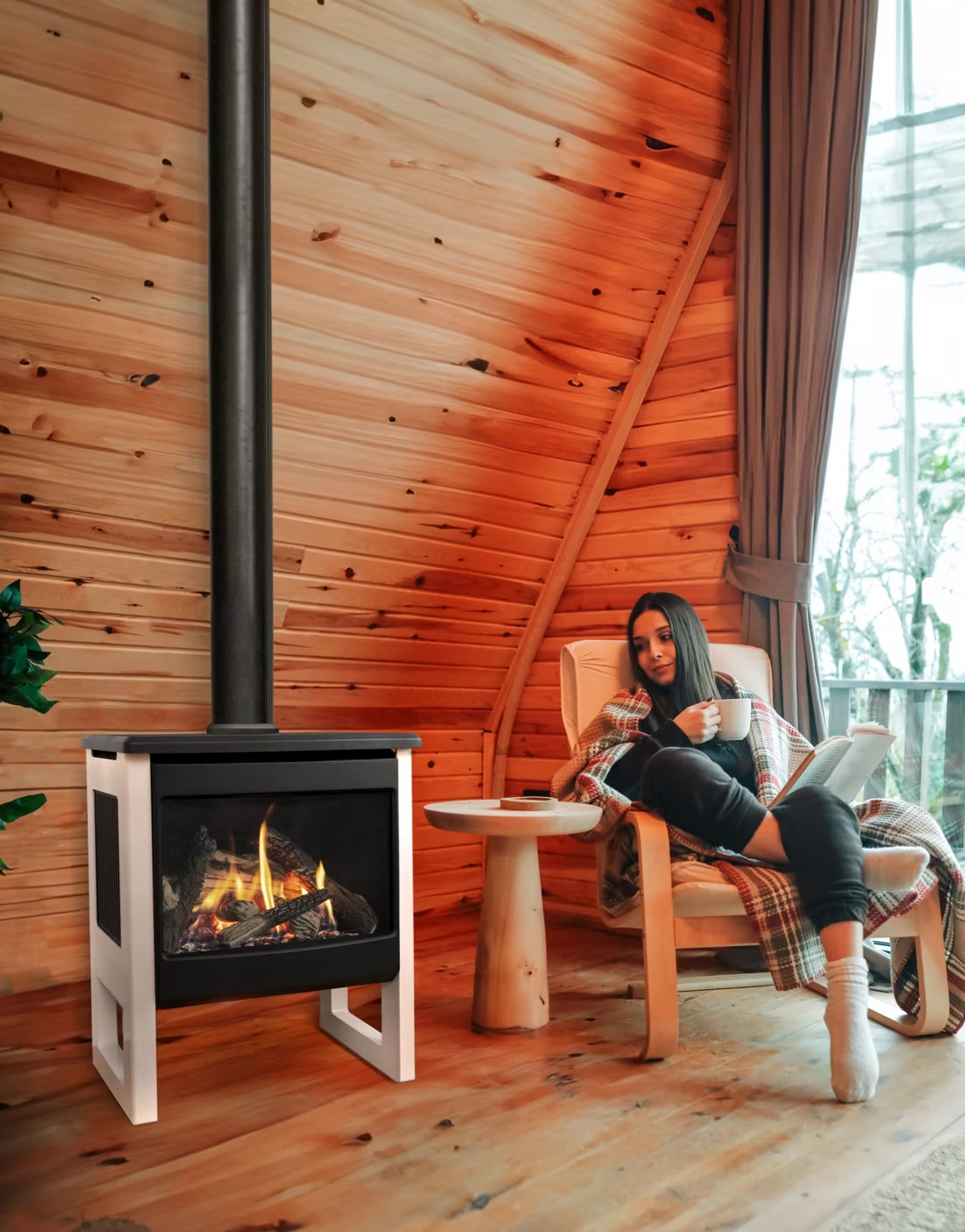
A gas insert slides into an existing masonry firebox and uses your current chimney as the vent path—the most common route for Jenkintown's older twins and singles that already have a fireplace opening. A built-in gas fireplace is framed into a wall from scratch, which fits better for additions, finished basements, or newer construction where there's no existing masonry to work with. A gas stove is a freestanding unit that sits on the floor like a wood stove but burns gas, which some homeowners choose for a den or sunroom without disturbing existing walls. For most Jenkintown homes with a fireplace already in place, an insert is the simplest and most cost-effective path.
Do I need a permit to install a gas fireplace in Jenkintown?
Yes—Jenkintown Borough requires a building permit for gas fireplace installations, and Montgomery County's Uniform Construction Code applies to the gas line and venting work as well. The gas connection itself has to be run or modified by a licensed gas fitter, which is one reason to go through a certified hearth retailer rather than a general contractor—they coordinate the permit, the gas work, and the final inspection as one package instead of leaving you to manage separate trades.
What's the difference between vented and vent-free gas fireplaces?
Vented (direct-vent) fireplaces draw combustion air from outside and exhaust it back outside through sealed venting—in an existing masonry chimney, that usually means running a liner up the flue you already have. Vent-free units burn without any exterior venting at all, releasing combustion byproducts into the room, and Pennsylvania permits them under specific room-sizing and ventilation rules. In a lot of Jenkintown's older twins, the existing chimney chase makes direct-vent inserts the more natural fit anyway, since the venting path is already built into the house. Ask a local retailer to walk through both options for your specific fireplace opening.
How often should my gas fireplace be serviced?
Plan on an annual inspection, ideally before the first cold snap in late fall. A technician checks the burner, pilot assembly, venting, and gas connections, and cleans the glass and interior—quick work compared to a wood chimney sweep, but just as important for safety, particularly in an older Jenkintown home where the flue liner may be original to the house. Local gas appliance technicians typically charge $150 to $250 for the visit.
Gas vs. wood—which is right for my home?
In Jenkintown, gas is the clear default and wood is the exception. The borough's tight lots leave little room to store and season cordwood, and most homes don't have the clearance for a freestanding wood stove without major renovation. A handful of homeowners with larger yards or detached properties still burn wood—oak, hickory, and maple are common regionally—but for the typical Jenkintown twin or rowhome, a gas insert into the existing fireplace delivers real heat without the storage, ash, or chimney maintenance that wood requires. If you're set on wood, a local retailer can tell you honestly whether your property and chimney can support it.
Why is a fireplace insert so efficient?
An insert does two things: it seals the chimney completely, so you stop losing air you already paid to heat, and it radiates warmth into the room through the firebox and glass. Most add a heat-exchange fan that pulls cool room air underneath, wraps it around the hot firebox, and pushes it back out warm. Your home is more efficient before you've even lit the first fire.
Why is my open fireplace making my house colder?
Open fireplaces suck—literally. As the fire burns, it consumes air your furnace already paid to heat and pulls it out through the chimney, so the house is actually colder after the fire goes out than before you lit it. An insert fixes this: it seals the chimney, puts fixed glass across the front, and turns that hole in your house into a real heat source.
What is an in-home preview and do I need one?
It's a visit where a hearth professional measures your space, confirms the model you picked actually works in your home, and walks the specs—framing, gas line, venting, finish work—before anything is ordered. Some details you just can't know until you see the house. Never make a down payment without one; it's the single most-skipped step that burns buyers.
Can I install a fireplace myself?
If you're putting a fire in your house on purpose, it's best to work with an expert. Unless you're genuinely experienced in framing, gas line, vent pipe, and the national code on clearances to combustibles, have a professional do it—and ideally the same company that sells you the fireplace, so warranty, service, and liability all live under one roof.
Nearby Dealers
Hearth shops serving Jenkintown and the surrounding area. Every listing shows whether it is a WhyFire partner, a dealer we have verified as authorized for the brands we recommend, or a local business carrying hearth products. No manufacturer pays for placement. How we verify dealers →
Kester Fireplace
Maple Glen Mechanical
Ambler Fireplace And Patio
Estates Chimney & Fireplace
Norristown Chimney
Plumbarama Co. Inc.
Hearth & Stove LLC
Estates Chimney Sweep
Ambler Fireplace & Patio - Chalfont
E & E Stoves & Fireplaces
Sequoia Supply Hatfield Showroom
Rattan Patio & Fireplace Shoppe
Better Homes Hearth & Patio
Find your gas fireplace in Jenkintown.
Tell us a bit about your Jenkintown home and we'll match you with a trusted local dealer and send over a free Project Guide & Parts List—the exact gas fireplace or insert setup, vent kit included, sized for your fireplace and your home.
Find Your Fireplace →