
Steady heat for Luzerne County's coal-region winters.
With 6,616 heating degree days and winter lows averaging 18°F, Hazleton sits in the same heating-load range as Burlington, Vermont. A lot of homeowners here are replacing old coal-era heat sources with gas. I'll match you with a trusted local dealer who knows the venting and gas line work.
Every Project Starts From One of These Five Situations
A practical swap for aging coal-era heat.
At 1,668 feet in the ridge-and-valley country of northeastern Pennsylvania, Hazleton runs a long, cold heating season—climate zone 5A, average winter lows near 18°F, and better than 6,600 heating degree days a year. That's a heavier load than most of the mid-Atlantic carries, closer to what a Midwest city like Madison sees than what you'd expect this close to Philadelphia. Hazleton's housing stock reflects its history as an anthracite coal town: a lot of the older rowhouses and freestanding homes downtown were built with a masonry firebox or chimney originally sized for a coal grate, long before anyone was burning oak or hickory recreationally in this area.
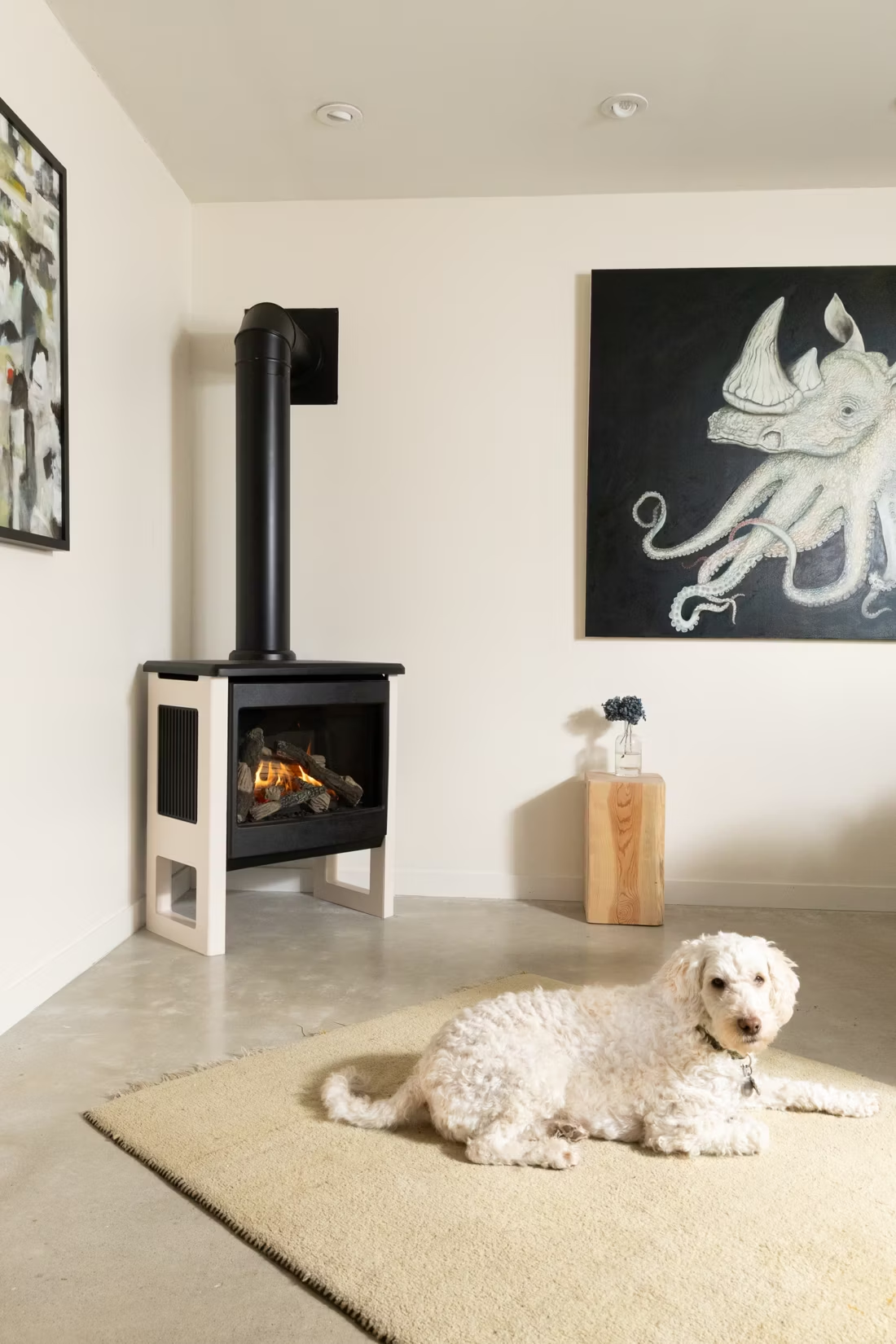
Today most of those old fireboxes and outdated coal or oil setups get converted to a direct-vent gas insert rather than a wood-burning replacement—wood and pellet stoves see limited use in Hazleton compared to more rural stretches of Luzerne County, even though oak, hickory, maple, and cherry are all available regionally. Gas gives you real, on-demand zone heat without babysitting a fire or storing fuel, which matters through a heating season this long. PPL Electric Utilities serves the area's electric side, and there are no local air quality restrictions on file for Hazleton, so both vented and vent-free gas options are on the table depending on the room.
Three steps. No salesperson until you're ready.
Tell us about your project
Your zip code, your situation, and the fuel you're leaning toward—or let the answers point you to one.
See what's actually available
The brands dealers within 100 miles genuinely carry—real options, never a catalog mirage.
Get your dealer & Project Guide
A trusted local dealer, plus the free Project Guide & Parts List that names every component of the job.
Frequently Asked Questions
How much does a gas fireplace installation cost in Hazleton?
Most gas fireplace and insert installations in Hazleton run somewhere in the $4,000 to $9,000 range. An insert dropped into one of the borough's older coal-era masonry fireboxes, with a gas line already run nearby, lands toward the lower end. A new direct-vent unit for a remodel or an addition—with fresh gas line work and venting through an exterior wall—sits higher. If your address falls outside the gas main and you're running on propane instead, factor in tank setup as an added cost. A local dealer will confirm the number after seeing your firebox or wall space.
Can I convert an old coal-fireplace opening to gas?
Yes, and it's a common project in Hazleton given how much of the housing stock dates back to the anthracite coal era. Those older masonry openings were often built for a coal grate rather than an open wood fire, but they generally still accept a gas insert with a stainless liner run up the existing flue. The conversion typically lands in the $4,000 to $8,500 range depending on chimney condition and whether the gas line needs to be extended to reach the firebox. It's a straightforward way to modernize a fireplace that's been sitting unused since the house switched off coal heat decades ago.
Do I need natural gas service, or is propane more realistic here?
It depends on your address. Homes inside Hazleton's older grid, closer to downtown, are more likely to have natural gas mains already serving the block. Out toward the newer subdivisions and the surrounding Luzerne County townships, gas service can be spottier, and propane with a tank on the property is the more common fallback. If your water heater or range already runs on natural gas, adding a fireplace is simple; if not, most gas fireplace models can be configured for propane instead, and your installer will confirm which fuel your address supports before ordering the unit.
Will a gas fireplace still work if the power goes out?
Many will, which is worth knowing given that PPL Electric service in this hilly part of Luzerne County can see outages during winter ice storms. Units with IPI (intermittent pilot ignition) run their electronics off AA battery backup that kicks in automatically when the power drops. Some models, including certain Valor fireplaces, use a millivolt pilot system that generates its own electricity and needs no battery at all. If backup heat during an extended outage is a priority for your Hazleton winter, ask your local dealer specifically about the ignition system before you settle on a model.
What's the difference between a gas fireplace, insert, and stove?
A gas fireplace is a built-in unit, framed into a wall—the right call for new construction or a remodel where there's no existing chimney. A gas insert is built to slide into an existing masonry firebox, which describes a lot of Hazleton's older rowhouses and coal-era homes with a chimney chase already in place but no working coal grate anymore. A gas stove is freestanding on a hearth pad, similar in footprint to a wood stove but running on a gas line or propane. For most Hazleton homeowners with an existing fireplace opening, an insert is the simplest and least invasive upgrade.
Do I need a permit to install a gas fireplace in Hazleton?
Yes. You'll need a building permit through Hazleton's local building and codes office, and gas line work requires a licensed Pennsylvania plumber or gas-fitter, which typically means a separate inspection. Most established hearth dealers coordinate the building permit, the gas line hookup, and the final inspection as part of the installation quote, so you're not left managing two separate trades and two separate sign-offs on your own.
Vented vs. vent-free gas fireplaces—which makes sense in Hazleton?
Direct-vent units draw combustion air from outside and exhaust it back outside through sealed pipe, and they're the safer, code-compliant choice in any room, especially a bedroom or a tightly sealed newer addition. Vent-free units burn directly into the room and are legal in Pennsylvania within room-sizing limits, and since Hazleton has no notable air quality restrictions on record, they're a reasonable option for supplemental heat in a den or finished basement. Most local dealers still default to direct-vent for a primary living-area fireplace, saving vent-free for smaller secondary spaces.
How often should a gas fireplace be serviced in Hazleton?
Plan on an annual inspection, ideally in September before the coldest stretch of a heating season that runs into six-plus months here. A technician checks the burner, pilot assembly, gas connections, and venting, and cleans the glass—a lighter job than sweeping a wood chimney, but skipping it on a unit running daily through a Hazleton winter is how an ignition failure shows up on the night you need the heat most. Budget roughly $150 to $250 for a standard visit.
Gas vs. wood—why don't more Hazleton homes burn wood given the local hardwoods?
Oak, hickory, maple, and cherry are all available in the wooded ridges around Luzerne County, but wood-burning setups are genuinely uncommon in Hazleton itself. A lot of that traces back to the borough's coal-heating history: homes that once ran on anthracite converted straight to oil or gas rather than to wood, and that pattern has largely held. Gas wins here on convenience and on fitting into fireboxes that were never really designed around an open wood fire in the first place. If you're drawn to wood heat specifically, it's worth talking to a local dealer about your particular chimney and lot before assuming it's a simple retrofit.
What's the difference between an insert and a zero-clearance fireplace?
An insert is a fireplace that slides into a pre-existing wood-burning fireplace—if you don't have one, there's nothing to insert it into. A zero-clearance fireplace is built into a framed wall, which makes it the answer for remodels and new construction. Simple test: existing masonry fireplace means insert; blank or framed wall means zero-clearance.
Why is a fireplace insert so efficient?
An insert does two things: it seals the chimney completely, so you stop losing air you already paid to heat, and it radiates warmth into the room through the firebox and glass. Most add a heat-exchange fan that pulls cool room air underneath, wraps it around the hot firebox, and pushes it back out warm. Your home is more efficient before you've even lit the first fire.
Can I install a fireplace myself?
If you're putting a fire in your house on purpose, it's best to work with an expert. Unless you're genuinely experienced in framing, gas line, vent pipe, and the national code on clearances to combustibles, have a professional do it—and ideally the same company that sells you the fireplace, so warranty, service, and liability all live under one roof.
Does a fireplace add value to my home?
On average, a fireplace adds back to the home about the same amount you spent installing it. Add the monthly savings from heating the rooms you actually use instead of the whole house—often hundreds of dollars a year—and the value case is strong before you even count what a fire does for how your family uses the room.
Nearby Dealers
Hearth shops serving Hazleton and the surrounding area.
Get your free Project Guide & Parts List for a gas fireplace in Hazleton.
Tell me about your home and whether you're on natural gas or propane, and I'll match you with a trusted local dealer and send a free Project Guide & Parts List—the exact vent kit and parts your Hazleton project needs, sized for a long coal-region winter.
Find Your Fireplace →