
Instant heat, no chimney, no wait.
Zone heat for Hamburg's rowhomes and stone farmhouses—plug it in and it works. Find the right electric fireplace, insert, or stove, and connect with a trusted local dealer.
Every Project Starts From One of These Five Situations
Electric heat fits Hamburg's older housing stock.
Hamburg sits along the Schuylkill River at the base of Blue Mountain in Berks County, at just under 400 feet of elevation but squarely in a cold-climate zone (5A). Winter lows average around 20°F, and the borough sees a real, solid heating season that runs from fall well into spring—a genuine heating season, though not in the same league as a place like Duluth, Minnesota. A lot of Hamburg's housing stock is 19th- and early 20th-century rowhomes and stone farmhouses, many with decorative fireplace openings that haven't held a real fire in decades and no existing gas line to convert.
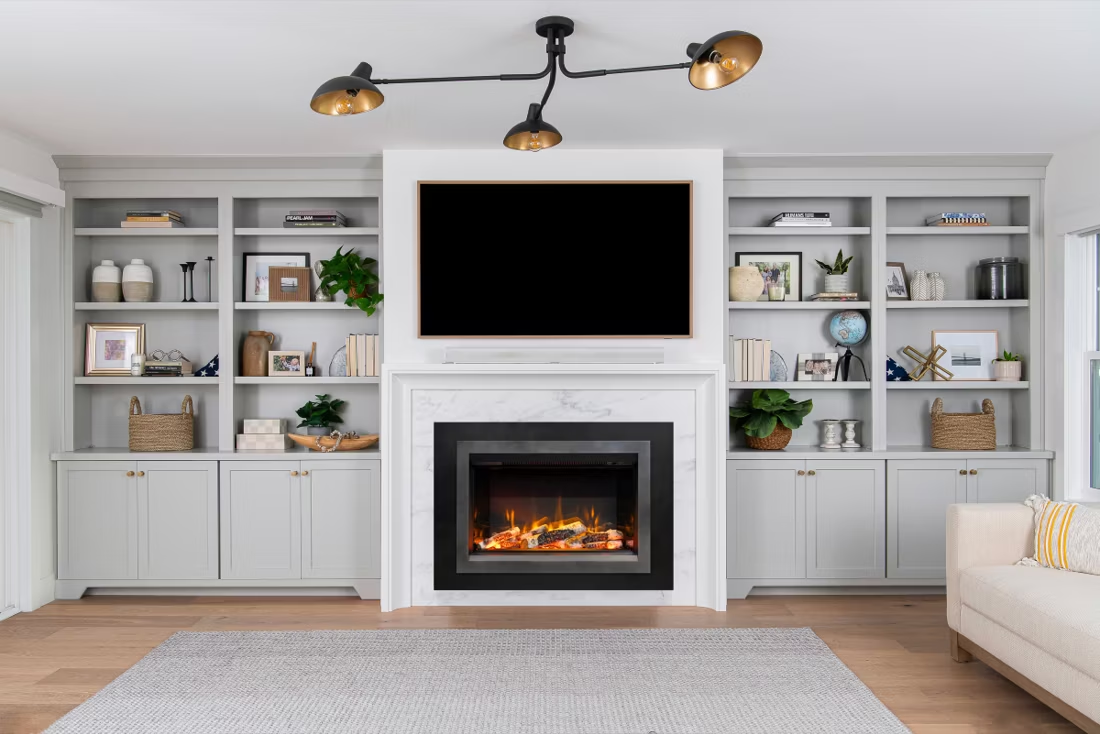
That combination is exactly where electric fireplaces earn their keep. Metropolitan Edison (Met-Ed) serves Hamburg and the surrounding area at a residential rate of about 15.45 cents per kWh, and an electric unit needs nothing more than an outlet or a dedicated circuit—no venting, no gas line, no masonry work, and no air-quality restrictions to navigate since Berks County has none of the wood-smoke curtailment concerns some other regions deal with. For a bedroom, den, or finished basement that needs supplemental warmth and ambiance without opening up a wall, it's often the simplest project on the list.
Three steps. No salesperson until you're ready.
Tell us about your project
Your zip code, your situation, and the fuel you're leaning toward—or let the answers point you to one.
See what's actually available
The brands dealers within 100 miles genuinely carry—real options, never a catalog mirage.
Get your dealer & Project Guide
A trusted local dealer, plus the free Project Guide & Parts List that names every component of the job.
Frequently Asked Questions
How much does it cost to install an electric fireplace in Hamburg?
Plug-in electric inserts and mantel units typically run $400 to $1,200 installed, since they use a standard 120V outlet and skip any gas line or venting work entirely. Built-in wall units or full mantel-and-insert packages that need a licensed electrician to run a dedicated 20-amp circuit usually land between $1,200 and $2,500 in the Hamburg area. Either way, it's a fraction of what a masonry chimney or gas line retrofit costs in one of this area's older rowhomes.
Do I need a permit to install an electric fireplace in Hamburg?
Usually not. A plug-in unit that runs off an existing outlet doesn't typically trigger a permit from Hamburg Borough or Berks County. If an electrician is adding a new dedicated circuit or subpanel capacity for a larger built-in unit, that electrical work itself generally requires a permit pulled by the electrician—a quick process, nothing like the inspections required for a masonry chimney or new gas line elsewhere in the county.
What does an electric fireplace cost to run in Hamburg?
Most electric fireplaces draw around 1,500 watts on the heat setting. At Metropolitan Edison's residential rate of roughly $0.1545 per kWh, that works out to about 23 cents an hour—a couple of dollars for a full evening of use. That's noticeably cheaper than running a whole-house furnace to warm a single room, which is why most Hamburg homeowners use electric fireplaces for zone heating a den, bedroom, or basement rather than as their only heat source.
Can an electric fireplace actually heat a room through a Pennsylvania winter?
With realistic expectations, yes. Hamburg sees winter lows averaging around 20°F and a long, solidly cold heating season that stretches from fall well into spring—solidly cold-climate territory, though not as extreme as somewhere like Burlington, Vermont. Most electric fireplaces are rated to comfortably heat 400 to 1,000 square feet, which covers a single room or open living area well. They're best used as supplemental zone heat alongside your existing furnace, not as the sole heat source for the whole house.
What's the difference between an electric fireplace, insert, and stove?
An electric fireplace is usually a mantel-and-firebox combination or a wall-mounted unit sized for a specific opening. An electric insert is built to slide into an existing masonry or factory-built firebox—a common fit for older Hamburg homes with a fireplace opening that's no longer used for real fires. An electric stove is a freestanding cabinet styled like a wood or pellet stove, useful in a spot with no fireplace at all, like a converted sunroom or basement corner. All three plug into standard household power and need no venting.
Will my electric fireplace work during a power outage?
No—electric fireplaces need household power to run the heater and flame effects, so they'll go dark along with everything else when Met-Ed's lines go down. Berks County homeowners who want a heat source that still works during an outage often pair an electric fireplace for everyday convenience with a wood stove or insert for backup—oak, hickory, and maple are all common, locally cut firewood species in this part of Pennsylvania.
Electric vs. gas fireplace—which is right for my Hamburg home?
Gas fireplaces put out more heat and a more realistic flame, but they need a gas line or propane tank and, in most cases, venting through a wall or roof—real construction work in an older rowhome. Electric fireplaces skip all of that: no gas line, no venting, and a fraction of the installed cost. For homeowners who want supplemental warmth and ambiance without opening up a wall, electric is usually the simpler answer. For those already on natural gas or propane who want a stronger primary heat source, gas is worth comparing too—a local retailer can walk through both.
Electric vs. pellet stove—which makes more sense here?
Pellet stoves burn bagged pellets from brands sold around Berks County, including Energex, Hamer Pellet Fuel, and Greene Team Pellet Fuel, and they put out more heat than an electric unit—but they need a vent, a hopper you refill regularly, and periodic ash cleanup. Electric fireplaces need none of that: plug it in and it runs, with no fuel storage and no combustion byproducts. For a low-maintenance supplemental heat source in a bedroom or den, electric is the easier path. For a primary heat source that burns cleaner than wood and costs less to run over a full winter than electric resistance heat, pellet is worth a look.
What size or style of electric fireplace fits Hamburg's older housing stock?
Many homes in and around Hamburg are 19th- and early 20th-century rowhomes and stone farmhouses built with a decorative brick fireplace opening that hasn't held a real fire in decades. An electric insert sized to fit that existing opening is often the cleanest fix, since it uses a spot the house was already built around. Newer construction or rooms without an existing fireplace opening are usually better suited to a wall-mount unit or a full mantel package, which any local hearth retailer can size to your wall and room.
Can I put a TV above my fireplace?
Yes—with an asterisk. Fireplaces are hot and TVs don't like heat. Either put a mantel between them to deflect rising warmth, or choose a fireplace with heat-management technology that creates a cool zone on the wall above—the wall stays around 125 degrees, barely warm, while the room still gets full heat. If you like clean lines and don't want a mantel, heat management is the answer.
Does an electric fireplace need a vent or chimney?
No—that's its superpower. An electric fireplace needs a wall and an outlet, period. No vent pipe, no gas line, no clearances to design around, which is why it works in bedrooms, offices, apartments, and walls where venting a gas or wood unit would be impractical or impossible. Installation is typically the simplest and least expensive of any fireplace type.
Can a fireplace actually lower my heating bill?
Yes—by creating a comfort zone. A furnace heats every square foot of the house just to warm the one room you're in; a gas fireplace on low burns roughly a sixth of the gas a typical furnace does. Set the furnace around 55–60 degrees as a baseline, then heat the rooms your family actually uses. Families who heat this way commonly save $20–$60 a month.
Can I install a fireplace myself?
If you're putting a fire in your house on purpose, it's best to work with an expert. Unless you're genuinely experienced in framing, gas line, vent pipe, and the national code on clearances to combustibles, have a professional do it—and ideally the same company that sells you the fireplace, so warranty, service, and liability all live under one roof.
Nearby Dealers
Hearth shops serving Hamburg and the surrounding area. Every listing shows whether it is a WhyFire partner, a dealer we have verified as authorized for the brands we recommend, or a local business carrying hearth products. No manufacturer pays for placement. How we verify dealers →
Scandia Stoves Of Pa Inc.
Cressona Agway Store
Dewald & Lengle Hardware Inc.
A Chimney King
Krings Hearth & Home - Schnecksville
Liberty Oil & Propane
Penn Hearth Llc.
Krings Hearth & Home - Bechtelsville
Electric Service in Hamburg
An electric fireplace's heater draws about 1,500 watts—pennies per hour at local rates.
Metropolitan Edison Co
Find your electric fireplace in Hamburg.
Tell us a bit about your home and we'll put together your free Project Guide & Parts List—the exact unit specs, circuit or outlet requirements, and mounting hardware for your Hamburg home—plus a match with a trusted local dealer who can get it installed.
Find Your Fireplace →