
Real warmth for Glassport's rowhomes, without a chimney to maintain.
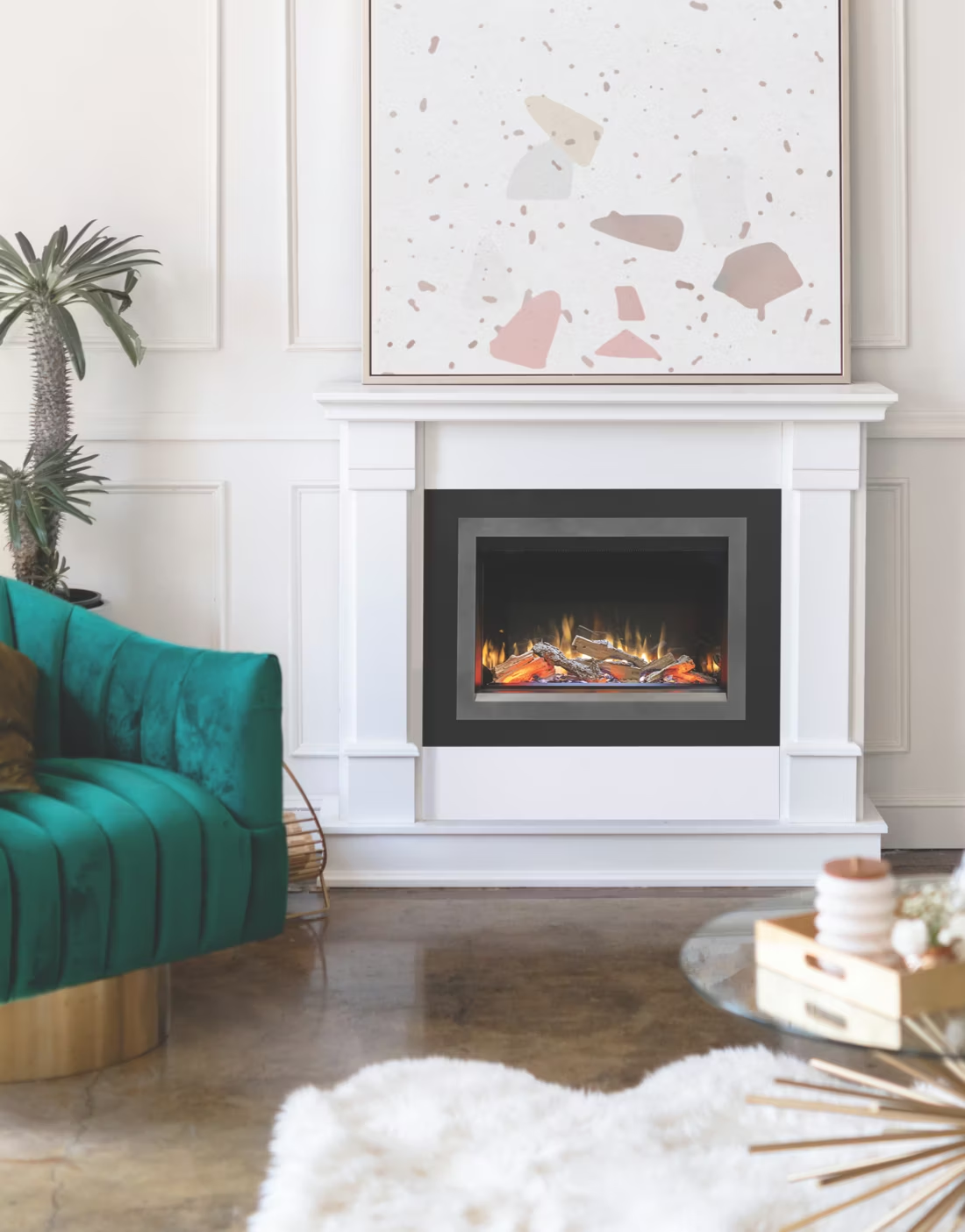
No venting, no gas line, no permit headaches—just plug-in or hardwired heat that fits the borough's older housing stock. Find the right unit and connect with a trusted local dealer.
Every Project Starts From One of These Five Situations
The practical choice for a dense river town.
Glassport is a tight-knit Mon Valley borough of narrow lots, hillside streets, and housing stock that dates mostly to the early 1900s steel era. Many of these rowhomes and modest single-family houses were never built with masonry chimneys, and adding one now means expensive structural work most homeowners here simply skip. Allegheny County also sits in a federal non-attainment area for fine particulate matter—a legacy of decades of coking and steelmaking upriver—which is part of why wood and pellet appliances are essentially absent from the borough. Electric fireplaces sidestep both problems entirely: no flue, no smoke, no emissions review.
Duquesne Light Co. and Pennsylvania Power Co. serve Glassport at a residential rate around 19.5 cents per kWh—higher than the statewide average, which is worth factoring into how you think about an electric fireplace. The good news is that most units here are used as supplemental zone heat rather than a primary furnace replacement, so the actual hourly draw stays modest even with local rates. For a borough where winter lows average around 20°F and older homes can be drafty, an electric insert or built-in in the main living room is often the simplest upgrade a homeowner can make in a weekend.
Three steps. No salesperson until you're ready.
Tell us about your project
Your zip code, your situation, and the fuel you're leaning toward—or let the answers point you to one.
See what's actually available
The brands dealers within 100 miles genuinely carry—real options, never a catalog mirage.
Get your dealer & Project Guide
A trusted local dealer, plus the free Project Guide & Parts List that names every component of the job.
Frequently Asked Questions
How much does an electric fireplace installation cost in Glassport?
Plug-in electric inserts and freestanding units that use a standard 120V outlet typically run $200 to $900 installed, since there's no wiring work involved beyond placement. Built-in wall units or larger inserts that need a dedicated 240V circuit run higher—usually $1,200 to $3,500 once an electrician is brought in, especially in Glassport's older homes where panel capacity sometimes needs to be checked first. Local dealers will tell you which category your home falls into during a walkthrough.
Plug-in vs. hardwired electric fireplace—which do I need?
A plug-in unit works in almost any Glassport rowhome as-is—you set it against a wall, plug it into an existing outlet, and you're done. A hardwired or built-in unit is recessed into a wall or mantel surround and typically needs a dedicated circuit, which means an electrician and a permit through the borough. Given how many homes here have older electrical panels, it's worth having a local electrician confirm capacity before committing to a built-in model rather than assuming the existing wiring can handle it.
Will an electric fireplace actually heat my living room?
Most electric fireplaces put out around 5,000 BTU on the high setting—enough to noticeably warm a single room (roughly 400 square feet) in a typical Glassport rowhome, especially as supplemental heat alongside a furnace. They won't replace whole-home heating on a 20-degree January night, but they're effective for the room you actually live in, and they respond instantly with no warm-up time the way a wood stove would need.
Do I need a permit to install an electric fireplace in Glassport?
A plug-in unit needs no permit at all—it's treated like any other appliance. A built-in or hardwired unit that requires new electrical circuitry does need an electrical permit, which in Glassport is handled through the borough building office, often in coordination with Allegheny County code requirements. Most local dealers who also do the electrical work will pull this permit as part of the installation rather than leaving it to the homeowner.
Why don't more homes in Glassport use wood or pellet stoves?
Two things work against solid fuel here. First, Glassport's housing stock—mostly early-1900s rowhomes on narrow lots—rarely has a masonry chimney suited to a wood stove, and retrofitting one is a major structural project. Second, Allegheny County is a federal non-attainment area for fine particulate matter, a holdover from the region's steel and coking history, which has made local air quality a sensitive topic and discouraged new solid-fuel installations. A handful of homeowners with existing fireplaces still burn oak or hickory occasionally, but it's the exception rather than the norm—electric and gas are the practical defaults in the borough.
What's the best electric fireplace for an older Glassport rowhome?
For narrow rowhomes with limited wall space, a slim wall-mount or recessed built-in unit tends to work better than a bulky mantel package—it keeps the footprint small in rooms that were designed before central heat was standard. If your electrical panel is older, a plug-in insert into an existing fireplace opening or TV stand-style unit is the lower-friction option since it avoids new wiring. A local dealer can look at your specific room and panel before recommending which type fits.
What will an electric fireplace add to my Duquesne Light bill?
At Duquesne Light's residential rate of roughly 19.5 cents per kWh, a typical 1,500-watt electric fireplace running on high costs about 29 cents per hour to operate. Used a few hours a night in one room rather than heating the whole house, most Glassport homeowners see a modest bump in their monthly bill rather than a dramatic one—and many use the fireplace's lower heat settings or flame-only mode to cut that further during milder stretches.
How is an electric fireplace different from a space heater?
Functionally, both plug into standard household wiring and produce heat through electric resistance, but an electric fireplace is built to look and feel like a real hearth—with a mantel, glass front, and a realistic flame effect—and is designed for permanent placement rather than being moved room to room. Many Glassport buyers choose an electric fireplace specifically because it becomes part of the room's design rather than sitting out as a utilitarian appliance, while still delivering comparable supplemental heat.
Electric vs. gas fireplace—which is right for my Glassport home?
Gas fireplaces are common in Glassport for homes already on a natural gas line, offering stronger heat output and the ability to run during a power outage if properly configured—a real consideration in older Mon Valley housing where outages happen. Electric fireplaces cost far less to install, require no gas line or venting, and work in any room with an outlet, but they depend on the power grid and add to your Duquesne Light bill rather than your gas bill. For a secondary room, a rental, or a home without existing gas service, electric is usually the simpler and cheaper path. For a primary living space in a home already piped for gas, many local homeowners lean toward gas instead.
Can I put a TV above my fireplace?
Yes—with an asterisk. Fireplaces are hot and TVs don't like heat. Either put a mantel between them to deflect rising warmth, or choose a fireplace with heat-management technology that creates a cool zone on the wall above—the wall stays around 125 degrees, barely warm, while the room still gets full heat. If you like clean lines and don't want a mantel, heat management is the answer.
Do electric fireplaces actually produce heat?
Yes—most put out around 4,800–5,000 BTUs from a standard outlet, which comfortably warms a bedroom, office, or den as a comfort-zone heater. What they won't do is carry a whole house the way wood, gas, or pellet can. Think of electric as ambiance-first with honest supplemental heat: flames on with no heat in July, flames plus warmth in January.
Can a fireplace actually lower my heating bill?
Yes—by creating a comfort zone. A furnace heats every square foot of the house just to warm the one room you're in; a gas fireplace on low burns roughly a sixth of the gas a typical furnace does. Set the furnace around 55–60 degrees as a baseline, then heat the rooms your family actually uses. Families who heat this way commonly save $20–$60 a month.
Can I install a fireplace myself?
If you're putting a fire in your house on purpose, it's best to work with an expert. Unless you're genuinely experienced in framing, gas line, vent pipe, and the national code on clearances to combustibles, have a professional do it—and ideally the same company that sells you the fireplace, so warranty, service, and liability all live under one roof.
Nearby Dealers
Hearth shops serving Glassport and the surrounding area. Every listing shows whether it is a WhyFire partner, a dealer we have verified as authorized for the brands we recommend, or a local business carrying hearth products. No manufacturer pays for placement. How we verify dealers →
Howell Craft Inc.
All Seasons Fireplace & Home
A Capital Roofing
Fireplace & Patioplace
Fireplace And Patio Place
Tri-State Stoves
Clear Water Pools LLC
Tomayko Construction & Alternative Heating Llc.
Samson Glass And Mirror
Scenery Hill Hardware
Halls Pools & Fireplaces
The Stove Place
Northern Woodworking
Electric Service in Glassport
An electric fireplace's heater draws about 1,500 watts—pennies per hour at local rates.
Duquesne Light Co
Pennsylvania Power Co
Find your electric fireplace in Glassport.
Tell us a bit about your home and we'll put together a free Project Guide & Parts List—the right electric fireplace or insert for your space, matched with a trusted local dealer who can install it.
Find Your Fireplace →