
Warm Up Your Gilbertsville Home With Efficient Gas Heat.
Steady, instant warmth for Montgomery County winters, without the wood pile. Get matched with a trusted local dealer who can size and install it right.
Every Project Starts From One of These Five Situations
Dependable heat for a mixed-humid Pennsylvania winter.
Gilbertsville sits at just 314 feet in the Route 100 corridor of Montgomery County, in a climate zone 4A pocket that racks up a winter heating load a little above average for the mid-Atlantic and average winter lows near 22°F. It is nowhere near as brutal as Burlington, Vermont, but it is enough sustained cold, damp weather to make a supplemental heat source worth having in a house full of drafty older additions or a finished basement that never quite warms up off the furnace alone.
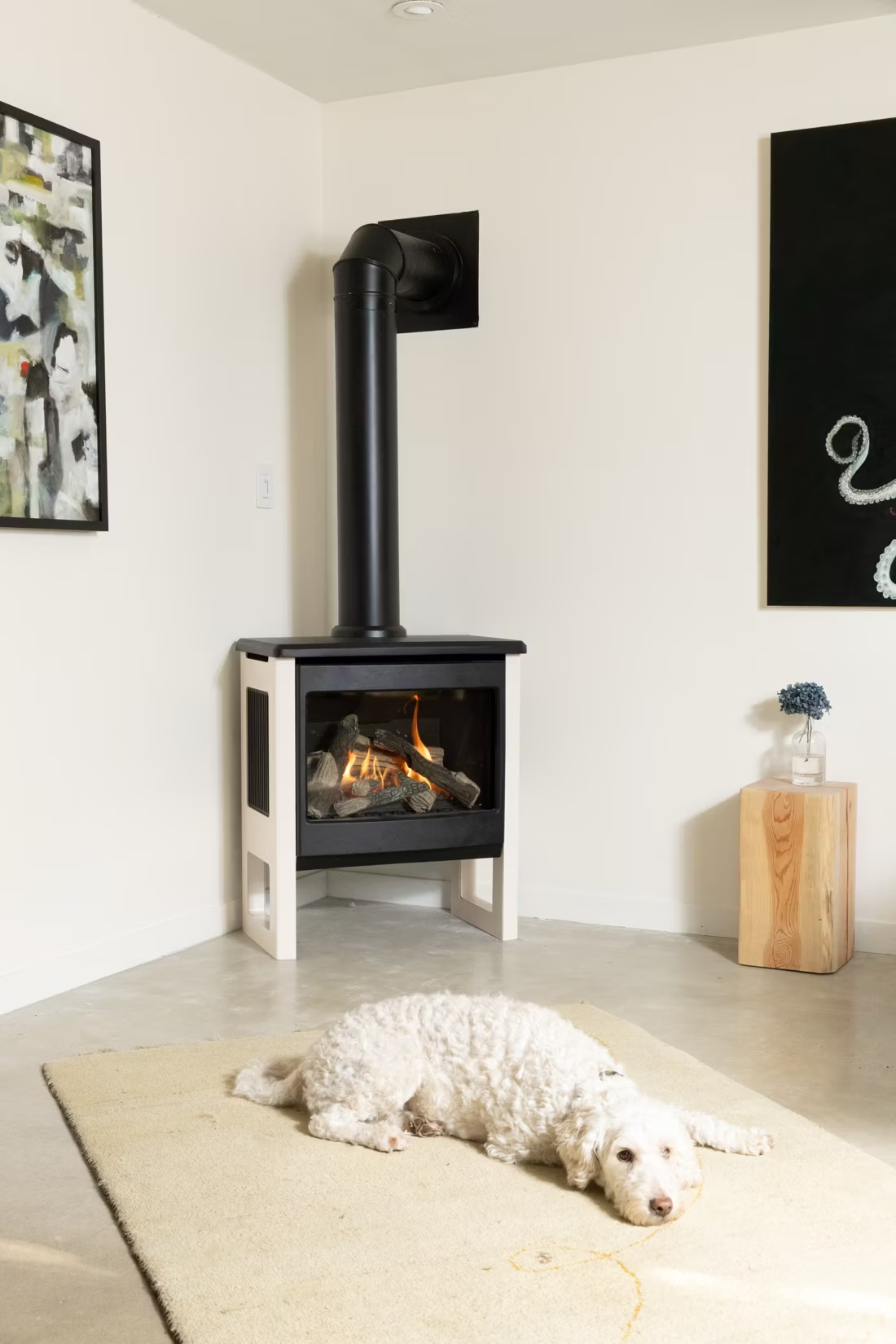
With a village population under 6,000 spread across New Hanover and Douglass Townships, Gilbertsville is a mix of older farmhouses with existing masonry fireplaces and newer builds without one. A gas fireplace or insert fits both: it drops into an existing chimney opening as a high-efficiency conversion, or it gets framed into new construction as a direct-vent unit with no chimney required at all. Either way, you get heat at the flip of a switch, no ash, and no stacking cordwood for winter.
Three steps. No salesperson until you're ready.
Tell us about your project
Your zip code, your situation, and the fuel you're leaning toward—or let the answers point you to one.
See what's actually available
The brands dealers within 100 miles genuinely carry—real options, never a catalog mirage.
Get your dealer & Project Guide
A trusted local dealer, plus the free Project Guide & Parts List that names every component of the job.
Frequently Asked Questions
How much does a gas fireplace installation cost in Gilbertsville?
Most gas fireplace installations in this part of Montgomery County run somewhere between $3,500 and $9,000. A direct-vent insert going into an existing masonry fireplace with a gas line already nearby sits on the lower end. A new built-in gas fireplace for a remodel or addition, including framing, venting, and a new gas or propane line run, lands in the middle to upper end. Homes that need a propane tank set and a longer buried line to reach the house will run higher. A local dealer will give you a firm number after seeing the space in person.
Can I convert my existing fireplace to gas?
Yes, and it's a common project for the older farmhouses and mid-century homes scattered around Gilbertsville and New Hanover Township. New wood-burning installs have become fairly rare in this area, so most existing masonry fireplaces get converted to a gas insert rather than kept as open wood hearths. A stainless liner runs up your existing chimney and a sealed gas insert drops into the firebox opening. Typical cost for this kind of conversion is $4,000 to $8,000, with the range driven mostly by whether the home already has a gas line nearby or needs one extended.
Do I need natural gas, or should I plan on propane?
It depends on exactly where your house sits. Natural gas mains reach parts of the more built-up sections near Route 100 and Boyertown, but a fair number of properties around Gilbertsville and out into Douglass and New Hanover Townships are outside the main lines and run on propane instead, typically with a tank set on the property by a regional propane supplier. Both fuels work fine in the same fireplace models; your installer just sets the orifice and regulator for whichever one you have.
Will a gas fireplace still work if the power goes out?
Most will. Units with an IPI (intermittent pilot ignition) system run on a set of AA batteries tucked inside the unit, so the fireplace lights on demand even with the electricity off. Given how often winter storms and downed lines take out power in rural stretches of Montgomery County, that battery backup is worth confirming before you buy. Valor's lineup takes it a step further: their pilot assembly generates its own electricity off a thermocouple, so there's no battery to remember or replace. Ask your dealer which ignition system is on any model you're considering.
What's the difference between a gas fireplace, gas insert, and gas stove?
A gas fireplace is a fully built-in unit framed into a wall, typically used in new construction or additions. A gas insert is sized to slide into an existing masonry fireplace opening and uses the existing chimney as its vent chase. A gas stove is a freestanding cast-iron or steel unit that sits out in the room on its own hearth pad, similar in footprint to a wood stove but running on gas. For the older Gilbertsville homes with a fireplace already in place, an insert is usually the simplest upgrade. Newer construction without an existing chimney is better suited to a built-in unit or freestanding stove.
Do I need a permit to install a gas fireplace in Gilbertsville?
Generally, yes. Pennsylvania's Uniform Construction Code requires a building permit for new fireplace installations, issued through your township—New Hanover or Douglass Township depending on which side of Gilbertsville the property falls on—and any new or extended gas line needs to be run by a licensed gas-fitter. Reputable local hearth dealers handle the permit application and coordinate the gas line and inspection as part of the installation, so you're not left managing separate trades yourself.
Should I get a vented or vent-free gas fireplace?
Vented, direct-vent units draw combustion air from outside and exhaust it back outside through a sealed pipe—they're the safer, more universally recommended choice and the standard pick for most Gilbertsville installations. Vent-free units burn without any outside venting and release some combustion byproducts into the room; Pennsylvania permits them but requires strict adherence to room-size and ventilation rules. For a zone-4A climate with genuinely cold, closed-up winters, a sealed direct-vent unit is generally the better call for indoor air quality and long-term reliability. Your local dealer can walk through both if you want to compare.
How often does a gas fireplace need to be serviced?
Plan on an annual inspection, ideally in early fall before you start relying on it. A technician checks the burner, pilot assembly, venting, and gas connections, and cleans the glass and interior. It's a lighter lift than chimney sweeping for a wood stove, but skipping it is how pilot and ignition problems go unnoticed until the coldest week of the year. Expect to pay somewhere in the $150 to $250 range for a standard annual service call in this area.
Gas vs. wood—which makes more sense for a Gilbertsville home?
Wood-burning installs have become genuinely uncommon in this part of Montgomery County; most homeowners here choose gas or electric for new hearth projects, and existing masonry fireplaces more often get converted to a gas insert than kept as an open wood-burning hearth. Gas gives you instant on-off heat, no ash or creosote to manage, and consistent output without babysitting a fire. If you already have a strong wood-burning setup and enjoy tending it, there's nothing wrong with keeping it—but for most Gilbertsville households, gas is the more practical, lower-maintenance path, and it's what local dealers are set up to install and service.
What's the difference between an insert and a zero-clearance fireplace?
An insert is a fireplace that slides into a pre-existing wood-burning fireplace—if you don't have one, there's nothing to insert it into. A zero-clearance fireplace is built into a framed wall, which makes it the answer for remodels and new construction. Simple test: existing masonry fireplace means insert; blank or framed wall means zero-clearance.
Why is a fireplace insert so efficient?
An insert does two things: it seals the chimney completely, so you stop losing air you already paid to heat, and it radiates warmth into the room through the firebox and glass. Most add a heat-exchange fan that pulls cool room air underneath, wraps it around the hot firebox, and pushes it back out warm. Your home is more efficient before you've even lit the first fire.
What is an in-home preview and do I need one?
It's a visit where a hearth professional measures your space, confirms the model you picked actually works in your home, and walks the specs—framing, gas line, venting, finish work—before anything is ordered. Some details you just can't know until you see the house. Never make a down payment without one; it's the single most-skipped step that burns buyers.
Can a fireplace actually lower my heating bill?
Yes—by creating a comfort zone. A furnace heats every square foot of the house just to warm the one room you're in; a gas fireplace on low burns roughly a sixth of the gas a typical furnace does. Set the furnace around 55–60 degrees as a baseline, then heat the rooms your family actually uses. Families who heat this way commonly save $20–$60 a month.
Nearby Dealers
Hearth shops serving Gilbertsville and the surrounding area. Every listing shows whether it is a WhyFire partner, a dealer we have verified as authorized for the brands we recommend, or a local business carrying hearth products. No manufacturer pays for placement. How we verify dealers →
Krings Hearth & Home - Bechtelsville
Pennsburg Ace Hardware
Independence Propane
A Chimney King
Atlantic Building Prodcuts Inc
Scandia Stoves Of Pa Inc.
Progressive Propane
Stoves N Stuff Ltd
Sequoia Supply Hatfield Showroom
Ambler Fireplace & Patio - Chalfont
Norristown Chimney
Halligan's Hearth And Home
Estates Chimney Sweep
Halco Grills And Fireplaces
Ambler Fireplace And Patio
Abe Fence / Landscape Supply
Penn Hearth Llc.
Get your free Project Guide & Parts List for a gas fireplace in Gilbertsville.
Tell us about your home and we'll match you with a trusted local dealer and send over a free Project Guide & Parts List—the exact parts, vent kit, and recommended installer for your gas fireplace project.
Find Your Fireplace →