
Real flame-look heat without a chimney in Etna.
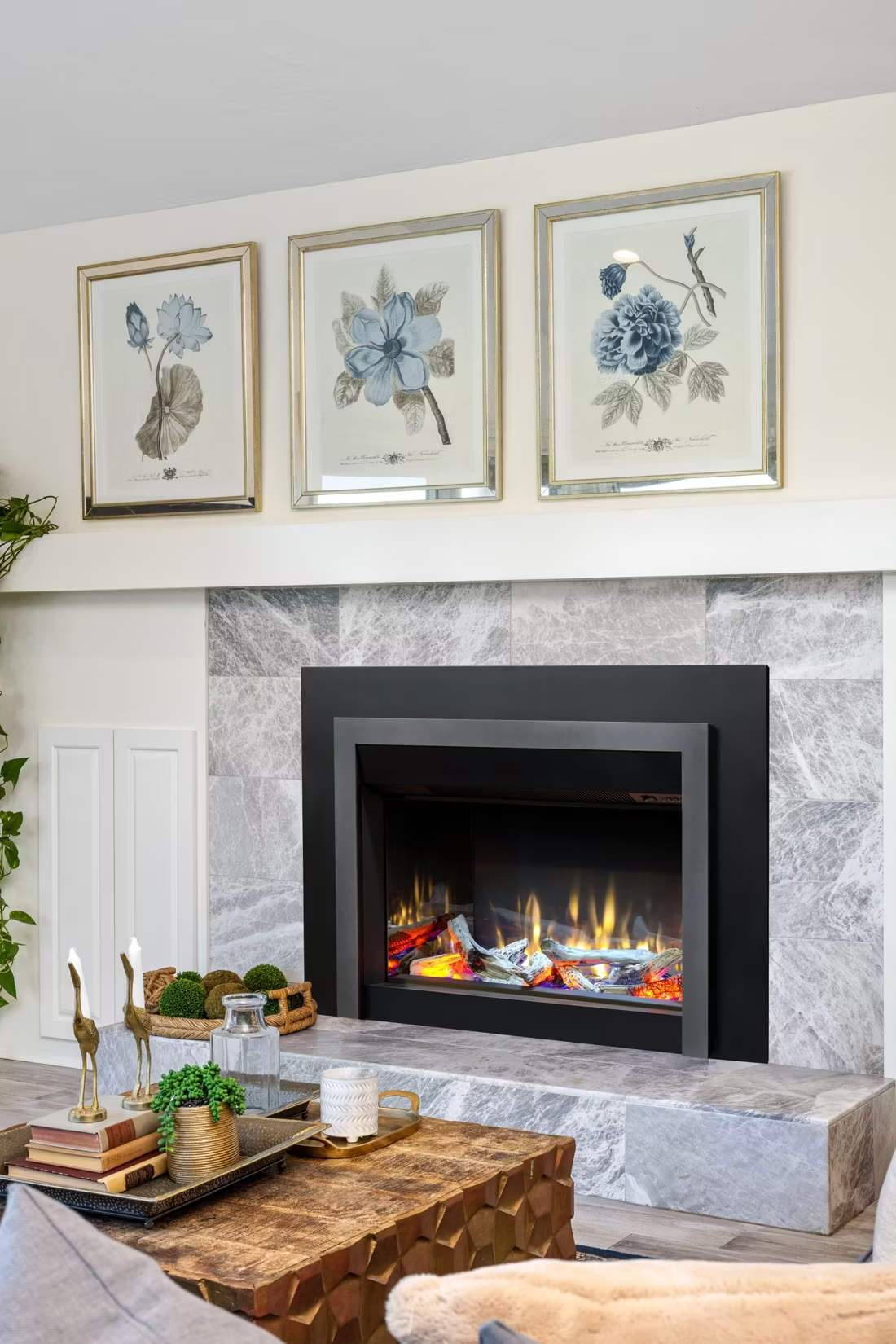
Etna's rowhouses and narrow-lot homes along the Allegheny weren't all built with a flue to spare. With 5,811 heating degree days and winter lows near 19°F, an electric fireplace gives you supplemental warmth and ambiance with no venting and no gas line—I'll match you with a local dealer who knows the borough's housing stock.
Every Project Starts From One of These Five Situations
Electric heat that fits Etna's older housing stock.
Etna grew up as a Pittsburgh-area mill town along the Allegheny River, and it still shows in the housing: tight rowhouse blocks, narrow lots, and older single-family homes where retrofitting a Class A chimney or running a new gas line is expensive or physically awkward. At 837 feet in climate zone 5A, with winter lows averaging 19°F and 5,811 heating degree days a season, Etna gets a real, sustained winter—cold enough that a lot of homeowners want a second heat source in the room they actually live in, without ripping into masonry or exterior walls to get it.
Duquesne Light Co. serves most of Etna, with Pennsylvania Power Co. covering some outlying accounts, and at a residential rate of roughly 19.5 cents per kWh—noticeably above the statewide average—running electric resistance heat as a whole-house solution gets expensive fast. That's why most local installs are zone heating: a family room or den that gets its own supplemental warmth while a central furnace handles the rest of the house. Etna also sits in a designated non-attainment area, which matters more for wood and pellet burning than for electric—there's no smoke, no particulate output, and no curtailment advisory that applies to an electric unit, which is one reason they've become a common choice in a dense borough where neighbors are close and lot lines are tight.
Three steps. No salesperson until you're ready.
Tell us about your project
Your zip code, your situation, and the fuel you're leaning toward—or let the answers point you to one.
See what's actually available
The brands dealers within 100 miles genuinely carry—real options, never a catalog mirage.
Get your dealer & Project Guide
A trusted local dealer, plus the free Project Guide & Parts List that names every component of the job.
Frequently Asked Questions
How much does it cost to install an electric fireplace in Etna?
A plug-in freestanding unit that just needs an existing outlet can run as little as $300-$600 installed. A wall-mounted linear model usually needs a dedicated 120V or 240V circuit run by a licensed electrician, which typically pushes the job to $800-$1,800 depending on how far the panel is from the wall—a real consideration in some of Etna's older rowhomes with dated electrical service. A built-in insert set into an existing masonry firebox, common in the borough's early-1900s housing stock, usually lands between $1,500 and $3,500 once trim and any minor framing are included.
Do I need a permit to install an electric fireplace in Etna?
There's no chimney or gas line involved, so you skip the mechanical permitting that wood and gas installs require. But if your unit needs a new dedicated circuit—which most wall-mounted and built-in models do—that electrical work typically requires a permit through Etna Borough (or Allegheny County, depending on the scope) and should be pulled by the licensed electrician doing the wiring. A simple plug-in freestanding unit on an existing outlet generally doesn't trigger any permit at all.
Is electric heat expensive to run in an Etna winter?
At Duquesne Light's residential rate of about 19.5 cents per kWh, a 1,500-watt electric fireplace running several hours a day through a Pittsburgh-area winter adds a noticeable line to the bill—more per BTU than natural gas, and more than most homes pay to run a gas insert. That's why almost nobody here uses electric as a whole-house heat source; it's used as zone heat for one room, letting you turn down the thermostat elsewhere, which is where the economics actually work in your favor given 5,811 heating degree days of demand each year.
Can an electric fireplace actually heat my whole house in Etna?
No, and no manufacturer markets them that way. With winter lows averaging 19°F and stretches well below that during Allegheny River valley cold snaps, an electric unit is built for supplemental, room-by-room heat—typically rated for 400 to 1,000 square feet at most. For a rowhouse living room or a converted den, that's plenty. For the whole house, you still need your furnace or boiler; the electric fireplace just takes the daily load off it in the room you occupy most.
What's the difference between an electric insert, a wall-mount, and a freestanding unit?
An electric insert drops into an existing masonry firebox, which is common in Etna's older homes that were originally built around wood-burning fireplaces decades ago—it's often the cleanest upgrade since the opening is already there. A wall-mount is a slimmer linear unit hung directly on drywall, popular in newer renovations or rooms without an existing hearth. A freestanding unit is furniture-style and fully portable, which suits renters or anyone in Etna's rental-heavy housing stock who can't modify a wall. All three plug into standard household voltage or a dedicated circuit—none of them need venting.
Which utility serves my home, and does it matter for an electric fireplace?
Duquesne Light Co. serves the great majority of Etna addresses, with Pennsylvania Power Co. covering a smaller set of accounts nearby. The unit itself works the same either way—what matters is checking your actual rate before sizing up to a larger, higher-wattage insert, since running cost scales directly with watts used and hours run. At roughly 19.5 cents per kWh, a 750-watt low setting costs meaningfully less to run than the 1,500-watt high setting, which is worth knowing if you plan to leave it on most of the evening.
I have an old wood fireplace opening—can I convert it to electric?
Yes, and it's one of the more common projects local dealers see in Etna's older housing stock, where many rowhomes and early-1900s single-families still have a masonry firebox that hasn't burned real wood in years. An electric insert sized to the opening slides in, needs a nearby outlet or a new circuit, and doesn't require a working chimney, damper repair, or a liner—all of which get expensive to restore on an old flue. It's often the fastest way to get a working, code-simple fireplace back without touching the masonry.
Does Etna's air quality status affect electric fireplace use?
Etna sits within a designated non-attainment area, which drives real restrictions on wood-burning appliances during inversion advisories and shapes a lot of local rules around solid fuel. None of that applies to electric units—they produce no smoke or particulate emissions, so there's no curtailment period, no advisory-day restriction, and no air-quality-related paperwork to worry about. For homeowners who want fireplace ambiance without adding to the borough's air quality concerns, electric is the cleanest option available, full stop.
Electric vs. wood or pellet—which makes more sense for my Etna home?
Local firewood here is mostly oak, hickory, maple, and cherry, and pellet stoves running regional brands like Energex, Hamer, or Greene Team are both viable in Etna—but they need chimney or vent clearance and, in the case of wood, somewhere to store split cordwood, which is a real constraint on a narrow rowhouse lot. Electric skips all of that: no venting, no fuel storage, no ash or creosote. The tradeoff is that electric depends on the grid—during a winter power outage, a wood stove keeps burning and a pellet stove doesn't, while an electric fireplace goes dark along with everything else. A lot of Etna households use electric for daily convenience in a main room and lean on a furnace or space heater elsewhere for outage backup.
Can I put a TV above my fireplace?
Yes—with an asterisk. Fireplaces are hot and TVs don't like heat. Either put a mantel between them to deflect rising warmth, or choose a fireplace with heat-management technology that creates a cool zone on the wall above—the wall stays around 125 degrees, barely warm, while the room still gets full heat. If you like clean lines and don't want a mantel, heat management is the answer.
Do electric fireplaces actually produce heat?
Yes—most put out around 4,800–5,000 BTUs from a standard outlet, which comfortably warms a bedroom, office, or den as a comfort-zone heater. What they won't do is carry a whole house the way wood, gas, or pellet can. Think of electric as ambiance-first with honest supplemental heat: flames on with no heat in July, flames plus warmth in January.
How much should I budget for a fireplace?
For an average home—covering the fireplace, the vent pipe, and basic installation—a budget between $3,900 and $5,500 gives you a lot of options across wood, gas, and pellet. By the time you add finish work, gas line, and electrical, the average complete installation lands between $5,000 and $12,000 all-in. In a remodel or new build, a good rule is to put about 2.5% of the total project cost toward the fireplace.
Should the dealer who sells my fireplace also install it?
Ideally, yes. A fireplace project involves vent pipe, gas line, electrical, and often tile or stone. Hire three or four separate trades and you own the liability and the game of telephone between them. One company selling and installing means one accountable party, start to finish—ask about factory training, on-time completion records, and what happens if an inspection fails.
Nearby Dealers
Hearth shops serving Etna and the surrounding area. Every listing shows whether it is a WhyFire partner, a dealer we have verified as authorized for the brands we recommend, or a local business carrying hearth products. No manufacturer pays for placement. How we verify dealers →
All Seasons Fireplace & Home
Fireplace & Patioplace
Northern Woodworking
Halls Pools & Fireplaces
Fireplace And Patio Place
The Stove Place
A Capital Roofing
Suburban Insulation
Howell Craft Inc.
Tri-State Stoves
Fireplace And Patio Place
Buck Stove & Fireplace
Home Improvement Center
Electric Service in Etna
An electric fireplace's heater draws about 1,500 watts—pennies per hour at local rates.
Duquesne Light Co
Pennsylvania Power Co
Get your free Project Guide & Parts List for an electric fireplace in Etna.
Tell me about your room, your electrical panel, and whether you're working with an existing firebox opening—I'll match you with a trusted local dealer and send a free Project Guide & Parts List with the right unit, circuit needs, and trim specified for your home.
Find Your Fireplace →