
Instant Heat for Long, Pocono Winters.
At nearly 1,900 feet on the Pocono Plateau, Emerald Lakes sees some of the longest heating seasons in Pennsylvania. Find the right propane fireplace or insert, and get matched with a local dealer who knows lake-community codes.
Every Project Starts From One of These Five Situations
Propane-powered comfort for lake-house living.
Emerald Lakes sits in Coolbaugh Township on the Pocono Plateau at close to 1,900 feet of elevation, where average winter lows run around 15°F and the area sees a winter heating load in the same range as Burlington, Vermont. Many homes here are lake cabins and second homes built for weekend and seasonal use, which changes what homeowners actually need from a fireplace: heat that's ready the moment you arrive, not a fire that needs tending after a two-hour drive up I-380.
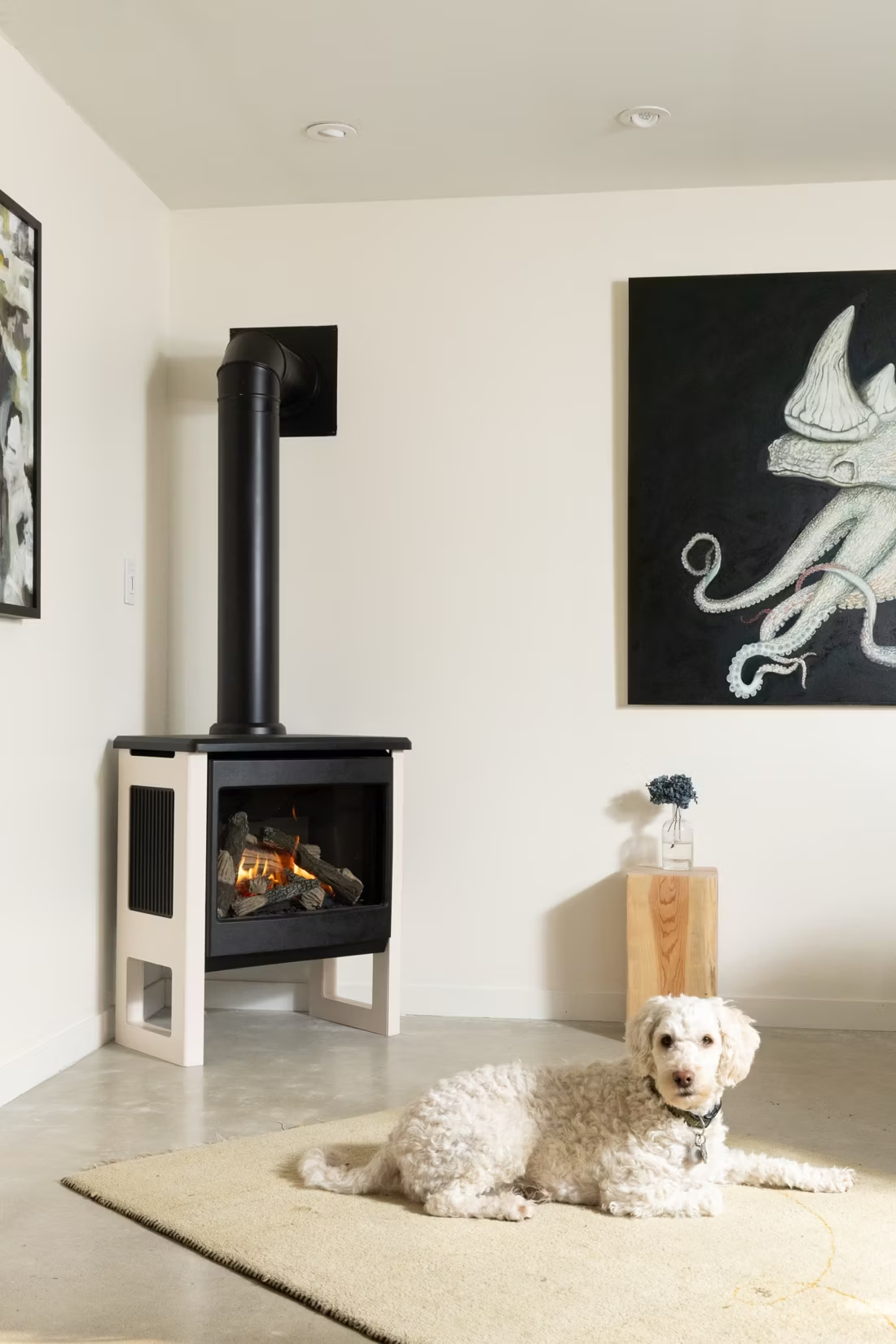
There's no natural gas utility serving this private lake community—PPL Electric Utilities handles power here, but gas heat runs on propane, delivered and stored in a tank on the property. A direct-vent propane fireplace, insert, or stove gives Emerald Lakes homeowners thermostat-controlled heat that starts instantly, holds steady through the coldest stretches, and doesn't depend on someone splitting or hauling wood up a mountain road in January.
Three steps. No salesperson until you're ready.
Tell us about your project
Your zip code, your situation, and the fuel you're leaning toward—or let the answers point you to one.
See what's actually available
The brands dealers within 100 miles genuinely carry—real options, never a catalog mirage.
Get your dealer & Project Guide
A trusted local dealer, plus the free Project Guide & Parts List that names every component of the job.
Frequently Asked Questions
How much does a gas fireplace installation cost in Emerald Lakes?
Because Emerald Lakes runs on propane rather than piped natural gas, most installs fall between $4,500 and $10,500, depending on the unit, the venting run through a log or timber-frame wall, and whether a new propane line needs to be run from the tank. If you don't already have a propane tank on-site, add roughly $800 to $2,500 for tank installation or a supplier-owned tank agreement. Converting an existing wood-burning fireplace to a propane insert using the current chase as a chimney liner path tends to land on the lower end of that range.
Do I need natural gas, or does everything here run on propane?
Propane. Emerald Lakes doesn't have natural gas mains running through the community, and PPL's service here is electric only. Nearly every "gas" fireplace, insert, or stove installed in this area runs on propane supplied by a local delivery company, with fuel stored in an above-ground or buried tank on the property. Your installer sets the unit's orifices and regulator for propane rather than natural gas—most fireplace models are available in either configuration, so this doesn't limit your options.
Will my gas fireplace still work if the power goes out?
Most direct-vent propane fireplaces will, which matters here—ice storms and downed lines on the rural roads around the lake can knock out power for a day or more. Units with intermittent pilot ignition (IPI) run off a small battery backup that keeps the igniter working when the grid is down. Valor fireplaces go a step further: their pilot assembly generates its own electricity through the thermocouple, so there's no battery to check or replace. For a home that sits empty for stretches at a time, ask your local dealer specifically about battery-free ignition—it's one less thing to fail while nobody's watching the house.
What permits or approvals do I need to install a gas fireplace in Emerald Lakes?
You'll need a building permit through Coolbaugh Township's code enforcement office, and the propane line work should be handled by a licensed installer as part of that permit. Because Emerald Lakes is a private, deed-restricted lake community, most exterior work—including new vent terminations, propane tank placement, or visible venting changes—also requires sign-off from the Emerald Lakes Community Association before work begins. A local hearth dealer who's worked in the community before will usually know this step and can help you avoid a redo.
Should I install a vented or vent-free gas fireplace in a lake cabin like mine?
Pennsylvania permits vent-free propane units, but they come with strict room-volume and ventilation requirements, and they're a harder sell in the tightly built, well-insulated cabins common around Emerald Lakes—indoor air quality concerns are magnified in a smaller closed-up seasonal home. A direct-vent unit draws combustion air from outside and exhausts it back outside through a sealed pipe, which is the safer and more common choice for lake homes here, especially ones that sit unoccupied for stretches with nobody around to notice a problem.
What should I consider differently for a fireplace in a part-time lake home?
Occupancy pattern changes the sizing conversation. A cabin used mainly on weekends benefits from a unit that can bring a cold room up to temperature fast rather than one sized purely for steady-state heat load. It's also worth asking your dealer about a remote thermostat or freeze-protection setting—some propane fireplaces can be set to kick on automatically if the interior temperature drops below a set point, which protects pipes during the weeks between visits. With winters as demanding as Burlington, Vermont, an unheated Emerald Lakes cabin can drop dangerously cold fast if the power or heat fails while you're away.
Where does the propane tank go, and how big does it need to be?
Most homes running a single gas fireplace or insert use a 250- or 500-gallon tank, sized up if the propane also feeds a furnace, water heater, or range. Tanks can be set above ground or buried, and several regional propane suppliers serving Monroe County offer buried installation specifically because many lake communities, including Emerald Lakes, restrict visible tanks under community aesthetic guidelines. Check with the Community Association on placement rules before your supplier schedules the install—it's easier to confirm upfront than to relocate a full tank later.
How often does a propane fireplace need to be serviced?
Plan on an annual inspection, ideally in early fall before the heating season ramps up. A technician checks the burner, pilot assembly, gas connections, and venting, and cleans the glass and interior—typically $150 to $250. For a seasonal home, it's worth scheduling this alongside your propane tank's annual safety check, since both the supplier and the hearth technician will want access to the same equipment area.
Gas vs. wood—which makes more sense for an Emerald Lakes property?
Wood is genuinely plentiful here—oak, hickory, maple, and cherry are all common in the surrounding Pocono forests, and a wood stove gives you real heat during outages without relying on a propane delivery truck making it up snowy roads. But for a part-time lake home, propane's instant on-off operation and lack of ash cleanup or wood storage between visits usually wins out, especially in a home nobody's tending mid-week. Many owners here end up with both: a propane insert or stove for convenience and shoulder-season use, and a wood-burning unit or stove for backup heat and ambiance during longer stays.
Is my gas fireplace wasting gas?
If it was installed more than 15 years ago, probably. Older gas fireplaces keep a standing pilot light burning all the time, and that little flame can cost a couple hundred dollars a year. Newer models use pilot-on-demand ignition—the pilot lights only when you use the fireplace and goes out when you turn it off.
Why is a fireplace insert so efficient?
An insert does two things: it seals the chimney completely, so you stop losing air you already paid to heat, and it radiates warmth into the room through the firebox and glass. Most add a heat-exchange fan that pulls cool room air underneath, wraps it around the hot firebox, and pushes it back out warm. Your home is more efficient before you've even lit the first fire.
How much should I budget for a fireplace?
For an average home—covering the fireplace, the vent pipe, and basic installation—a budget between $3,900 and $5,500 gives you a lot of options across wood, gas, and pellet. By the time you add finish work, gas line, and electrical, the average complete installation lands between $5,000 and $12,000 all-in. In a remodel or new build, a good rule is to put about 2.5% of the total project cost toward the fireplace.
What is an in-home preview and do I need one?
It's a visit where a hearth professional measures your space, confirms the model you picked actually works in your home, and walks the specs—framing, gas line, venting, finish work—before anything is ordered. Some details you just can't know until you see the house. Never make a down payment without one; it's the single most-skipped step that burns buyers.
Nearby Dealers
Hearth shops serving Emerald Lakes and the surrounding area. Every listing shows whether it is a WhyFire partner, a dealer we have verified as authorized for the brands we recommend, or a local business carrying hearth products. No manufacturer pays for placement. How we verify dealers →
S & T Coombe
Spring Hill Services
Kozy By The Fire
Hinton & Sons Inc.
Forest Inn Masonry Supply
Integrity Chimney Service
East Lawn Supply Co., Inc.
Liberty Oil & Propane
Find your gas fireplace in Emerald Lakes.
Tell us about your lake home and how you use it, and we'll match you with a trusted local dealer who knows propane systems and Emerald Lakes' community requirements—plus a free Project Guide & Parts List with the exact parts, including the vent kit, for your project.
Find Your Fireplace →