
Real fireplace warmth for Dublin homes, no venting required.
For the stone farmhouses and colonials scattered through Bucks County's 18917 zip code, an electric insert or built-in adds heat and ambiance without a flue, a gas line, or a cord of firewood.
Every Project Starts From One of These Five Situations
Zone heat and ambiance, without altering your home's structure.
Dublin sits in Bedminster Township on the edge of Bucks County, in a Climate Zone 4A pocket where winters average around 23°F and the region logs a solidly cold, multi-month heating season—cold enough to need real supplemental heat for four or five months, though nowhere near the extremes of a place like Burlington, VT. Many of the homes here are 19th-century stone farmhouses and colonial-era houses with existing masonry fireplaces that were never lined for modern wood-burning, or that homeowners insurance restricts from active wood fires. That combination—old hearth openings, tight village lots, and a preference not to touch the flue—is exactly where electric fireplaces do their best work.
PECO Energy serves electric accounts throughout the 18917 area at a residential rate around $0.1474 per kWh, which makes running an electric insert for a few hours of evening ambiance and supplemental heat inexpensive compared to running a whole-house system harder to warm one room. For renters, condo owners, or anyone with a fireplace opening but no interest in permits for gas lines or chimney liners, an electric insert or mantel package installs in an afternoon and plugs into a standard or dedicated circuit.
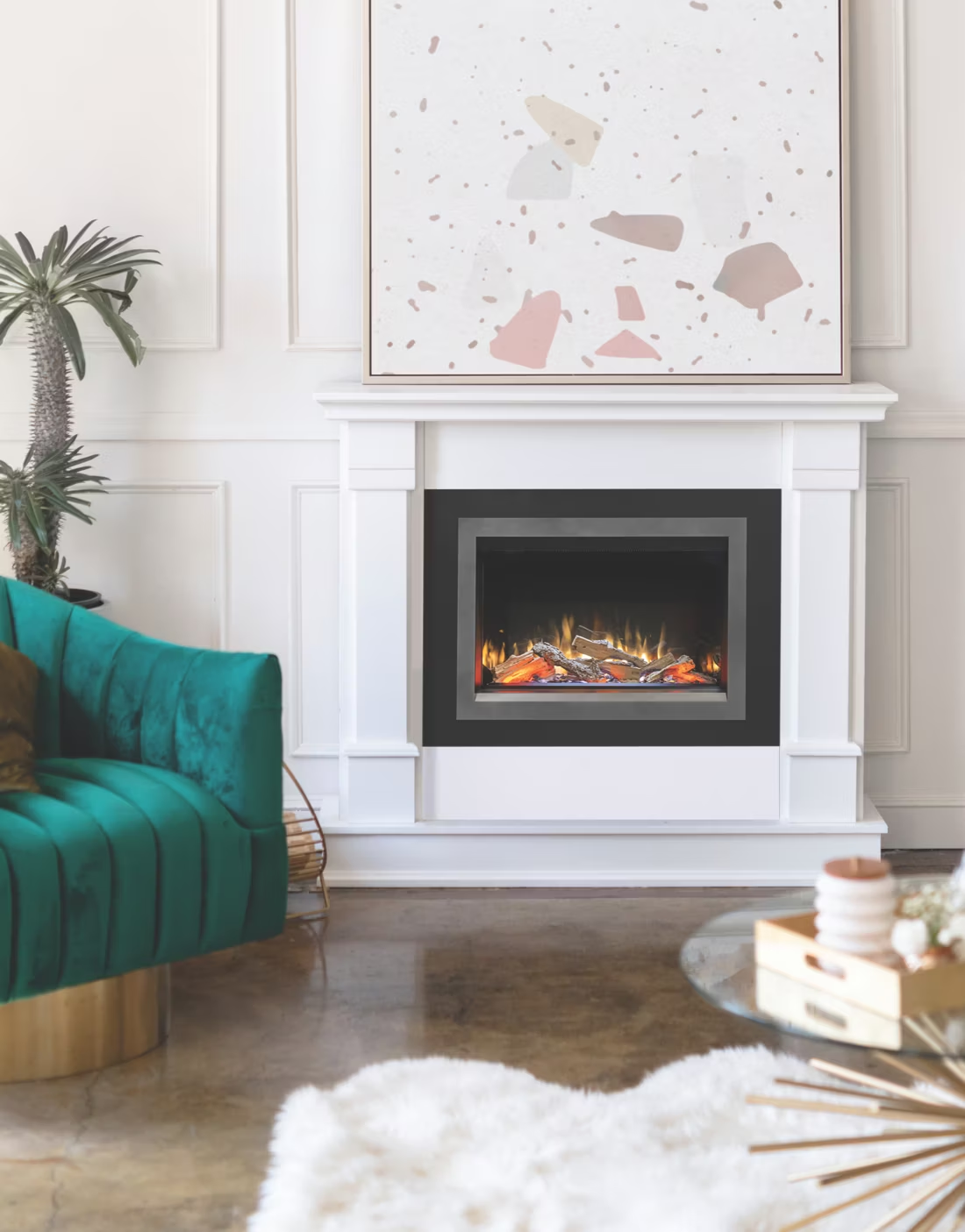
Three steps. No salesperson until you're ready.
Tell us about your project
Your zip code, your situation, and the fuel you're leaning toward—or let the answers point you to one.
See what's actually available
The brands dealers within 100 miles genuinely carry—real options, never a catalog mirage.
Get your dealer & Project Guide
A trusted local dealer, plus the free Project Guide & Parts List that names every component of the job.
Frequently Asked Questions
How much does an electric fireplace or insert cost to install in Dublin?
Most electric insert installations into an existing masonry fireplace opening in the Dublin area run $400 to $2,500 depending on the unit size, whether it needs a dedicated 20-amp circuit run by an electrician, and any surround or trim kit work. Built-in wall units and full mantel packages for a room without an existing fireplace typically run $1,500 to $4,000, largely driven by cabinetry and finish carpentry rather than the appliance itself. Compared to a gas insert conversion or a new masonry wood installation, electric is consistently the least expensive way to get a working fireplace in an older Bucks County home.
Can I install an electric insert into my existing stone or brick fireplace?
Yes, and it's one of the most common electric fireplace projects in this part of Bucks County. Many of the stone farmhouses and colonial-era homes around Dublin have an original masonry fireplace opening that was either never fitted with a liner or has been closed off for years. An electric insert slides into that existing opening, needs no chimney, no venting, and no gas line, and can often use the same opening's existing outlet or a new one run by an electrician. It's a practical way to bring a dark fireplace back into use without touching the historic masonry.
What will it cost to run an electric fireplace with PECO's rates?
At PECO Energy's residential rate of roughly $0.1474 per kWh, a typical 1,500-watt electric fireplace running on its heater setting for three hours a night costs around 66 cents a day, or about $20 a month for regular winter evening use. Running the unit on flame-only mode without the heater draws only 30 to 100 watts, so ambiance use costs pennies a day. That makes electric heat noticeably cheaper to operate for occasional, room-by-room use than running a whole-house system longer just to warm the room you're sitting in.
Do I need a permit to install an electric fireplace in Dublin?
In most cases, no separate building permit is required for a plug-in electric insert or freestanding unit—it's treated like any other appliance. If your installation requires a new dedicated circuit or an outlet added inside the fireplace opening, that electrical work should go through a licensed electrician and, in some cases, a permit through Bedminster Township, which handles building and zoning for the Dublin area under the Pennsylvania Uniform Construction Code. Larger built-in wall units that involve framing or wiring changes are more likely to need a permit than a simple insert.
What's the difference between an electric fireplace, insert, and built-in unit?
An electric insert is sized to slide into an existing fireplace opening and is the go-to choice for the many older Dublin-area homes with a masonry firebox already in place. A freestanding electric fireplace or stove sits on the floor and plugs in like a large appliance—no opening required. A built-in or wall-mount unit is designed for new construction or a remodel, typically framed into a wall with a mantel or surround built around it. For a home with an existing hearth opening, an insert is almost always the simplest and least expensive path; for a room with no fireplace at all, a built-in or freestanding unit is the way to go.
Will an electric fireplace actually heat my room, or is it just for looks?
Most electric fireplaces include a built-in heater rated between 4,000 and 5,200 BTU (roughly 1,500 watts), which is enough to comfortably heat a single room of 400 to 1,000 square feet, depending on insulation and ceiling height. It won't replace a furnace or heat pump across a whole 1,800-square-foot colonial, but it works well as zone heat—supplementing the main system in the room you're actually using on a 23°F January evening, while the flame effect can run independently of the heater so you can use it purely for ambiance in the shoulder seasons.
Electric vs. wood or gas—which fits a Dublin, PA home better?
Wood remains popular in this part of Bucks County—oak, hickory, maple, and cherry are all common firewood species split locally—and it works during a power outage, which electric cannot. Gas offers instant, higher-output heat but requires a gas line and venting work. Electric is the choice when the priority is avoiding permits, venting, and chimney work altogether: it's the fastest and least invasive option for a rental, a condo, a historic home where insurance restricts wood burning, or a room where running a gas line isn't practical. The tradeoff is that electric fireplaces are supplemental heaters, not primary heat sources, and they go dark in a blackout unless you're running a generator.
What are the best electric fireplace brands to look at?
Dimplex, Napoleon, and Amantii are the three brands most hearth dealers in the greater Philadelphia and Bucks County area carry, and all three make realistic flame technology that holds up well against the sun glare through south-facing farmhouse windows—a real issue with cheaper units. Dimplex's Opti-myst and multi-fire LED lines tend to look the most convincing in person, while Napoleon and Amantii offer strong mid-range built-in options for mantel and wall installations. A local dealer can show you the flame effect in person before you buy, which matters more with electric units than with any other fuel type.
Will my electric fireplace work during a power outage?
No—unlike a wood stove or a gas fireplace with battery-backup ignition, an electric fireplace needs continuous household power to run both the flame effect and the heater, so it will shut off the moment the power drops. For Dublin homes that lose power during ice storms or summer thunderstorms, electric fireplaces should be treated purely as everyday supplemental heat and ambiance rather than emergency backup. If outage-proof heat matters to you, pair an electric fireplace with a wood stove or gas unit elsewhere in the house, or plan for a portable generator.
Do electric fireplaces actually produce heat?
Yes—most put out around 4,800–5,000 BTUs from a standard outlet, which comfortably warms a bedroom, office, or den as a comfort-zone heater. What they won't do is carry a whole house the way wood, gas, or pellet can. Think of electric as ambiance-first with honest supplemental heat: flames on with no heat in July, flames plus warmth in January.
Can I put a TV above my fireplace?
Yes—with an asterisk. Fireplaces are hot and TVs don't like heat. Either put a mantel between them to deflect rising warmth, or choose a fireplace with heat-management technology that creates a cool zone on the wall above—the wall stays around 125 degrees, barely warm, while the room still gets full heat. If you like clean lines and don't want a mantel, heat management is the answer.
Can a fireplace actually lower my heating bill?
Yes—by creating a comfort zone. A furnace heats every square foot of the house just to warm the one room you're in; a gas fireplace on low burns roughly a sixth of the gas a typical furnace does. Set the furnace around 55–60 degrees as a baseline, then heat the rooms your family actually uses. Families who heat this way commonly save $20–$60 a month.
Can I install a fireplace myself?
If you're putting a fire in your house on purpose, it's best to work with an expert. Unless you're genuinely experienced in framing, gas line, vent pipe, and the national code on clearances to combustibles, have a professional do it—and ideally the same company that sells you the fireplace, so warranty, service, and liability all live under one roof.
Nearby Dealers
Hearth shops serving Dublin and the surrounding area. Every listing shows whether it is a WhyFire partner, a dealer we have verified as authorized for the brands we recommend, or a local business carrying hearth products. No manufacturer pays for placement. How we verify dealers →
We’ve paused dealer listings for this connection today. Enter your zip or postal code above to find dealers near you, or come back tomorrow.
Popular Electric Brands
Where each brand came from, what's inside it today, and every current model. No brand pays to be here. Not every dealer carries every brand, so enter your zip code to see what's sold near Dublin.
Fireplace Xtrordinair
Fireplace Xtrordinair, now often called FireplaceX, is the fireplace brand of Travis Industries, Inc., of Mukilteo, Washington.
5 electric models →DaVinci
DaVinci Custom Fireplaces is a brand of Travis Industries, Inc., of Mukilteo, Washington, the company behind Lopi and Fireplace Xtrordinair.
5 electric models →Kozy Heat
Kozy Heat was founded in 1976 by Dudley Hussong in Lakefield, Minnesota, and incorporated as Hussong Manufacturing Co., Inc. in 1978.
3 electric models →Forge & Flame
Forge & Flame is the stove brand Hearth & Home Technologies introduced in August 2023 to bring Vermont Castings, Harman, and Quadra-Fire under one name.
1 electric model →Electric Service in Dublin
An electric fireplace's heater draws about 1,500 watts—pennies per hour at local rates.
Peco Energy Co
Find your electric fireplace in Dublin.
Tell us about your home and your existing fireplace opening, if you have one, and we'll help you find a trusted local dealer and send over a free Project Guide & Parts List—the exact parts, including any surround or circuit work, for your Dublin electric fireplace project.
Find Your Fireplace →