
The easiest fireplace upgrade in Denver, PA.
No chimney, no gas line, no permit headaches—just plug it in. Find the right electric fireplace or insert for your Denver home and connect with a trusted local dealer.
Every Project Starts From One of These Five Situations
No chimney needed, no wood to split.
Denver is a small borough of under 4,000 people tucked into the farmland of eastern Lancaster County, with a winter climate that's real but not brutal—average lows around 22°F and roughly 5,215 heating degree days a year, nowhere near what a place like Burlington, VT deals with, but enough that supplemental heat matters from November through March. Much of the borough's housing stock is older rowhomes and farmhouses built long before anyone planned for a masonry chimney or a gas line, which is exactly the gap electric fireplaces fill.
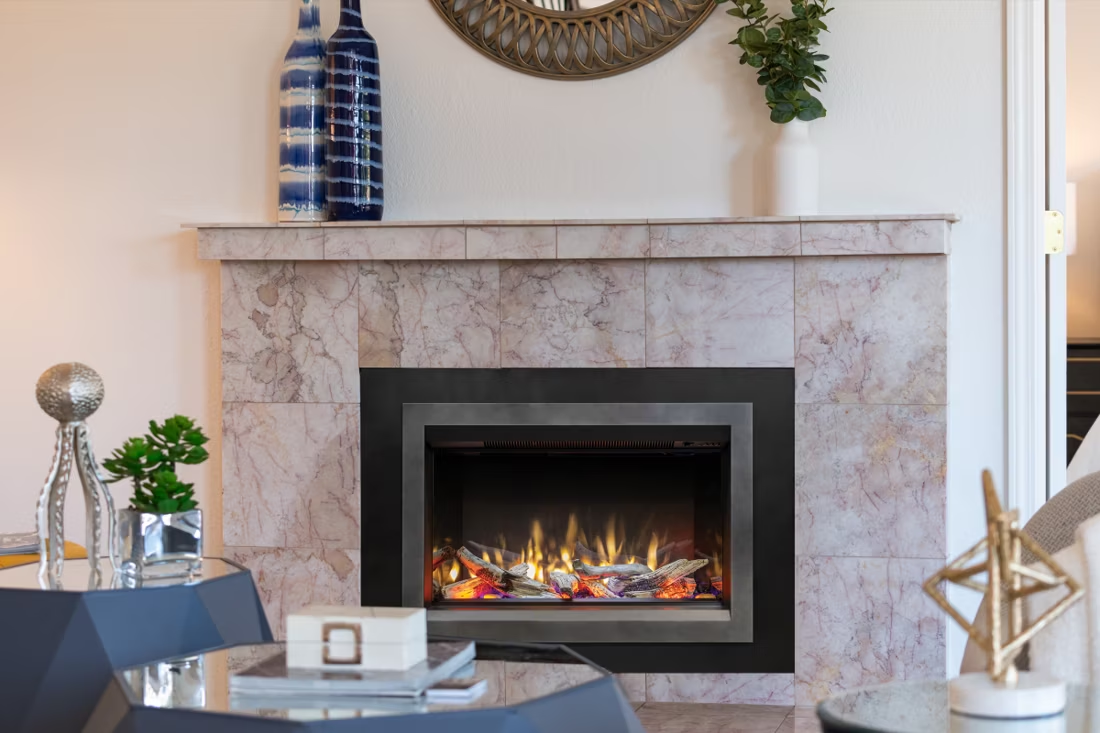
PPL Electric Utilities serves Denver at a residential rate around $0.1234 per kWh—reasonable enough that a 1,500-watt electric insert running a few hours an evening costs pennies, not dollars. Because there's no venting, no gas line, and typically no permit required, electric units go into finished basements, bedrooms, rental units, and rowhome living rooms that could never accommodate a wood or gas installation. It's not a replacement for a whole-house furnace, but as zone heat and ambiance for a specific room, it's the fastest and least disruptive upgrade on this list.
Three steps. No salesperson until you're ready.
Tell us about your project
Your zip code, your situation, and the fuel you're leaning toward—or let the answers point you to one.
See what's actually available
The brands dealers within 100 miles genuinely carry—real options, never a catalog mirage.
Get your dealer & Project Guide
A trusted local dealer, plus the free Project Guide & Parts List that names every component of the job.
Frequently Asked Questions
How much does it cost to install an electric fireplace in Denver, PA?
Because electric units skip venting, gas lines, and masonry work entirely, they're the least expensive fireplace project available. A plug-in freestanding or wall-mounted unit typically runs $300 to $1,500 installed, while a built-in electric insert set into an existing fireplace opening or new cabinetry runs closer to $1,500 to $4,000 including any minor electrical work. Compare that to the venting and chimney costs that come with wood or gas installs in an older Denver rowhome, and it's easy to see why electric is often the practical choice when you just want heat and ambiance in one room.
Do I need a permit to install an electric fireplace in Denver Borough?
Most plug-in electric fireplaces need no permit at all—they run on a standard outlet like any other appliance. If your installer is adding a new dedicated circuit or a GFCI-protected outlet for a built-in unit, that electrical work typically requires a permit through Denver Borough's code enforcement office, and it should be pulled by a licensed electrician. A reputable local dealer will tell you upfront whether your specific unit and installation location triggers a permit—for most freestanding units, it simply doesn't.
What does it actually cost to run an electric fireplace with PPL's electric rates?
At PPL Electric Utilities' residential rate of about $0.1234 per kWh, a typical 1,500-watt electric fireplace running on high for five hours an evening costs roughly $0.93 a day, or about $28 a month of steady use. Most homeowners run theirs on the lower heat setting or ambiance-only mode much of the time, which cuts that cost further. It's a fraction of what it costs to heat a whole house, which is the point—electric fireplaces are built for zone heating a single room, not replacing your furnace.
Electric vs. gas vs. wood—which fireplace fits my Denver home?
Wood is still popular in this part of Lancaster County, with oak, hickory, maple, and cherry all available locally as firewood, and it works during power outages when nothing else does. Gas offers instant, consistent heat if your home already has a gas line, with none of the wood handling. Electric is the choice when you want a fireplace look and some supplemental warmth without any venting, gas line, or chimney access at all—which describes a lot of the older rowhomes and apartments in Denver Borough. If your priority is real heat output during a winter storm, wood or a battery-backup gas unit wins; if it's flexibility and low install cost, electric wins.
Can an electric fireplace actually heat a room in a Pennsylvania winter?
Yes, within limits. A quality 1,500-watt electric insert or stove can comfortably supplement heat in a single room of 300 to 400 square feet, which covers most bedrooms, home offices, or finished basement rooms in a Denver home. On the coldest nights—when temperatures drop toward that 22°F average winter low—an electric unit works best paired with your existing furnace rather than replacing it. Where it shines is taking the edge off in a room your central heat doesn't reach well, like an addition or a converted attic space.
Will my electric fireplace work during a power outage?
No—and this is the one real tradeoff of going electric. Because the unit runs entirely on household current, it shuts off the moment the power does, unlike a wood stove or a battery-backed gas fireplace. If backup heat during winter storm outages matters to your household, a local dealer can help you weigh a wood or gas option instead, or plan for electric as a secondary unit alongside a generator.
What's the difference between an electric insert, a wall-mounted unit, and a freestanding electric stove?
An electric insert is built to slide into an existing fireplace opening, giving an old masonry fireplace a new look and real heat output without touching the chimney. A wall-mounted unit hangs like a flat-screen TV and works well in newer construction or a remodel where there's no existing fireplace. A freestanding electric stove sits on the floor and can go almost anywhere with an outlet—a good fit for rowhome living rooms or finished basements in Denver where there's no fireplace opening to work with at all. A local retailer can walk through your specific room and recommend the right form factor.
Are electric fireplaces a good fit for rentals or older rowhomes in Denver Borough?
Yes—this is where electric units solve a real problem. A lot of the housing stock in Denver Borough is older rowhomes and small single-family homes without an existing chimney or gas service, and landlords generally can't justify the cost of adding one for a rental unit. A plug-in or simple wall-mounted electric fireplace adds real ambiance and supplemental heat without any structural work, venting, or permanent modification—and it comes out with the tenant if needed. It's one of the few fireplace upgrades that works in a rental.
Do electric fireplaces need any maintenance?
Very little. There's no chimney to sweep, no gas line to inspect, and no creosote to worry about. Most maintenance is limited to occasionally dusting the heating element and vents, and replacing the LED lights or the heater fan if they eventually wear out—usually years down the road. Compare that to the annual chimney sweep a wood-burning household in Lancaster County budgets for, and electric is by far the lowest-maintenance option on this list.
Does an electric fireplace need a vent or chimney?
No—that's its superpower. An electric fireplace needs a wall and an outlet, period. No vent pipe, no gas line, no clearances to design around, which is why it works in bedrooms, offices, apartments, and walls where venting a gas or wood unit would be impractical or impossible. Installation is typically the simplest and least expensive of any fireplace type.
Can I put a TV above my fireplace?
Yes—with an asterisk. Fireplaces are hot and TVs don't like heat. Either put a mantel between them to deflect rising warmth, or choose a fireplace with heat-management technology that creates a cool zone on the wall above—the wall stays around 125 degrees, barely warm, while the room still gets full heat. If you like clean lines and don't want a mantel, heat management is the answer.
Can I install a fireplace myself?
If you're putting a fire in your house on purpose, it's best to work with an expert. Unless you're genuinely experienced in framing, gas line, vent pipe, and the national code on clearances to combustibles, have a professional do it—and ideally the same company that sells you the fireplace, so warranty, service, and liability all live under one roof.
What is an in-home preview and do I need one?
It's a visit where a hearth professional measures your space, confirms the model you picked actually works in your home, and walks the specs—framing, gas line, venting, finish work—before anything is ordered. Some details you just can't know until you see the house. Never make a down payment without one; it's the single most-skipped step that burns buyers.
Nearby Dealers
Hearth shops serving Denver and the surrounding area. Every listing shows whether it is a WhyFire partner, a dealer we have verified as authorized for the brands we recommend, or a local business carrying hearth products. No manufacturer pays for placement. How we verify dealers →
Sauder's Hardscape Supply
Keystone Custom Decks
Kring's Hearth & Home - Lancaster
Peak Distribution
Ds Stoves
Penn Stone
A Chimney King
Hillside Acres Stoves
North Forge Home Heating
H2 LLC
Electric Service in Denver
An electric fireplace's heater draws about 1,500 watts—pennies per hour at local rates.
Ppl Electric Utilities Corp
Find your electric fireplace in Denver, PA.
Tell us about your room and we'll match you with the right electric fireplace or insert, plus a free Project Guide & Parts List—the exact unit, mounting or insert kit, and your recommended local Denver-area dealer.
Find Your Fireplace →