
Real Fireplace Warmth, Without the Masonry Work.
For Dallastown's rowhomes and older twins, an electric fireplace delivers real zone heat without a chimney, gas line, or wood storage. Find the right unit and connect with a trusted local dealer.
Every Project Starts From One of These Five Situations
A practical fit for Dallastown's older housing stock.
Dallastown is a small York County borough of about 4,100 residents, built out mostly with early-to-mid-20th-century rowhomes, twins, and narrow-lot single-family houses. Winters here average a low of 21°F with roughly 5,017 heating degree days a year—real cold, though nowhere near the extremes of a place like Duluth, MN or International Falls, MN. Many of these older Dallastown homes were never built with a masonry chimney, and the tight lot lines and shared walls common in the borough leave little room to add one. That's a big part of why wood and pellet appliances see so little use here, and why electric fireplaces have become the practical answer for homeowners who want real ambiance and supplemental heat without structural work.
Electric service in Dallastown comes from Metropolitan Edison (Met-Ed) and, in parts of the surrounding area, Adams Electric Cooperative, with residential rates running around $0.1442 per kWh. That makes an electric fireplace an affordable zone-heating option—a 1,500-watt unit costs roughly 20 cents an hour to run at full heat, cheap enough to warm a family room or bedroom without touching the furnace. No venting, no gas line, no chimney sweep. A local dealer can size the right insert, mantel package, or built-in linear unit for your space and handle any electrical work a larger unit requires.
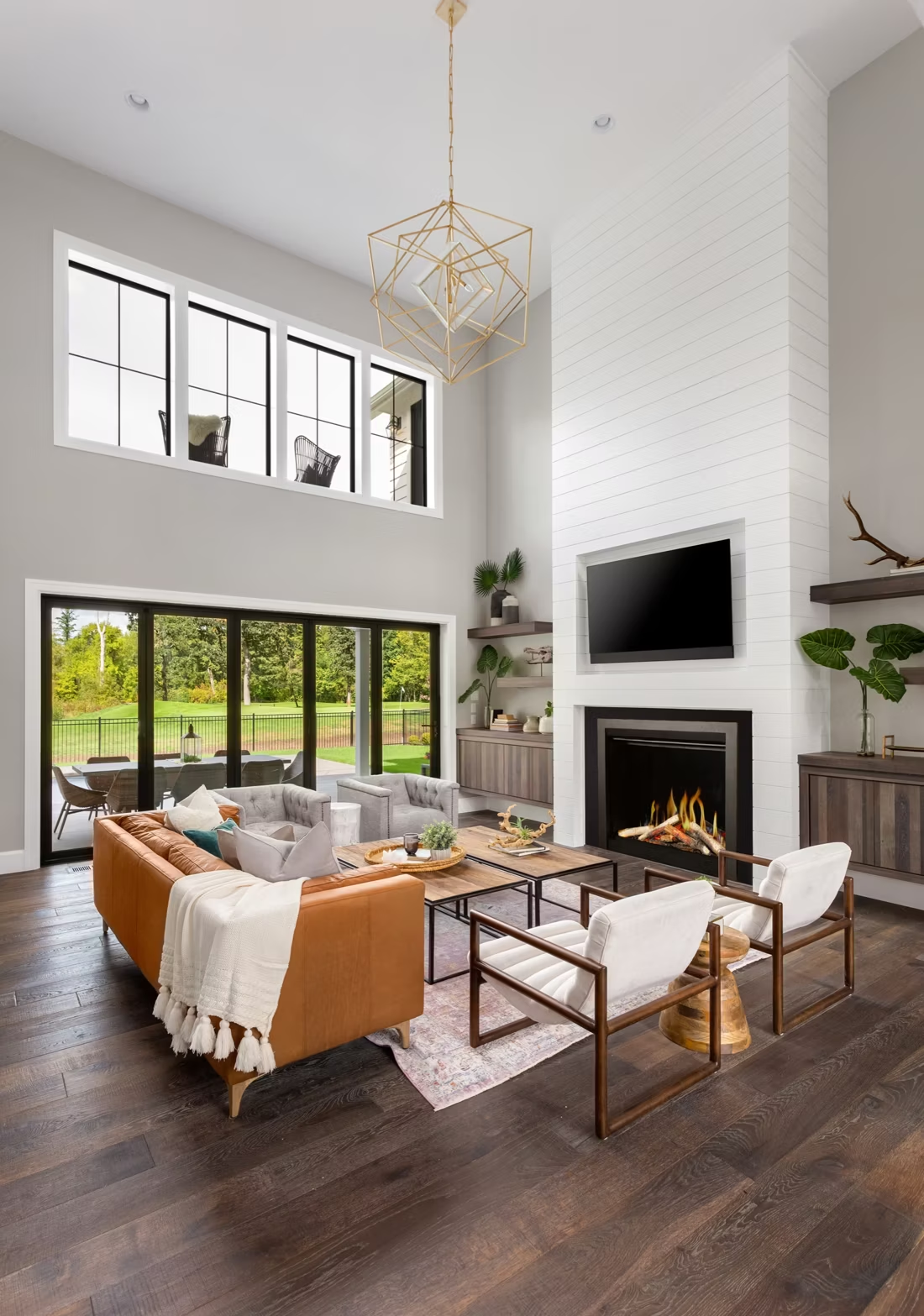
Three steps. No salesperson until you're ready.
Tell us about your project
Your zip code, your situation, and the fuel you're leaning toward—or let the answers point you to one.
See what's actually available
The brands dealers within 100 miles genuinely carry—real options, never a catalog mirage.
Get your dealer & Project Guide
A trusted local dealer, plus the free Project Guide & Parts List that names every component of the job.
Frequently Asked Questions
How much does an electric fireplace installation cost in Dallastown?
Costs vary widely by unit type. A plug-in electric insert or stove that runs off a standard 120V outlet typically runs $300 to $1,200 installed, since most only need a compatible outlet and no electrician. A built-in linear electric fireplace or a mantel package with custom surround runs higher—usually $1,500 to $4,000—because it often calls for a dedicated 240V circuit, framing, and finish carpentry. Local dealers in the York County area can give you a firm number after seeing your space and deciding whether you need new wiring.
Do electric fireplaces actually produce real heat, or are they just for looks?
Most models sold today include a real heating element—typically a 1,500-watt resistance or infrared heater capable of warming 400 to 1,000 square feet, enough for a single room or open living area in a Dallastown rowhome. You can run the flame effect alone for ambiance in warmer months, or switch on the heat for genuine supplemental warmth on a 21°F January night. It won't replace your furnace for whole-house heating, but as zone heat for a family room or finished basement, it does real work.
Do I need a permit or an electrician to install an electric fireplace in Dallastown?
A plug-in unit that uses an existing 120V outlet doesn't require a permit or an electrician—it's no different than plugging in a space heater. A built-in or wall-mounted unit that needs a new dedicated circuit does require an electrician, and larger 240V installations typically need an electrical permit through the borough's code enforcement office. Most hearth dealers coordinate the electrician and permit as part of the installation.
What's the difference between a plug-in electric insert and a built-in linear electric fireplace?
A plug-in insert or stove is a self-contained unit you can place almost anywhere with an outlet—into an existing masonry opening, against a wall, or as a standalone piece. A built-in linear electric fireplace is designed to be framed into a wall or cabinetry, often spanning 40 to 74 inches wide, and usually needs a dedicated circuit for full heating output. For Dallastown's older homes without existing fireplace openings, a built-in linear unit framed into a family room wall is a popular way to add a real focal point without any masonry work.
How much does it cost to run an electric fireplace on Dallastown electric rates?
With Met-Ed and Adams Electric Cooperative residential rates running around $0.1442 per kWh, a typical 1,500-watt unit costs about 21 cents an hour on the heat setting, or roughly $1.70 for an 8-hour evening of use. Running the flame effect alone without heat draws far less—usually under 100 watts, a couple pennies an hour. Compared to running a gas furnace to heat a whole house, using an electric fireplace to zone-heat one room you're actually using can meaningfully cut a winter electric bill.
Can I put an electric insert into my existing masonry fireplace?
If your Dallastown home is one of the few with an existing masonry fireplace, yes—electric inserts are built specifically to slide into a standard fireplace opening, and most plug into an outlet installed inside or near the firebox. It's one of the simplest hearth upgrades available: no chimney liner, no venting, no gas line, and it seals off drafts from an old, rarely-used masonry chimney. A local dealer can confirm your opening dimensions before ordering.
Electric vs. gas—which is right for my Dallastown home?
Gas delivers higher heat output and can serve as genuine primary heat for a room, but it requires a gas line and venting work that adds real cost and complexity, especially in a rowhome with tight wall cavities. Electric skips all of that: plug it in or wire a single circuit, and you're done, with a far lower install cost. For a family room in an older Dallastown twin where running new gas line isn't practical, electric is usually the simpler and cheaper path. For homes that already have gas service and want stronger heat output, a gas insert is worth comparing.
Is wood heat an option in Dallastown, or should I stick with electric?
Wood stoves and inserts are uncommon in Dallastown. The borough's older housing stock is mostly rowhomes and narrow-lot twins built without masonry chimneys, and there's little room on most lots for firewood storage or the clearances a wood stove needs. While oak, hickory, maple, and cherry are all common regional firewood species in York County, most residents who burn wood are doing it on outlying township properties with more land, not in the borough itself. For nearly all Dallastown homes, electric is the more realistic path to supplemental heat.
Where can I find a certified electrician or dealer for an electric fireplace installation near me?
For plug-in units, most homeowners handle the install themselves or ask their hearth dealer to hang and level the unit. For built-in or linear units needing new wiring, look for a licensed Pennsylvania electrician experienced with dedicated circuits for fireplace inserts—your local hearth retailer typically has a short list of electricians they work with regularly and can coordinate the whole project, from unit selection to the final circuit hookup.
Can I put a TV above my fireplace?
Yes—with an asterisk. Fireplaces are hot and TVs don't like heat. Either put a mantel between them to deflect rising warmth, or choose a fireplace with heat-management technology that creates a cool zone on the wall above—the wall stays around 125 degrees, barely warm, while the room still gets full heat. If you like clean lines and don't want a mantel, heat management is the answer.
Do electric fireplaces actually produce heat?
Yes—most put out around 4,800–5,000 BTUs from a standard outlet, which comfortably warms a bedroom, office, or den as a comfort-zone heater. What they won't do is carry a whole house the way wood, gas, or pellet can. Think of electric as ambiance-first with honest supplemental heat: flames on with no heat in July, flames plus warmth in January.
Can a fireplace actually lower my heating bill?
Yes—by creating a comfort zone. A furnace heats every square foot of the house just to warm the one room you're in; a gas fireplace on low burns roughly a sixth of the gas a typical furnace does. Set the furnace around 55–60 degrees as a baseline, then heat the rooms your family actually uses. Families who heat this way commonly save $20–$60 a month.
How much should I budget for a fireplace?
For an average home—covering the fireplace, the vent pipe, and basic installation—a budget between $3,900 and $5,500 gives you a lot of options across wood, gas, and pellet. By the time you add finish work, gas line, and electrical, the average complete installation lands between $5,000 and $12,000 all-in. In a remodel or new build, a good rule is to put about 2.5% of the total project cost toward the fireplace.
Nearby Dealers
Hearth shops serving Dallastown and the surrounding area. Every listing shows whether it is a WhyFire partner, a dealer we have verified as authorized for the brands we recommend, or a local business carrying hearth products. No manufacturer pays for placement. How we verify dealers →
Se Outdoor & Design
Firestarters Custom Fireplace & Stove
Country Comfort Inc.
Bulls Supply Co, Inc
Penn Stone
Hillside Acres Stoves
Kring's Hearth & Home - Lancaster
Electric Service in Dallastown
An electric fireplace's heater draws about 1,500 watts—pennies per hour at local rates.
Metropolitan Edison Co
Adams Electric Cooperative Inc
Find your electric fireplace in Dallastown.
Tell us about your home and we'll match you with the right electric fireplace, insert, or built-in unit—plus a free Project Guide & Parts List with your recommended local dealer.
Find Your Fireplace →