
Electric fireplaces built for Crawford County's long winters.
With 6,454 heating degree days a year and winter lows near 18°F, Crawford County needs real heat—but not every room has a chimney or gas line. Electric fireplaces plug in or wire into a dedicated circuit, no venting required, and work in Meadville apartments, Conneaut Lake camps, and any room in between.
Every Project Starts From One of These Five Situations
No flame, no chimney, still real heat.
Crawford County sits in Pennsylvania's northwest corner, bordering Ohio and New York State, with the county seat of Meadville, along with Titusville, Conneaut Lake, Cambridge Springs, and Saegertown spread across roughly 1,000 square miles of rolling farmland and hardwood forest. Climate zone 5A here brings 6,454 heating degree days a year and winter lows that average 18°F—a cold-climate profile closer to Buffalo, NY than to most of the rest of Pennsylvania, and lake-effect systems off nearby Lake Erie can drop temperatures and pile up snow with little warning. Wood has long been the backbone of heat here—oak, hickory, maple, and cherry are all common in local woodlots, and Allegheny National Forest cutting permits (about $20 per cord, May through October) still bring firewood cutters out every season—but electric fireplaces have carved out a real niche alongside it.
Electric units make the most sense in the rooms wood and gas can't easily reach: a Meadville apartment or rental with no chimney, a Conneaut Lake or Pymatuning-area camp used only a few weekends a year, a finished basement, or a bedroom addition where running new gas line or masonry just isn't practical. Most units run on a standard 120V outlet for plug-in inserts or a dedicated 240V circuit for larger built-ins, wired by a licensed electrician serving Penelec's (FirstEnergy) territory here in Crawford County. There's no venting, no gas line, and in most cases no permit at all for a plug-in model—though a built-in unit tied into new wiring typically needs an electrical permit from your local municipality. It won't replace a furnace on a night at 18°F, but as supplemental zone heat or year-round ambiance, it's straightforward, safe, and low-maintenance.
Three steps. No salesperson until you're ready.
Tell us about your project
Your zip code, your situation, and the fuel you're leaning toward—or let the answers point you to one.
See what's actually available
The brands dealers within 100 miles genuinely carry—real options, never a catalog mirage.
Get your dealer & Project Guide
A trusted local dealer, plus the free Project Guide & Parts List that names every component of the job.
Frequently Asked Questions
How much does an electric fireplace installation cost in Crawford County?
Plug-in electric inserts and freestanding electric stoves are the least expensive option, typically running $150 to $600 for the unit itself with no real installation labor beyond hanging or placing it. Built-in linear electric fireplaces—the kind recessed into a wall or a custom mantel surround—usually run $1,200 to $3,500 installed once you factor in the unit, framing, and a licensed electrician running a dedicated 240V circuit if the model requires one. Costs trend toward the higher end in older Meadville and Titusville homes where panel capacity is limited and an electrician needs to add circuit space, and toward the lower end in newer construction or camps around Conneaut Lake where wiring is already modern. A local retailer can give you a firm number after seeing your electrical panel and the room.
Can an electric fireplace actually heat a room in Crawford County's winters?
Most electric fireplaces put out 5,000 to 9,000 BTU, enough to comfortably warm a 400- to 1,000-square-foot room on its own, but that's not enough to carry a whole house through a Crawford County winter—not with 6,454 heating degree days a year and lows that regularly sit around 18°F. Think of it as zone heat: excellent for taking the chill off a sunroom, finished basement, or bedroom while your furnace, oil boiler, or wood stove handles the rest of the house. For camps around Conneaut Lake or Pymatuning that are only occupied part of the year, an electric fireplace can function as the primary heat source simply because the space is heated intermittently rather than held at a steady temperature all winter.
Do I need a permit to install an electric fireplace in Crawford County?
In most cases, no—a plug-in electric insert or freestanding unit that runs on a standard 120V household outlet doesn't require a permit anywhere in Crawford County. A built-in linear electric fireplace that requires new wiring or a dedicated 240V circuit is a different story: that work typically needs an electrical permit from your local municipality, whether that's the City of Meadville, Titusville, or the county for unincorporated townships. There's no chimney, gas line, or combustion venting to inspect either way, which is one of the main reasons electric installs move faster than wood or gas projects.
What's the difference between an electric fireplace, insert, and stove?
An electric insert is built to slide into an existing masonry fireplace opening or a zero-clearance firebox, giving an old fireplace a clean, glowing upgrade without touching the chimney. A built-in electric fireplace is a linear or traditional-shaped unit meant to be recessed into new framing or a custom mantel wall—common in Meadville and Titusville remodels where homeowners want a modern focal point. A freestanding electric stove looks like a small wood stove and just needs floor space and an outlet, which makes it the easiest option for camps, rentals, and rooms without any existing fireplace at all. All three plug into standard household power or a dedicated circuit—none of them need a flue.
Electric vs. wood—which makes sense for my Crawford County home?
Wood remains the practical choice for anyone who wants real backup heat during a winter power outage or who already has access to oak, hickory, maple, or cherry from a local woodlot or an Allegheny National Forest cutting permit (about $20 per cord, May through October). Electric can't run without grid power, so it's not a storm-outage solution—Crawford County sees its share of ice storms and lake-effect snow events that knock out lines for a day or more. Where electric wins is convenience and reach: no chimney needed, no ash, no wood storage, and instant on-off heat in rooms a wood stove could never go, like a second-floor bedroom or a finished basement. Plenty of local homeowners run both—a wood stove or insert for real heat and resilience, an electric unit for ambiance and zone heat elsewhere in the house.
Electric vs. pellet stove—what's the real difference?
Pellet stoves burn compressed hardwood pellets—regional brands like Energex, Hamer Pellet Fuel, and Greene Team Pellet Fuel are all sold within reach of Crawford County—and they still need electricity to run the auger and blower, so they're not a true outage backup either without a generator or battery system. Where they differ from electric fireplaces is heat output: a pellet stove can put out 40,000+ BTU and genuinely heat a large portion of a house through a Crawford County winter, while an electric fireplace tops out around 9,000 BTU and is really a supplemental or ambiance unit. If you want serious heat with the ease of a thermostat, pellet is the closer match. If you want a flame-look feature with zero venting or fuel storage, electric is simpler.
Will my electric fireplace work during a power outage?
No—and this is worth being honest about. Electric fireplaces run entirely on grid power, so when Penelec service goes down during an ice storm or a heavy lake-effect snow event off Lake Erie, the unit goes dark along with everything else in the house. If backup heat during outages matters to you—and in a county with 6,454 heating degree days and regular winter storms, it often should—pair your electric fireplace with a wood stove, a vented gas unit, or at minimum a generator sized to carry a few essential circuits. Electric is best understood as everyday convenience and ambiance, not storm insurance.
What size electric fireplace do I need?
For supplemental heat, match the unit's BTU rating to the room: a 5,000 BTU insert comfortably handles a 400- to 500-square-foot room, while a 9,000 BTU unit can reach 800 to 1,000 square feet in a reasonably insulated space. If you're installing purely for the visual—a linear unit as a living room focal point, say—sizing is more about the wall or mantel dimensions than BTU output, since most homeowners run these units on the flame-only setting most of the year and use the heater function only occasionally. Local retailers serving Meadville, Titusville, and the Conneaut Lake area will measure your space and walk through both considerations before recommending a model.
What's the best electric fireplace for Crawford County homes?
Linear electric fireplaces from Dimplex, Napoleon, and Touchstone are the most common recommendations locally, largely because their LED flame technology looks convincing even in a bright room and their heaters are rated for the room sizes typical of Crawford County homes. For a masonry fireplace retrofit in an older Meadville or Cambridge Springs home, an electric insert sized to the existing firebox opening is usually the simplest path. For camps around Conneaut Lake or Pymatuning that sit empty during the week, a freestanding electric stove is often the easiest to install and the easiest to shut off completely when the camp isn't in use. A local dealer can match a specific model to your electrical panel capacity and the room you're heating.
Can I put a TV above my fireplace?
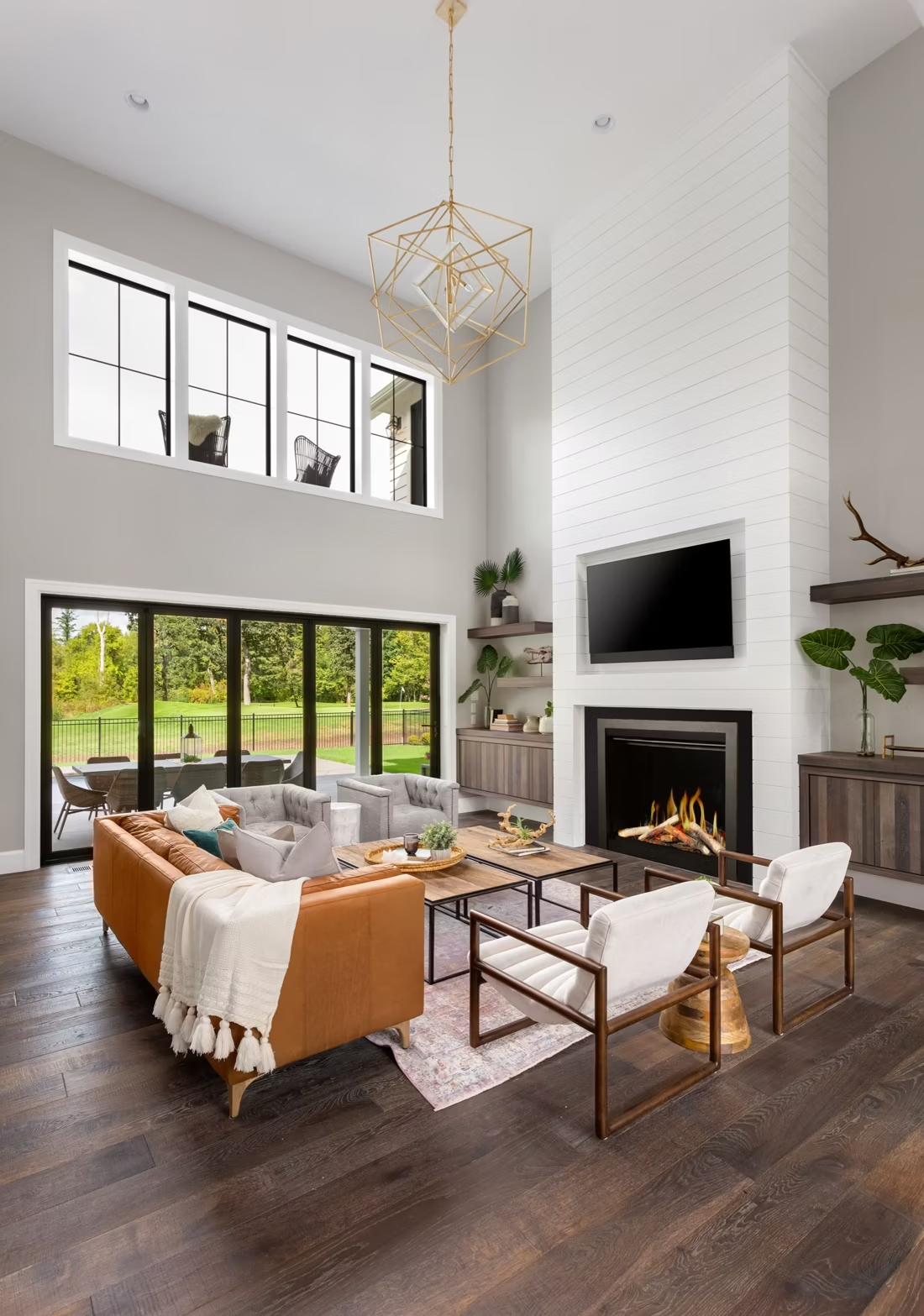
Yes—with an asterisk. Fireplaces are hot and TVs don't like heat. Either put a mantel between them to deflect rising warmth, or choose a fireplace with heat-management technology that creates a cool zone on the wall above—the wall stays around 125 degrees, barely warm, while the room still gets full heat. If you like clean lines and don't want a mantel, heat management is the answer.
How much does an electric fireplace cost to run?
With the heater on, a typical unit draws about 1,500 watts—at average electric rates that's roughly 20 cents an hour. Run the flame effect alone and it costs pennies; the flames are LED-driven and use about as much power as a light bulb. There's no pilot light, no fuel delivery, and essentially no maintenance.
How much should I budget for a fireplace?
For an average home—covering the fireplace, the vent pipe, and basic installation—a budget between $3,900 and $5,500 gives you a lot of options across wood, gas, and pellet. By the time you add finish work, gas line, and electrical, the average complete installation lands between $5,000 and $12,000 all-in. In a remodel or new build, a good rule is to put about 2.5% of the total project cost toward the fireplace.
What is an in-home preview and do I need one?
It's a visit where a hearth professional measures your space, confirms the model you picked actually works in your home, and walks the specs—framing, gas line, venting, finish work—before anything is ordered. Some details you just can't know until you see the house. Never make a down payment without one; it's the single most-skipped step that burns buyers.
Stove and Fireplace Dealers in Crawford County
Listings include WhyFire partner dealers, dealers we have verified as authorized for the brands we recommend, and established local businesses that carry hearth products. Every listing shows which one it is. The ones marked Preferred run on WhyFire's software, so they can show you real pricing and book your appointment right here. No manufacturer pays for placement. How we verify dealers →
Penn Ohio Chimney
Susi Builders Supply
Weaver's Stove & Patio - Erie
Hayford Chimney Service
Susi Builders Supply
A Duchini Inc.
Frontier Design Center
Clymer Hardware & Home Center
Find your electric fireplace in Crawford County.
Tell us about your home and we'll match you with a trusted local dealer and a free Project Guide & Parts List—the exact parts, including any wiring needs, for your electric fireplace project in Crawford County.
Find Your Fireplace →