
Warm Up Corry Winters Without Splitting a Single Log.
With a long, demanding heating season and lake-effect snow rolling off Erie, Corry homes need heat that starts at the flip of a switch. Find the right gas fireplace or insert and get matched with a trusted local dealer.
Every Project Starts From One of These Five Situations
A town built on energy still runs on it.
Corry sits at 1,399 feet in the far northwest corner of Pennsylvania, close enough to Lake Erie to catch its share of lake-effect snow bands on top of an already long, cold season—winter lows here average 16°F and the region faces a long, demanding heating season that stretches from fall deep into spring, putting it solidly in Climate Zone 5A. This is a town that grew up during the 1860s Pennsylvania oil and gas boom, and that energy legacy still shows in how many Corry homes are built: older housing stock with masonry fireplaces that were never designed for today's heating expectations.
Natural gas service reaches parts of Corry and the surrounding villages, while propane remains the standard fuel for homes further out in rural Erie County, delivered by regional suppliers who serve the same territory as Northwestern Rural Electric Cooperative. Either fuel gets you the same result: a gas fireplace or insert that lights instantly, holds a steady temperature through a January cold snap, and doesn't require anyone to haul, split, or stack wood before the next storm rolls through.
Three steps. No salesperson until you're ready.
Tell us about your project
Your zip code, your situation, and the fuel you're leaning toward—or let the answers point you to one.
See what's actually available
The brands dealers within 100 miles genuinely carry—real options, never a catalog mirage.
Get your dealer & Project Guide
A trusted local dealer, plus the free Project Guide & Parts List that names every component of the job.
Frequently Asked Questions
How much does a gas fireplace installation cost in Corry?
Most gas fireplace and insert installations in Corry run $4,000 to $10,000, with the spread driven mainly by venting and gas supply. A direct-vent insert dropped into an existing masonry fireplace with gas already run to the house sits at the lower end. A new built-in gas fireplace for a remodel or an addition—with framing, direct-vent piping through an exterior wall, and a fresh gas or propane line—lands in the middle to upper range. Homes that need a new propane tank set and buried line typically land near the top. A local installer will give you a firm number after seeing the space.
Can I convert my existing wood fireplace to gas?
Yes, and it's a common project in a town like Corry where many houses date back to the early 1900s oil-boom era and still have their original masonry chimneys. A gas insert typically uses that existing chimney as the venting path, run with a stainless liner, and costs $4,000 to $8,500 depending on whether natural gas or propane is used and whether new line work is needed. The finished look keeps your original mantel and firebox opening while swapping out ash, smoke, and wood hauling for a switch or remote.
Should I plan for natural gas or propane in Corry?
It depends on where in town you're located. Corry has pockets of natural gas service, but coverage thins out quickly once you're past the village core, which is typical for a small Erie County community. Homes outside the natural gas footprint use propane, delivered and stored in an above- or below-ground tank by a regional supplier—the same rural areas served by Northwestern Rural Electric Cooperative tend to be propane territory. Nearly every gas fireplace and insert on the market can be configured for either fuel; your installer sets the orifice and regulator to match what's available at your address.
Will my gas fireplace still work if the power goes out?
Most will. Units with intermittent pilot ignition (IPI) run on a small battery backup—usually AA batteries in the control compartment—that keeps the fireplace lighting on demand even when Penelec or Northwestern Rural Electric Cooperative service drops during a winter storm. Just check those batteries each fall before burning season. Valor fireplaces skip batteries altogether: their pilot assembly generates its own electricity through the thermocouple, so the unit stays fully operational through extended outages. Given how often lake-effect snow knocks out power in this part of Erie County, that's worth asking your local dealer about.
What's the difference between a gas fireplace, gas insert, and gas stove?
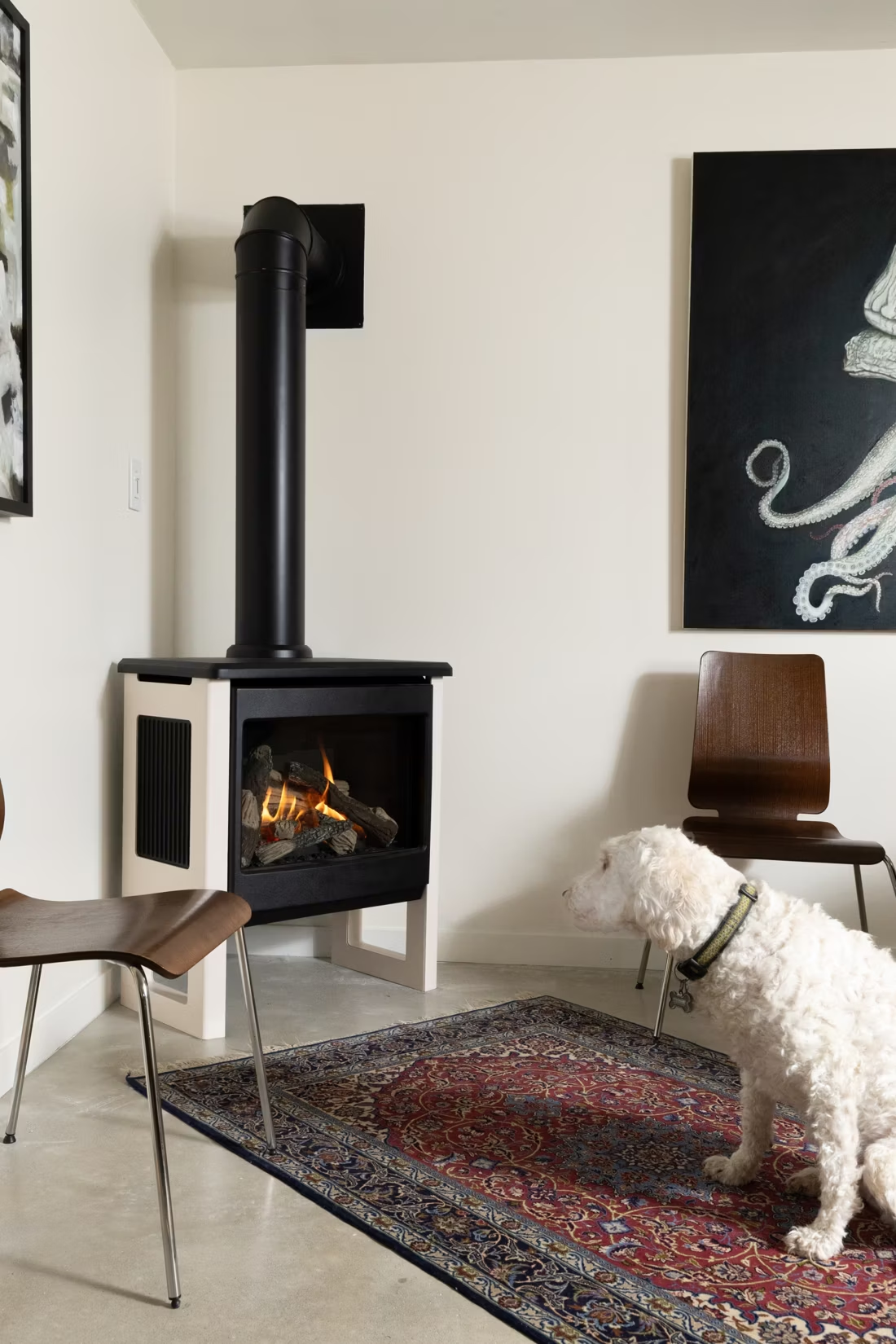
A gas fireplace is a fully built-in unit framed into a wall—the right call for new construction or a remodel without an existing chimney. A gas insert slides into an existing masonry fireplace opening and vents through that chimney with a liner, which fits the older Corry housing stock well. A gas stove is a freestanding cast-iron or steel unit that sits on the floor like a wood stove but runs on gas, useful in a room without any existing fireplace or chimney at all. Most homeowners here with an existing hearth opt for the insert route since it reuses what's already built into the house.
Do I need a permit to install a gas fireplace in Corry?
Yes. Gas fireplace installations require a building permit, and any new gas line work needs sign-off from a licensed gas fitter—this applies whether you're on natural gas or setting up a propane line. Most hearth dealers who work in Erie County handle the permitting and coordinate the gas trade as part of the installation, so you're not left managing separate contractors for the gas line, venting, and framing.
Vented vs. vent-free gas fireplaces—what's allowed in Corry?
Vented (direct-vent) gas fireplaces pull combustion air from outside and exhaust exhaust gases back outside through sealed pipe—they're the standard choice and work in any room size. Vent-free units burn directly into the living space without external venting; Pennsylvania permits them, but they come with strict room-volume and oxygen-depletion-sensor requirements, and they're not a fit for smaller, tightly sealed rooms common in Corry's older homes. Given the area's long heating season, most local dealers steer homeowners toward direct-vent units for the more consistent heat output and the fact that there's no compromise on indoor air quality during months when windows stay shut.
How often does a gas fireplace need to be serviced?
Plan on an annual inspection, ideally before heating season starts in the fall. A technician checks the burner, pilot assembly, gas connections, and venting, and cleans the glass and interior—a much lighter job than a wood chimney sweep, but still important given how many months a year a gas unit runs in a climate with as long a heating season as Corry's. Expect to pay in the $150 to $250 range for a standard annual service call from a local hearth or propane company.
Gas vs. wood—which makes more sense for a Corry home?
Wood has real appeal here: the Allegheny National Forest issues cutting permits for $20 a cord from May through October, and the region has good hardwood species—oak, hickory, maple, and cherry—that split and burn well. But wood means hauling, stacking, and tending a fire through a season that runs long in a climate like this. Gas trades that labor for instant, thermostat-steady heat with none of the ash or creosote upkeep, at the cost of an ongoing fuel bill instead of a permit fee. Many Corry households end up with both: gas as the day-to-day heat source in the main living space, and a wood stove or fireplace elsewhere for backup heat and the occasional fire with a bit more character.
Why is a fireplace insert so efficient?
An insert does two things: it seals the chimney completely, so you stop losing air you already paid to heat, and it radiates warmth into the room through the firebox and glass. Most add a heat-exchange fan that pulls cool room air underneath, wraps it around the hot firebox, and pushes it back out warm. Your home is more efficient before you've even lit the first fire.
Is my gas fireplace wasting gas?
If it was installed more than 15 years ago, probably. Older gas fireplaces keep a standing pilot light burning all the time, and that little flame can cost a couple hundred dollars a year. Newer models use pilot-on-demand ignition—the pilot lights only when you use the fireplace and goes out when you turn it off.
Does a fireplace add value to my home?
On average, a fireplace adds back to the home about the same amount you spent installing it. Add the monthly savings from heating the rooms you actually use instead of the whole house—often hundreds of dollars a year—and the value case is strong before you even count what a fire does for how your family uses the room.
What is an in-home preview and do I need one?
It's a visit where a hearth professional measures your space, confirms the model you picked actually works in your home, and walks the specs—framing, gas line, venting, finish work—before anything is ordered. Some details you just can't know until you see the house. Never make a down payment without one; it's the single most-skipped step that burns buyers.
Nearby Dealers
Hearth shops serving Corry and the surrounding area. Every listing shows whether it is a WhyFire partner, a dealer we have verified as authorized for the brands we recommend, or a local business carrying hearth products. No manufacturer pays for placement. How we verify dealers →
Clymer Hardware & Home Center
Chautauqua Brick
Stone And Outdoor Living Center
CJ's Home Decor & Fireplaces
Concord Plumbing & Heating, Inc.
Weaver's Stove & Patio - Erie
Solstice Heating
A Duchini Inc.
Frontier Design Center
Susi Builders Supply
Find your gas fireplace in Corry.
Tell us about your home and heating goals, and we'll match you with a trusted local dealer plus a free Project Guide & Parts List—the exact parts, including the vent kit, for your gas fireplace project in Corry.
Find Your Fireplace →