
Steady, on-demand heat for Columbia's Susquehanna Valley winters.
With a long heating season and winter lows averaging 19°F, Columbia's historic rowhomes need reliable heat that doesn't depend on hauling wood through a narrow city lot. I'll match you with a vetted local dealer who knows the borough's older construction and can spec the right unit.
Every Project Starts From One of These Five Situations
A historic river town built for gas, not woodpiles.
Columbia sits at 346 feet along the Susquehanna River, one of Lancaster County's older canal and rail towns, with tight lots and rowhomes that date back well over a century. The climate here is real—Columbia's winter heating load falls below a place like Buffalo, NY, but still well above the Mid-Atlantic average, and an average winter low of 19°F, meaning heating season runs long from November into April. What that climate doesn't come with is much room for cordwood storage: narrow rowhome lots and shared property lines make stacking oak, hickory, or cherry impractical for most in-town addresses, which is why wood and pellet stoves see little demand inside the borough even though those species are common on farms just outside town.
Gas has become the practical answer for most Columbia homeowners who want a real heat source without a woodpile. Many of the borough's older homes already have natural gas run to the street from decades of use for heat and cooking, which keeps installation simpler than in newer, all-electric subdivisions. Electric fireplaces are also a standard option here, running on PPL Electric Utilities service at roughly 12.34 cents per kWh, and work well for supplemental warmth in rooms where running new gas line isn't worth the cost. Either way, the borough's older masonry—original parlor fireboxes in a lot of Columbia's 19th-century housing stock—often becomes the starting point for a gas insert conversion rather than new construction.
Three steps. No salesperson until you're ready.
Tell us about your project
Your zip code, your situation, and the fuel you're leaning toward—or let the answers point you to one.
See what's actually available
The brands dealers within 100 miles genuinely carry—real options, never a catalog mirage.
Get your dealer & Project Guide
A trusted local dealer, plus the free Project Guide & Parts List that names every component of the job.
Frequently Asked Questions
How much does a gas fireplace installation cost in Columbia?
Most Columbia installations run in the $4,000 to $10,500 range. A direct-vent insert dropped into one of the borough's original masonry fireboxes—common in the rowhomes near Locust Street and the historic district—tends toward the lower half, since the chimney chase already exists. A new built-in unit for an addition or a home without an existing fireplace opening costs more once you factor in framing, venting through an exterior wall, and a fresh gas line run. Homes further out toward rural Lancaster County township that rely on propane rather than piped gas should budget for tank setup or a line extension on top of the unit itself.
Can I convert my old fireplace to gas?
Yes, and it's one of the more common projects in Columbia's historic core, where a lot of homes still have an original parlor fireplace that once burned local oak or hickory but hasn't been used in years. A gas insert with a stainless liner typically drops into that existing opening without touching the surrounding masonry or mantel, which matters in homes where the fireplace is part of the house's original character. Costs usually land between $4,500 and $9,000 depending on chimney condition and whether the flue needs relining before the liner goes in.
Do I need natural gas service, or is propane more common in Columbia?
It depends on where in the borough you are. Much of Columbia's older housing stock, built when the town was a rail and canal hub, already sits on natural gas service run decades ago for heat and cooking, which makes adding a fireplace straightforward if that line is nearby. Properties on the edges of town or out in surrounding Lancaster County townships more often rely on propane with a tank on the property. A local installer can tell you within a few minutes which fuel makes sense for your address and whether the existing gas meter has enough capacity for an added appliance.
Will a gas fireplace keep working if the power goes out?
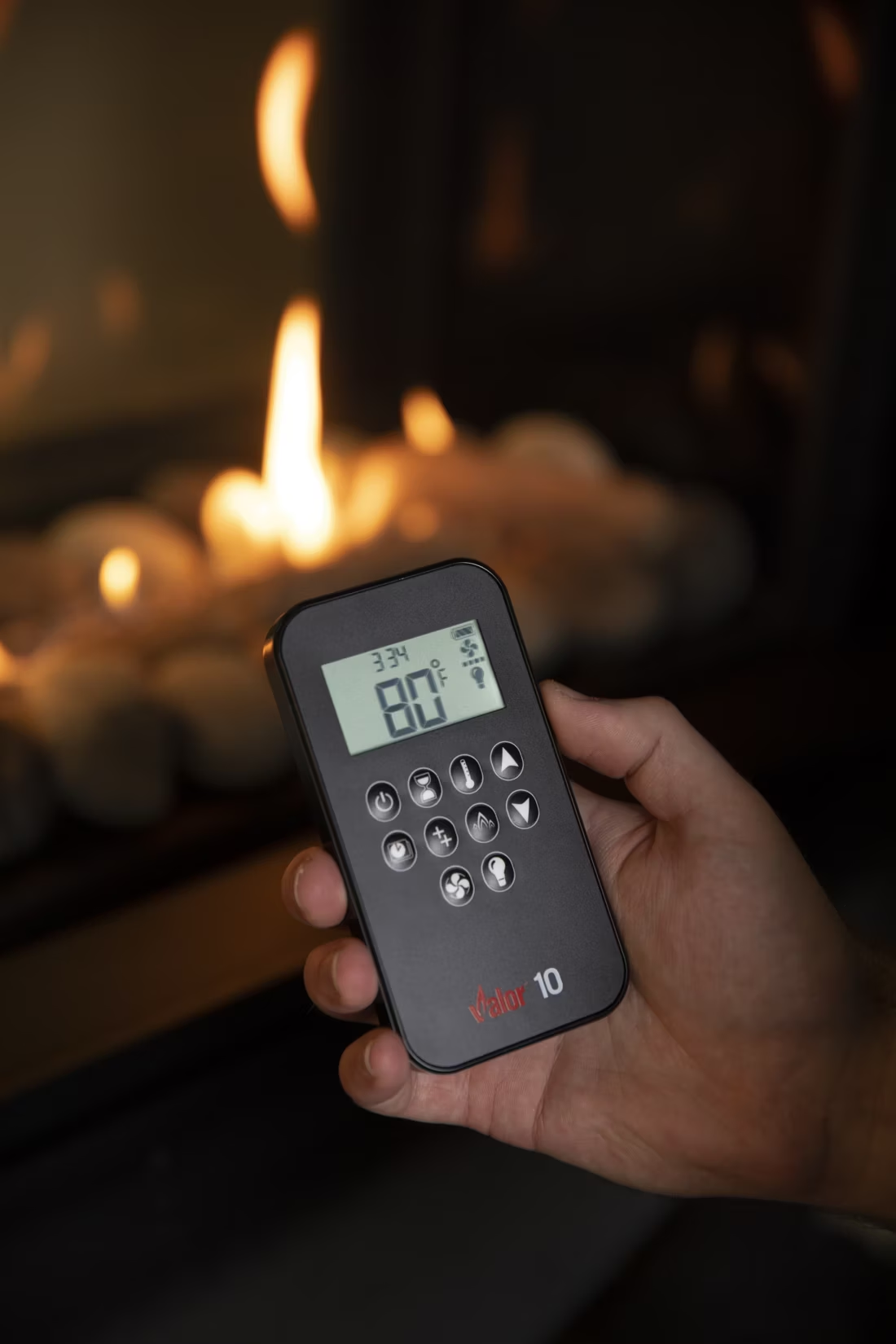
Most will, which is worth planning around given how ice storms moving up the Susquehanna Valley can knock out PPL Electric service for hours at a time in winter. Units with intermittent pilot ignition (IPI) run their control board on AA battery backup that kicks in automatically when the power drops. Some manufacturers, like Valor, use a pilot-generated electrical current instead of a battery at all, so there's nothing to remember to replace. If backup heat during an outage matters to you, ask your dealer about the ignition system before you pick a model—it's a bigger factor than most homeowners expect.
What's the difference between a gas fireplace, insert, and stove for a Columbia home?
A built-in gas fireplace is framed into a wall, typically used in an addition or a home without an existing chimney. A gas insert fits inside an existing masonry firebox—the more common route in Columbia's older rowhomes, which usually still have a parlor fireplace opening even if it hasn't burned wood in decades. A gas stove is freestanding on a hearth pad, similar in footprint to a wood stove but running off a gas line instead of cordwood; it's an option for homes that want visible flame without touching original masonry at all. For most Columbia homeowners with an existing fireplace, an insert is the simplest and least invasive upgrade.
Do I need a permit to install a gas fireplace in Columbia?
Yes. Work inside the borough goes through Columbia Borough's codes enforcement office, while properties just outside the borough line in Lancaster County township go through the county building permit process instead. Either way, you'll need a building permit plus a separate gas line permit, since any new or modified gas piping has to be done by a licensed gas fitter. Established local dealers who regularly work in Columbia's historic district typically handle all of this—including scheduling the final inspection—as part of the install.
Should I get a vented or vent-free gas fireplace?
Direct-vent units draw combustion air from outside and exhaust it back outside through sealed pipe, which makes them the safer choice and the one most local dealers default to, especially in Columbia's older rowhomes where wall cavities and room sizes weren't designed with vent-free clearance rules in mind. Vent-free units are legal in Pennsylvania and burn directly into the room, but they come with strict square-footage requirements per the appliance's BTU rating. Columbia doesn't carry any air quality non-attainment designation, so there's no regulatory push either way—it comes down to how airtight your particular house is and how comfortable you are with combustion byproducts in a living space.
How often does a gas fireplace need to be serviced?
Plan on an annual inspection, ideally in September or October before Columbia's heating season really kicks in. A technician checks the burner, pilot or IPI assembly, gas connections, and venting, and cleans the glass—a lighter job than a wood chimney sweep, but skipping it on a unit running daily through a five-plus-month heating season is how pilot or ignition problems show up on the coldest night of the year instead of during a routine check. Expect to pay around $150 to $225 for a standard service call from a local hearth technician.
Why is gas so much more common than wood or pellet heat in Columbia?
It comes down to the borough itself. Columbia's rowhomes and narrow in-town lots leave little practical space for stacking and drying cords of oak, hickory, or cherry, and there isn't the acreage or forest-adjacent land here that supports wood heat as a serious option the way it does in more rural stretches of Lancaster County. Pellet stoves face a similar space and demand problem—regional brands like Energex or Hamer Pellet Fuel are sold nearby, but local dealer support for pellet appliances inside the borough is thin. Gas, backed by existing lines in much of the old town, and electric fireplaces on PPL Electric service fill that gap instead, giving Columbia homeowners real heat without needing a woodshed.
Why is a fireplace insert so efficient?
An insert does two things: it seals the chimney completely, so you stop losing air you already paid to heat, and it radiates warmth into the room through the firebox and glass. Most add a heat-exchange fan that pulls cool room air underneath, wraps it around the hot firebox, and pushes it back out warm. Your home is more efficient before you've even lit the first fire.
Is my gas fireplace wasting gas?
If it was installed more than 15 years ago, probably. Older gas fireplaces keep a standing pilot light burning all the time, and that little flame can cost a couple hundred dollars a year. Newer models use pilot-on-demand ignition—the pilot lights only when you use the fireplace and goes out when you turn it off.
How much should I budget for a fireplace?
For an average home—covering the fireplace, the vent pipe, and basic installation—a budget between $3,900 and $5,500 gives you a lot of options across wood, gas, and pellet. By the time you add finish work, gas line, and electrical, the average complete installation lands between $5,000 and $12,000 all-in. In a remodel or new build, a good rule is to put about 2.5% of the total project cost toward the fireplace.
Does a fireplace add value to my home?
On average, a fireplace adds back to the home about the same amount you spent installing it. Add the monthly savings from heating the rooms you actually use instead of the whole house—often hundreds of dollars a year—and the value case is strong before you even count what a fire does for how your family uses the room.
Nearby Dealers
Hearth shops serving Columbia and the surrounding area. Every listing shows whether it is a WhyFire partner, a dealer we have verified as authorized for the brands we recommend, or a local business carrying hearth products. No manufacturer pays for placement. How we verify dealers →
Firestarters Custom Fireplace & Stove
Penn Stone
Se Outdoor & Design
Kring's Hearth & Home - Lancaster
Hillside Acres Stoves
Country Comfort Inc.
Ds Stoves
Peak Distribution
North Forge Home Heating
Bulls Supply Co, Inc
Sauder's Hardscape Supply
Keystone Custom Decks
H2 LLC
Get your free Project Guide & Parts List for a gas fireplace in Columbia.
Tell me about your home—whether it's an original rowhome fireplace opening or new construction—and I'll match you with a trusted local dealer and send a free Project Guide & Parts List with the exact vent kit and parts your Columbia project needs.
Find Your Fireplace →