
Instant heat, zero venting, for Carnot-Moon homes.
No chimney, no gas line, no smoke—just plug in and warm up. Find the right electric fireplace and connect with a trusted local dealer.
Every Project Starts From One of These Five Situations
Clean heat for a non-attainment county.
Carnot-Moon sits in Allegheny County's 15108 corridor near Pittsburgh International Airport, where winters bring HDD totals near 5,848 and lows averaging 19°F. Allegheny County is also designated a non-attainment area for particulate air quality, which is part of why wood and pellet stoves are rarely installed here—they're simply not a fit for the region's air quality goals or its dense mix of townhomes, newer subdivisions, and multi-unit housing near the airport.
Electric fireplaces fill that gap well. Served by Duquesne Light Co. and Pennsylvania Power Co., Carnot-Moon homeowners can add supplemental heat and fireplace ambiance to a bedroom, basement, or condo unit without a flue, a gas line, or a masonry chimney. For renters, HOA communities, and newer construction where venting a combustion appliance isn't practical, an electric insert or built-in is often the only realistic option—and modern units with real-flame LED technology have closed a lot of the gap with traditional fireplaces on looks.
Three steps. No salesperson until you're ready.
Tell us about your project
Your zip code, your situation, and the fuel you're leaning toward—or let the answers point you to one.
See what's actually available
The brands dealers within 100 miles genuinely carry—real options, never a catalog mirage.
Get your dealer & Project Guide
A trusted local dealer, plus the free Project Guide & Parts List that names every component of the job.
Frequently Asked Questions
How much does it cost to install an electric fireplace in Carnot-Moon?
Plug-in electric inserts that slide into an existing fireplace opening or mantel surround typically run $300 to $700 installed, since no wiring changes are needed. Built-in wall units or larger inserts that require a dedicated 20-amp circuit run higher—typically $1,200 to $1,800 once you factor in an electrician to run the new circuit, which is common in Carnot-Moon's newer townhome and condo construction where existing outlets aren't rated for a full-size unit. Local dealers will size the unit to your room and tell you upfront whether your electrical panel can handle it without an upgrade.
How much does an electric fireplace cost to run in Carnot-Moon?
Duquesne Light's residential rate in this area runs about $0.1947 per kWh—noticeably above the Pennsylvania state average, so operating cost is worth thinking through before you buy. A typical 1,500-watt electric fireplace run five hours a day on heat mode uses about 7.5 kWh, or roughly $1.46 a day—about $44 a month for regular winter use. Running it on flame-only mode with the heater off costs only pennies a day, which is how a lot of Carnot-Moon households use theirs outside of the coldest stretches.
Do I need a permit for an electric fireplace insert or built-in unit?
A simple plug-in insert that uses an existing outlet typically doesn't require a permit. If your installer needs to run a new dedicated circuit for a larger built-in unit, that electrical work generally does require a permit through your local building department—for Carnot-Moon, that's usually Moon Township or Findlay Township depending on your exact address within Allegheny County. Licensed electricians who install these units routinely pull the permit as part of the job, so it's rarely something you have to handle yourself.
Why aren't wood and pellet stoves common in Carnot-Moon?
Allegheny County is a designated non-attainment area for fine particulate air quality, and the county has historically discouraged new solid-fuel combustion appliances as a result. Combine that with Carnot-Moon's mix of townhomes, HOA-governed developments, and newer construction near the airport—many with no chimney or flue to begin with—and wood or pellet stoves simply aren't a practical retrofit for most homes here. Electric and natural gas fill that role instead, with electric being the more common choice where there's no existing gas line or masonry chimney to work with.
What's the difference between an electric insert, built-in, and freestanding electric fireplace?
An electric insert slides into an existing fireplace opening or a custom mantel surround and plugs into a standard or dedicated outlet—the most common retrofit for Carnot-Moon homes with an old, unused wood-burning fireplace. A built-in electric fireplace is designed to be framed into a wall like a TV, typically wired to its own circuit, and gives the cleanest, most furniture-grade look. A freestanding electric stove sits on the floor and plugs in like an appliance—no framing or wiring changes needed, which makes it the easiest option for renters or condo owners. Local dealers can walk you through which fits your space and your lease or HOA restrictions.
Will an electric fireplace keep a room warm during Carnot-Moon's cold winters?
Electric fireplaces are zone heaters, not whole-home furnaces—most units put out around 4,600 to 5,200 BTUs, enough to noticeably warm a bedroom, den, or open living area but not a whole house. With winter lows averaging 19°F and HDD near 5,848 in this part of Allegheny County, an electric fireplace works best as supplemental heat alongside your existing furnace or heat pump, taking the edge off a chilly room or letting you turn down the thermostat elsewhere in the house. For homeowners hoping to replace central heat entirely, gas is usually the better-suited option.
Will my electric fireplace work during a power outage?
No—this is the honest tradeoff with electric heat. Since the unit runs entirely on household electricity, it goes dark the moment the power does, unlike a wood stove or a gas fireplace with battery-backup ignition. If backup heat during winter storm outages is a priority for your Carnot-Moon home, it's worth pairing an electric fireplace (for everyday ambiance and zone heat) with a generator or a gas appliance elsewhere in the house rather than relying on electric as your only heat source.
Electric vs. gas—which is right for my home?
Natural gas is widely available throughout the Pittsburgh suburbs and is the more common choice for homeowners who want real heat output and the look of a live flame, since gas fireplaces can genuinely supplement or replace zone heating. Electric fireplaces cost far less to install, need no gas line or venting at all, and go anywhere there's an outlet—which makes them the practical choice for condos, rentals, basements, and townhomes in Carnot-Moon where running new gas line isn't realistic. If you already have gas service and want real warmth, gas usually wins; if you want low-cost ambiance and flexible placement without construction, electric is the easier path.
What should I look for in an electric fireplace for a Pittsburgh-area home?
Given Duquesne Light's above-average residential rate, look for units with adjustable heat settings and a flame-only mode so you're not paying for heat you don't need on milder days. For homes without a dedicated circuit already in place, ask your dealer whether the model you like requires one—it changes your install cost meaningfully. And because most Carnot-Moon installs are retrofits into old wood fireplace openings, measure your existing opening carefully; a properly sized insert with a tight surround fit will look far better than an undersized unit rattling around in an oversized firebox.
Can I put a TV above my fireplace?
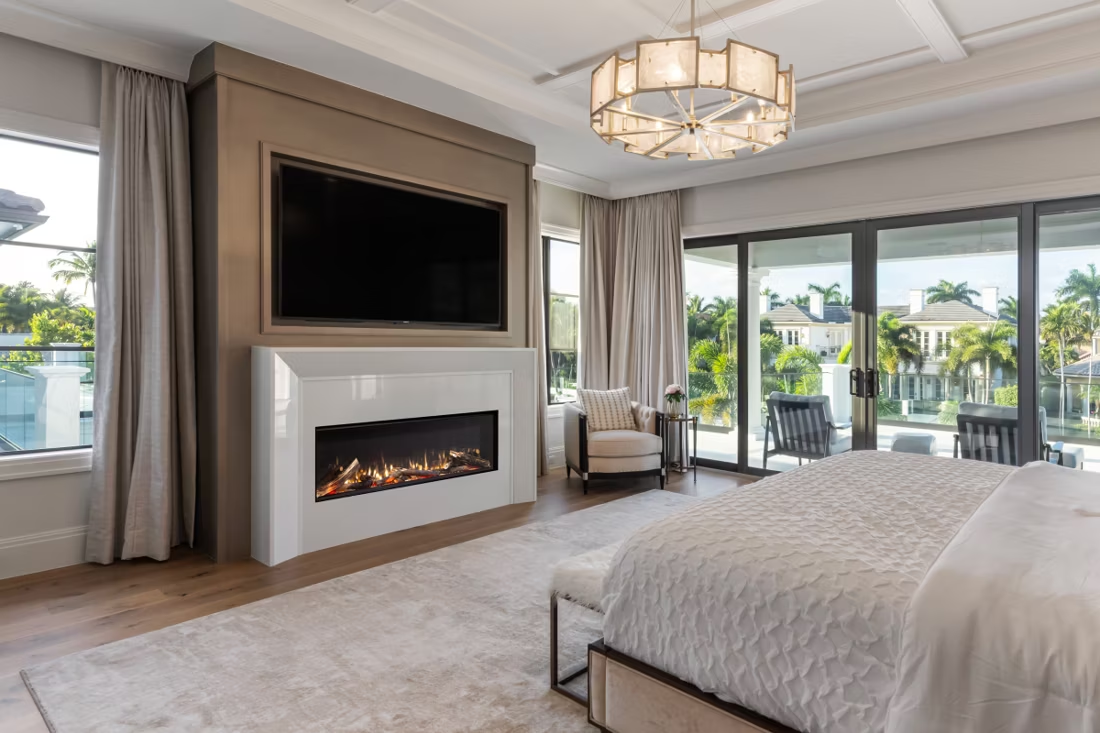
Yes—with an asterisk. Fireplaces are hot and TVs don't like heat. Either put a mantel between them to deflect rising warmth, or choose a fireplace with heat-management technology that creates a cool zone on the wall above—the wall stays around 125 degrees, barely warm, while the room still gets full heat. If you like clean lines and don't want a mantel, heat management is the answer.
Does an electric fireplace need a vent or chimney?
No—that's its superpower. An electric fireplace needs a wall and an outlet, period. No vent pipe, no gas line, no clearances to design around, which is why it works in bedrooms, offices, apartments, and walls where venting a gas or wood unit would be impractical or impossible. Installation is typically the simplest and least expensive of any fireplace type.
Does a fireplace add value to my home?
On average, a fireplace adds back to the home about the same amount you spent installing it. Add the monthly savings from heating the rooms you actually use instead of the whole house—often hundreds of dollars a year—and the value case is strong before you even count what a fire does for how your family uses the room.
How much should I budget for a fireplace?
For an average home—covering the fireplace, the vent pipe, and basic installation—a budget between $3,900 and $5,500 gives you a lot of options across wood, gas, and pellet. By the time you add finish work, gas line, and electrical, the average complete installation lands between $5,000 and $12,000 all-in. In a remodel or new build, a good rule is to put about 2.5% of the total project cost toward the fireplace.
Nearby Dealers
Hearth shops serving Carnot-Moon and the surrounding area. Every listing shows whether it is a WhyFire partner, a dealer we have verified as authorized for the brands we recommend, or a local business carrying hearth products. No manufacturer pays for placement. How we verify dealers →
The Stove Place
Northern Woodworking
Buck Stove & Fireplace
Fireplace & Patioplace
Suburban Insulation
All Seasons Fireplace & Home
Fireplace And Patio Place
Builders Wholesale
Tri-State Stoves
Soot Seekers Chimney Service
Buckeye Valley Chimney Service
Howell Craft Inc.
Electric Service in Carnot-Moon
An electric fireplace's heater draws about 1,500 watts—pennies per hour at local rates.
Duquesne Light Co
Pennsylvania Power Co
Find your electric fireplace in Carnot-Moon.
Tell us a bit about your home and we'll match you with the right electric insert, built-in, or freestanding unit—plus a free Project Guide & Parts List and a trusted local dealer to install it.,
Find Your Fireplace →