
Ambiance and supplemental warmth for Bradford County homes.
No venting, no gas line, no chimney—just plug-in warmth and a real flame look for homes from Towanda to Sayre to the rural stretches of the county.
Every Project Starts From One of These Five Situations
Simple heat where wood and gas aren't the whole answer.
Bradford County sits in the rolling hills of Pennsylvania's Endless Mountains, with winters harsh enough to push the heating season well past what most homes deal with, and lows averaging 16 degrees—comparable to what a home in Madison, WI deals with most winters. Plenty of county households still burn oak, hickory, maple, and cherry in wood stoves, and gas is common where lines reach, but electric fireplaces fill a different need: a bedroom, a finished basement, a rental unit, or a room where running a flue or gas line isn't practical or worth the cost.
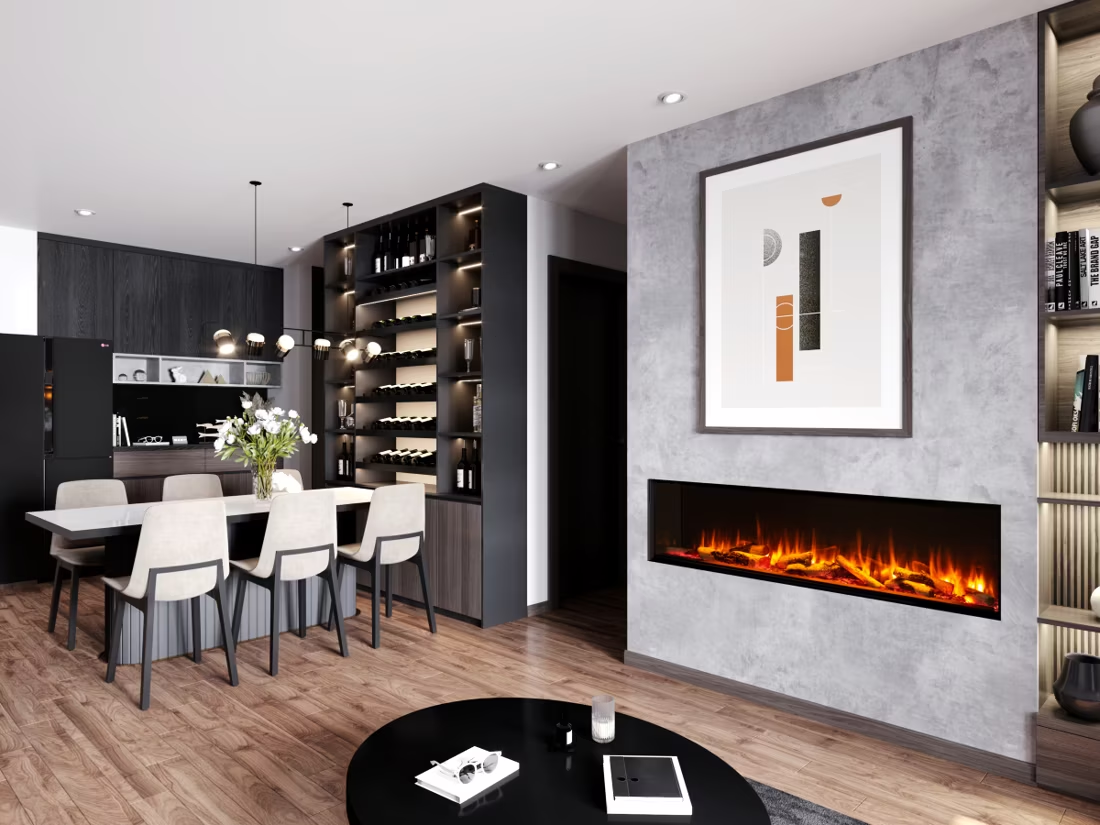
An electric fireplace or insert plugs into a standard outlet in most cases, needs no permit for the unit itself, and produces real supplemental heat (typically up to 5,000-10,000 BTU) alongside a realistic flame effect. It won't replace a wood stove as primary heat during a Bradford County cold snap, but it's the fastest, least invasive way to add warmth and ambiance to a room—no masonry, no venting, no waiting on a contractor's chimney schedule.
Three steps. No salesperson until you're ready.
Tell us about your project
Your zip code, your situation, and the fuel you're leaning toward—or let the answers point you to one.
See what's actually available
The brands dealers within 100 miles genuinely carry—real options, never a catalog mirage.
Get your dealer & Project Guide
A trusted local dealer, plus the free Project Guide & Parts List that names every component of the job.
Frequently Asked Questions
How much does an electric fireplace installation cost in Bradford County?
Most electric fireplace installations in Bradford County run $400 to $1,200. A plug-in freestanding unit or a basic insert into an existing mantel surround sits at the low end—often just the cost of the unit and minor trim work. Built-in wall units that require framing, a dedicated outlet or circuit run by an electrician, and finish carpentry land at the higher end. Because there's no venting or gas line involved, electric is consistently the least expensive fireplace fuel to install in the county, and most jobs are done in a day.
Do I need a permit to install an electric fireplace in Bradford County?
In most cases, no—a plug-in or existing-outlet electric fireplace doesn't require a building permit since there's no venting, gas line, or structural chimney work involved. If your installation requires a new dedicated electrical circuit (common for larger built-in units pulling more amperage), an electrician will need to pull an electrical permit through the applicable municipal or Bradford County code office, since jurisdiction varies by township. Local dealers can tell you upfront whether your chosen unit needs new wiring or just an existing outlet.
Will an electric fireplace actually heat my room, or is it just for looks?
A quality electric fireplace or insert will genuinely heat a small to medium room—most models put out 4,000 to 5,000 BTU, comparable to a space heater, and can be run flame-only for ambiance without any heat if you prefer. For a Bradford County home in the depths of a January cold snap with lows in the teens, an electric unit is best understood as zone heat for one room, not a substitute for a wood stove or furnace covering the whole house. Where it shines is exactly the room your central heat struggles to keep comfortable—a bonus room, a converted garage, a bedroom over an unheated space—without adding load to your existing gas or wood setup.
What's the difference between an electric fireplace, insert, and a wall-mounted unit?
A freestanding electric fireplace looks like a stove or cabinet and can go anywhere with an outlet—the most flexible option and easiest to move if you relocate. An electric insert is sized to slide into an existing masonry fireplace opening, which is common in older Bradford County farmhouses that have a fireplace but no interest in burning wood anymore. A wall-mounted or built-in unit is recessed into a wall or entertainment center for a more architectural look, but usually needs a dedicated outlet and some carpentry. For homes with an old, unused masonry fireplace, an insert is often the simplest upgrade—instant ambiance and heat without touching the chimney.
Can I put an electric fireplace anywhere in my house?
Nearly—electric fireplaces have no venting requirements and produce no combustion byproducts, so they can go in bedrooms, basements, and interior rooms where a wood or gas unit couldn't be installed at all. The main constraints are electrical: standard plug-in units need a grounded outlet nearby, and larger built-in models may need a dedicated 20-amp circuit, which means involving an electrician for that portion of the job. For finished basements or additions in Bradford County homes without existing gas service, this makes electric the practical default when a real chimney or gas line isn't in the budget or the floor plan.
How does an electric fireplace compare to a wood stove for Bradford County winters?
Wood stoves burning local oak, hickory, or maple remain the go-to for primary or serious backup heat in Bradford County, especially given winters that regularly dip into the teens and stretch into a long, demanding heating season—they keep running with the power out, which matters here. Electric fireplaces need grid power to run and won't help during an outage, but they cost far less to install, need zero maintenance beyond dusting, and can go in rooms wood heat never could. Many county homeowners run both: a wood stove for the cold months and real heat security, and an electric unit in a secondary living space or bedroom for everyday convenience.
Are electric fireplaces expensive to run?
Running costs are modest. A typical electric fireplace on heat setting draws roughly 1,500 watts, which at average Pennsylvania electric rates runs somewhere around 15 to 20 cents per hour of heated operation—cheaper than propane per BTU, though costlier than wood if you're already cutting or splitting your own from the woodlot. Flame-only mode with the heater off uses only a few watts, so running it purely for ambiance costs next to nothing. For supplemental use in one room rather than whole-home heating, most Bradford County households find the electric bill impact minor.
Where can I find electric fireplace dealers near me in Bradford County?
Hearth retailers serving Bradford County—including those covering Towanda, Sayre, Athens, and Troy—typically carry electric lines alongside their wood, gas, and pellet inventory, since many households end up comparing all four fuels before deciding. Because installation is straightforward compared to venting a wood or gas unit, some general home improvement contractors handle electric fireplace installs too, but a dealer who specializes in hearth products will help you avoid an underpowered unit or one that looks out of place in an older farmhouse setting. Ask any local dealer for an in-home look if you're unsure whether your outlet setup or wall cavity will work.
Electric vs. pellet—which is right for my Bradford County home?
Pellet stoves, fed by regional brands like Energex, Hamer Pellet Fuel, and Greene Team Pellet Fuel, produce real heat output (up to 40,000-50,000 BTU) suited to whole-room or supplemental whole-home heating, but they need a vent, a hopper to refill, and electricity to run the auger and blower—so they go down in a power outage just like electric units do. Electric fireplaces produce less heat, need no fuel deliveries or storage, and install almost anywhere with no venting at all. If you want meaningful heat output and don't mind maintaining a pellet supply, pellet is the stronger heating tool. If you want low-maintenance ambiance or supplemental warmth in a room where venting isn't practical, electric is the simpler answer.
Do electric fireplaces actually produce heat?
Yes—most put out around 4,800–5,000 BTUs from a standard outlet, which comfortably warms a bedroom, office, or den as a comfort-zone heater. What they won't do is carry a whole house the way wood, gas, or pellet can. Think of electric as ambiance-first with honest supplemental heat: flames on with no heat in July, flames plus warmth in January.
Can I put a TV above my fireplace?
Yes—with an asterisk. Fireplaces are hot and TVs don't like heat. Either put a mantel between them to deflect rising warmth, or choose a fireplace with heat-management technology that creates a cool zone on the wall above—the wall stays around 125 degrees, barely warm, while the room still gets full heat. If you like clean lines and don't want a mantel, heat management is the answer.
Does a fireplace add value to my home?
On average, a fireplace adds back to the home about the same amount you spent installing it. Add the monthly savings from heating the rooms you actually use instead of the whole house—often hundreds of dollars a year—and the value case is strong before you even count what a fire does for how your family uses the room.
How much should I budget for a fireplace?
For an average home—covering the fireplace, the vent pipe, and basic installation—a budget between $3,900 and $5,500 gives you a lot of options across wood, gas, and pellet. By the time you add finish work, gas line, and electrical, the average complete installation lands between $5,000 and $12,000 all-in. In a remodel or new build, a good rule is to put about 2.5% of the total project cost toward the fireplace.
Stove and Fireplace Dealers in Bradford County
Listings include WhyFire partner dealers, dealers we have verified as authorized for the brands we recommend, and established local businesses that carry hearth products. Every listing shows which one it is. The ones marked Preferred run on WhyFire's software, so they can show you real pricing and book your appointment right here. No manufacturer pays for placement. How we verify dealers →
Kennedys Country Heating
Calhoun's Hearth & Home
Johnson's Pools & Spas, LLC
Wellsboro Equipment Rental
Terry's Chimney
Gokey And Compton Heating & Ac
Kurtz Enterprises
Find your electric fireplace in Bradford County.
Tell us a bit about your home and we'll match you with the right electric fireplace or insert, plus a free Project Guide & Parts List with your recommended local dealer.
Find Your Fireplace →