
Modern Comfort for Main Line Homes.
From stone colonials near City Avenue to newer construction off Bryn Mawr Avenue, gas fireplaces give Bala Cynwyd homeowners instant heat without the smoke or upkeep of wood. Find the right unit and connect with a trusted local dealer.
Every Project Starts From One of These Five Situations
Instant heat that fits Lower Merion living.
Bala Cynwyd sits just across the Schuylkill from Philadelphia in Lower Merion Township, with winters that are moderate by national standards—average lows around 28°F and roughly 4,200 heating degree days a year, nowhere near the extremes of places like Burlington, VT or Madison, WI. Many of the neighborhood's stone and brick colonials and Tudors were built decades ago with masonry fireplaces designed for wood, but wood burning has become genuinely uncommon here. Tight lot lines, close-set neighbors, and a preference for low-maintenance living have made gas the default choice for nearly every fireplace project in town.
PECO Energy provides both electric and natural gas service throughout Bala Cynwyd, so most homes already sit on a gas main—which makes converting an old wood-burning fireplace to gas straightforward. A gas insert or built-in gives you real flame and real heat at the flip of a switch, with none of the ash, smoke drift, or chimney maintenance that made sense in a rural setting but is a poor fit for this dense, tree-lined inner suburb.
Three steps. No salesperson until you're ready.
Tell us about your project
Your zip code, your situation, and the fuel you're leaning toward—or let the answers point you to one.
See what's actually available
The brands dealers within 100 miles genuinely carry—real options, never a catalog mirage.
Get your dealer & Project Guide
A trusted local dealer, plus the free Project Guide & Parts List that names every component of the job.
Frequently Asked Questions
How much does a gas fireplace installation cost in Bala Cynwyd?
Most gas fireplace projects in Bala Cynwyd run between roughly $4,500 and $11,500 depending on the unit and the venting path. Converting an existing masonry fireplace to a direct-vent gas insert—the most common project in this neighborhood's older stone and brick homes—tends to land on the lower-to-middle end when a gas line is already nearby. New construction or a fireplace built into a wall without an existing chimney runs higher once framing, venting, and a fresh gas line are factored in. A local retailer can give you a firm number after seeing your home.
Can I convert my existing wood fireplace to gas?
Yes—this is by far the most common gas fireplace project in Bala Cynwyd. Many of the neighborhood's older colonials and Tudors have masonry fireboxes that were originally built for wood decades ago and haven't been used that way in years. A gas insert slides into the existing opening, uses a stainless steel liner run up the original chimney for venting, and keeps the historic mantel and surround intact. Typical cost runs $4,500 to $9,500 depending on the insert and whether new gas line work is needed to reach the firebox.
Do I need natural gas to install a fireplace, or is propane an option?
Nearly every property in Bala Cynwyd has access to natural gas through PECO Energy, so propane is rarely necessary here—unlike more rural parts of Montgomery County where propane fills the gap. If you already have a gas water heater, range, or furnace, tapping into the existing service for a fireplace is usually simple. Propane is really only worth considering for an outbuilding or detached space without an existing gas connection, and would require a separate tank installation.
Will my gas fireplace still work if the power goes out?
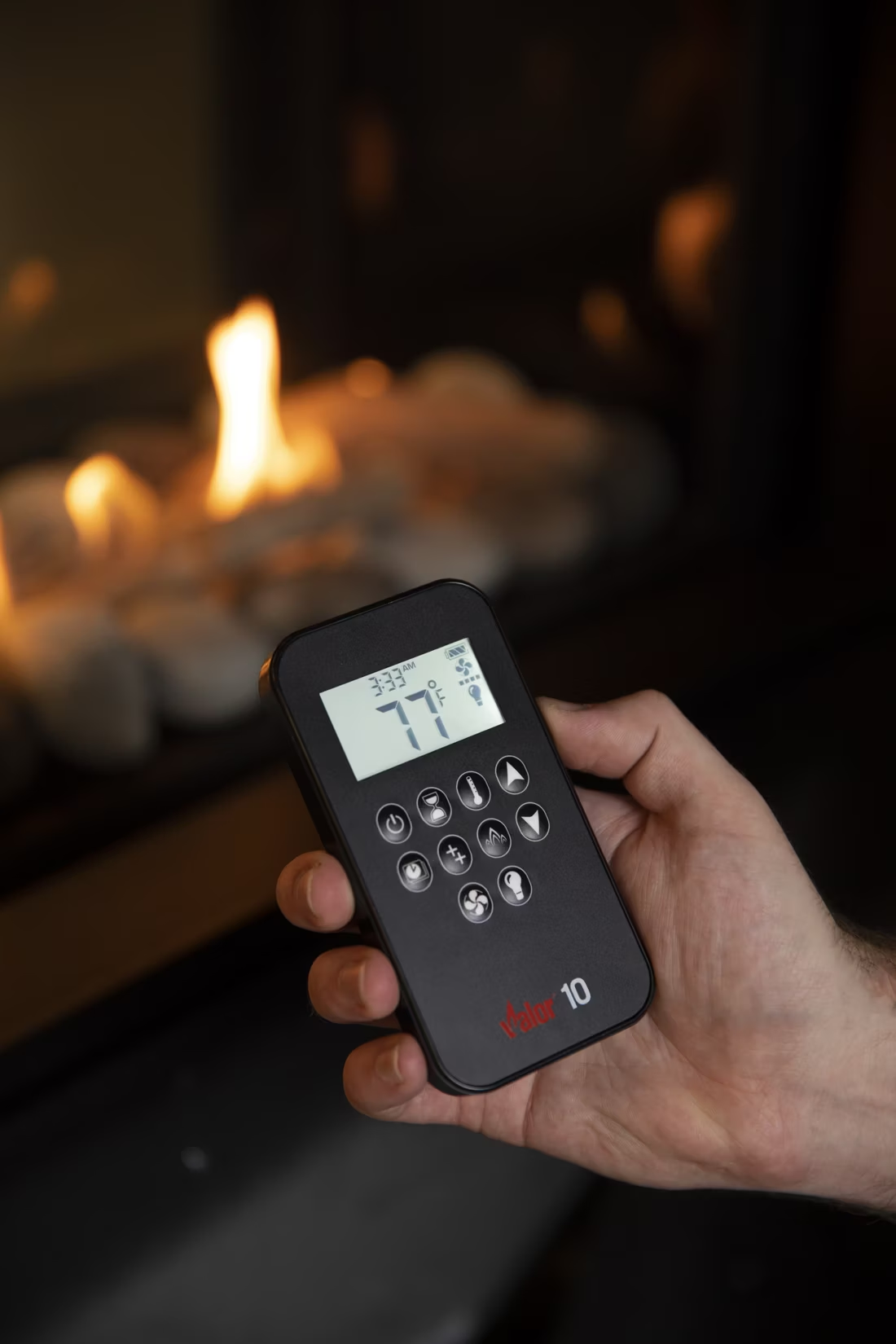
Most direct-vent gas fireplaces with intermittent pilot ignition (IPI) include a battery backup, so they'll still light and run during a PECO outage—a real consideration here given how often ice storms and downed limbs from mature Main Line trees can knock out power for a stretch. Valor fireplaces take a different approach: their pilot assembly generates its own electricity through the thermocouple, so there's no battery to remember or replace. Ask your local dealer which ignition system is used on any model you're considering.
What's the difference between a gas fireplace, gas insert, and gas stove?
A gas fireplace is a fully built-in unit, typically used in new construction or a remodel where there's no existing masonry opening. A gas insert is built to slide into an existing fireplace—the right call for most Bala Cynwyd homes with an original stone or brick firebox you want to preserve. A gas stove is a freestanding cast-iron or steel unit that sits on its own hearth pad, which works well in a room without an existing chimney. Given how many homes here have handsome original mantels, inserts tend to be the most popular option in this neighborhood.
Do I need a permit to install a gas fireplace in Bala Cynwyd?
Yes—Lower Merion Township requires both a building permit and a permit for the gas line work itself, and the gas connection has to be completed by a licensed gas-fitter. Most established hearth retailers handle the permitting and inspection scheduling as part of the installation. If your property falls within one of the township's designated historic districts, exterior venting placement may also need a quick review, which a local installer familiar with Lower Merion's process can walk you through.
What's the difference between vented and vent-free gas fireplaces?
Vented (direct-vent) gas fireplaces pull combustion air from outside and exhaust it back outside through a sealed pipe—they're the cleanest and most universally recommended option. Vent-free units burn gas directly into the room without external venting; they're legal in Pennsylvania but come with strict room-size and ventilation requirements, and some homeowners are uncomfortable with combustion byproducts released indoors. For a masonry conversion in an older Bala Cynwyd home, a direct-vent insert using the existing chimney as the vent path is almost always the better choice—it delivers real heat without any indoor air quality trade-offs.
How often does a gas fireplace need to be serviced?
Plan on an annual inspection, ideally in early fall before the heating season starts. A certified technician checks the burner, pilot assembly, venting, and gas connections, and cleans the glass and interior—a much quicker visit than a wood chimney sweep, but still important. Local gas appliance service providers in the area typically charge $150 to $250 for this visit, and it's worth keeping on the same schedule every year rather than waiting until something goes wrong.
Should I even consider a wood-burning fireplace instead of gas?
For most Bala Cynwyd properties, no—wood-burning has become genuinely uncommon in this part of Lower Merion Township. Lot sizes are tight, homes sit close together, and smoke drifting toward a neighbor's yard is a real nuisance in a dense inner suburb, even without any formal air quality restrictions in place. A handful of larger properties or vacation homes elsewhere still burn oak, hickory, or cherry cut locally, but the overwhelming majority of homeowners here who have an old masonry fireplace choose to convert it to a gas insert rather than keep it wood-burning. If you're weighing the two, talk to a local dealer about what your specific chimney and firebox can support.
Is my gas fireplace wasting gas?
If it was installed more than 15 years ago, probably. Older gas fireplaces keep a standing pilot light burning all the time, and that little flame can cost a couple hundred dollars a year. Newer models use pilot-on-demand ignition—the pilot lights only when you use the fireplace and goes out when you turn it off.
Are new gas fireplaces really better than old ones?
Two ways, and they're both big. Looks: modern gas fireplaces are realistic enough that it's hard to believe they aren't burning wood. Cost: old units burn a standing pilot year-round (roughly $200 a year), while new ones use pilot-on-demand ignition and modern burners. Add remote controls and thermostat operation, and the day-to-day experience isn't close.
Can I install a fireplace myself?
If you're putting a fire in your house on purpose, it's best to work with an expert. Unless you're genuinely experienced in framing, gas line, vent pipe, and the national code on clearances to combustibles, have a professional do it—and ideally the same company that sells you the fireplace, so warranty, service, and liability all live under one roof.
Can a fireplace actually lower my heating bill?
Yes—by creating a comfort zone. A furnace heats every square foot of the house just to warm the one room you're in; a gas fireplace on low burns roughly a sixth of the gas a typical furnace does. Set the furnace around 55–60 degrees as a baseline, then heat the rooms your family actually uses. Families who heat this way commonly save $20–$60 a month.
Nearby Dealers
Hearth shops serving Bala Cynwyd and the surrounding area. Every listing shows whether it is a WhyFire partner, a dealer we have verified as authorized for the brands we recommend, or a local business carrying hearth products. No manufacturer pays for placement. How we verify dealers →
Rettinger Fireplace Systems Inc
Ambler Fireplace And Patio
Norristown Chimney
Maple Glen Mechanical
Kester Fireplace
Plumbarama Co. Inc.
Estates Chimney & Fireplace
Halligan's Hearth And Home
South Jersey Hearthside LLC Dba Modern Gas Products
Comfort Home & Hearth
Find your gas fireplace in Bala Cynwyd.
Tell us a bit about your home and we'll match you with a trusted local dealer and a free Project Guide & Parts List—the exact parts, vent kit, and installation plan for your gas fireplace project in Bala Cynwyd.
Find Your Fireplace →