
Gas Heat That Turns On the Moment You Need It.
Ambler winters average lows near 24°F with roughly 5,000 heating degree days a season. A properly sized gas fireplace or insert gives Wissahickon Valley homes fast, clean heat without a woodpile.
Every Project Starts From One of These Five Situations
Clean heat built for Montgomery County winters.
Ambler sits in a Zone 4A climate along the Wissahickon Creek, about 15 miles northwest of Philadelphia. Winters here bring average lows around 24°F and roughly 5,008 heating degree days a year—a real but moderate cold load, nowhere near what a place like Burlington VT or Duluth MN sees, but enough to justify a dependable secondary heat source for the borough's older twins, rowhomes, and stone farmhouses that lose heat fast through original windows and uninsulated walls.
PECO serves both electric and natural gas across Ambler Borough, so most homes already have gas service to the street, which keeps installation straightforward compared to areas relying on propane delivery. Ambler's historic housing stock—many built in the early 1900s during the borough's asbestos-manufacturing boom—often came with masonry fireplaces that were never great heat sources. Converting one to a direct-vent gas insert is one of the most common hearth projects a local dealer sees here: it keeps the original brick surround, adds real supplemental heat, and skips the ash and chimney maintenance that dense lot lines and shared walls make inconvenient anyway.
Three steps. No salesperson until you're ready.
Tell us about your project
Your zip code, your situation, and the fuel you're leaning toward—or let the answers point you to one.
See what's actually available
The brands dealers within 100 miles genuinely carry—real options, never a catalog mirage.
Get your dealer & Project Guide
A trusted local dealer, plus the free Project Guide & Parts List that names every component of the job.
Frequently Asked Questions
How much does a gas fireplace installation cost in Ambler?
Most gas fireplace and insert installations in Ambler run between roughly $4,000 and $10,000, depending on the unit, the venting path, and whether new gas line work is needed. A direct-vent insert going into an existing masonry fireplace with gas already run to that wall lands on the lower end. A new built-in unit in a remodel—with framing, a fresh gas line from the meter, and direct-vent piping through an exterior wall—sits toward the higher end. Since PECO already serves gas to most Ambler Borough addresses, line extensions are usually shorter and cheaper here than in outlying rural parts of Montgomery County. A local dealer will give you a firm number after seeing your fireplace wall in person.
Can I convert my existing fireplace to gas?
Yes, and it's a routine project for Ambler's older housing stock. Many of the borough's early-20th-century twins and stone homes have a masonry fireplace that was rarely used for real wood heat even historically. A gas insert slides into that existing firebox, uses a stainless liner run up the original flue for venting, and typically runs $4,000 to $8,500 installed depending on the insert and whether the chimney needs relining. Because PECO gas service is already common throughout Ambler, most conversions don't require a long new gas line—often just a branch line from an existing appliance run.
Do I need natural gas, or can I use propane?
Natural gas is the standard choice for nearly every home inside Ambler Borough, since PECO provides gas service throughout the area alongside electric. If you're just outside the borough in a less-developed pocket of Montgomery County without a gas main nearby, propane with a tank installation is the fallback, and most gas fireplace models can be configured for either fuel with the correct orifice kit. For the large majority of Ambler addresses, though, tapping into existing PECO gas service is simpler and avoids the cost and upkeep of a propane tank.
Will my gas fireplace work during a power outage?
Most modern gas fireplaces will, which matters in a borough that sees its share of PECO outages during ice storms and nor'easters. Units with IPI (intermittent pilot ignition) run on a small battery backup that kicks in automatically when the power drops, so the fireplace still lights on demand. Valor fireplaces skip batteries entirely—their pilot's thermocouple generates its own electricity to run the unit, so there's nothing to remember to replace. Either way, ask your local dealer about the ignition system before you buy if reliable heat during a storm-related outage is a priority for your household.
What's the difference between a gas fireplace, gas insert, and gas stove?
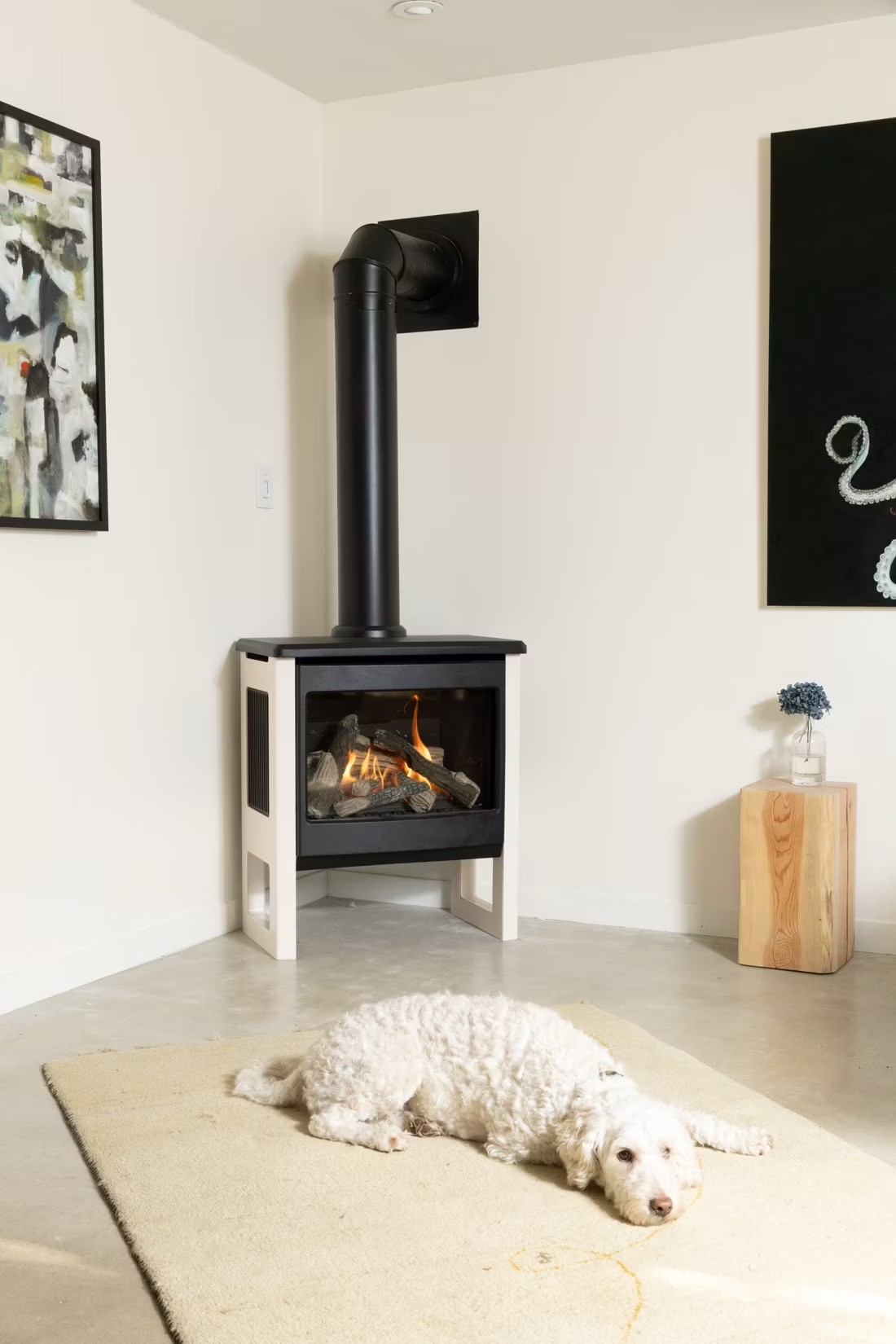
A gas fireplace is a fully built-in unit framed into a wall—the right choice for a remodel or an addition without an existing hearth. A gas insert drops into an existing masonry firebox, which fits a lot of Ambler's older twins and stone homes with fireplaces built decades before central heat was reliable. A gas stove is a freestanding cast-iron or steel unit that sits on a hearth pad, useful in a room without any existing fireplace opening and where a compact footprint matters—a common issue in Ambler's smaller rowhome floor plans.
Do I need a permit to install a gas fireplace in Ambler?
Yes. Ambler Borough requires a building permit for the fireplace installation and a separate mechanical/gas permit for any new gas line work, and the gas piping itself has to be run by a licensed gas fitter. Most hearth dealers coordinate all of this as part of the installation, pulling the permit through Ambler Borough's code enforcement office and scheduling the inspection once the unit and venting are in. It's worth confirming your quote includes permit handling rather than assuming it's separate.
What's the difference between vented and vent-free gas fireplaces?
Vented (direct-vent) gas fireplaces draw combustion air from outside and exhaust it back outside through sealed venting—they're the standard, code-friendly choice almost everywhere. Vent-free units burn gas directly into the room with no external venting; Pennsylvania permits them, but only within strict room-volume and ventilation rules, and they add water vapor and combustion byproducts to indoor air. For Ambler's older homes, many of which already run tighter on ventilation than newer construction, a direct-vent unit is the option most local dealers steer homeowners toward—it delivers real heat without any tradeoffs on indoor air quality.
How often should my gas fireplace be serviced?
Plan on an annual inspection, ideally before the heating season starts in the fall. A certified technician checks the burner, pilot assembly, venting, and gas connections, and cleans the glass and interior—a quicker visit than wood chimney sweeping but just as important for safety and efficiency. Local gas appliance service providers around Ambler typically charge $150 to $250 for this annual visit, and it's the same visit that catches a failing battery backup or thermocouple before you actually need it during an outage.
Gas vs. wood—which makes more sense for an Ambler home?
Wood-burning appliances are uncommon in Ambler today—most of the borough's lots and shared-wall twins and rowhomes make cutting, storing, and stacking cordwood impractical, and there's no nearby public land for cutting permits the way there is in more rural parts of Pennsylvania. Gas is the far more practical fit here: instant on-off operation, no ash or creosote to manage, and a clean look that suits historic fireplace surrounds. A handful of Ambler homeowners with detached houses on larger lots still keep a wood-burning insert running on species like oak, hickory, or cherry sourced from a regional firewood supplier, usually for ambiance or as true backup heat, but for the majority of borough addresses, gas is the practical answer.
Why is a fireplace insert so efficient?
An insert does two things: it seals the chimney completely, so you stop losing air you already paid to heat, and it radiates warmth into the room through the firebox and glass. Most add a heat-exchange fan that pulls cool room air underneath, wraps it around the hot firebox, and pushes it back out warm. Your home is more efficient before you've even lit the first fire.
Why is my open fireplace making my house colder?
Open fireplaces suck—literally. As the fire burns, it consumes air your furnace already paid to heat and pulls it out through the chimney, so the house is actually colder after the fire goes out than before you lit it. An insert fixes this: it seals the chimney, puts fixed glass across the front, and turns that hole in your house into a real heat source.
Can a fireplace actually lower my heating bill?
Yes—by creating a comfort zone. A furnace heats every square foot of the house just to warm the one room you're in; a gas fireplace on low burns roughly a sixth of the gas a typical furnace does. Set the furnace around 55–60 degrees as a baseline, then heat the rooms your family actually uses. Families who heat this way commonly save $20–$60 a month.
Does a fireplace add value to my home?
On average, a fireplace adds back to the home about the same amount you spent installing it. Add the monthly savings from heating the rooms you actually use instead of the whole house—often hundreds of dollars a year—and the value case is strong before you even count what a fire does for how your family uses the room.
Nearby Dealers
Hearth shops serving Ambler and the surrounding area. Every listing shows whether it is a WhyFire partner, a dealer we have verified as authorized for the brands we recommend, or a local business carrying hearth products. No manufacturer pays for placement. How we verify dealers →
Ambler Fireplace And Patio
Maple Glen Mechanical
Norristown Chimney
Kester Fireplace
Ambler Fireplace & Patio - Chalfont
Estates Chimney Sweep
Sequoia Supply Hatfield Showroom
Hearth & Stove LLC
Estates Chimney & Fireplace
Tor Chimney & Fireplace
Plumbarama Co. Inc.
Independence Propane
Tri County Hearth & Awning
Find your gas fireplace in Ambler.
Tell us about your Ambler home and fireplace, and we'll match you with a trusted local dealer plus a free Project Guide & Parts List—the exact parts, vent kit, and recommended installer for your project.
Find Your Fireplace →