
Instant Heat for Aliquippa's Older Homes—No Chimney Required.
A clean, plug-in path to real warmth for Aliquippa's rowhouses, ranches, and Ohio River-side homes—no flue, no gas line, no permits for most units.
Every Project Starts From One of These Five Situations
Heat that works with Aliquippa's older housing stock.
Aliquippa was built fast in the early 1900s to house J&L Steel workers, and it shows in the housing stock today—tight rowhouses, narrow lots along the hillsides above the Ohio River, and older single-family homes where a masonry chimney either was never built or has been sealed off for decades. Winters here bring an average low around 21°F and roughly 5,644 heating degree days, cold enough to want real supplemental warmth in a bedroom, den, or finished basement, but the housing layout makes wood and pellet appliances impractical for most residents—there's often nowhere to store cordwood or pellet bags on a 30-foot-wide lot, and running new venting through a shared party wall in a century-old duplex is its own headache.
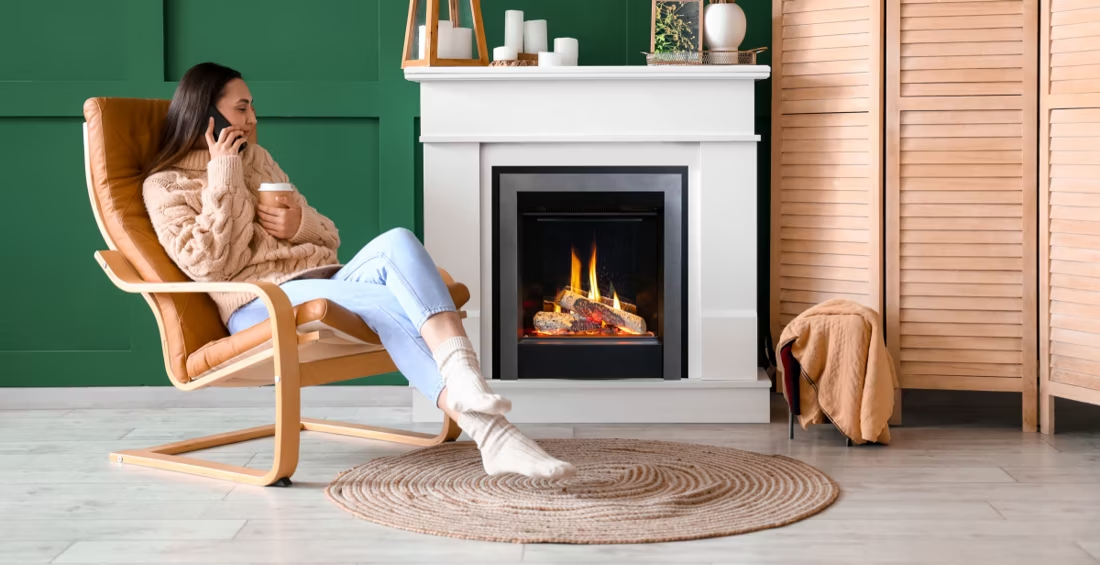
Electric fireplaces sidestep all of that. There's no flue to inspect, no gas line to run, and in most cases no building permit at all for a plug-in unit. The tradeoff is cost per BTU: Duquesne Light and Pennsylvania Power (the two utilities serving Beaver County) bill residential customers around 19.5 cents per kWh, which is on the higher end nationally, so an electric fireplace makes the most sense as zone heat for one room rather than a whole-house heating strategy. For a finished basement, an add-on bedroom, or a rowhouse living room where running new gas line isn't worth the cost, it's often the simplest option on the table.
Three steps. No salesperson until you're ready.
Tell us about your project
Your zip code, your situation, and the fuel you're leaning toward—or let the answers point you to one.
See what's actually available
The brands dealers within 100 miles genuinely carry—real options, never a catalog mirage.
Get your dealer & Project Guide
A trusted local dealer, plus the free Project Guide & Parts List that names every component of the job.
Frequently Asked Questions
How much does it cost to install an electric fireplace in Aliquippa?
Simple plug-in units—freestanding mantels or wall-mounts that use a standard outlet—typically run $400 to $1,200 installed, since there's often no electrical work beyond mounting the unit. Built-in electric fireplaces or inserts that require a dedicated 20-amp circuit, in-wall wiring, or custom framing run higher, usually $1,200 to $2,500, and call for a licensed electrician. Converting an old coal-era or wood-burning masonry fireplace to an electric insert—common in Aliquippa's older housing stock—tends to land in the middle of that range, since the existing firebox opening usually accepts a standard insert with minimal modification.
Will an electric fireplace actually heat a room, or is it just for looks?
Most electric fireplaces include a 1,500-watt heater rated for roughly 400 to 1,000 square feet, which is enough to noticeably warm a bedroom, den, or finished basement room on a cold Aliquippa evening. It won't replace a furnace on a 21°F night across an entire house, but as zone heat for the room you're actually sitting in, it works well—and you can run the flame effect alone, without the heater, during milder months for ambiance without the electric bill.
Do I need a permit to install an electric fireplace in Aliquippa?
A plug-in freestanding or wall-mount unit that uses an existing outlet generally doesn't require a permit. If you're installing a built-in unit that needs a new dedicated circuit or any electrical panel work, that portion of the job requires a licensed electrician and typically a borough electrical permit through Aliquippa's code enforcement office. Most local electric fireplace dealers coordinate this as part of the install, so you're not left tracking down permits yourself.
What will it cost to run an electric fireplace on my Duquesne Light or Penn Power bill?
At the local residential rate of about 19.5 cents per kWh, a typical 1,500-watt electric fireplace heater costs roughly 29 cents an hour to run on high. Used for a few hours each evening—say, 3 hours a night—that adds up to around $17 to $18 a month. Running the flame effect only, without the heater engaged, uses a fraction of that, often just a few watts, so many Aliquippa homeowners leave the flame on for ambiance and reserve the heater setting for the coldest nights.
Can I put an electric insert into my existing fireplace?
Yes, and it's one of the more common projects among Aliquippa's older homes with an existing masonry firebox from the early 1900s. Many of these chimneys have deteriorated mortar or liners that would need costly repair before they could safely handle a wood fire or gas conversion—an electric insert sidesteps that entirely, since it doesn't vent through the chimney at all. It simply sits in the existing firebox opening and plugs into a nearby outlet or a new dedicated circuit, giving you the look of a working fireplace without touching the flue.
Electric vs. gas—which is right for my Aliquippa home?
Gas fireplaces deliver more heat output and can serve as a real supplemental heat source through a Beaver County winter, but they require a gas line (new or existing) and typically a larger upfront investment. Electric fireplaces cost less to install, require no venting or gas work, and are often the better fit for rowhouses, finished basements, or rental units where running new gas line isn't practical or worth the cost. If your home already has natural gas service to it, it's worth comparing both; if it doesn't, electric is usually the more straightforward path.
What are the best electric fireplace brands to look for?
Dimplex, ClassicFlame, and Napoleon are widely regarded as the standard-bearers for realistic flame technology and reliable heater performance, and all three are commonly stocked by hearth dealers serving the Pittsburgh metro area. Look for models with adjustable flame brightness, a thermostat (not just a high/low switch), and a heater rated for your room's square footage—a local dealer can match the unit to your specific space during a consultation.
Are electric fireplaces safe for older homes or rental units?
Electric fireplaces produce no combustion byproducts—no carbon monoxide, no smoke, no need for a carbon monoxide detector specific to the unit—which makes them a straightforward option for Aliquippa's older housing stock and rental properties where landlords want to avoid the liability and maintenance of a wood or gas appliance. The exterior surface on most modern units stays cool to the touch, an added benefit in smaller rowhouse rooms where furniture sits close to the fireplace.
Why don't more Aliquippa homes use wood or pellet stoves?
Wood and pellet stoves are genuinely uncommon within Aliquippa's borough limits. The lot sizes in this part of Beaver County were laid out for steelworker rowhouses, not woodpiles, and running new flue pipe through a shared wall in a century-old duplex is often impractical or prohibitively expensive. A handful of homeowners with detached houses and yard space still burn wood for supplemental heat, but for most residents here, electric and gas cover the realistic options—electric especially so, since it needs no venting and no fuel storage at all.
Does an electric fireplace need a vent or chimney?
No—that's its superpower. An electric fireplace needs a wall and an outlet, period. No vent pipe, no gas line, no clearances to design around, which is why it works in bedrooms, offices, apartments, and walls where venting a gas or wood unit would be impractical or impossible. Installation is typically the simplest and least expensive of any fireplace type.
Do electric fireplaces actually produce heat?
Yes—most put out around 4,800–5,000 BTUs from a standard outlet, which comfortably warms a bedroom, office, or den as a comfort-zone heater. What they won't do is carry a whole house the way wood, gas, or pellet can. Think of electric as ambiance-first with honest supplemental heat: flames on with no heat in July, flames plus warmth in January.
How much should I budget for a fireplace?
For an average home—covering the fireplace, the vent pipe, and basic installation—a budget between $3,900 and $5,500 gives you a lot of options across wood, gas, and pellet. By the time you add finish work, gas line, and electrical, the average complete installation lands between $5,000 and $12,000 all-in. In a remodel or new build, a good rule is to put about 2.5% of the total project cost toward the fireplace.
What is an in-home preview and do I need one?
It's a visit where a hearth professional measures your space, confirms the model you picked actually works in your home, and walks the specs—framing, gas line, venting, finish work—before anything is ordered. Some details you just can't know until you see the house. Never make a down payment without one; it's the single most-skipped step that burns buyers.
Nearby Dealers
Hearth shops serving Aliquippa and the surrounding area. Every listing shows whether it is a WhyFire partner, a dealer we have verified as authorized for the brands we recommend, or a local business carrying hearth products. No manufacturer pays for placement. How we verify dealers →
Buck Stove & Fireplace
Suburban Insulation
Northern Woodworking
Fireplace And Patio Place
The Stove Place
Soot Seekers Chimney Service
Builders Wholesale
Fireplace & Patioplace
Buckeye Valley Chimney Service
All Seasons Fireplace & Home
Tri-State Stoves
Home Improvement Center
Electric Service in Aliquippa
An electric fireplace's heater draws about 1,500 watts—pennies per hour at local rates.
Duquesne Light Co
Pennsylvania Power Co
Find your electric fireplace in Aliquippa.
Tell us a bit about your home and we'll put together a free Project Guide & Parts List for your electric fireplace project—the right unit, the exact parts, and a trusted local dealer near Aliquippa who can install it right.
Find Your Fireplace →