
Heat you can flip on in seconds, right here in Turner.
No chimney, no gas line, no smoke—just warmth and ambiance for Turner's mild Willamette Valley winters. Find the right unit and connect with a trusted local dealer.
Every Project Starts From One of These Five Situations
Mild winters, real electric bills—the case for electric heat in Turner.
Turner sits in the Willamette Valley south of Salem at just 409 feet of elevation, where winters are mild by Oregon standards—an average winter low around 36°F and a winter heating load well below towns with much colder climates. That's a fraction of what a town like Bozeman, Montana or Fargo, North Dakota sees, which means an electric fireplace here rarely has to fight sub-zero nights as the sole heat source. Instead, it's asked to do what it does best: zone heat a family room, add warmth to a primary bedroom, or bring ambiance to a space without the smoke, sparks, or seasonal burn restrictions that come with wood.
Wildfire smoke is the main air quality concern in this part of Marion County, and it shapes how a lot of local households think about heat. An electric fireplace produces zero emissions and isn't subject to burn bans or advisories the way a wood stove burning Douglas fir or ponderosa pine can be. Homes here are served by Portland General Electric at a residential rate around $0.18 per kWh—on the higher end for Oregon—so most local buyers treat electric as smart supplemental heat rather than a whole-home furnace replacement. For the many Turner properties without a natural gas line reaching the property, an electric insert or built-in is often the simplest fireplace upgrade available: no venting, no gas permit, minimal electrical work.
Three steps. No salesperson until you're ready.
Tell us about your project
Your zip code, your situation, and the fuel you're leaning toward—or let the answers point you to one.
See what's actually available
The brands dealers within 100 miles genuinely carry—real options, never a catalog mirage.
Get your dealer & Project Guide
A trusted local dealer, plus the free Project Guide & Parts List that names every component of the job.
Frequently Asked Questions
How much does an electric fireplace installation cost in Turner?
A plug-in electric insert or freestanding unit typically runs $400 to $1,500 installed, since most just need an existing outlet and a mantel or surround. A built-in electric fireplace or wall-mounted unit that requires a dedicated 20-amp circuit runs higher, often $1,500 to $3,500, once an electrician cuts in a new circuit and a carpenter builds or modifies the surround. Because there's no chimney, no gas line, and no venting to size, electric installs in Turner are consistently the fastest and least invasive of the fireplace options—often a one-day job compared to a multi-day wood or gas install.
Do I need a permit to install an electric fireplace in Turner?
A simple plug-in unit that draws off an existing outlet generally doesn't require a permit. If your install needs a new dedicated circuit, a licensed electrician will typically pull an electrical permit through Marion County's Building Codes Division, since Turner is unincorporated and permitting runs through the county rather than a city building department. Most local dealers coordinate this as part of the install quote, so it's rarely something homeowners have to manage themselves.
What will it cost to run an electric fireplace with Portland General Electric rates?
Turner homes are served by Portland General Electric, where residential rates run around $0.18 per kWh—a bit higher than the Oregon average. A typical 1,500-watt electric fireplace heater costs roughly $0.27 an hour to run at full heat output, or a little over $2 for an 8-hour evening. Most owners run the flame effect alone (a few watts) for ambiance and only kick on the heater when they want supplemental warmth, which keeps monthly costs modest even at PGE's rate.
Is an electric fireplace enough heat for a Turner winter?
For most Turner homes, yes—as supplemental heat. With an average winter low around 36°F and a winter heating load well below towns with much colder climates, this part of the Willamette Valley doesn't see the deep, sustained cold of eastern Oregon or somewhere like Bozeman, Montana. Electric fireplaces are built to zone-heat a single room efficiently, not replace a central furnace, so they work well for a family room, den, or bonus space where you want extra warmth without running the whole-house heat pump harder.
Electric vs. wood—which makes more sense for my Turner home?
Wood heat has deep roots in this part of Marion County, with Douglas fir, ponderosa pine, and lodgepole pine all common and cutting permits available through nearby national forests like Mt. Hood and Gifford Pinchot for $5 to $20 per cord in season. But wood means smoke, ash, and exposure to wildfire-season air quality advisories that periodically affect this area. Electric produces no smoke and no emissions, needs no cutting permits or chimney sweeps, and can be installed almost anywhere in a home. For a primary heat source during a power outage, wood still wins—an electric fireplace won't run without utility power. For daily convenience and cleaner air, electric is usually the easier choice.
Electric vs. gas—which is right for my home?
Much of Turner sits outside natural gas utility territory, so a gas fireplace here typically means propane, with its own tank installation and gas-fitter costs. Electric sidesteps all of that: no fuel tank, no gas line, no annual gas appliance inspection. Gas still delivers more raw heat output and can run during a power outage with the right ignition system, which matters for whole-room heating. But for homeowners who want fireplace ambiance and zone heat without adding a fuel system to the property, electric is the more practical fit in a town without gas infrastructure at the curb.
Can I put an electric insert into my existing wood-burning fireplace?
Yes, and it's one of the more common projects local dealers handle in older Turner homes with existing masonry fireplaces. An electric insert slides into the existing firebox opening, plugs into a nearby outlet (or a new dedicated circuit for larger units), and gives you flame-effect ambiance and supplemental heat without opening the flue, running a liner, or maintaining a chimney. It's a straightforward way to retire an old, drafty wood fireplace that's rarely used while keeping the mantel and surround you already have.
How much maintenance does an electric fireplace need?
Very little. There's no chimney to sweep, no creosote to manage, and no annual gas line inspection. Maintenance is mostly dusting the interior, occasionally cleaning the glass front, and replacing LED components if the flame effect dims after years of use—most manufacturers rate LED elements for 20,000+ hours. This low-maintenance profile is a big part of why electric units are popular in Turner's smaller homes and rentals, where owners want fireplace ambiance without an ongoing service commitment.
Will my electric fireplace still work during a power outage?
No—electric fireplaces require utility power to run both the heater and the flame effect, so they'll shut off along with everything else during a Portland General Electric outage. This is the main tradeoff against wood heat, which keeps working with no power at all. If backup heat during storms is a real concern for your Turner property, some households pair an electric fireplace for daily convenience with a wood stove or portable propane heater as a power-outage backup.
Can I put a TV above my fireplace?
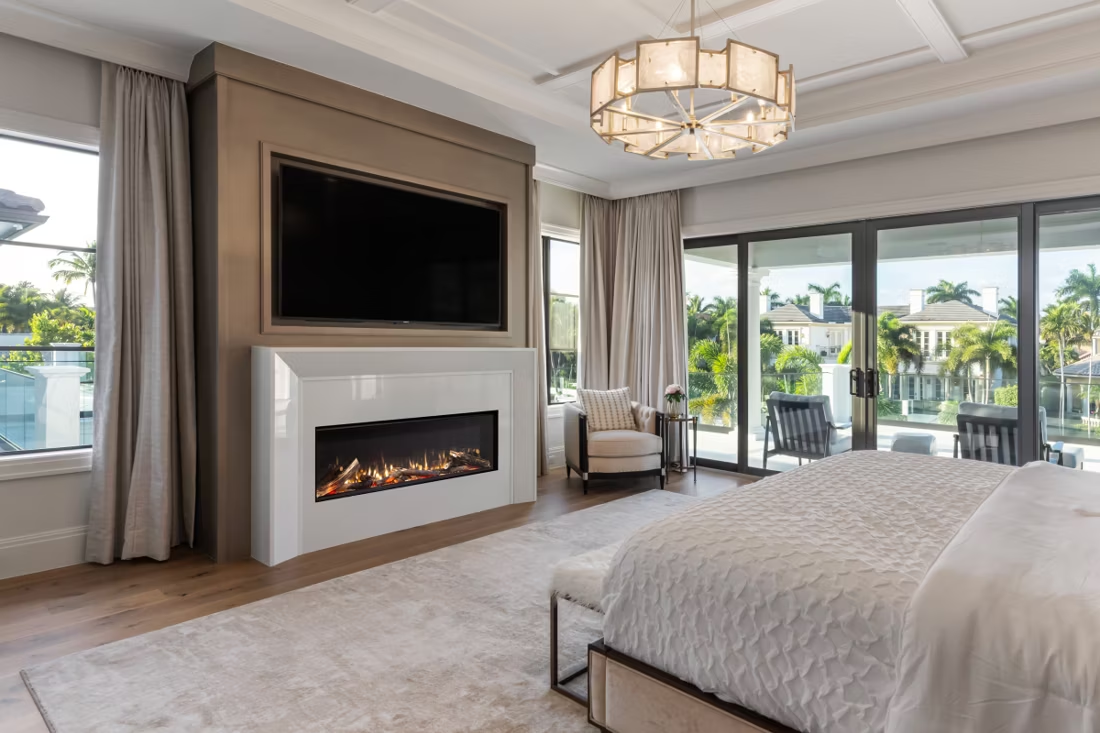
Yes—with an asterisk. Fireplaces are hot and TVs don't like heat. Either put a mantel between them to deflect rising warmth, or choose a fireplace with heat-management technology that creates a cool zone on the wall above—the wall stays around 125 degrees, barely warm, while the room still gets full heat. If you like clean lines and don't want a mantel, heat management is the answer.
Does an electric fireplace need a vent or chimney?
No—that's its superpower. An electric fireplace needs a wall and an outlet, period. No vent pipe, no gas line, no clearances to design around, which is why it works in bedrooms, offices, apartments, and walls where venting a gas or wood unit would be impractical or impossible. Installation is typically the simplest and least expensive of any fireplace type.
What is an in-home preview and do I need one?
It's a visit where a hearth professional measures your space, confirms the model you picked actually works in your home, and walks the specs—framing, gas line, venting, finish work—before anything is ordered. Some details you just can't know until you see the house. Never make a down payment without one; it's the single most-skipped step that burns buyers.
Does a fireplace add value to my home?
On average, a fireplace adds back to the home about the same amount you spent installing it. Add the monthly savings from heating the rooms you actually use instead of the whole house—often hundreds of dollars a year—and the value case is strong before you even count what a fire does for how your family uses the room.
Nearby Dealers
Hearth shops serving Turner and the surrounding area. Every listing shows whether it is a WhyFire partner, a dealer we have verified as authorized for the brands we recommend, or a local business carrying hearth products. No manufacturer pays for placement. How we verify dealers →
Haven Spa Pool & Hearth - Salem
Stayton Builders Mart
Murphy’s Fireplace & Stoves
Philco & Associates
Melton's Fireplace Shop
Silver Creek Chimney Sweep
Home Comfort
Cascade Chimney Care Nw
Schaefers Recreation Equipment
Electric Service in Turner
An electric fireplace's heater draws about 1,500 watts—pennies per hour at local rates.
Portland General Electric Co
Find your electric fireplace in Turner.
Tell us a bit about your home and we'll match you with the right electric fireplace or insert, plus a free Project Guide & Parts List with your recommended local dealer.
Find Your Fireplace →