
Modern heat for Talent's rebuilt homes.
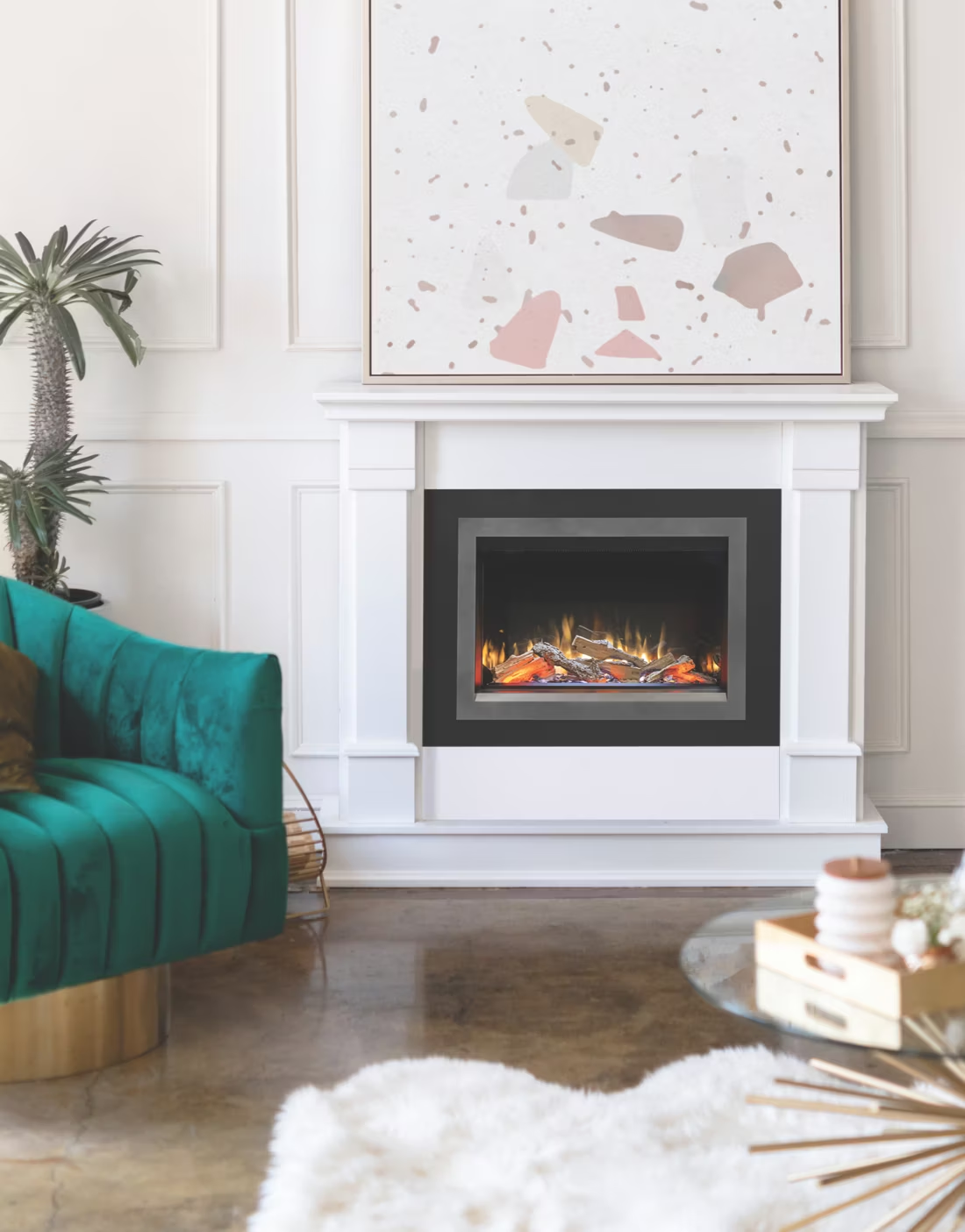
No chimney, no venting, no added smoke—electric fireplaces fit the way Talent has rebuilt since 2020. Find the right unit and connect with a trusted local dealer.
Every Project Starts From One of These Five Situations
Zero-clearance heat for a town that's rebuilding smarter.
Talent sits in the Rogue Valley at 1,638 feet, with winters that are mild by Oregon standards—average lows near 30°F and a heating season that's just a fraction of what cold-climate towns like Bozeman, MT or Duluth, MN see in a typical winter. What's shaped hearth decisions here more than climate is history: the September 2020 Almeda Fire destroyed a large share of Talent's housing stock, and much of what's been rebuilt since has leaned toward electric fireplaces and inserts. No chimney to frame, no gas line to run, and a straightforward addition during new-construction electrical rough-in.
Winter inversions in the Rogue Valley trap wood smoke and wildfire smoke close to the ground, a recurring concern for Jackson County air quality officials. For homeowners who rebuilt after the fire—or who are renovating an older Talent home—an electric fireplace delivers the look and supplemental warmth of a hearth without adding particulate to an airshed that already deals with enough of it in fire season. PacifiCorp is the electric utility serving Talent, with residential rates around $0.125 per kWh, which keeps the running cost of an electric insert used for zone heat or ambiance to a few dollars a month.
Three steps. No salesperson until you're ready.
Tell us about your project
Your zip code, your situation, and the fuel you're leaning toward—or let the answers point you to one.
See what's actually available
The brands dealers within 100 miles genuinely carry—real options, never a catalog mirage.
Get your dealer & Project Guide
A trusted local dealer, plus the free Project Guide & Parts List that names every component of the job.
Frequently Asked Questions
How much does an electric fireplace installation cost in Talent?
Electric fireplaces are the least expensive hearth product to install because there's no chimney, no venting, and usually no gas line involved. A plug-in insert or wall-mounted unit runs $300 to $1,000 for the appliance itself, plus $200 to $600 for basic installation—mounting, trim, and an outlet if one isn't already in place. Built-in electric fireplaces that need a dedicated 120V or 240V circuit run higher, typically $1,500 to $3,000 once an electrician is involved. For homes rebuilt in Talent since the 2020 Almeda Fire, this work often gets bundled into the electrical rough-in during construction, which keeps the incremental cost low.
Is electric fireplace heat enough for Talent's winters?
Talent's winters are moderate for the Pacific Northwest—average lows around 30°F and a heating season well under towns like Duluth, MN or Bozeman, MT that see two to three times that load. A standard electric fireplace, usually rated around 1,500 watts (about 5,000 BTU), works well as zone heat for a living room or bedroom and pairs naturally with a heat pump or forced-air system handling the rest of the house. It's not sized to carry whole-home heating on its own, but for supplemental warmth in a Rogue Valley winter, that's rarely necessary.
Can an electric fireplace be my home's main heat source in Talent?
Generally no. Most electric fireplaces top out around 5,000 BTU per unit, which is enough to noticeably warm one room but not carry a whole house through a Rogue Valley cold snap. In Talent, electric fireplaces are almost always installed as a complement to a central heat pump or furnace—common in the homes rebuilt after the 2020 fire, where new HVAC systems went in alongside the fireplace rather than instead of it. If you're trying to heat an entire addition or a detached space, a local dealer can talk through higher-wattage options or whether a different fuel makes more sense.
Do I need a permit to install an electric fireplace in Talent?
A simple plug-in electric fireplace that uses an existing standard outlet typically doesn't require a permit. If your unit needs a new dedicated circuit—common with larger built-in models—that electrical work requires a permit through the City of Talent or Jackson County, depending on your address, and should be pulled by a licensed electrician. Because so much of Talent's housing stock has gone through full electrical permitting during post-fire rebuilds, most local electricians here are already comfortable folding a fireplace circuit into that process.
What's the difference between an electric fireplace and an electric insert?
An electric insert is built to slide into an existing masonry or factory-built fireplace opening, using the space you already have without any venting changes. A standalone electric fireplace—wall-mounted, freestanding, or built into new framing—works anywhere there's power, which is why it's become common in Talent homes built from the ground up since 2020; there's no existing fireplace opening to retrofit into, so a built-in unit gets framed in during construction instead.
Will my electric fireplace work during a power outage?
No—electric fireplaces require power to run the heater, flame effect, and blower, so they go dark during an outage just like any other electric appliance. This matters in Talent: PacifiCorp has implemented Public Safety Power Shutoffs during periods of high wildfire risk in the Rogue Valley, sometimes for a day or more. If backup heat during an outage is a priority for your household, an electric fireplace should be a secondary or ambiance choice rather than your only hearth appliance—a wood or propane-fueled option that doesn't depend on the grid is worth discussing with a local dealer if that's a real concern for your home.
How much does it cost to run an electric fireplace in Talent?
At PacifiCorp's residential rate of roughly $0.125 per kWh, a typical 1,500-watt electric fireplace costs about 19 cents per hour to run on high heat. Used a few hours a night through a Rogue Valley winter, that's usually $10 to $25 a month—noticeably cheaper to operate day-to-day than running a wood stove factoring in firewood costs, though wood remains cheaper as a primary heat source for homes that burn multiple cords a season.
What size electric fireplace do I need for my Talent home?
For most rooms, a 26- to 50-inch electric insert or wall-mount unit rated around 1,500 watts covers a standard living room or bedroom in a well-insulated Talent home. Larger open-concept spaces common in newer post-2020 construction may do better with two zoned units or a higher-wattage built-in model rather than a single oversized fireplace. A local dealer can size this based on your square footage and layout during a quick in-home or virtual consult.
Electric vs. gas—which is right for my Talent home?
Gas fireplaces put out more real heat—typically 20,000 to 30,000 BTU versus an electric unit's 5,000—and can serve as genuine supplemental heat on cold Rogue Valley nights. Electric fireplaces cost far less to install, need no gas line or venting, and produce zero combustion byproducts, which matters given how often winter inversions trap smoke in this valley. For Talent homeowners rebuilding after the Almeda Fire, electric has been the faster, simpler path to add hearth ambiance to a new build; homeowners prioritizing real heat output alongside a heat pump often look at gas instead. Both are worth discussing with a local dealer who can walk through your specific home.
Can I put a TV above my fireplace?
Yes—with an asterisk. Fireplaces are hot and TVs don't like heat. Either put a mantel between them to deflect rising warmth, or choose a fireplace with heat-management technology that creates a cool zone on the wall above—the wall stays around 125 degrees, barely warm, while the room still gets full heat. If you like clean lines and don't want a mantel, heat management is the answer.
Do electric fireplaces actually produce heat?
Yes—most put out around 4,800–5,000 BTUs from a standard outlet, which comfortably warms a bedroom, office, or den as a comfort-zone heater. What they won't do is carry a whole house the way wood, gas, or pellet can. Think of electric as ambiance-first with honest supplemental heat: flames on with no heat in July, flames plus warmth in January.
How much should I budget for a fireplace?
For an average home—covering the fireplace, the vent pipe, and basic installation—a budget between $3,900 and $5,500 gives you a lot of options across wood, gas, and pellet. By the time you add finish work, gas line, and electrical, the average complete installation lands between $5,000 and $12,000 all-in. In a remodel or new build, a good rule is to put about 2.5% of the total project cost toward the fireplace.
Can a fireplace actually lower my heating bill?
Yes—by creating a comfort zone. A furnace heats every square foot of the house just to warm the one room you're in; a gas fireplace on low burns roughly a sixth of the gas a typical furnace does. Set the furnace around 55–60 degrees as a baseline, then heat the rooms your family actually uses. Families who heat this way commonly save $20–$60 a month.
Nearby Dealers
Hearth shops serving Talent and the surrounding area. Every listing shows whether it is a WhyFire partner, a dealer we have verified as authorized for the brands we recommend, or a local business carrying hearth products. No manufacturer pays for placement. How we verify dealers →
Keller Kitchen & Bath Showcase
Alaska Masonry Heat
Electric Service in Talent
An electric fireplace's heater draws about 1,500 watts—pennies per hour at local rates.
Find your electric fireplace in Talent.
Tell us a bit about your home and we'll match you with a trusted local dealer and send over your free Project Guide & Parts List—the exact parts and plan for your electric fireplace project in Talent.
Find Your Fireplace →