
Electric heat that works the moment you flip a switch in Sisters.
No gas line, no chimney, no wood to split—just clean zone heat for a high-desert mountain town where Central Electric Cooperative keeps rates low. Find the right unit and connect with a trusted local dealer.
Every Project Starts From One of These Five Situations
Zone heat that doesn't rely on a chimney or a gas line.
Sisters sits at 3,190 feet on the eastern slope of the Cascades, and the numbers here are tougher than most people assume for a town this size—colder over a season than Bozeman, Montana in most years, with winter lows averaging 21°F and hard freezes that drop well below zero. There's no natural gas utility serving Sisters, which means most homes run on propane, wood, or electricity. Central Electric Cooperative supplies power at $0.0975 per kWh, a notably low rate that makes electric zone heat more affordable here than in a lot of the country.
That combination—no gas infrastructure, cheap electricity, and a town full of vacation homes, guest cabins, and additions where running a chimney or gas line isn't practical—is exactly where electric fireplaces earn their place. They're also the cleanest option during Sisters' recurring winter inversions and wildfire-smoke seasons, when a fire-free heat source in a bedroom, den, or short-term rental is worth more than the ambiance of an open flame. A licensed electrician can have a built-in unit running on its own dedicated circuit, or a plug-in insert can go into an existing masonry opening with no wiring work at all.
Three steps. No salesperson until you're ready.
Tell us about your project
Your zip code, your situation, and the fuel you're leaning toward—or let the answers point you to one.
See what's actually available
The brands dealers within 100 miles genuinely carry—real options, never a catalog mirage.
Get your dealer & Project Guide
A trusted local dealer, plus the free Project Guide & Parts List that names every component of the job.
Frequently Asked Questions
How much does it cost to install an electric fireplace in Sisters?
Plan on roughly $500 to $2,500 depending on the unit. A plug-in electric insert that drops into an existing fireplace opening or a freestanding electric stove is on the low end—often just the cost of the unit itself, since no wiring changes are needed. A built-in linear electric fireplace set into a wall or new construction runs higher once you add a dedicated 120V or 240V circuit, an electrician's labor, and any framing or trim work. Because Central Electric Cooperative's residential rate is under 10 cents per kWh, the operating cost stays modest even for larger units used regularly.
Is electric heat enough for a Sisters winter, or do I need wood or propane too?
Most electric fireplaces are built for supplemental zone heat, not whole-home heating—a typical 1,500-watt unit puts out around 5,000 BTUs, which will comfortably warm a bedroom or den but won't carry a home through a hard freeze on its own. Given Sisters' winters, which run colder over the season than Bozeman, Montana, and no natural gas service in town, most households pair electric units with a propane furnace or a wood stove for primary heat, especially since firewood permits through Deschutes National Forest and Ochoco National Forest run as little as $5 to $20 per cord. Electric fireplaces are the layer people add for a specific room, a converted garage, or a guest space where running new gas or venting isn't worth it.
Do electric fireplaces actually produce real heat, or are they just for looks?
Both, depending on the model and how it's used. Every electric fireplace has a built-in resistance heater—typically 4,600 to 5,200 BTU output—that can be run independently of the flame effect, so you can use the visual with the heat off in shoulder-season Sisters evenings, or run both together on a cold January night. They heat a single room effectively but won't push warm air through a house the way a wood stove or ducted furnace does. For a den, primary bedroom, or converted bonus room in a Sisters home, that's usually exactly the amount of heat needed.
What's the best type of electric fireplace for a Sisters vacation home or guest cabin?
For short-term rentals and guest cabins around Sisters, a plug-in electric insert or a wall-mounted unit is usually the practical choice—no gas line, no chimney, and nothing for a renter or guest to operate incorrectly beyond a remote or wall switch. Owners who want the look of a built-in without new wiring often choose an insert sized to an existing masonry opening. For new construction or larger additions, a built-in linear electric fireplace on its own circuit gives a more finished, architectural look and is common in Sisters' newer mountain-modern builds.
Do I need a permit to install an electric fireplace in Sisters?
A plug-in electric insert or freestanding unit that uses an existing outlet typically doesn't require a permit. A built-in electric fireplace that needs a new dedicated circuit does require an electrical permit, inspected under Deschutes County's building code since Sisters is unincorporated for some permitting purposes and coordinates through the county building division. A licensed electrician pulling the permit as part of the install is the norm, and it's worth confirming before work starts rather than after.
Will my electric fireplace still work if the power goes out?
No—and this is worth being direct about, especially in a place like Sisters where winter storms do occasionally knock out power for hours at a time. Electric fireplaces have no battery backup and no combustion source; when Central Electric Cooperative's lines go down, the unit goes dark along with everything else. Homes that need heat during an outage typically keep a wood stove or a propane appliance with a standing pilot as backup. Electric is best understood as everyday convenience heat, not emergency heat.
What's the difference between an electric insert, an electric stove, and a built-in electric fireplace?
An electric insert is sized to slide into an existing masonry fireplace opening, usually just plugging into an outlet behind it. An electric stove is a freestanding, stove-shaped unit that sits on the floor like a wood stove but plugs in—no hearth pad or clearances required. A built-in electric fireplace is installed into a wall or custom surround, usually wired to its own circuit, and gives the cleanest, most architectural look. For most Sisters homes with an existing fireplace, an insert is the simplest upgrade; new construction and additions usually go with a built-in.
How much does it cost to run an electric fireplace in Sisters?
At Central Electric Cooperative's residential rate of $0.0975 per kWh, a typical 1,500-watt unit costs roughly 15 cents per hour to run on full heat. Used five hours a night through a Sisters winter, that's around $22 a month—noticeably cheaper than the same runtime on propane, which is the main fuel alternative in a town without natural gas service. Running the flame effect alone with the heater off costs only a fraction of that, since the light uses a small percentage of the unit's wattage.
Electric vs. propane—which makes more sense for a Sisters home?
Since Sisters has no natural gas utility, propane is the main combustion alternative to electric. Propane delivers more heat per appliance and keeps working during a power outage, which matters given the town's winter storm history. Electric costs less to install, needs no tank or fuel deliveries, produces no combustion byproducts, and is cheaper to run at Central Electric Cooperative's rate for moderate use—but it depends entirely on the grid staying up. Many Sisters homeowners end up with both: propane for primary heat or backup, electric for a guest room, addition, or rental unit where simplicity matters more than backup capability.
Can I put a TV above my fireplace?
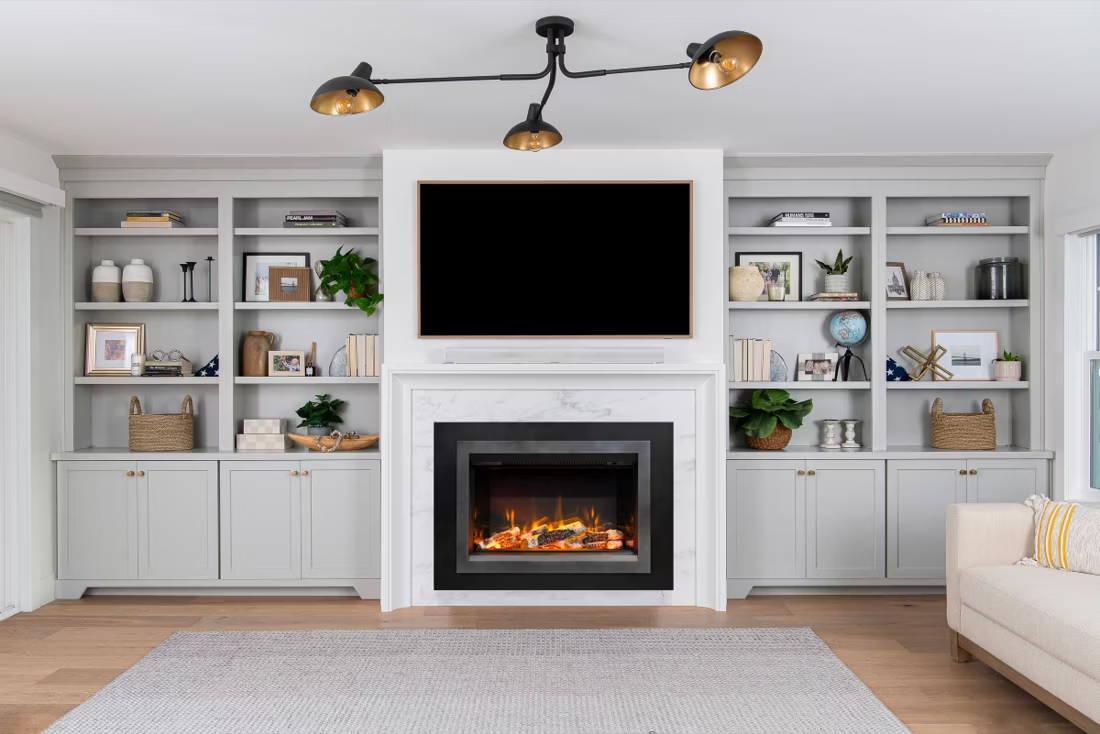
Yes—with an asterisk. Fireplaces are hot and TVs don't like heat. Either put a mantel between them to deflect rising warmth, or choose a fireplace with heat-management technology that creates a cool zone on the wall above—the wall stays around 125 degrees, barely warm, while the room still gets full heat. If you like clean lines and don't want a mantel, heat management is the answer.
Do electric fireplaces actually produce heat?
Yes—most put out around 4,800–5,000 BTUs from a standard outlet, which comfortably warms a bedroom, office, or den as a comfort-zone heater. What they won't do is carry a whole house the way wood, gas, or pellet can. Think of electric as ambiance-first with honest supplemental heat: flames on with no heat in July, flames plus warmth in January.
Does a fireplace add value to my home?
On average, a fireplace adds back to the home about the same amount you spent installing it. Add the monthly savings from heating the rooms you actually use instead of the whole house—often hundreds of dollars a year—and the value case is strong before you even count what a fire does for how your family uses the room.
How much should I budget for a fireplace?
For an average home—covering the fireplace, the vent pipe, and basic installation—a budget between $3,900 and $5,500 gives you a lot of options across wood, gas, and pellet. By the time you add finish work, gas line, and electrical, the average complete installation lands between $5,000 and $12,000 all-in. In a remodel or new build, a good rule is to put about 2.5% of the total project cost toward the fireplace.
Nearby Dealers
Hearth shops serving Sisters and the surrounding area. Every listing shows whether it is a WhyFire partner, a dealer we have verified as authorized for the brands we recommend, or a local business carrying hearth products. No manufacturer pays for placement. How we verify dealers →
Sticks And Stones
Emerald Pool & Patio
Quality Heating
Brilliant Environmental Products
Creative Fire
Bend Spa And Hearth
Diversified Heating And Cooling
Cascade Chimney Service
Master's Touch
Countryside Stove And Chimney
Electric Service in Sisters
An electric fireplace's heater draws about 1,500 watts—pennies per hour at local rates.
Central Electric Coop Inc - (Or)
Find your electric fireplace in Sisters.
Tell us a bit about your home and we'll match you with a trusted local dealer and send over a free Project Guide & Parts List—the exact unit, circuit requirements, and installer recommendation for your Sisters project.
Find Your Fireplace →