
Add Warmth and Ambiance Without a Chimney in Shady Cove.
No venting, no masonry, no wood to split—just plug-in or hardwired warmth for river cabins, manufactured homes, and Highway 62 getaways. Find the right unit and connect with a trusted local dealer.
Every Project Starts From One of These Five Situations
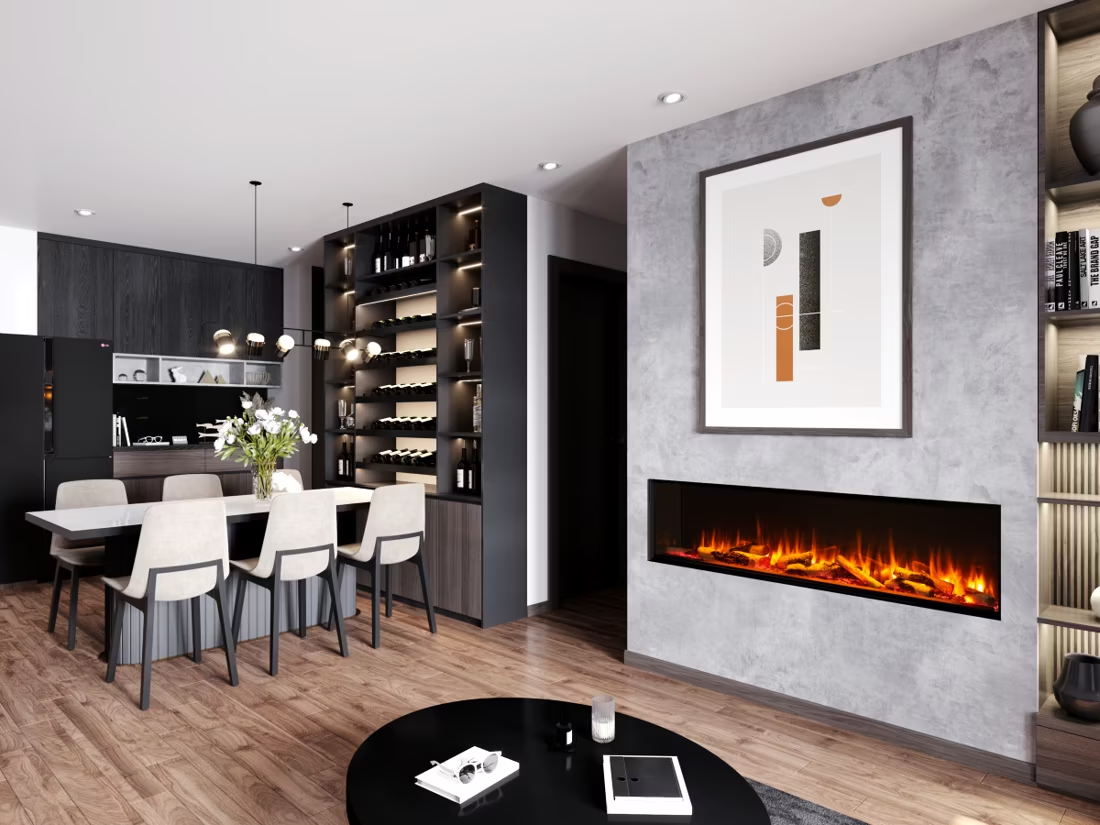
The easiest hearth upgrade on the Rogue River.
Shady Cove sits along the Rogue River at just 1,378 feet, with winter lows averaging a relatively mild 31°F and a moderate winter heating season overall—nowhere near the extremes of a place like Bozeman, Montana, but still enough to want real heat on a January evening. Because the climate here is moderate rather than brutal, a lot of local homes don't need a full-time primary heat source in every room. That's exactly the gap electric fireplaces fill: zone heat and fire-look ambiance in a living room, bonus room, or riverside cabin without adding a chimney or gas line to the project.
Shady Cove has a large share of manufactured homes, vacation cabins, and fishing and rafting rental properties along the Rogue—many of which have insurance or HOA restrictions on open-flame wood burning, or simply lack the wall cavity for a masonry chimney. A plug-in or built-in electric unit sidesteps both problems. PacifiCorp serves electric accounts here at roughly 12.5 cents per kWh, so a typical 1,500-watt unit running on high costs somewhere around 19 cents an hour—cheap zone heat for a den or guest room. And with wildfire smoke a recurring late-summer concern in the Rogue Valley, an electric unit adds fire ambiance without putting any combustion byproducts into the air you're already trying to keep clean.
Three steps. No salesperson until you're ready.
Tell us about your project
Your zip code, your situation, and the fuel you're leaning toward—or let the answers point you to one.
See what's actually available
The brands dealers within 100 miles genuinely carry—real options, never a catalog mirage.
Get your dealer & Project Guide
A trusted local dealer, plus the free Project Guide & Parts List that names every component of the job.
Frequently Asked Questions
How much does an electric fireplace installation cost in Shady Cove?
Plug-in electric inserts and freestanding stoves are the cheapest entry point—typically $150 to $800 including delivery and a basic in-wall or surface mount, since they run off a standard outlet and need no permit. Built-in linear electric fireplaces with custom framing, a recessed wall opening, and a dedicated 120V or 240V circuit run from $1,500 to $4,500 once an electrician is involved. Because there's no chimney, no venting, and no gas line, electric is consistently the lowest-cost hearth upgrade for Shady Cove homes and river cabins compared to wood or gas installs.
Do I need a permit to install an electric fireplace in Shady Cove?
A plug-in unit that runs off an existing outlet generally doesn't require a permit—it's treated like any other appliance. If your install involves a new dedicated circuit, a built-in recessed unit, or moving wiring inside a wall, that electrical work typically needs a permit through Jackson County's building and electrical permitting process, since Shady Cove falls under county jurisdiction for most trade permits. A licensed electrician handling the circuit work will usually pull that permit as part of the job, so it's worth confirming that's included in any installer's quote.
How much does it actually cost to run an electric fireplace here?
At PacifiCorp's residential rate of about $0.1252 per kWh, a typical 1,500-watt electric fireplace running on full heat costs roughly $0.19 an hour, or a little under $5 for a full 24 hours of continuous use. Most owners run theirs a few hours an evening rather than around the clock, so realistic monthly cost for regular evening use lands in the $10-$25 range. That's meaningfully cheaper to operate than a lot of homeowners expect, and one reason electric units are popular as supplemental heat in Shady Cove's milder winters rather than a whole-home solution.
Is an electric fireplace a good fit for a Rogue River cabin or rental property?
Often, yes. A lot of the vacation and rental cabins around Shady Cove and along the Highway 62 corridor toward Crater Lake are manufactured homes or seasonal properties where insurance policies restrict open-flame wood stoves, or where a masonry chimney simply isn't practical. Electric units solve both issues—no combustion, no venting, and most models can be installed by a licensed electrician in a day. For rental cabins specifically, a wall-mounted electric fireplace also gives guests visual ambiance without the liability or cleanup of a real fire.
Electric vs. wood or gas—which should I choose for my Shady Cove home?
Wood and gas are both standard, common choices in Jackson County, and either will out-heat an electric unit on genuinely cold nights—electric fireplaces typically max out around 4,000-5,000 BTUs (about 1,500 watts), which is fine for zone heat in one room but not enough to carry a whole house through a hard freeze. What electric offers instead is simplicity: no wood to split from local Douglas fir or ponderosa pine stands, no gas line or propane tank, no chimney sweep, and no clearance issues in a manufactured home. For a primary living space in an older farmhouse, wood or gas often makes more sense. For a bonus room, bedroom, or cabin where you mostly want the fire-look and some supplemental warmth, electric is usually the simpler and cheaper call.
What's the difference between an electric insert, a built-in, and a freestanding electric stove?
An electric insert is sized to slide into an existing masonry fireplace opening, instantly converting a cold, unused wood fireplace into usable heat and ambiance without any venting work. A built-in (or linear) electric fireplace is designed to be framed into a wall during a remodel, giving a clean, flush, wall-set look—this is the option that usually needs an electrician for a dedicated circuit. A freestanding electric stove looks like a traditional wood stove but plugs into a standard outlet, making it the easiest option for a rental cabin or a room with no existing fireplace at all. Most Shady Cove homeowners converting an old wood fireplace go with an insert; those doing a fresh remodel go built-in.
Will my electric fireplace work if the power goes out?
No—electric fireplaces are entirely dependent on grid power, and there's no battery backup option the way there is with some gas units. During winter storms in the Rogue Valley, PacifiCorp outages can knock out an electric fireplace right along with everything else in the house. That's the one real tradeoff against wood, which keeps working with no power at all, and it's worth factoring in if you're relying on the fireplace for actual heat rather than just supplemental warmth or ambiance. Homes that want both convenience and outage-proof backup heat sometimes pair an electric unit in the main living space with a wood stove elsewhere.
What are the best electric fireplace brands to look for?
Dimplex and Napoleon are the two most widely carried brands among Pacific Northwest hearth dealers and both make a full range from small plug-in inserts to large linear built-ins with realistic flame technology. Touchstone is a common choice for smaller wall-mounted units in bedrooms or cabins where budget matters more than flame realism. For a Shady Cove installation, a local dealer can show you the flame effect and heat output side by side—the difference between a $300 big-box unit and a $1,500 Dimplex is usually obvious once you see both running.
Electric vs. pellet stove—which makes more sense for my situation?
Pellet stoves burn compressed wood pellets—regional brands like Bear Mountain and Lignetics are both available in the Rogue Valley—and put out real, substantial heat (typically 40,000-50,000 BTUs), enough to serve as a home's primary heat source. But they need venting, a hopper you have to keep loaded, and electricity to run the auger and blower, so they're not a true backup during outages either. Electric fireplaces put out far less heat but need zero venting, zero fuel handling, and cost a fraction to install. If you want serious heat output and are comfortable maintaining a hopper and vent pipe, pellet is the stronger choice. If you want low-maintenance ambiance and supplemental warmth in Shady Cove's milder winters, electric is the simpler path.
Can I put a TV above my fireplace?
Yes—with an asterisk. Fireplaces are hot and TVs don't like heat. Either put a mantel between them to deflect rising warmth, or choose a fireplace with heat-management technology that creates a cool zone on the wall above—the wall stays around 125 degrees, barely warm, while the room still gets full heat. If you like clean lines and don't want a mantel, heat management is the answer.
Do electric fireplaces actually produce heat?
Yes—most put out around 4,800–5,000 BTUs from a standard outlet, which comfortably warms a bedroom, office, or den as a comfort-zone heater. What they won't do is carry a whole house the way wood, gas, or pellet can. Think of electric as ambiance-first with honest supplemental heat: flames on with no heat in July, flames plus warmth in January.
Can I install a fireplace myself?
If you're putting a fire in your house on purpose, it's best to work with an expert. Unless you're genuinely experienced in framing, gas line, vent pipe, and the national code on clearances to combustibles, have a professional do it—and ideally the same company that sells you the fireplace, so warranty, service, and liability all live under one roof.
How much should I budget for a fireplace?
For an average home—covering the fireplace, the vent pipe, and basic installation—a budget between $3,900 and $5,500 gives you a lot of options across wood, gas, and pellet. By the time you add finish work, gas line, and electrical, the average complete installation lands between $5,000 and $12,000 all-in. In a remodel or new build, a good rule is to put about 2.5% of the total project cost toward the fireplace.
Nearby Dealers
Hearth shops serving Shady Cove and the surrounding area. Every listing shows whether it is a WhyFire partner, a dealer we have verified as authorized for the brands we recommend, or a local business carrying hearth products. No manufacturer pays for placement. How we verify dealers →
Keller Kitchen & Bath Showcase
Alaska Masonry Heat
Electric Service in Shady Cove
An electric fireplace's heater draws about 1,500 watts—pennies per hour at local rates.
Find your electric fireplace in Shady Cove.
Tell us a bit about your home or cabin and we'll put together a free Project Guide & Parts List—the exact unit, circuit requirements, and a trusted local dealer near Shady Cove who can install it right.
Find Your Fireplace →