
Propane-powered warmth for the Santiam Canyon.
Mill City sits along the North Santiam River at 836 feet, with a heating season that's real but manageable, not an extreme one. Since no natural gas main reaches this canyon town, most gas fireplaces here run on propane. I'll match you with a local dealer who knows the tank sizing, the venting, and what's actually installable in a Santiam Canyon home.
Every Project Starts From One of These Five Situations
Propane fills the gap where the gas line doesn't reach.
At 836 feet in the Cascade foothills, Mill City is a small town of about 1,760 people tucked along Highway 22 where the North Santiam River comes out of the mountains toward the Willamette Valley. Climate zone 4C keeps winters here milder than the high-desert side of the Cascades—average lows sit around 36°F, nowhere near what a place like Bozeman or Duluth sees—but with a long, nearly seven-month heating season, most households still run supplemental or primary heat from fall through early spring, and canyon winter storms bring outages that make a fireplace more than decorative.
Unlike Salem or Albany down in the valley, Mill City has no piped natural gas utility, so a gas fireplace here almost always means propane, typically from a local bulk supplier or a dealer-arranged tank rather than a monthly gas bill. That's a meaningful cost difference to plan for, but propane fireplaces perform identically to natural gas units once installed—same real flame, same on-demand heat, same battery-backed ignition during a storm-related outage. Interest in gas has also grown since the 2020 wildfires tore through the Santiam Canyon and destroyed a number of homes in and around Mill City: a lot of rebuilds have gone with gas inserts or fireplaces specifically because they produce zero smoke, which matters in a canyon where wildfire smoke is already the area's dominant air quality concern most late summers.
Three steps. No salesperson until you're ready.
Tell us about your project
Your zip code, your situation, and the fuel you're leaning toward—or let the answers point you to one.
See what's actually available
The brands dealers within 100 miles genuinely carry—real options, never a catalog mirage.
Get your dealer & Project Guide
A trusted local dealer, plus the free Project Guide & Parts List that names every component of the job.
Frequently Asked Questions
How much does a gas fireplace installation cost in Mill City?
Because Mill City runs on propane rather than piped natural gas, expect $4,000 to $9,500 for a typical direct-vent installation, with tank setup or rental as a separate line item if you don't already have propane service to the house. A gas insert going into an existing masonry firebox—common in homes that kept their chimney chase through a rebuild after the 2020 fires—lands toward the lower end. A new built-in unit requiring fresh framing and exterior venting runs higher. Your local dealer will quote the propane tank separately from the fireplace itself, since tank size depends on whether you're also running a range or water heater off the same supply.
Can I convert my old wood fireplace to gas?
Yes, and it's a common request among Santiam Canyon homeowners rebuilding after the 2020 wildfires, many of whom are choosing not to replace a wood-burning setup they used to feed with Douglas fir or ponderosa pine. A propane insert typically drops into the existing masonry firebox using a stainless liner run up the current chimney, which keeps the exterior chimney chase and saves on framing costs. Budget $4,500 to $8,500 for a straightforward conversion, plus propane tank costs if you're not already set up for it.
Does Mill City have natural gas, or is it all propane?
Mill City has no natural gas utility serving the town—PacifiCorp provides electricity here, but there's no gas main running up the canyon the way there is in larger Willamette Valley cities. That means any gas fireplace, insert, or log set installed in Mill City runs on propane, either from a small tank dedicated to the fireplace or a larger tank shared with a range or water heater. It's a straightforward setup once a dealer sizes the tank correctly, but it's worth knowing upfront so you're not budgeting for a natural gas hookup that doesn't exist here.
Will a propane fireplace still work during a power outage?
Most will, which is a real advantage in a canyon town where winter storms regularly knock out power along Highway 22. Units with IPI (intermittent pilot ignition) run on AA battery backup that kicks in automatically when the electricity drops. Valor fireplaces skip the battery question entirely—their pilot's thermocouple generates its own electricity to run the unit. Ask your dealer which ignition system is on any model you're considering; in a town that loses power more often than the valley towns downstream, this detail is worth prioritizing over aesthetics.
What's the difference between a gas fireplace, insert, and stove?
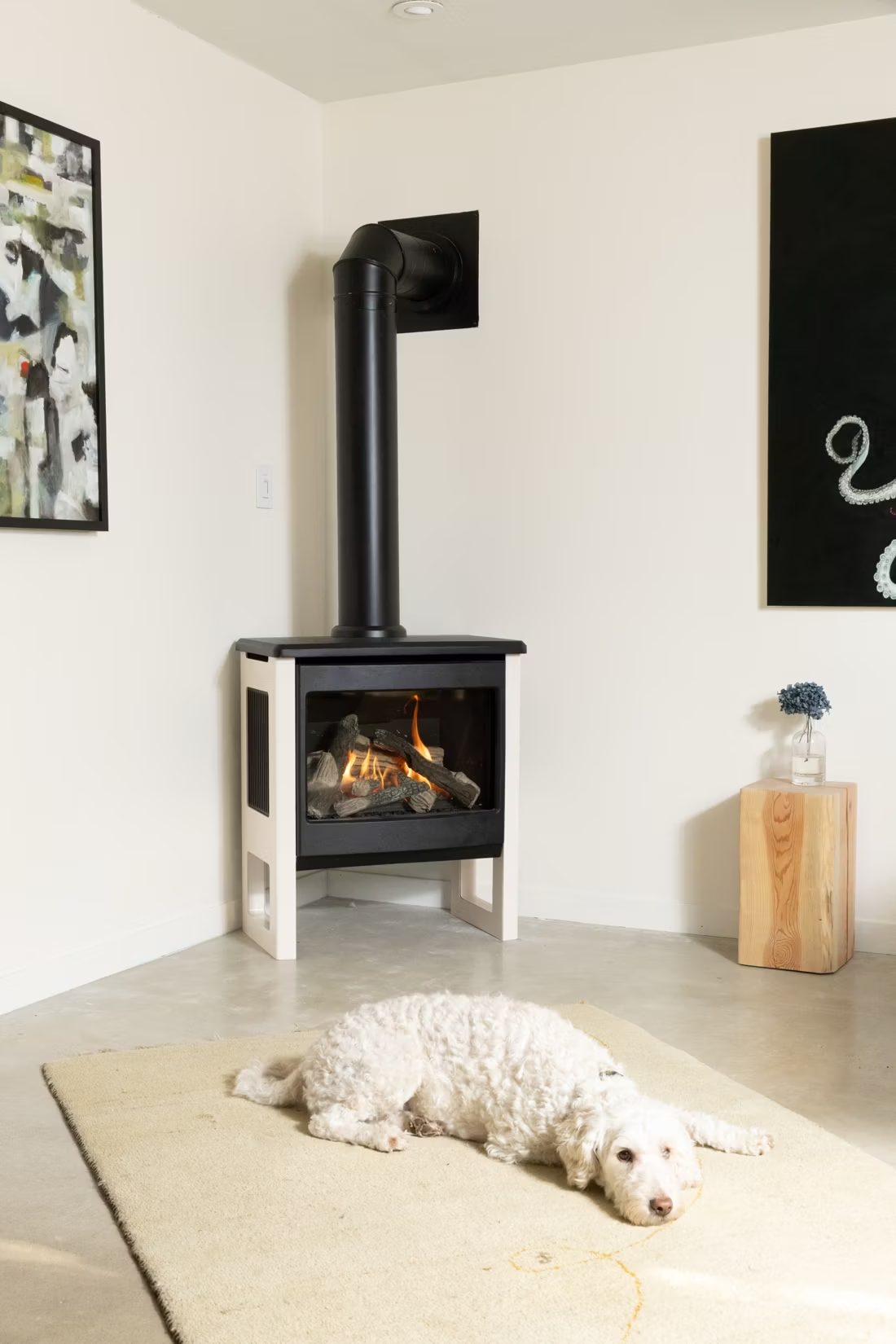
A gas fireplace is a built-in unit framed into a wall, typically chosen for new construction or a full rebuild—relevant for the number of Mill City homes reconstructed since the 2020 fires. A gas insert fits into an existing masonry firebox, which suits homes that kept their chimney structure through a rebuild or renovation. A gas stove is freestanding on a hearth pad, running off a propane line instead of cordwood, and works well in smaller cabins or additions where framing a full fireplace isn't practical. Most Mill City homeowners with an existing chimney go with an insert; new builds usually go built-in.
Do I need a permit to install a gas fireplace in Mill City?
Yes. You'll need a building permit through the Linn County Building Department, along with a separate propane line permit since gas work requires a licensed gas-fitter—the same licensing standard applies whether the fuel is natural gas or propane. Most established hearth dealers who work the Santiam Canyon route coordinate the building permit, the propane line work, and the final inspection together, which matters here since Linn County's permitting office isn't next door the way a city building department would be in a larger town.
Should I get a vented or vent-free gas fireplace given the wildfire smoke here?
Direct-vent (sealed combustion) units are the better choice for Mill City. They draw combustion air from outside and exhaust it back outside, so they add nothing to indoor air quality—which matters in a town where wildfire smoke already forces windows shut for stretches most late summers and early falls. Vent-free units are legal in Oregon under certain room-size rules, but they burn directly into the living space, and most local dealers steer Santiam Canyon homeowners toward direct-vent given how often smoke season already compromises indoor air here.
How often does a propane fireplace need to be serviced?
Plan on an annual inspection, ideally in late summer before the canyon's first cold snap and before wildfire smoke season complicates scheduling a technician visit. A service check covers the burner, pilot assembly, propane line connections, and venting, and typically runs $150 to $250. Propane systems benefit from a slightly closer look at the regulator and line fittings compared to natural gas, since tank-fed systems see more pressure variation—a detail worth asking your installer about at your first annual visit.
Gas vs. wood—which makes more sense for a Mill City home?
Wood has deep roots here—Douglas fir, ponderosa pine, and lodgepole pine are all cut locally, with permits from Willamette National Forest, Siuslaw National Forest, or Mt. Hood National Forest running just $5 to $20 a cord across a May-through-October season—and it works without any utility at all during a storm-driven outage. Propane wins on convenience and, increasingly, on air quality: with wildfire smoke already limiting outdoor burning many summers and a number of rebuilt homes going smoke-free by design, gas has become the default choice for Mill City's main living space. Plenty of households still keep a wood stove or insert as backup heat while running gas day to day.
Why is my open fireplace making my house colder?
Open fireplaces suck—literally. As the fire burns, it consumes air your furnace already paid to heat and pulls it out through the chimney, so the house is actually colder after the fire goes out than before you lit it. An insert fixes this: it seals the chimney, puts fixed glass across the front, and turns that hole in your house into a real heat source.
Is my gas fireplace wasting gas?
If it was installed more than 15 years ago, probably. Older gas fireplaces keep a standing pilot light burning all the time, and that little flame can cost a couple hundred dollars a year. Newer models use pilot-on-demand ignition—the pilot lights only when you use the fireplace and goes out when you turn it off.
Can a fireplace actually lower my heating bill?
Yes—by creating a comfort zone. A furnace heats every square foot of the house just to warm the one room you're in; a gas fireplace on low burns roughly a sixth of the gas a typical furnace does. Set the furnace around 55–60 degrees as a baseline, then heat the rooms your family actually uses. Families who heat this way commonly save $20–$60 a month.
How much should I budget for a fireplace?
For an average home—covering the fireplace, the vent pipe, and basic installation—a budget between $3,900 and $5,500 gives you a lot of options across wood, gas, and pellet. By the time you add finish work, gas line, and electrical, the average complete installation lands between $5,000 and $12,000 all-in. In a remodel or new build, a good rule is to put about 2.5% of the total project cost toward the fireplace.
Nearby Dealers
Hearth shops serving Mill City and the surrounding area. Every listing shows whether it is a WhyFire partner, a dealer we have verified as authorized for the brands we recommend, or a local business carrying hearth products. No manufacturer pays for placement. How we verify dealers →
Stayton Builders Mart
Silver Creek Chimney Sweep
Haven Spa Pool & Hearth - Salem
Philco & Associates
Murphy’s Fireplace & Stoves
Melton's Fireplace Shop
Cascade Chimney Care Nw
Pellet Stoves & More
Get your free Project Guide & Parts List for a gas fireplace in Mill City.
Tell me about your home and your propane setup, and I'll match you with a trusted local dealer who works the Santiam Canyon, plus send a free Project Guide & Parts List with the exact tank sizing, vent kit, and parts your project needs.
Find Your Fireplace →