
Instant Heat for Rogue Valley Winters, Any Time You Want It.
Clean, on-demand warmth for Medford homes—without adding smoke to a valley that already deals with enough of it. Find the right unit and connect with a trusted local dealer.
Every Project Starts From One of These Five Situations
Clean heat that works around wildfire season and winter inversions.
Medford sits at 1,414 feet in the Rogue Valley, and its climate (zone 4C, with a moderate, fairly short heating season) is genuinely mild compared to inland cold climates like Bismarck, ND or Duluth, MN—winter lows average around 32°F rather than single digits. But the valley has its own quirks: winter temperature inversions trap air and smoke close to the ground, and summer wildfire smoke already puts real stress on local air quality for weeks at a time. Both of those facts push a lot of homeowners toward gas.
A gas fireplace or insert gives you instant, controllable heat without adding another source of smoke to a valley basin that traps it. It's an easy zone-heating pair with central HVAC on the shoulder-season days, and for homes with an existing wood-burning fireplace, converting to a gas insert is one of the most common upgrades local hearth dealers handle—no chimney sweeping, no firewood to source or store, and no extra smoke during inversion advisories. Homes inside Medford's natural gas service area (Avista Utilities supplies most in-town neighborhoods) typically have the simplest installs; homes further out in Jackson County often run on propane instead.
Three steps. No salesperson until you're ready.
Tell us about your project
Your zip code, your situation, and the fuel you're leaning toward—or let the answers point you to one.
See what's actually available
The brands dealers within 100 miles genuinely carry—real options, never a catalog mirage.
Get your dealer & Project Guide
A trusted local dealer, plus the free Project Guide & Parts List that names every component of the job.
Frequently Asked Questions
How much does a gas fireplace installation cost in Medford?
Most gas fireplace and insert installations in the Medford area run somewhere between $4,500 and $10,000, with the spread driven mainly by venting complexity and whether new gas line work is required. A direct-vent gas insert dropped into an existing masonry fireplace that already has a gas line nearby sits toward the low end. A new built-in gas fireplace for a remodel—with framing, a fresh gas run, and full venting—lands in the middle to upper range. Homes outside Medford's natural gas footprint that need a propane tank set and line run can push toward the higher end. A local dealer will give you a firm number after seeing your fireplace and chimney in person.
Can I convert my existing wood fireplace to gas?
Yes, and it's a common project in this part of the Rogue Valley, partly because of how often winter inversions trap wood smoke close to the ground here. Most conversions involve installing a direct-vent gas insert into your existing masonry fireplace, running a stainless liner through the chimney you already have. Homes already plumbed for natural gas (common in-town, where Avista Utilities serves most neighborhoods) tend to be the simplest and least expensive conversions. Homes on propane, or without gas service at all, need a bit more coordination for the fuel line, but the conversion itself is routine work for a certified installer.
Do I need natural gas, or can I run a gas fireplace on propane?
Either works fine. Avista Utilities supplies natural gas to most of in-town Medford, so if you already have a gas water heater, range, or furnace, adding a fireplace is usually a straightforward tie-in. Outside the natural gas footprint—much of unincorporated Jackson County—propane is the standard fallback, either from an existing tank or a new one set by a local propane supplier. Nearly every gas fireplace model on the market can be configured for either fuel; your installer sets the correct orifice and regulator for whichever you're running.
Will my gas fireplace still work if the power goes out?
Most modern gas fireplaces will, with one caveat. Units built around IPI (intermittent pilot ignition) run on a battery backup—typically a set of AA batteries built into the control module—that kicks in automatically when utility power drops, so the fireplace lights and runs normally. The only failure point is dead batteries sitting unnoticed until you need them. Valor fireplaces solve this differently: their pilot assembly generates its own electricity through a thermocouple, so the unit needs no batteries at all, ever. For Rogue Valley winter storms that can knock out power for a day or more, that's worth asking a local dealer about directly.
What's the difference between a gas fireplace, gas insert, and gas stove?
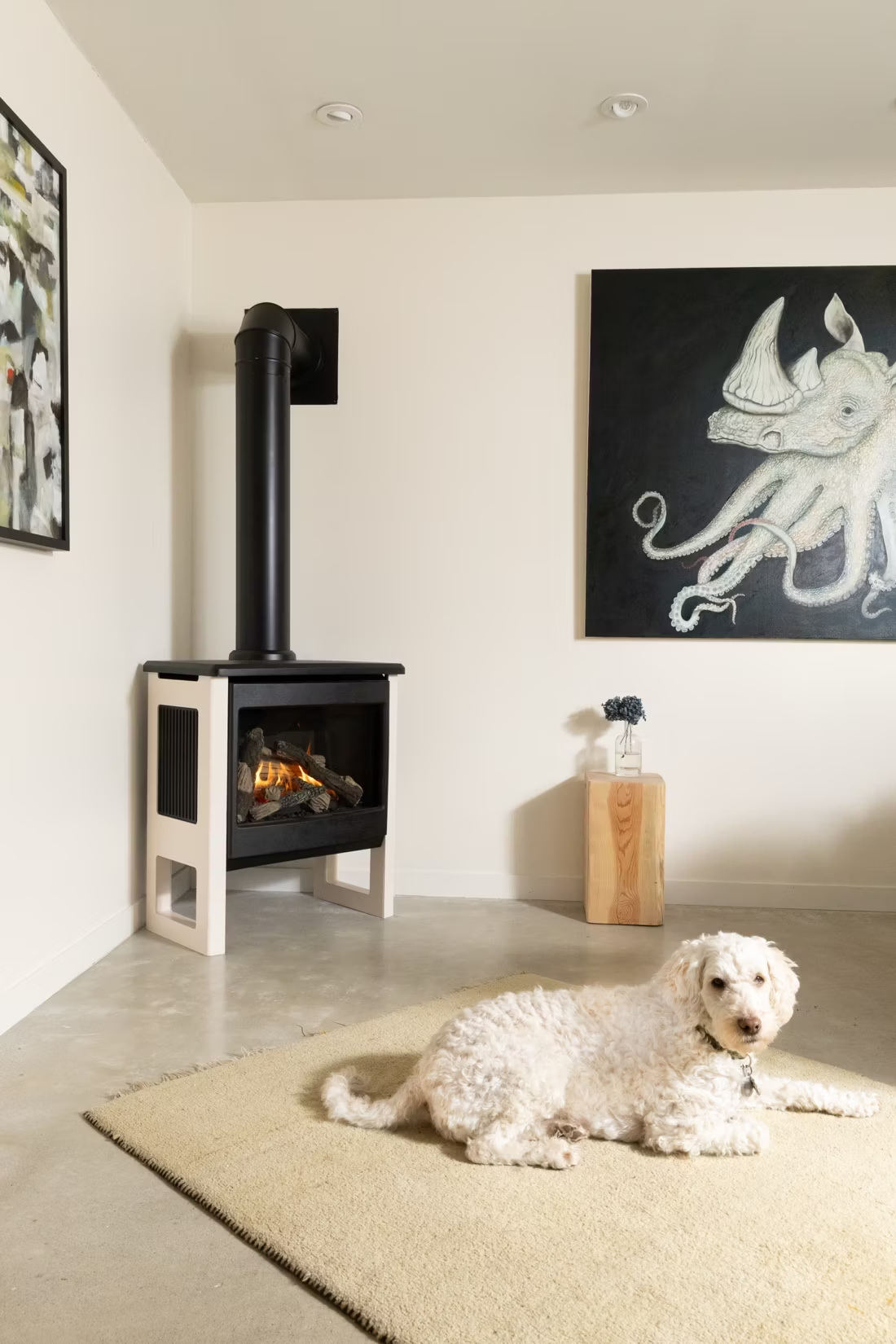
A gas fireplace is a fully built-in unit framed into a wall—the right call for new construction or a full remodel. A gas insert is built to slide into an existing masonry firebox, sealing it up and using your current chimney as the vent path—this is what most Medford homeowners with an older wood fireplace end up choosing. A gas stove is a freestanding cast-iron or steel unit that sits on the floor like a wood stove but burns gas, which works well in a room with no existing fireplace and no interest in framing one in. A local dealer can walk your space and tell you which format actually fits.
Do I need a permit to install a gas fireplace in Medford?
Yes—new gas fireplace installations require both a building permit and a gas line permit, typically pulled through the City of Medford Building Safety Division (or Jackson County Development Services for homes outside city limits). The gas line portion has to be run or connected by a licensed gas-fitter, which is one of the real advantages of hiring a certified hearth dealer rather than a general handyman: they coordinate the gas work, venting, and inspection sign-off as one job instead of leaving you to manage separate trades.
Should I get a vented or vent-free gas fireplace?
Vented (direct-vent) gas fireplaces pull combustion air from outside and exhaust it back outside through sealed venting—they're the cleanest option and the one recommended almost universally, especially in a valley that already sees weeks of wildfire smoke every summer and winter inversion advisories that trap particulates near the ground. Vent-free units burn directly into the room and release some combustion byproducts indoors; they're legal in Oregon within room-sizing and ventilation limits, but given Medford's existing air quality challenges, most local dealers steer homeowners toward direct-vent models. Ask about both if efficiency on paper matters to you, but expect the recommendation to land on vented.
How often does a gas fireplace need to be serviced?
Plan on an annual inspection, ideally before the first cold snap in late fall. A certified technician checks the burner, pilot assembly, venting, and gas connections, and cleans the glass and firebox interior—a much smaller job than chimney sweeping, but still important for safe, efficient operation. Local hearth service providers in the Rogue Valley typically charge $150 to $250 for a standard annual visit, more if a part like a thermocouple or blower needs replacing.
Gas vs. wood—which makes more sense for a Medford home?
Wood is still widely burned here, and Douglas fir, ponderosa pine, and lodgepole pine are the common local species, with cutting permits available through the Rogue River-Siskiyou National Forest and BLM Medford District for $5 to $20 per cord. Wood also keeps working when the power's out. But wood smoke is exactly what piles up during Rogue Valley winter inversions, and burning during an active air quality advisory isn't something a lot of homeowners want to deal with on top of the wildfire smoke that already rolls through most summers. Gas trades that self-sufficiency for instant, smoke-free heat you can run on demand without a permit, a wood pile, or an inversion advisory to check first. Plenty of local homes end up with both: gas for daily use in the main living space, wood as backup elsewhere.
Is my gas fireplace wasting gas?
If it was installed more than 15 years ago, probably. Older gas fireplaces keep a standing pilot light burning all the time, and that little flame can cost a couple hundred dollars a year. Newer models use pilot-on-demand ignition—the pilot lights only when you use the fireplace and goes out when you turn it off.
What's the difference between an insert and a zero-clearance fireplace?
An insert is a fireplace that slides into a pre-existing wood-burning fireplace—if you don't have one, there's nothing to insert it into. A zero-clearance fireplace is built into a framed wall, which makes it the answer for remodels and new construction. Simple test: existing masonry fireplace means insert; blank or framed wall means zero-clearance.
Can a fireplace actually lower my heating bill?
Yes—by creating a comfort zone. A furnace heats every square foot of the house just to warm the one room you're in; a gas fireplace on low burns roughly a sixth of the gas a typical furnace does. Set the furnace around 55–60 degrees as a baseline, then heat the rooms your family actually uses. Families who heat this way commonly save $20–$60 a month.
Can I install a fireplace myself?
If you're putting a fire in your house on purpose, it's best to work with an expert. Unless you're genuinely experienced in framing, gas line, vent pipe, and the national code on clearances to combustibles, have a professional do it—and ideally the same company that sells you the fireplace, so warranty, service, and liability all live under one roof.
Nearby Dealers
Hearth shops serving Medford and the surrounding area. Every listing shows whether it is a WhyFire partner, a dealer we have verified as authorized for the brands we recommend, or a local business carrying hearth products. No manufacturer pays for placement. How we verify dealers →
Keller Kitchen & Bath Showcase
Alaska Masonry Heat
Find your gas fireplace in Medford.
Tell us about your home and your existing fireplace or chimney, and we'll match you with a trusted local Medford dealer plus a free Project Guide & Parts List—the exact parts, including the vent kit, for your specific project.
Find Your Fireplace →