
See what a real gas fireplace install actually looks like in Lane County.
From the Willamette Valley floor in Eugene and Springfield out to the coast in Florence and up into the foothills near Oakridge, gas delivers instant, mild-winter heat without the wood-handling. Get matched with a trusted local dealer who can size and install it right.
Every Project Starts From One of These Five Situations
Mild winters, real demand for convenience heat.
Lane County stretches from the Pacific coast at Florence across the Willamette Valley through Eugene and Springfield and up into the Cascade foothills near Oakridge—a huge range of terrain, but a relatively mild climate zone 4C with a moderate winter heating load and average winter lows near 35°F. That's a far cry from places like Duluth MN or Bozeman MT, and it's exactly why gas fireplaces do so well here: homeowners don't need a wood-burning workhorse running 24/7, they want reliable zone heat they can flip on for a cold, damp evening and off again when it passes.
Eugene and Springfield have well-established natural gas service through the local utility, which makes a direct-vent gas insert or built-in fireplace a straightforward retrofit for older Willamette Valley homes with existing masonry fireplaces. Out toward Florence and the coast, and up into higher-elevation communities like Oakridge, propane is the more common fallback where natural gas lines don't reach. Either way, a correctly sized and vented gas unit gives Lane County homeowners instant heat, a cleaner living space than an open wood fireplace, and—with the right ignition system—a source of heat that still works when a winter storm knocks out power along the coast or in the foothills.
Three steps. No salesperson until you're ready.
Tell us about your project
Your zip code, your situation, and the fuel you're leaning toward—or let the answers point you to one.
See what's actually available
The brands dealers within 100 miles genuinely carry—real options, never a catalog mirage.
Get your dealer & Project Guide
A trusted local dealer, plus the free Project Guide & Parts List that names every component of the job.
Frequently Asked Questions
How much does a gas fireplace installation cost in Lane County?
Costs vary a good deal depending on whether you're converting an existing masonry fireplace to a gas insert, installing a new built-in unit during a remodel, or running gas line to a home that doesn't have service yet. A straightforward insert conversion into an existing fireplace with gas already at the house tends to run toward the lower end of typical gas project costs; a new direct-vent fireplace with fresh framing, venting, and a gas line extension runs higher. Homes in Florence or Oakridge relying on propane may also factor in tank installation or delivery setup. A local dealer will walk your home and give you a firm number rather than a phone-quote guess.
Can I convert my existing wood fireplace to gas in a Eugene or Springfield home?
Yes, and it's one of the most common projects local hearth dealers handle in the older Willamette Valley neighborhoods around Eugene and Springfield. A gas insert typically drops into your existing masonry firebox, using a stainless liner run through your current chimney as the vent path. If natural gas is already plumbed to the house, the job is largely about the insert, liner, and finishing—no new gas line trenching needed. Homes without existing gas service, or those relying on propane out toward the coast or up near Oakridge, will need that piece priced separately.
Do I need natural gas, or can I run a gas fireplace on propane in Lane County?
Either works, and which one makes sense mostly comes down to where you live. In and around Eugene and Springfield, natural gas service is well established, so if you already have gas appliances at the house, adding a fireplace is usually a simple tie-in. Out toward Florence, up in the Oakridge area, and in more rural pockets of the county without gas mains, propane is the standard alternative—either an existing tank or a new one set by a local propane supplier. Most gas fireplace models can be configured for either fuel; your installer sets the correct orifice and regulator for whichever you're running.
Will my gas fireplace still work if the power goes out?
Most modern gas fireplaces with IPI (intermittent pilot ignition) run on a battery backup—typically AA batteries built into the unit—that kicks in automatically the moment power drops, so the fireplace lights and runs like normal. Valor units take a different approach: their pilot assembly generates its own electricity through the thermocouple, so there are no batteries to remember at all. That distinction matters in Lane County, where winter windstorms off the coast can knock out power in Florence or along the McKenzie corridor for a day or more. Ask your local dealer which ignition system is on any unit you're considering.
What's the difference between a gas fireplace, a gas insert, and a gas stove?
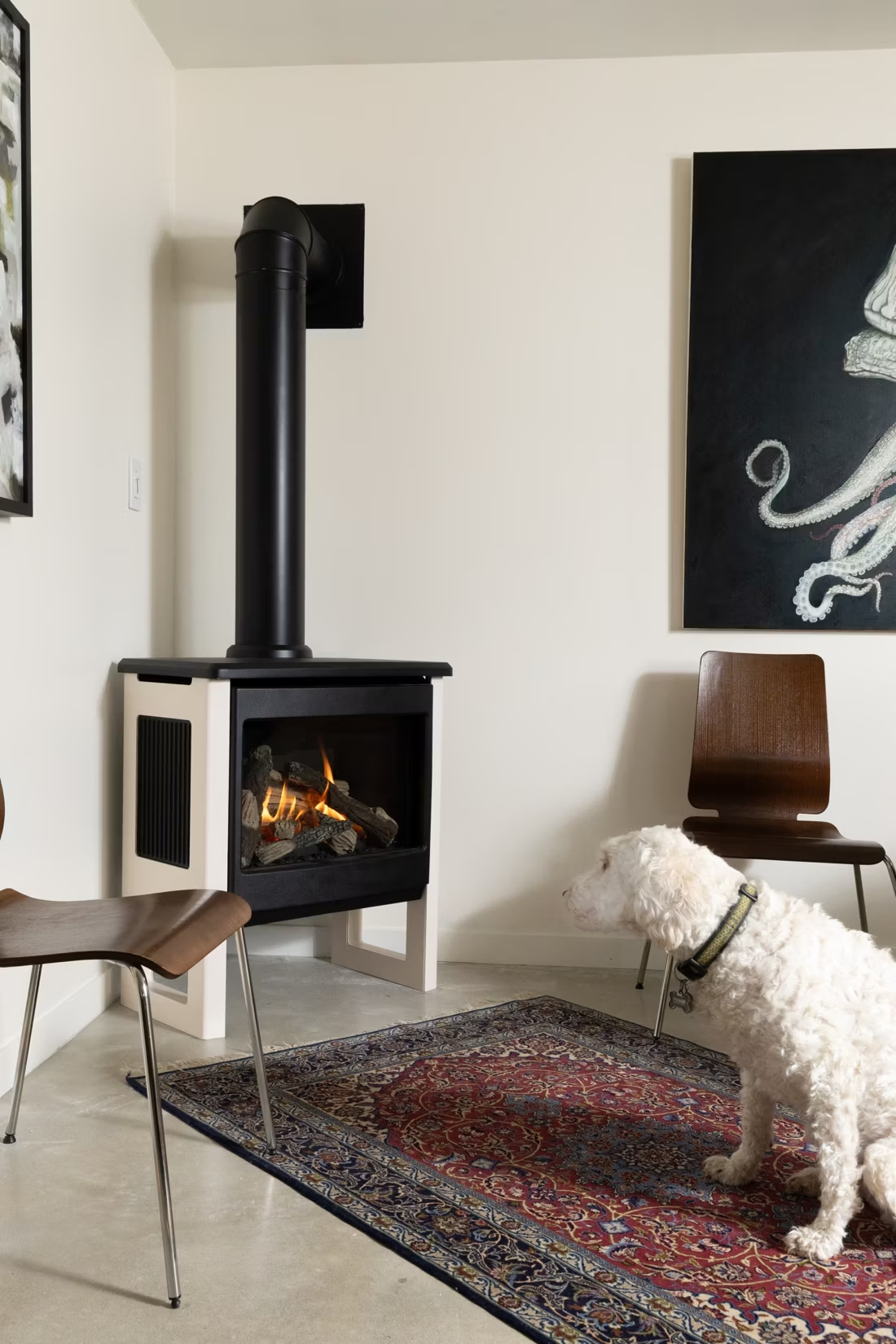
A gas fireplace is a fully built-in unit, typically installed during new construction or a remodel when you're framing a wall opening from scratch. A gas insert is built to slide into an existing masonry firebox, converting an old open wood fireplace into a sealed, efficient unit that uses your existing chimney as the vent chase. A gas stove is a freestanding cabinet-style unit that sits on the floor, similar in footprint to a wood stove but running on gas. For the many older homes around Eugene, Springfield, and Cottage Grove that already have a wood fireplace, an insert is usually the natural fit; new builds or additions without an existing firebox are better suited to a built-in unit or freestanding stove.
Do I need a permit to install a gas fireplace in Lane County?
Yes—both a building permit and a gas line permit are typically required for a new gas fireplace or insert installation, whether the home is inside Eugene or Springfield city limits or out in unincorporated Lane County. The gas line portion has to be handled by a licensed gas-fitter, which is one of the practical reasons to go through a trusted hearth dealer rather than piecing the job together yourself—they coordinate the gas work, venting, and inspection sign-off as one job instead of leaving you to manage separate trades.
Vented vs. vent-free gas fireplaces—what's the difference, and does it matter in Lane County?
Vented (direct-vent or B-vent) gas fireplaces pull combustion air from outside and exhaust the byproducts back outside through a sealed vent system—they're the cleanest and most universally code-compliant option. Vent-free units burn directly into the room air, which is more efficient on paper but releases water vapor and small amounts of combustion byproducts into the living space, and requires careful attention to room size and ventilation rules. Vent-free fireplaces are legal in Oregon but come with real restrictions on where and how they can be installed. In Lane County's damp climate—especially in older, tighter-sealed homes in Eugene and Springfield—direct-vent units are by far the more common recommendation from local dealers, since they don't add moisture to a home that's already dealing with coastal or valley humidity.
How often does a gas fireplace need to be serviced?
An annual inspection is the standard recommendation for any gas appliance, including direct-vent fireplaces and inserts. A technician checks the burner, pilot assembly, venting, gas connections, and any electronic ignition components, and cleans the glass and firebox interior. It's a lighter job than sweeping a wood-burning chimney, but skipping it is how small issues—a failing thermocouple, a partially blocked vent—turn into no-heat calls in the middle of a cold, wet Lane County winter.
Gas vs. wood—which makes more sense for a Lane County home?
Wood is still a real option here—Lane County sits amid the Willamette, Siuslaw, and Umpqua National Forests, and cutting permits through those offices run roughly $5 to $20 per cord during the May-through-October season, so self-cut douglas fir and ponderosa pine are affordable and available. But with average winter lows only around 35°F and a winter heating load well short of the coldest climates, most Lane County homes don't need wood as a primary heat source the way a true cold-climate house in Bozeman MT or Fargo ND would. Gas tends to win for homeowners who want instant, no-maintenance zone heat in a main living space; wood still appeals to those who want backup heat during storm-driven outages or simply enjoy tending a real fire. Plenty of local homes end up with both—gas for daily convenience, a wood stove or insert for backup and ambiance.
Can I put a TV above my fireplace?
Yes—with an asterisk. Fireplaces are hot and TVs don't like heat. Either put a mantel between them to deflect rising warmth, or choose a fireplace with heat-management technology that creates a cool zone on the wall above—the wall stays around 125 degrees, barely warm, while the room still gets full heat. If you like clean lines and don't want a mantel, heat management is the answer.
Is my gas fireplace wasting gas?
If it was installed more than 15 years ago, probably. Older gas fireplaces keep a standing pilot light burning all the time, and that little flame can cost a couple hundred dollars a year. Newer models use pilot-on-demand ignition—the pilot lights only when you use the fireplace and goes out when you turn it off.
Can I install a fireplace myself?
If you're putting a fire in your house on purpose, it's best to work with an expert. Unless you're genuinely experienced in framing, gas line, vent pipe, and the national code on clearances to combustibles, have a professional do it—and ideally the same company that sells you the fireplace, so warranty, service, and liability all live under one roof.
Can a fireplace actually lower my heating bill?
Yes—by creating a comfort zone. A furnace heats every square foot of the house just to warm the one room you're in; a gas fireplace on low burns roughly a sixth of the gas a typical furnace does. Set the furnace around 55–60 degrees as a baseline, then heat the rooms your family actually uses. Families who heat this way commonly save $20–$60 a month.
Stove and Fireplace Dealers in Lane County
Listings include WhyFire partner dealers, dealers we have verified as authorized for the brands we recommend, and established local businesses that carry hearth products. Every listing shows which one it is. The ones marked Preferred run on WhyFire's software, so they can show you real pricing and book your appointment right here. No manufacturer pays for placement. How we verify dealers →
Emerald Swimming Pools
Comfort Flow Heating
Ambassador Fireplaces
Get matched with a Lane County gas fireplace dealer.
Tell us about your home and we'll put together a free Project Guide & Parts List—the right gas fireplace, insert, or stove for your space, the exact parts including the vent kit, and a trusted local dealer in Lane County to install it.
Find Your Fireplace →