
Instant Warmth for La Pine's High-Desert Winters.
No chimney, no venting, no smoke—just heat at the flip of a switch for La Pine's long, cold season. Find the right unit and connect with a trusted local dealer or electrician.
Every Project Starts From One of These Five Situations
The cleanest heat source in a smoke-prone valley.
La Pine sits at 4,230 feet in the pumice flats south of Bend, surrounded by ponderosa pine, lodgepole pine, and juniper forest. With a winter heating load greater than Klamath Falls and in the same range as Bozeman, Montana, this is a place that takes winter seriously, with average lows around 21°F and a burning season that stretches from fall through spring. Wood heat runs deep here, but La Pine also sits in a basin prone to winter temperature inversions and wildfire smoke, both of which trap particulate matter close to the ground for days at a time.
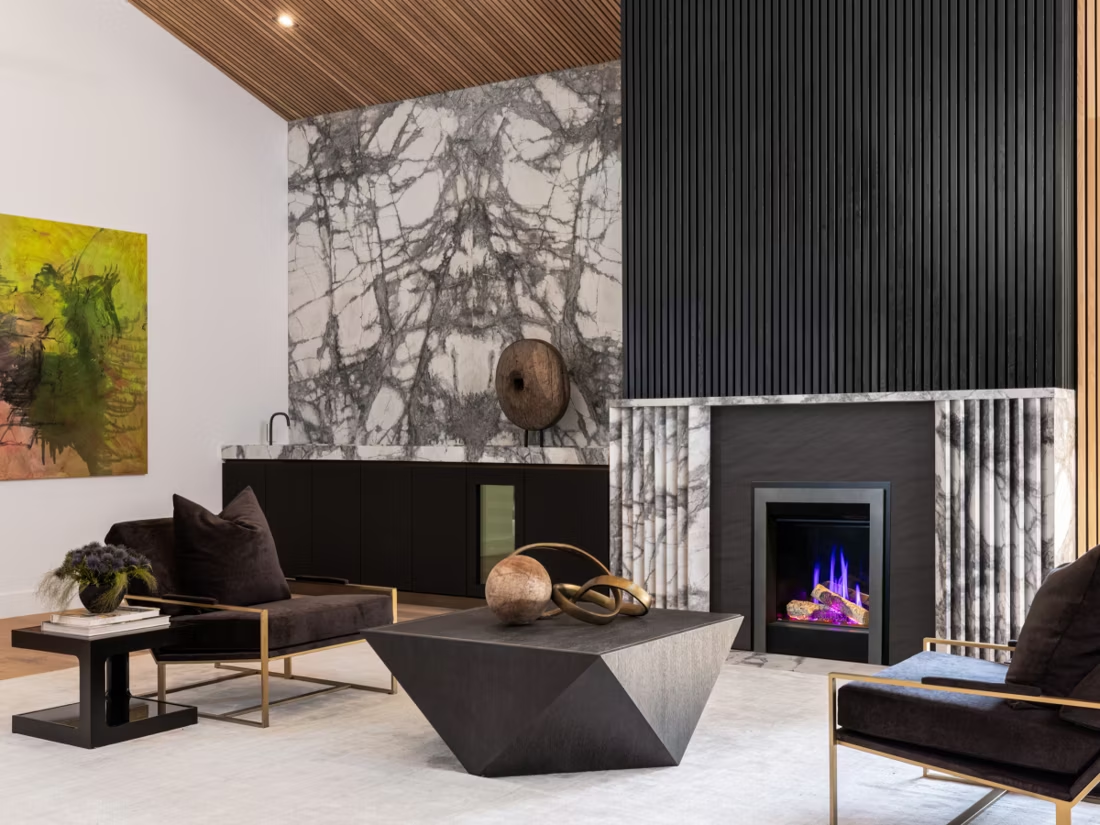
That combination is part of why electric fireplaces and inserts have a real place in La Pine homes. There's no natural gas utility serving this part of Deschutes County, so most households run on wood, propane, or electricity from Midstate Electric Cooperative, whose residential rate of roughly $0.1052 per kWh keeps supplemental electric heat reasonably affordable. Electric units also make sense in La Pine's large stock of manufactured and modular homes, where adding a wood chimney or gas line isn't practical but a 120V or 240V electric insert can go in without touching the roofline. On smoke advisory days or during a winter inversion, an electric fireplace is the one heat source in the house that adds zero particulate to the air.
Three steps. No salesperson until you're ready.
Tell us about your project
Your zip code, your situation, and the fuel you're leaning toward—or let the answers point you to one.
See what's actually available
The brands dealers within 100 miles genuinely carry—real options, never a catalog mirage.
Get your dealer & Project Guide
A trusted local dealer, plus the free Project Guide & Parts List that names every component of the job.
Frequently Asked Questions
How much does an electric fireplace installation cost in La Pine?
Plug-in electric inserts and freestanding units that run on a standard 120V outlet typically cost $300 to $900 installed, since there's no venting or gas line to run—most of that cost is the unit itself plus a licensed electrician confirming the circuit can handle the load. Built-in wall or linear electric fireplaces that require a dedicated 240V circuit run higher, usually $1,500 to $3,000, once an electrician pulls new wire from the panel. For La Pine's manufactured and modular homes, plug-in inserts are often the simpler and cheaper path since they don't require any changes to the home's structure.
Will my electric fireplace still work during a power outage?
No—electric fireplaces need grid power to run, and that matters in La Pine. Midstate Electric Cooperative serves a lot of rural line miles through forested, snow-loaded terrain, and outages during ice storms or heavy snow aren't unusual. Most La Pine homeowners who install an electric fireplace treat it as supplemental or zone heat and keep a wood stove or propane heater as backup for when the power actually goes out. If backup heat during outages is your top priority, wood is still the more dependable choice for this area.
Do I need a permit for an electric fireplace in La Pine?
It depends on the unit. A plug-in electric fireplace or insert that runs on an existing standard outlet generally doesn't require a permit. If your unit needs a new dedicated circuit—common with larger built-in or linear models—that electrical work needs to be pulled and inspected through Deschutes County's building safety process, since La Pine relies on county services for permitting. A licensed electrician handling the installation will typically pull that permit as part of the job.
Are electric fireplaces a good fit for manufactured and modular homes?
Yes, and it's one of the more common installs in the 97739 zip code, where manufactured and modular housing makes up a large share of the housing stock. Electric inserts and wall-mount units don't require any changes to the roof or exterior wall, don't need a chimney chase, and place no load on the structure beyond a standard electrical circuit. That makes them one of the few heat-source upgrades that's genuinely simple to add to a manufactured home without triggering major renovation work.
Electric vs. wood—which should I choose for my La Pine home?
Wood is still the primary heat source for a lot of La Pine households, with cutting permits available through the Deschutes National Forest, Ochoco National Forest, and BLM Prineville District running roughly $5 to $20 per cord depending on the office. Wood also keeps working when the power is out, which matters given Midstate Electric's rural lines. But La Pine's winter inversions and wildfire smoke seasons are real drawbacks to wood—an electric fireplace produces zero smoke and can run on advisory days when wood burning is discouraged. Many local homes end up with both: wood as the primary or backup heat, electric for smoke-free ambiance and shoulder-season warmth.
Electric vs. pellet stove—what's the difference for La Pine homes?
Pellet stoves burn compressed wood pellets from regional brands like Bear Mountain, Lignetics, and Pacific Pellet, and they put out more heat per hour than most electric units—useful given La Pine's long, demanding winters. But pellet stoves need a hopper refilled, ash cleaned out, and still require electricity to run the auger and blower. Electric fireplaces skip the fuel storage and ash entirely—you're only paying for the electricity itself, at Midstate Electric Cooperative's roughly $0.105 per kWh rate. For a primary heat source in a cold winter like La Pine's, pellet usually wins on raw output; for supplemental zone heat or a smoke-free room, electric is simpler.
What types of electric fireplaces are available for La Pine homes?
The main options are inserts (which slide into an existing fireplace opening or a manufactured surround), wall-mount linear units (mounted flush or recessed into a wall, popular in newer remodels), and freestanding stove-style units (which mimic a wood stove's look without any venting). Mantel packages that pair a small electric insert with a surround are common for renters or homes where a full remodel isn't in the cards. A local dealer can walk through which style fits your existing fireplace opening or wall space.
What does it cost to run an electric fireplace in La Pine?
Most electric fireplaces draw around 1,500 watts on the heat setting. At Midstate Electric Cooperative's residential rate of about $0.1052 per kWh, running one for 8 hours costs roughly $1.25. Used as supplemental zone heat in one room rather than round-the-clock whole-house heat, that's a modest add to a winter electric bill—though it won't compete with wood or pellet on raw heating cost per BTU across an entire La Pine winter.
Are electric fireplaces a good option during wildfire smoke and winter inversions?
Yes—this is one of the strongest cases for electric heat in La Pine specifically. The valley traps smoke during winter temperature inversions, and wildfire smoke can linger for days in summer and fall. An electric fireplace adds no particulate matter to outdoor or indoor air, which matters for households with respiratory sensitivities or anyone who wants a heat source they can run without worrying about local burn advisories. It won't replace wood as a primary heat source for most La Pine homes, but it's a genuinely clean option to have available.
Can I put a TV above my fireplace?
Yes—with an asterisk. Fireplaces are hot and TVs don't like heat. Either put a mantel between them to deflect rising warmth, or choose a fireplace with heat-management technology that creates a cool zone on the wall above—the wall stays around 125 degrees, barely warm, while the room still gets full heat. If you like clean lines and don't want a mantel, heat management is the answer.
Do electric fireplaces actually produce heat?
Yes—most put out around 4,800–5,000 BTUs from a standard outlet, which comfortably warms a bedroom, office, or den as a comfort-zone heater. What they won't do is carry a whole house the way wood, gas, or pellet can. Think of electric as ambiance-first with honest supplemental heat: flames on with no heat in July, flames plus warmth in January.
Can I install a fireplace myself?
If you're putting a fire in your house on purpose, it's best to work with an expert. Unless you're genuinely experienced in framing, gas line, vent pipe, and the national code on clearances to combustibles, have a professional do it—and ideally the same company that sells you the fireplace, so warranty, service, and liability all live under one roof.
Can a fireplace actually lower my heating bill?
Yes—by creating a comfort zone. A furnace heats every square foot of the house just to warm the one room you're in; a gas fireplace on low burns roughly a sixth of the gas a typical furnace does. Set the furnace around 55–60 degrees as a baseline, then heat the rooms your family actually uses. Families who heat this way commonly save $20–$60 a month.
Nearby Dealers
Hearth shops serving La Pine and the surrounding area. Every listing shows whether it is a WhyFire partner, a dealer we have verified as authorized for the brands we recommend, or a local business carrying hearth products. No manufacturer pays for placement. How we verify dealers →
Countryside Stove And Chimney
Master's Touch
Bend Spa And Hearth
Cascade Chimney Service
Diversified Heating And Cooling
Creative Fire
Brilliant Environmental Products
Emerald Pool & Patio
Sticks And Stones
Quality Heating
Electric Service in La Pine
An electric fireplace's heater draws about 1,500 watts—pennies per hour at local rates.
Midstate Electric Coop, Inc
Find your electric fireplace in La Pine.
Tell us a bit about your home and we'll match you with the right electric fireplace or insert, plus a free Project Guide & Parts List and a trusted local dealer to install it.
Find Your Fireplace →