
Clean electric heat for high desert winters in Jefferson County.
No chimney, no venting, no smoke—just zone heat and ambiance for homes from Madras to Culver to the Metolius River corridor. Find the right unit and connect with a trusted local dealer.
Every Project Starts From One of These Five Situations
A no-smoke option for high desert living.
Jefferson County stretches from the Cascade foothills near Camp Sherman down through the Crooked River canyon, with Madras—elevation roughly 2,240 feet—as the county seat. Winters here average lows around 24°F, a climate similar to what you'd see in Bozeman, Montana, though drier. Wood heat has deep roots in the county—ponderosa pine, lodgepole pine, and juniper are the local staples cut under permits from the Ochoco and Deschutes National Forests and BLM Prineville District—but a large share of Jefferson County's housing stock is manufactured or modular, especially around Culver, Metolius, and the rural stretches toward Warm Springs. For those homes, running a masonry chimney or Class A pipe isn't always practical, and that's exactly where electric fireplaces and stoves fill the gap.
Electric units plug into an outlet or connect to a dedicated 120V or 240V circuit, produce zero emissions, and can be installed in a rental, a cabin near Lake Billy Chinook, or a manufactured home without touching the roofline. That matters in a county where summer wildfire smoke and Red Flag burn restrictions on nearby forest land already limit outdoor and sometimes wood-burning options—electric heat and ambiance keep running regardless of air quality advisories. Central Electric Cooperative and Pacific Power both serve parts of Jefferson County, and while the grid in Madras is generally reliable, rural lines can go down during winter ice events, so most homeowners here pair an electric fireplace with a wood or propane backup rather than relying on it as the sole heat source in a power outage.
Three steps. No salesperson until you're ready.
Tell us about your project
Your zip code, your situation, and the fuel you're leaning toward—or let the answers point you to one.
See what's actually available
The brands dealers within 100 miles genuinely carry—real options, never a catalog mirage.
Get your dealer & Project Guide
A trusted local dealer, plus the free Project Guide & Parts List that names every component of the job.
Frequently Asked Questions
How much does an electric fireplace installation cost in Jefferson County?
Costs vary widely by unit type. A plug-in electric insert or freestanding stove that uses a standard outlet typically runs $300 to $1,000 installed, with no electrician needed. A built-in electric fireplace or wall unit that requires a dedicated 240V circuit runs higher—typically $1,200 to $2,500 once a licensed electrician runs new wiring, which is common in Madras-area remodels and new manufactured home installs. Local dealers can tell you within a few minutes which category your project falls into based on the unit and your home's existing electrical panel.
Do I need a permit to install an electric fireplace in Jefferson County?
A plug-in, freestanding electric unit generally doesn't require a permit—it's treated like any other appliance. A built-in electric fireplace that requires new wiring or a dedicated circuit does need an electrical permit through Jefferson County Community Development, and the wiring itself should be done by a licensed electrician regardless of whether you pull a permit. For manufactured and modular homes, which make up a significant share of housing in Culver and Metolius, there are additional clearance and anchoring rules worth confirming with your installer before cutting into a wall.
Is an electric fireplace a good fit for a manufactured or modular home?
Yes—it's one of the most common reasons homeowners in Jefferson County choose electric over wood or gas. Manufactured homes have specific clearance requirements and often can't support a masonry chimney or the roof penetration a direct-vent gas unit needs. Electric units avoid both problems entirely: no venting, no combustion, no roof work. Many manufactured-home owners install a freestanding electric stove in a living room or bedroom for zone heat and simply supplement whatever the home's central system already provides.
Will an electric fireplace actually heat my home, or is it just for looks?
Most electric fireplaces sold today include a heater rated between 4,600 and 5,200 BTU, enough to comfortably heat a single room of 400 to 1,000 square feet depending on insulation. That makes them well suited as supplemental or zone heat in Jefferson County—warming the living room or bedroom you actually occupy in the evening rather than running central heat for the whole house. They're not typically sized to heat an entire home through a high desert winter with lows in the low 20s, so most owners pair one with a furnace, heat pump, or wood stove for whole-house coverage.
What does it cost to run an electric fireplace in Jefferson County?
At typical rural Oregon co-op and utility rates—Central Electric Cooperative and Pacific Power both serve parts of the county, generally in the $0.10 to $0.13 per kWh range—a 1,500-watt electric fireplace running on full heat costs roughly 15 to 20 cents per hour. Most units let you run the flame effect alone without the heater, which draws only a few watts, so you can keep the ambiance going for pennies a day and reserve full heat output for the coldest evenings.
Electric vs. wood—which makes more sense for my Jefferson County home?
Wood remains the traditional choice across the county, with easy access to ponderosa pine, lodgepole pine, and juniper through low-cost permits from the Ochoco and Deschutes National Forests, plus the advantage of heat that works with the power out. Electric wins on convenience and cleanliness—no ash, no chimney maintenance, no smoke during the wildfire-season burn restrictions that occasionally limit outdoor burning near Warm Springs and the forest boundary. For a primary residence with a wood-burning tradition already in place, wood often stays in the mix; for a second bedroom, a rental unit, or a manufactured home where venting isn't practical, electric is usually the simpler answer.
Electric vs. gas—which is right for my home?
Gas fireplaces deliver more real heat output and can be configured to run on battery backup during an outage, but they require either a natural gas line or a propane tank and typically involve venting and a larger installation budget. Electric fireplaces skip the fuel supply and venting question entirely—plug it in or wire a circuit and you're done—but they need grid power to run, so during a rural winter outage in Jefferson County they won't help. If your home already has propane service for a furnace or water heater, gas is worth comparing; if you want the simplest possible install with no ongoing fuel deliveries, electric is usually the better fit.
What's the difference between an electric fireplace, insert, and stove?
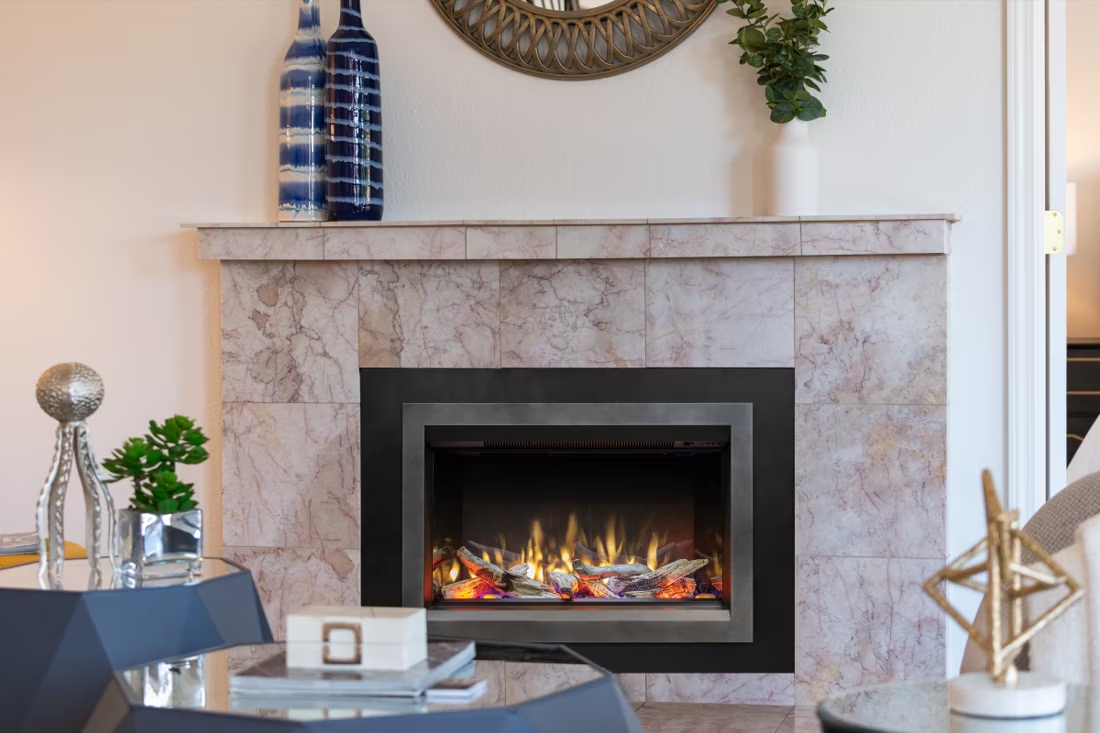
An electric fireplace is typically a wall-mounted or built-in unit designed to look like a traditional fireplace, often set into a mantel surround. An electric insert is sized to slide into an existing masonry fireplace opening, letting you keep the look of your existing hearth while eliminating chimney draft and ash. An electric stove is a freestanding cabinet-style unit that can go almost anywhere there's an outlet, which is why it's popular in manufactured homes and cabins around the Metolius River and Lake Billy Chinook where there's no existing fireplace to convert.
Are electric fireplaces a good option during wildfire smoke season?
Yes—this is one of the clearest advantages for Jefferson County homeowners. During late summer wildfire smoke events and Red Flag burn restrictions near the Ochoco and Deschutes National Forest boundaries, wood burning is sometimes discouraged or restricted, and outdoor air quality can already be poor. An electric fireplace produces zero combustion byproducts, so it can run for ambiance or supplemental warmth on a cool evening without adding anything to indoor or outdoor air quality—a real consideration in a county where wildfire smoke is the primary local air quality concern.
Can I put a TV above my fireplace?
Yes—with an asterisk. Fireplaces are hot and TVs don't like heat. Either put a mantel between them to deflect rising warmth, or choose a fireplace with heat-management technology that creates a cool zone on the wall above—the wall stays around 125 degrees, barely warm, while the room still gets full heat. If you like clean lines and don't want a mantel, heat management is the answer.
Do electric fireplaces actually produce heat?
Yes—most put out around 4,800–5,000 BTUs from a standard outlet, which comfortably warms a bedroom, office, or den as a comfort-zone heater. What they won't do is carry a whole house the way wood, gas, or pellet can. Think of electric as ambiance-first with honest supplemental heat: flames on with no heat in July, flames plus warmth in January.
What is an in-home preview and do I need one?
It's a visit where a hearth professional measures your space, confirms the model you picked actually works in your home, and walks the specs—framing, gas line, venting, finish work—before anything is ordered. Some details you just can't know until you see the house. Never make a down payment without one; it's the single most-skipped step that burns buyers.
Does a fireplace add value to my home?
On average, a fireplace adds back to the home about the same amount you spent installing it. Add the monthly savings from heating the rooms you actually use instead of the whole house—often hundreds of dollars a year—and the value case is strong before you even count what a fire does for how your family uses the room.
Find your electric fireplace in Jefferson County.
Tell us a bit about your home and we'll put together a free Project Guide & Parts List—the right electric fireplace, insert, or stove for your space, plus a match with a trusted local dealer who can install it.
Find Your Fireplace →