
Instant Heat, Zero Mess in Harrisburg, OR.
No chimney, no gas line, no woodpile—just a fireplace that plugs in or wires into a Harrisburg home and works. Find the right unit and connect with a trusted local dealer.
Every Project Starts From One of These Five Situations
Mild Willamette Valley winters meet modern convenience.
Harrisburg sits at just 314 feet in the Willamette Valley, where winters are damp and mild rather than brutal—average lows hover around 35°F and the town has a fairly short, mild heating season each year. That's a fraction of the heating workload a place like Duluth, MN faces in a single winter. Homes here don't need a roaring wood stove to survive January; they need dependable, low-maintenance heat for the rainy stretch between November and March, plus the occasional summer week when wildfire smoke keeps windows shut and central air working overtime.
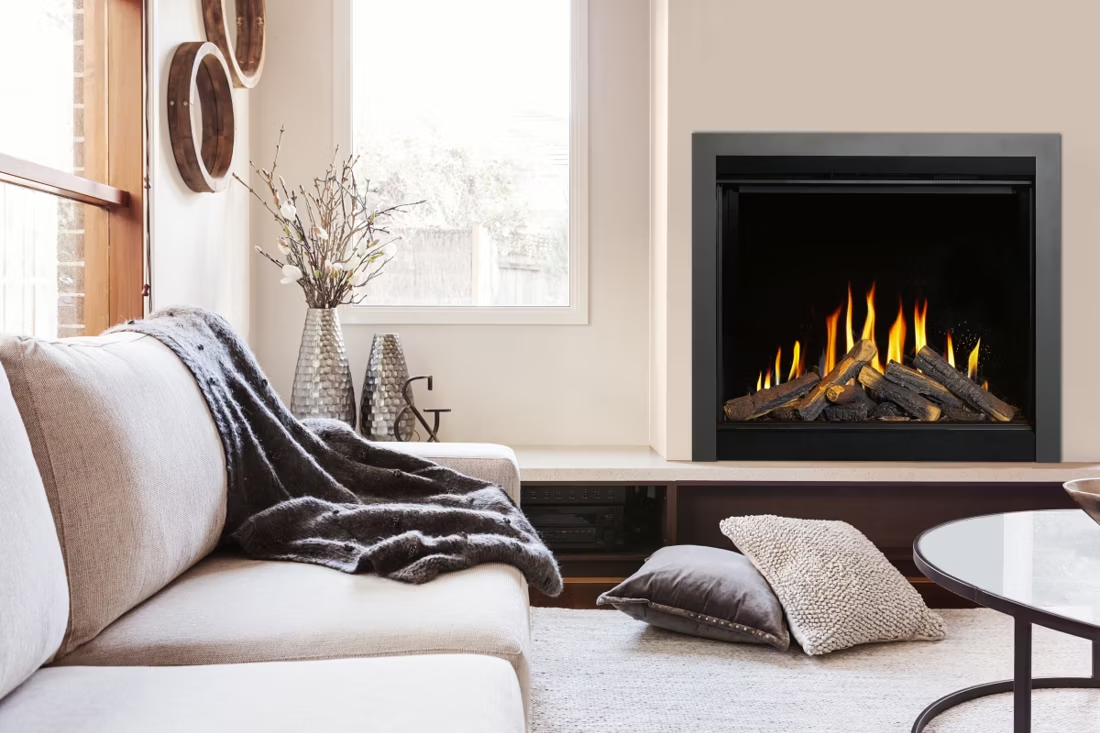
That's the gap electric fireplaces fill well in Harrisburg. PacifiCorp serves the town at a residential rate around 12.5 cents per kWh, and a plug-in insert or built-in electric unit gives you real, adjustable zone heat and flame ambiance without a flue, a gas line, or firewood stacked under a tarp. It's also why wood and pellet appliances see comparatively little demand here—the climate doesn't demand primary wood heat the way it does farther up in the Cascades, and valley air quality during smoke season makes homeowners think twice before adding another combustion source. Electric sidesteps that question entirely.
Three steps. No salesperson until you're ready.
Tell us about your project
Your zip code, your situation, and the fuel you're leaning toward—or let the answers point you to one.
See what's actually available
The brands dealers within 100 miles genuinely carry—real options, never a catalog mirage.
Get your dealer & Project Guide
A trusted local dealer, plus the free Project Guide & Parts List that names every component of the job.
Frequently Asked Questions
How much does an electric fireplace installation cost in Harrisburg?
A plug-in electric insert or freestanding unit that runs on a standard 120V outlet typically costs $300 to $1,200 installed, since there's no venting or gas work involved—most of that cost is the unit and a simple mantel or surround build-out. A built-in wall unit or larger insert that needs a dedicated 240V circuit runs higher, often $1,000 to $2,500, once an electrician is brought in to run the circuit. Compare that to a wood or gas install requiring chimney or vent work, and electric is consistently the lowest-cost hearth option in Harrisburg.
Do I need a permit to install an electric fireplace in Harrisburg?
In most cases, no. A plug-in electric fireplace that uses an existing outlet doesn't require a permit because there's no gas line, venting, or structural chimney work involved. If you're adding a built-in unit that needs a new dedicated circuit, an electrical permit through the Linn County Building Department is typically required, and it's usually pulled by the electrician doing the circuit work as part of the job. Either way, it's a far simpler permitting path than wood or gas.
Should I get electric or gas if I don't have natural gas service?
Harrisburg doesn't have municipal natural gas the way larger Linn County cities do, so a gas fireplace here generally means propane—a tank installation, a fuel delivery contract, and periodic refills. Electric skips all of that. There's no tank to site, no delivery schedule to manage, and no combustion byproducts to vent. For homeowners who want fire-like ambiance and supplemental heat without adding a new fuel account to manage, electric is often the more practical fit in a town this size.
Will an electric fireplace actually heat my whole home?
Most electric fireplaces are built for zone heating, not whole-house heating—a typical unit puts out around 5,000 BTUs (roughly 1,500 watts) and is meant to warm a living room or bedroom, not replace your furnace or heat pump. Given Harrisburg's mild winters, that's usually plenty for supplemental use: many homeowners run one in the main living space during evening hours and let central heat handle the rest of the house. If you're trying to heat a larger open floor plan, talk to a local dealer about a higher-wattage built-in unit or multiple zones.
Will my electric fireplace work during a power outage?
No—electric fireplaces need power to run the heating element, flame effect, and fan, so they go dark along with everything else in an outage. That's a real consideration in Linn County, where winter windstorms occasionally knock out PacifiCorp service for stretches. If backup heat during outages is a priority, most local dealers will point Harrisburg homeowners toward a gas unit with a millivolt or battery-backed ignition system as a secondary source, while keeping electric for everyday convenience and ambiance.
What's the difference between an electric insert and a built-in electric fireplace?
An electric insert is sized to slot into an existing fireplace opening—useful if you have an old wood-burning masonry fireplace you'd rather not maintain and want to convert to something plug-in-simple. A built-in electric fireplace is designed to be framed into a wall during a remodel or new build, similar to how a gas fireplace would be installed, and often ties into a dedicated circuit for a stronger heat element. For Harrisburg homes with an existing hearth, an insert is usually the quicker, lower-cost path; for new construction or a remodel, a built-in gives more design flexibility.
How much does it cost to run an electric fireplace in Harrisburg?
At PacifiCorp's residential rate of about 12.5 cents per kWh, a typical 1,500-watt electric fireplace costs roughly 19 cents an hour to run on the heat setting. Used a few hours a night through a mild Harrisburg winter—say 3 hours a day for a month—that's around $17 to $18 added to the electric bill. Running it flame-only without heat draws far less, often under 100 watts, so ambiance-only use is nearly free to operate.
Why don't more homes in Harrisburg use wood or pellet stoves?
Wood heat has deep roots in the Willamette Valley—Douglas fir, ponderosa pine, and lodgepole pine are all available regionally, and cutting permits through the Willamette or Mt. Hood National Forest run just $5 to $20 per cord in season. But in a town like Harrisburg, with mild winters and a short heating season, wood and pellet appliances see comparatively little demand as a primary heat source, and wildfire smoke concerns in the valley make homeowners more cautious about adding another combustion appliance. Electric and gas cover most of what local homeowners are actually asking for; if you specifically want a wood setup, a local dealer can still help, but it's a less common request here than in colder parts of the state.
What's the best electric fireplace for a Harrisburg home?
For most Harrisburg living rooms, a mid-size electric insert or built-in from a brand like Dimplex, Napoleon, or Amantii covers the bases—realistic flame technology, a supplemental heater in the 4,600–5,200 BTU range, and a thermostat you can set and forget. If you're retrofitting an old masonry fireplace, look at insert models sized to your existing firebox opening rather than a universal fit. A local dealer can measure your opening and match wattage to your room size during a quick consultation.
Can I put a TV above my fireplace?
Yes—with an asterisk. Fireplaces are hot and TVs don't like heat. Either put a mantel between them to deflect rising warmth, or choose a fireplace with heat-management technology that creates a cool zone on the wall above—the wall stays around 125 degrees, barely warm, while the room still gets full heat. If you like clean lines and don't want a mantel, heat management is the answer.
Do electric fireplaces actually produce heat?
Yes—most put out around 4,800–5,000 BTUs from a standard outlet, which comfortably warms a bedroom, office, or den as a comfort-zone heater. What they won't do is carry a whole house the way wood, gas, or pellet can. Think of electric as ambiance-first with honest supplemental heat: flames on with no heat in July, flames plus warmth in January.
Does a fireplace add value to my home?
On average, a fireplace adds back to the home about the same amount you spent installing it. Add the monthly savings from heating the rooms you actually use instead of the whole house—often hundreds of dollars a year—and the value case is strong before you even count what a fire does for how your family uses the room.
What is an in-home preview and do I need one?
It's a visit where a hearth professional measures your space, confirms the model you picked actually works in your home, and walks the specs—framing, gas line, venting, finish work—before anything is ordered. Some details you just can't know until you see the house. Never make a down payment without one; it's the single most-skipped step that burns buyers.
Nearby Dealers
Hearth shops serving Harrisburg and the surrounding area. Every listing shows whether it is a WhyFire partner, a dealer we have verified as authorized for the brands we recommend, or a local business carrying hearth products. No manufacturer pays for placement. How we verify dealers →
Emerald Swimming Pools
Comfort Flow Heating
Ambassador Fireplaces
Middleton Heating Sheet Metal
Schaefers Recreation Equipment
Electric Service in Harrisburg
An electric fireplace's heater draws about 1,500 watts—pennies per hour at local rates.
Find your electric fireplace in Harrisburg.
Tell us a bit about your home and we'll put together a free Project Guide & Parts List—the exact parts for your Harrisburg electric fireplace project, plus a match with a trusted local dealer who can install it.
Find Your Fireplace →