
Instant heat, zero chimney, Crook County ready.
Clean, instant electric heat for Crook County homes—from Prineville to Powell Butte, Post, and Paulina. Prineville's city-owned electric utility keeps rates among the lowest in Oregon, and we'll match you with a trusted local dealer who can size the right unit for your space.
Every Project Starts From One of These Five Situations
The cleanest heat option when wildfire smoke rolls in.
Crook County sits in Oregon's high desert, centered on Prineville at roughly 2,860 feet in the shadow of the Ochoco Mountains. Winters here run milder than the Cascade passes to the west—average lows sit around 25°F, and the county logs about 5,992 heating degree days a year, a season length closer to Madison, WI than to the deep-freeze extremes of eastern Montana. Ponderosa pine, lodgepole pine, and juniper cover the surrounding Ochoco National Forest and BLM Prineville District lands, and wood heat remains common in outlying areas. But Crook County also deals with real winter inversions in the Prineville basin and wildfire smoke that settles in during summer and early fall—conditions where a wood-burning appliance isn't always the cleanest or most practical choice.
That's where electric fireplaces earn their place. Prineville is home to one of the very few city-owned electric utilities in Oregon, and it delivers some of the lowest residential power rates in the state—the same rate advantage that drew data centers from Facebook and Apple to the area now makes running an electric fireplace or zone heater more affordable here than in most Oregon towns. Electric units install with no chimney, no venting, and often no gas line—just a standard outlet or a straightforward circuit run by a licensed electrician. For supplemental heat in a bedroom or bonus room, ambiance without smoke on inversion days, or a low-maintenance option in a rental or vacation property, electric is often the simplest fireplace project in the county.
Three steps. No salesperson until you're ready.
Tell us about your project
Your zip code, your situation, and the fuel you're leaning toward—or let the answers point you to one.
See what's actually available
The brands dealers within 100 miles genuinely carry—real options, never a catalog mirage.
Get your dealer & Project Guide
A trusted local dealer, plus the free Project Guide & Parts List that names every component of the job.
Frequently Asked Questions
How much does an electric fireplace installation cost in Crook County?
Plug-in electric fireplaces and inserts are the least expensive fireplace option in Crook County—many units run $300 to $1,200 installed, since most just need a dedicated outlet and no venting or gas line. Built-in electric fireplaces or wall-mounted units that require new framing, a flush-mount finish, and a licensed electrician to run a new circuit typically land between $1,200 and $2,500. Because Prineville's city-owned electric utility keeps power rates well below the Oregon average, the ongoing cost of running an electric unit for zone heat or ambiance is also lower here than in most of the state.
Will an electric fireplace actually heat my home in Crook County's winters?
Electric fireplaces are best treated as supplemental or zone heat, not a whole-home solution—most units top out around 1,500 watts, or roughly 5,200 BTU, enough to comfortably warm a single room but not a whole house through a Crook County winter with 5,992 heating degree days. Winter lows here average around 25°F, milder than the Cascade side of the state, so an electric fireplace can genuinely take the edge off a bedroom, office, or bonus room without a separate furnace zone. For primary heat during the coldest stretches, most Crook County homes still lean on a wood stove, gas system, or ducted heat pump, with the electric fireplace supplementing.
Do I need a permit to install an electric fireplace in Crook County?
A simple plug-in electric fireplace or insert generally doesn't require a permit since there's no new wiring, venting, or gas line involved. A built-in electric fireplace that requires a new dedicated circuit, however, typically needs an electrical permit through the Crook County Community Development Department, and the wiring should be run by a licensed electrician. If you're inside Prineville city limits, check whether the work also needs city sign-off before your local dealer schedules installation.
What's the difference between an electric fireplace, an electric insert, and an electric log set?
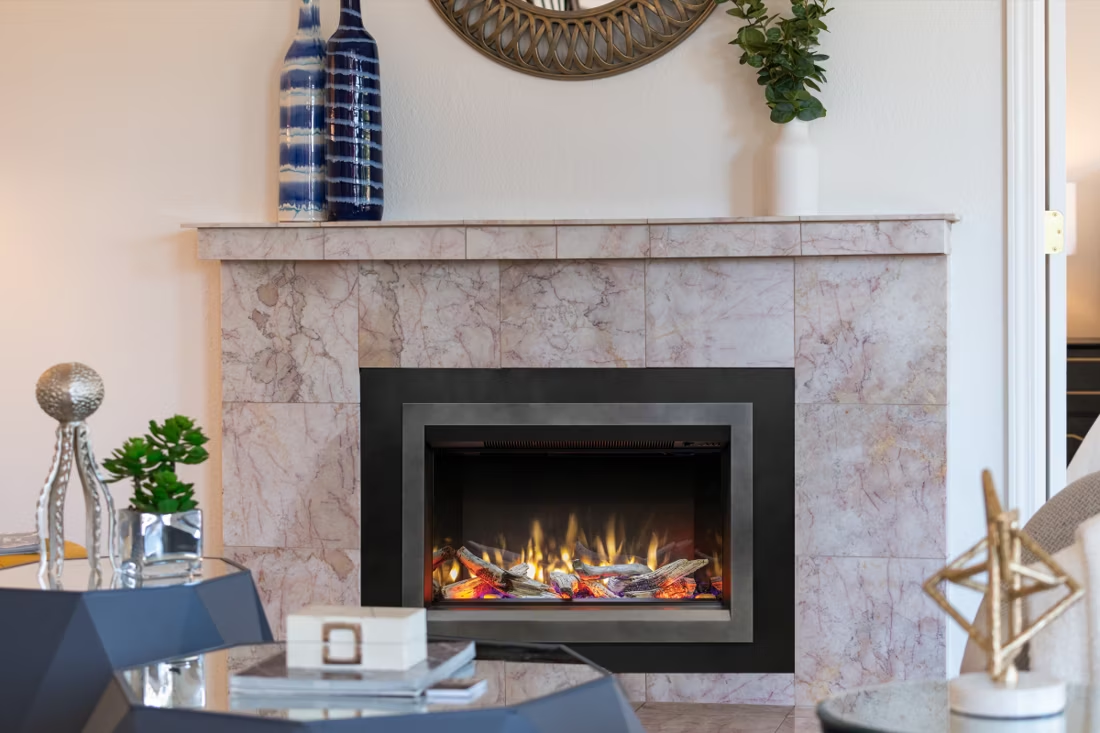
An electric fireplace is typically a self-contained unit—freestanding, wall-mounted, or built into cabinetry—with its own heater and flame effect. An electric insert is sized to slide into an existing masonry or wood-burning firebox, letting you keep the look of your current fireplace while swapping in electric heat and no chimney maintenance. An electric log set is the simplest option: a plug-in unit that sits inside an existing firebox purely for flame appearance, with heat output as a secondary feature. For Crook County homes with an old, rarely-used wood fireplace, an insert is often the easiest upgrade—no chimney inspection, no wood handling, and it's ready to use the same day it's installed.
Are electric fireplaces cheap to run in Crook County?
Relative to most of Oregon, yes. Prineville operates its own city-owned electric utility—one of only a handful of municipally owned power systems in the state—and its residential rates run noticeably below the statewide average. That rate advantage, which is part of what drew large data center operators to the area, also benefits homeowners running an electric fireplace or space heater for zone heat. Outside city limits, rates through the regional cooperative are still competitive with the rest of central Oregon. Either way, running an electric unit for a few hours of evening ambiance costs a fraction of what it costs to heat a whole room with resistance heat around the clock.
Is electric heat a good option during wildfire smoke or inversion days?
It's one of the best options. Prineville's basin location traps cold air and smoke during winter inversions, and wildfire smoke settles into the valley during summer and early fall burning season. On days when air quality is poor and wood burning isn't advisable, an electric fireplace produces zero indoor or outdoor emissions—you get heat and flame ambiance without adding to the smoke load. Several Crook County homeowners keep an electric unit specifically for these stretches, using wood or gas as their primary heat the rest of the season.
Electric vs. wood—which is right for my Crook County home?
Wood remains the backbone of heating in much of rural Crook County, supported by inexpensive cutting permits through the Ochoco National Forest, BLM Prineville District, and Deschutes National Forest—often $10 to $20 for a cord or more. Wood also keeps working when the power goes out, which matters in outlying areas where outages can stretch for hours. Electric, on the other hand, offers instant on-off convenience, zero ash or smoke, and—thanks to Prineville's low municipal power rates—genuinely affordable operation for zone heating. Most Crook County homes that choose electric are using it as a second fireplace for a room the wood stove doesn't reach, or as the sole option in a home where a chimney isn't practical.
What happens to my electric fireplace during a power outage?
It won't operate—electric fireplaces have no function without grid power, which is worth planning around in a county where wildfire risk and windstorms occasionally knock out lines in outlying areas around Post, Paulina, and Powell Butte. If backup heat during outages matters to you, most local dealers recommend pairing an electric fireplace with a wood stove, propane heater, or a home generator rather than relying on electric as your only heat source. Within Prineville's city-owned utility service area, outages tend to be shorter and less frequent than in the more remote parts of the county.
Electric fireplace vs. pellet stove—which should I choose?
Pellet stoves burn bagged fuel from brands like Bear Mountain, Lignetics, and Pacific Pellet—sold at Crook County farm and hardware stores—and can serve as a genuine primary heat source, but they need electricity to run the auger and blower and require periodic hopper loading and ash cleanup. Electric fireplaces need no fuel storage or loading at all, run on a standard outlet or simple circuit, and are typically used for supplemental or zone heat rather than whole-home heating. If you want a set-and-forget secondary heat source with the least maintenance, electric wins. If you want a stove capable of carrying more of the heating load on the cheap, especially with Central Oregon's accessible wood and pellet supply, a pellet stove is worth a look.
Can I put a TV above my fireplace?
Yes—with an asterisk. Fireplaces are hot and TVs don't like heat. Either put a mantel between them to deflect rising warmth, or choose a fireplace with heat-management technology that creates a cool zone on the wall above—the wall stays around 125 degrees, barely warm, while the room still gets full heat. If you like clean lines and don't want a mantel, heat management is the answer.
Do electric fireplaces actually produce heat?
Yes—most put out around 4,800–5,000 BTUs from a standard outlet, which comfortably warms a bedroom, office, or den as a comfort-zone heater. What they won't do is carry a whole house the way wood, gas, or pellet can. Think of electric as ambiance-first with honest supplemental heat: flames on with no heat in July, flames plus warmth in January.
Can I install a fireplace myself?
If you're putting a fire in your house on purpose, it's best to work with an expert. Unless you're genuinely experienced in framing, gas line, vent pipe, and the national code on clearances to combustibles, have a professional do it—and ideally the same company that sells you the fireplace, so warranty, service, and liability all live under one roof.
How much should I budget for a fireplace?
For an average home—covering the fireplace, the vent pipe, and basic installation—a budget between $3,900 and $5,500 gives you a lot of options across wood, gas, and pellet. By the time you add finish work, gas line, and electrical, the average complete installation lands between $5,000 and $12,000 all-in. In a remodel or new build, a good rule is to put about 2.5% of the total project cost toward the fireplace.
Stove and Fireplace Dealers in Crook County
Find your electric fireplace in Crook County.
Tell us a bit about your home and we'll match you with a trusted local Crook County dealer—plus a free Project Guide & Parts List with the exact parts, including any wiring needs, for your electric fireplace project.
Find Your Fireplace →