
The simplest way to add fireplace warmth on the Oregon coast.
With winter lows averaging 41°F across Coos Bay, North Bend, and Bandon, Coos County rarely needs a furnace-replacing fire—just clean, no-mess ambiance and a little extra warmth on damp coastal evenings. Find the right unit and connect with a trusted local dealer.
Every Project Starts From One of These Five Situations
A mild coast where electric heat just works.
Coos County's climate—zone 4C, roughly 4,369 heating degree days, winter lows averaging in the low 40s—is a fraction of what places like Bozeman, MT or Duluth, MN see in a single January. From the harbor at Coos Bay and North Bend out to Charleston, Bandon, and up the Coquille River valley toward Myrtle Point and Powers, the marine layer keeps temperatures moderate but the air perpetually damp. That humidity is hard on seasoned firewood—Douglas fir, ponderosa pine, and lodgepole pine all need extra drying time here compared to drier inland climates—and it's part of why electric units have become a genuinely popular, not just fallback, choice.
Because electric fireplaces don't burn anything, they skip the venting, chimney, and gas line questions altogether. That matters in a county with a lot of older Craftsman housing stock in Coos Bay's historic neighborhoods, vacation rentals along the Bandon coastline without existing chimneys, and condos or manufactured homes where cutting into a wall for gas or masonry work isn't realistic. Add in occasional late-summer wildfire smoke drifting in from the Coast Range, and plenty of Coos County homeowners simply prefer a heat source that doesn't add anything to the air they're breathing.
Three steps. No salesperson until you're ready.
Tell us about your project
Your zip code, your situation, and the fuel you're leaning toward—or let the answers point you to one.
See what's actually available
The brands dealers within 100 miles genuinely carry—real options, never a catalog mirage.
Get your dealer & Project Guide
A trusted local dealer, plus the free Project Guide & Parts List that names every component of the job.
Frequently Asked Questions
How much does an electric fireplace installation cost in Coos County?
Plug-in electric fireplaces and freestanding stoves are the least expensive route—often $300 to $700 including the unit itself, since they run off a standard 120V outlet with no electrician needed. Built-in electric inserts or wall units that require a dedicated 20-amp circuit run higher, typically $800 to $1,800, once you factor in a licensed electrician to run new wiring—a common need in older Coos Bay and North Bend homes with older panels. Coastal salt air can also shorten the life of cheaper units, so it's worth asking a local dealer about moisture-resistant components, especially for homes near Charleston or the bay front.
What's the difference between a plug-in electric fireplace and a built-in insert?
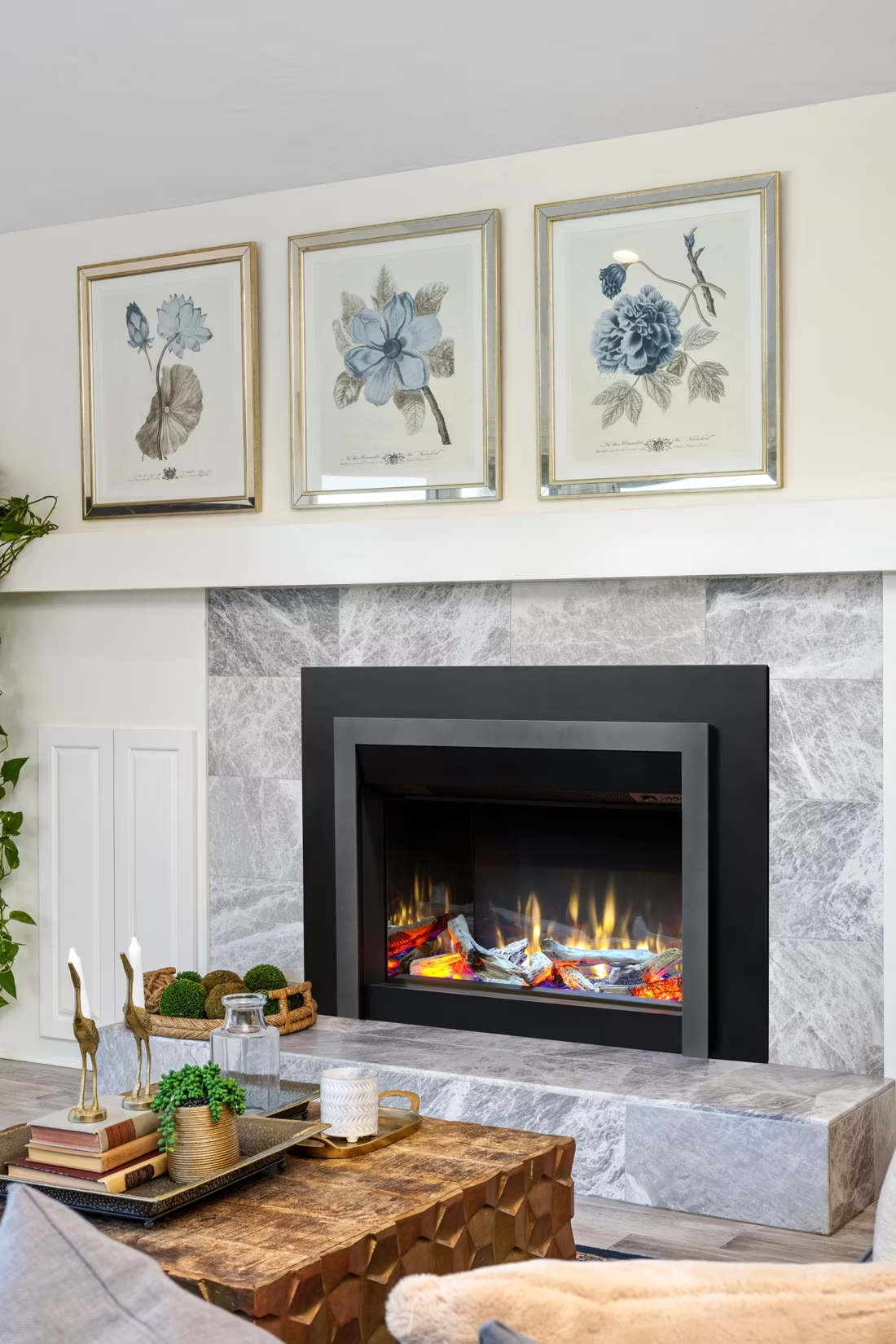
A plug-in unit is a self-contained stove or mantel-style fireplace you place against a wall and plug into a standard outlet—no electrical work required, and it can be moved if you relocate. A built-in insert is recessed into a wall, cabinetry, or an existing masonry fireplace opening, wired to a dedicated circuit for a cleaner, more permanent look. For Coos County homes converting an old wood-burning fireplace in a Coquille or Myrtle Point farmhouse, a built-in insert into the existing opening is the more common upgrade; for rentals and vacation properties in Bandon, a plug-in unit is often the practical choice since no permanent alteration is needed.
Do I need a permit to install an electric fireplace in Coos County?
A plug-in unit generally doesn't require any permit since it uses an existing outlet. A built-in electric fireplace that requires new wiring or a dedicated circuit typically needs an electrical permit, which a licensed electrician will pull through the county building department as part of the job. Unlike wood or gas installations, there's no venting, clearance-to-combustible chimney inspection, or fuel-line sign-off involved—it's a much simpler permitting path, which is part of why electric appeals to homeowners who want to avoid a drawn-out permit process.
Is an electric fireplace enough heat for a Coos County home?
For most of the county, yes—as supplemental or zone heat. With average winter lows around 41°F and roughly 4,369 heating degree days a year, Coos County's heating season is mild compared to inland Oregon or the intermountain West, and most homes rely on a furnace or heat pump for whole-house heat anyway. An electric fireplace is well suited to taking the chill off a living room on a damp 45-degree evening or adding ambiance without touching the thermostat. It's not designed to be your only heat source during the occasional harder cold snap, the way a wood stove with a full load can carry a home through a multi-day outage.
Electric vs. wood or gas—which is right for my Coos County home?
Wood works well here if you have a chimney and don't mind seasoning fir or pine longer than you would in a drier climate—and it's the one option that keeps working if the power goes out during a Pacific storm. Gas, where propane service is available, offers instant heat without the moisture problems that come with storing firewood on the coast. Electric skips both the fuel-handling and the venting entirely, which is why it's a common pick for condos, rentals, and vacation homes in Bandon and Charleston that don't have an existing chimney or gas line and don't want to add one. Many homeowners here keep wood as backup heat and add electric for everyday convenience in a main living space.
Can I put an electric insert into my existing wood-burning fireplace?
Yes, and it's a common project for older homes around Coquille, Myrtle Point, and Coos Bay's historic districts with an existing masonry fireplace that's rarely used. An electric insert slides into the existing firebox opening, plugs in or connects to a nearby circuit, and gives you flame-effect ambiance and supplemental heat without cleaning a chimney or seasoning wood. It's typically the lowest-cost way to bring an old, unused fireplace back into regular use.
Who provides electric service in Coos County, and does that affect my choice?
Pacific Power serves Coos Bay, North Bend, and most of the incorporated communities along the bay, while Coos-Curry Electric Cooperative covers a good share of the county's rural areas. Either way, an electric fireplace draws a modest, predictable amount of power—running one for a few hours an evening adds a small, easy-to-anticipate amount to a monthly bill compared to heating an entire home. It's a non-issue for most households, though homeowners on cooperative service in more remote parts of the county sometimes ask their dealer about lower-wattage models if they're watching usage closely.
Will my electric fireplace still work during a power outage?
No—electric fireplaces require utility power (or a generator) to run, unlike a wood stove that keeps producing heat regardless of the grid. Coos County's exposed coastline sees its share of winter storms that knock out power along Highway 101 and inland toward Myrtle Power and Powers, sometimes for a day or more. Because of that, some homeowners here pair an electric fireplace for everyday convenience with a wood stove or fireplace as backup heat, rather than relying on electric alone as their only heat source.
What should I look for in an electric fireplace for a coastal climate?
Salt air and near-constant humidity around Coos Bay, Charleston, and Bandon can accelerate corrosion in cheaper electric units over time, particularly in components close to the water. Ask a local dealer about models with sealed electronics and corrosion-resistant hardware, especially for homes within a mile or two of the bay or ocean. Built-in units installed inside conditioned living space generally hold up better than units placed in a garage, sunroom, or unheated addition where moisture swings are more extreme.
Can I put a TV above my fireplace?
Yes—with an asterisk. Fireplaces are hot and TVs don't like heat. Either put a mantel between them to deflect rising warmth, or choose a fireplace with heat-management technology that creates a cool zone on the wall above—the wall stays around 125 degrees, barely warm, while the room still gets full heat. If you like clean lines and don't want a mantel, heat management is the answer.
Does an electric fireplace need a vent or chimney?
No—that's its superpower. An electric fireplace needs a wall and an outlet, period. No vent pipe, no gas line, no clearances to design around, which is why it works in bedrooms, offices, apartments, and walls where venting a gas or wood unit would be impractical or impossible. Installation is typically the simplest and least expensive of any fireplace type.
Can a fireplace actually lower my heating bill?
Yes—by creating a comfort zone. A furnace heats every square foot of the house just to warm the one room you're in; a gas fireplace on low burns roughly a sixth of the gas a typical furnace does. Set the furnace around 55–60 degrees as a baseline, then heat the rooms your family actually uses. Families who heat this way commonly save $20–$60 a month.
Can I install a fireplace myself?
If you're putting a fire in your house on purpose, it's best to work with an expert. Unless you're genuinely experienced in framing, gas line, vent pipe, and the national code on clearances to combustibles, have a professional do it—and ideally the same company that sells you the fireplace, so warranty, service, and liability all live under one roof.
Stove and Fireplace Dealers in Coos County
Find your electric fireplace in Coos County.
Tell us a bit about your home and we'll match you with a trusted local dealer and send over a free Project Guide & Parts List—the exact parts and recommended dealer for your electric fireplace project in Coos County.
Find Your Fireplace →