
Clean, instant warmth for Central Point homes.
No flue, no gas line, no smoke—just supplemental heat and ambiance for the Rogue Valley's mild winters. Find the right unit and connect with a trusted local dealer.
Every Project Starts From One of These Five Situations
Mild winters, real convenience.
Central Point sits in the Rogue Valley at 1,272 feet, in climate zone 4C—a marine-influenced climate with a mild winter heating load, about a third of what a place like Bismarck ND logs in a typical winter. Average winter lows hover around 32°F, and hard freezes are the exception rather than the rule. That means most homes here don't need a high-output wood stove or a full gas retrofit just to stay comfortable. An electric insert or wall-mounted unit can add real, useful heat to a bonus room, primary suite, or converted garage without any chimney, gas line, or fuel storage—and it installs in a fraction of the time.
Jackson County also deals with two air-quality headaches most winters and falls: temperature inversions that trap wood smoke low in the valley, and wildfire smoke that can blanket the Rogue Valley for weeks at a stretch. Both push some Central Point households toward electric as the fireplace option that doesn't add another source of smoke to the air. PacifiCorp serves the city at a residential rate around 12.5 cents per kWh, and most electric inserts draw about 1,500 watts on their heat setting—so daily use adds a modest amount to a power bill, especially compared to running a whole-house furnace to warm one room.
Three steps. No salesperson until you're ready.
Tell us about your project
Your zip code, your situation, and the fuel you're leaning toward—or let the answers point you to one.
See what's actually available
The brands dealers within 100 miles genuinely carry—real options, never a catalog mirage.
Get your dealer & Project Guide
A trusted local dealer, plus the free Project Guide & Parts List that names every component of the job.
Frequently Asked Questions
How much does an electric fireplace installation cost in Central Point?
Electric is by far the least expensive fuel type to install because there's no venting, gas line, or masonry work involved. A plug-in freestanding unit needs no installation at all—just an outlet. A wall-mounted or built-in electric fireplace, or an insert set into an existing masonry firebox, typically runs $400 to $1,500 in Central Point, and that range mostly covers the unit itself plus a licensed electrician's time if a dedicated 20-amp circuit needs to be added. Compare that to the $4,500-plus most wood or gas installs require once venting and framing are factored in, and it's clear why electric appeals to homeowners doing a quick upgrade or a rental property refresh.
Do electric fireplaces actually produce useful heat, or are they just for looks?
Most electric inserts and stoves put out around 4,600 to 5,200 BTUs on high—enough to comfortably heat a 400 to 1,000 square foot room, which covers a lot of the supplemental-heat use cases in Central Point homes: a converted garage, a primary bedroom, or a finished bonus room over the garage. Given the area's mild winter heating needs, that's often plenty to skip running the central furnace for an evening. They won't replace a furnace in a cold snap, but for the Rogue Valley's typical winter nights, a good electric unit carries real, noticeable heat—not just a flickering light show.
Should I get an electric insert or a freestanding electric fireplace?
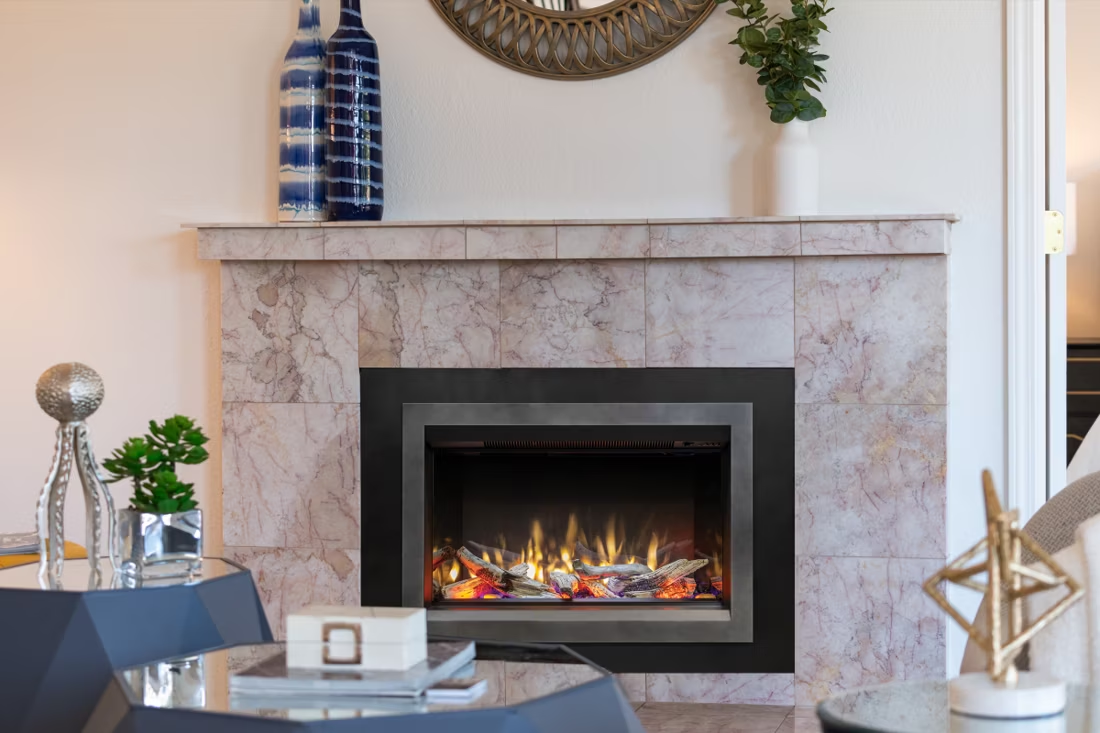
If you have an existing wood-burning masonry fireplace that's rarely used, an electric insert is usually the better fit—it slides into the existing firebox, plugs into a nearby outlet or a newly added outlet behind the surround, and instantly converts a cold, drafty opening into usable heat and ambiance. Freestanding electric stoves or wall-mounted units make more sense for rooms without an existing fireplace, like a bonus room, den, or primary suite. Local retailers can walk through both options and, if your existing masonry opening has an odd size, order an insert to match rather than forcing a standard size.
Do I need a permit to install an electric fireplace in Central Point?
A plug-in electric fireplace that runs off an existing outlet needs no permit—it's treated like any other appliance. If your installer needs to add a new dedicated circuit or run wiring for a hardwired wall unit, that electrical work requires a permit through the City of Central Point Building Division or Jackson County Development Services, depending on your address. Most hearth retailers coordinate a licensed electrician as part of the install, so the permit gets pulled without you having to manage it separately.
Will an electric fireplace work during a power outage?
No—and this is the one real tradeoff worth knowing. Electric fireplaces require power to run, so during an outage they go dark along with everything else. That matters in Jackson County specifically because PacifiCorp has implemented Public Safety Power Shutoffs during high wildfire-risk conditions in past fire seasons, and winter storms occasionally take out lines through the forested edges of the valley. If backup heat during outages is a priority, a wood stove or a battery-backed gas fireplace is a better primary choice—many Central Point homes pair an electric unit for everyday convenience with a wood or gas appliance elsewhere in the house for emergencies.
What are the best electric fireplace brands available locally?
Dimplex, Napoleon, and Amantii are the brands most Pacific Northwest hearth dealers carry and stand behind, offering everything from simple plug-in inserts to linear wall units with realistic flame-effect technology. For a masonry conversion, look at insert-style units sized to match your existing firebox opening rather than a generic universal size—a snug fit looks far more like a built-in fireplace than a loose-fitting insert with visible gaps. A local retailer can show you flame-effect quality side by side, which varies more between brands than most shoppers expect.
How much does it cost to run an electric fireplace in Central Point?
At PacifiCorp's residential rate of about 12.5 cents per kWh, a typical 1,500-watt electric fireplace running on high for four hours a day costs roughly 75 cents daily, or around $22 a month. Most units let you run the flame effect alone without the heater engaged, which draws only 30 to 100 watts—essentially free ambiance. That low operating cost is part of why electric works well as a secondary heat source here: you can zone-heat the room you're actually using instead of running central heat for the whole house.
Is electric a good option given the Rogue Valley's wildfire smoke and inversion issues?
Yes—this is one of the strongest local arguments for electric. Jackson County sees winter inversions that trap wood smoke close to the ground and wildfire smoke that can linger over the valley for weeks in late summer and early fall. An electric fireplace adds zero particulate matter to the air, which matters to households with asthma, allergies, or older residents who are more sensitive to smoke exposure during those already-smoky stretches. It's not a replacement for backup heat during an outage, but for everyday ambiance and supplemental warmth without contributing to local air quality problems, electric is a genuinely good fit for this valley.
Electric vs. wood vs. gas—which is right for my Central Point home?
Wood offers the highest heat output and works without power—a real advantage given occasional PacifiCorp outages and PSPS events—and Rogue River-Siskiyou National Forest cutting permits make self-cut douglas fir and ponderosa pine affordable locally. Gas offers instant, consistent heat with far less installation cost than wood but still requires a gas line and venting. Electric costs the least to install by a wide margin, adds no smoke during a valley already prone to wildfire haze and winter inversions, and is the simplest option for supplemental heat in a single room—but it won't help you during an outage. Many Central Point homes end up with a wood stove or gas insert for primary or backup heat and an electric unit for everyday convenience in a bedroom or bonus room.
Do electric fireplaces actually produce heat?
Yes—most put out around 4,800–5,000 BTUs from a standard outlet, which comfortably warms a bedroom, office, or den as a comfort-zone heater. What they won't do is carry a whole house the way wood, gas, or pellet can. Think of electric as ambiance-first with honest supplemental heat: flames on with no heat in July, flames plus warmth in January.
Does an electric fireplace need a vent or chimney?
No—that's its superpower. An electric fireplace needs a wall and an outlet, period. No vent pipe, no gas line, no clearances to design around, which is why it works in bedrooms, offices, apartments, and walls where venting a gas or wood unit would be impractical or impossible. Installation is typically the simplest and least expensive of any fireplace type.
Does a fireplace add value to my home?
On average, a fireplace adds back to the home about the same amount you spent installing it. Add the monthly savings from heating the rooms you actually use instead of the whole house—often hundreds of dollars a year—and the value case is strong before you even count what a fire does for how your family uses the room.
Can a fireplace actually lower my heating bill?
Yes—by creating a comfort zone. A furnace heats every square foot of the house just to warm the one room you're in; a gas fireplace on low burns roughly a sixth of the gas a typical furnace does. Set the furnace around 55–60 degrees as a baseline, then heat the rooms your family actually uses. Families who heat this way commonly save $20–$60 a month.
Nearby Dealers
Hearth shops serving Central Point and the surrounding area. Every listing shows whether it is a WhyFire partner, a dealer we have verified as authorized for the brands we recommend, or a local business carrying hearth products. No manufacturer pays for placement. How we verify dealers →
Keller Kitchen & Bath Showcase
Alaska Masonry Heat
Electric Service in Central Point
An electric fireplace's heater draws about 1,500 watts—pennies per hour at local rates.
Find your electric fireplace in Central Point.
Tell us a bit about your home and we'll put together a free Project Guide & Parts List for your electric fireplace project—the right unit, the exact parts, and a trusted local dealer to install it.
Find Your Fireplace →