
Instant heat, zero hassle, right here in Brownsville.
No chimney, no gas line, no smoke—just a fireplace that plugs in or wires into your Brownsville home and works the same day it's installed.
Every Project Starts From One of These Five Situations
A clean, flexible option for Willamette Valley winters.
Brownsville sits at just 336 feet in the mid-Willamette Valley, where winter lows average around 37°F and the heating season adds up to a mild, modest winter—a fraction of what a place like Duluth, MN racks up in a single hard winter. That mild profile means most Brownsville homes don't need a whole-home wood or gas system to stay comfortable; they need a way to take the chill off a specific room without firing up the furnace, and electric fireplaces fit that role well.
Brownsville is a small town—about 1,800 people—so most homeowners here work with hearth dealers based in Albany, Corvallis, or Eugene who service Linn County. PacifiCorp is the local electric utility, and at roughly 12.5 cents per kWh, running a 1,500-watt electric fireplace for a few hours a night costs pennies compared to keeping a furnace running. With wildfire smoke a recurring late-summer and fall concern in this part of the Willamette Valley, an electric unit also means zero indoor combustion byproducts and nothing to worry about when outdoor air quality is already compromised.
Three steps. No salesperson until you're ready.
Tell us about your project
Your zip code, your situation, and the fuel you're leaning toward—or let the answers point you to one.
See what's actually available
The brands dealers within 100 miles genuinely carry—real options, never a catalog mirage.
Get your dealer & Project Guide
A trusted local dealer, plus the free Project Guide & Parts List that names every component of the job.
Frequently Asked Questions
How much does an electric fireplace installation cost in Brownsville?
Plug-in freestanding or wall-mount units start around $150–$600 with no installation beyond hanging the unit and plugging it into an existing outlet. Built-in electric fireplaces set into a mantel or wall surround—the more common choice for a finished look—typically run $800–$3,000 installed, including trim work. If your chosen unit needs a dedicated 20-amp circuit (common for larger linear models), add an electrician's time for the new circuit, which can push the total to $2,000–$4,500. A local dealer serving Brownsville can spec the exact electrical requirements before you buy.
Do I need a permit to install an electric fireplace in Brownsville?
Most plug-in electric fireplaces need no permit at all—they're treated like any other appliance you plug into a wall outlet. If your installation requires new wiring or a dedicated circuit, Linn County requires an electrical permit for that work, which a licensed electrician typically pulls and inspects as part of the job. Unlike wood stoves, there's no EPA certification or curtailment rule to worry about with electric units—it's the simplest permitting path of any fireplace fuel available in Brownsville.
What size electric fireplace do I need for my Brownsville home?
Because Brownsville's winters are mild, most electric fireplaces here are sized for supplemental zone heat rather than whole-home output. A 1,000–1,500 sq ft main living area is typically well served by a 1,500-watt unit, which puts out roughly 4,700–5,000 BTUs—enough to noticeably warm a room on a 37°F evening. Larger open-concept living rooms may want a wider linear unit for even heat distribution, but even the biggest electric fireplaces are built to supplement, not replace, your existing furnace.
Will an electric fireplace work during a power outage?
No—and this is the one real tradeoff worth knowing in Linn County, where PacifiCorp outages do happen during winter windstorms and ice events. An electric fireplace draws its heat entirely from grid power, so it goes dark the moment the power does. If backup heat during outages matters to you, a wood stove using Douglas fir, ponderosa pine, or lodgepole pine cut under a Willamette National Forest permit is the more resilient choice. Many Brownsville homeowners run electric for daily convenience and keep a wood-burning option on hand for storm season.
How much does it cost to run an electric fireplace in Brownsville?
At PacifiCorp's residential rate of about 12.5 cents per kWh, a typical 1,500-watt electric fireplace costs roughly 19 cents an hour to run on full heat, or about $1.35 for a seven-hour evening. Most models also let you run the flame effect alone with the heater off, which draws only a few watts—essentially free ambiance. Compared to propane or even wood (once you factor in cutting permits and hauling), electric is the cheapest fuel to operate on a per-evening basis, even if the fuel itself—electricity—costs more per BTU than firewood.
Can I put an electric insert into my existing wood fireplace?
Yes, and it's a common project in Brownsville's older farmhouses and Craftsman-style homes that still have an original masonry fireplace. An electric insert slides into the existing firebox opening, plugs into a nearby outlet (or a new one added behind the surround), and gives you flame effect and heat without cutting or sweeping a chimney ever again. It's one of the fastest, least invasive upgrades a local dealer can do—often a same-day install with no permit required if you're using an existing outlet.
What brands of electric fireplace are worth considering?
Dimplex and Napoleon are the two names most local hearth dealers in the mid-Willamette Valley carry and stand behind, both offering realistic flame technology and a range of built-in, insert, and freestanding options. Touchstone is a common pick for smaller wall-mount installs on a tighter budget. Whichever brand you land on, the more important variable is matching the wattage and dimensions to your specific room and wall—a local dealer sizing your space in person will steer you right faster than any spec sheet.
Electric vs. wood—which makes more sense for my Brownsville home?
Wood remains a strong choice in Linn County given the low-cost cutting permits—$5 to $20 per cord through the Willamette or Siuslaw National Forest between May and October—and Brownsville's mild-but-real winter chill. But wood also means chimney maintenance, smoke during a season when wildfire smoke is already a local air quality concern, and hauling and stacking cordwood. Electric skips all of that: no emissions, no chimney, no permits for a plug-in unit, at the cost of going dark in a power outage. Many Brownsville homes end up with both—wood for backup and ambiance, electric for the room you use every evening.
Electric vs. pellet stove—which is right for me?
Pellet stoves burning regional brands like Bear Mountain or Lignetics offer more heat output than a typical electric fireplace and a similar plug-and-play convenience—load the hopper, set the thermostat—but they still require electricity to run the auger and blower, plus periodic ash cleanout and pellet storage. Electric fireplaces need no fuel storage at all and involve zero maintenance beyond dusting the unit. For a Brownsville homeowner who wants genuine supplemental heat with some flexibility during outages, pellet edges ahead; for pure simplicity and lowest upfront cost, electric wins.
Can I put a TV above my fireplace?
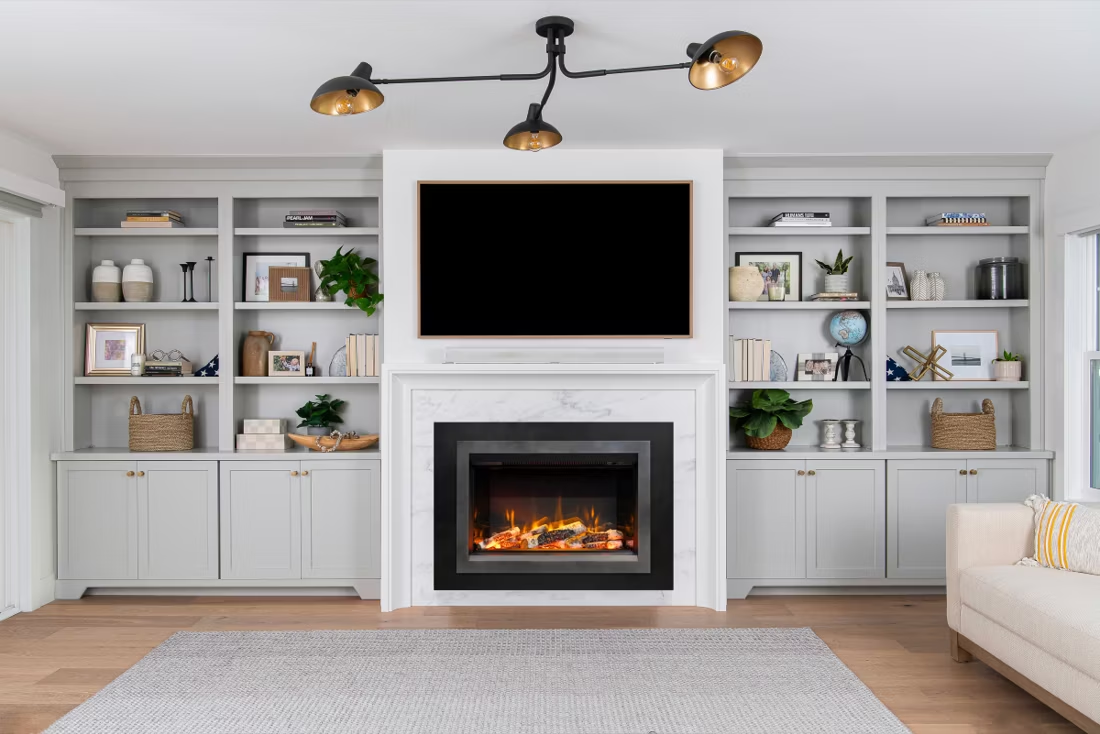
Yes—with an asterisk. Fireplaces are hot and TVs don't like heat. Either put a mantel between them to deflect rising warmth, or choose a fireplace with heat-management technology that creates a cool zone on the wall above—the wall stays around 125 degrees, barely warm, while the room still gets full heat. If you like clean lines and don't want a mantel, heat management is the answer.
Do electric fireplaces actually produce heat?
Yes—most put out around 4,800–5,000 BTUs from a standard outlet, which comfortably warms a bedroom, office, or den as a comfort-zone heater. What they won't do is carry a whole house the way wood, gas, or pellet can. Think of electric as ambiance-first with honest supplemental heat: flames on with no heat in July, flames plus warmth in January.
Does a fireplace add value to my home?
On average, a fireplace adds back to the home about the same amount you spent installing it. Add the monthly savings from heating the rooms you actually use instead of the whole house—often hundreds of dollars a year—and the value case is strong before you even count what a fire does for how your family uses the room.
Can a fireplace actually lower my heating bill?
Yes—by creating a comfort zone. A furnace heats every square foot of the house just to warm the one room you're in; a gas fireplace on low burns roughly a sixth of the gas a typical furnace does. Set the furnace around 55–60 degrees as a baseline, then heat the rooms your family actually uses. Families who heat this way commonly save $20–$60 a month.
Nearby Dealers
Hearth shops serving Brownsville and the surrounding area. Every listing shows whether it is a WhyFire partner, a dealer we have verified as authorized for the brands we recommend, or a local business carrying hearth products. No manufacturer pays for placement. How we verify dealers →
Middleton Heating Sheet Metal
Schaefers Recreation Equipment
Comfort Flow Heating
Emerald Swimming Pools
Ambassador Fireplaces
Electric Service in Brownsville
An electric fireplace's heater draws about 1,500 watts—pennies per hour at local rates.
Find your electric fireplace in Brownsville.
Tell us about your room and your home, and we'll match you with a trusted local dealer serving Brownsville plus a free Project Guide & Parts List—the exact unit, wiring needs, and install plan for your space.
Find Your Fireplace →