
Add Ambient Heat to Any Room in Bend—No Chimney Required.
Plug-in or built-in electric heat for Bend homes, condos, and rentals where venting a chimney isn't an option. Find the right unit and connect with a trusted local dealer.
Every Project Starts From One of These Five Situations
Clean heat for Bend's smoke-conscious winters.
At 3,647 feet on the eastern slope of the Cascades, Bend sees a winter heating load roughly in the same range as Bozeman, Montana—with winter lows averaging around 25°F. But Bend's winters bring a second complicating factor beyond the cold: winter temperature inversions trap wood smoke in the Deschutes River basin, and wildfire smoke has become a recurring summer and early-fall presence across Central Oregon. Both push a growing number of homeowners toward heat that doesn't burn anything at all.
Electric fireplaces and inserts produce zero combustion byproducts, need no chimney or flue, and aren't subject to the DEQ burn advisories that can sideline wood stoves during inversion events. That matters in Bend's fast-growing condo and townhome market—developments around NorthWest Crossing, the Old Mill District, and newer builds near Bend's east side often restrict or prohibit vented fireplaces entirely, making electric the only fireplace option allowed. With PacifiCorp as the local utility and a residential rate around $0.1252 per kWh, running an electric unit for supplemental zone heat or ambiance is inexpensive and requires nothing more than an outlet or, for larger built-ins, a dedicated circuit.
Three steps. No salesperson until you're ready.
Tell us about your project
Your zip code, your situation, and the fuel you're leaning toward—or let the answers point you to one.
See what's actually available
The brands dealers within 100 miles genuinely carry—real options, never a catalog mirage.
Get your dealer & Project Guide
A trusted local dealer, plus the free Project Guide & Parts List that names every component of the job.
Frequently Asked Questions
How much does an electric fireplace installation cost in Bend?
A plug-in electric insert or freestanding stove that uses a standard 120V outlet typically runs $500 to $1,200 installed in Bend, including the unit and basic surround or trim work. A built-in wall-mounted or linear electric fireplace that requires a dedicated 240V circuit and an electrician to run new wiring usually falls between $1,500 and $3,500, depending on wall framing and whether drywall or mantel work is involved. Because there's no chimney, flue, or gas line, electric is consistently the least expensive fireplace category to install in Bend.
Do I need a permit or electrician to install an electric fireplace in Bend?
A basic plug-in unit needs no permit at all—it's an appliance, not a fixed installation. If you're adding a built-in electric fireplace that requires new wiring or a dedicated circuit, that electrical work generally needs to be pulled through the City of Bend Building Safety Division (or Deschutes County Community Development if you're outside city limits) and performed by a licensed electrician. There's no combustion venting to inspect, which is why electric permitting is far simpler than a wood or gas installation.
What does it cost to run an electric fireplace with PacifiCorp rates?
At Bend's residential PacifiCorp rate of about $0.1252 per kWh, a typical 1,500-watt electric fireplace costs roughly 19 cents per hour to run on heat mode. Used for five hours a day through a cold stretch, that's under a dollar a day—around $28 for a full month of daily evening use. Most owners run the flame effect alone (a few watts) far more often than the heater, which costs next to nothing to operate.
Are electric fireplaces a good option during Bend's wildfire smoke season or winter inversions?
Yes—this is one of the strongest arguments for electric in Bend. When DEQ issues an air quality advisory during a winter inversion, or when summer wildfire smoke settles into the Deschutes basin, wood-burning appliances (and outdoor burning generally) can be restricted. Electric units aren't affected by any of those advisories since they produce no smoke or emissions. Households that want reliable ambiance and heat regardless of the season's air quality status increasingly choose electric as a secondary unit alongside a wood or gas primary heat source.
Can I convert an existing wood or gas fireplace opening to electric?
Yes, and it's a common retrofit in Bend's older neighborhoods around downtown and the Awbrey Butte area. An electric insert slides into an existing masonry or factory-built firebox opening without needing a liner, gas line, or venting work—you're essentially plugging in a heater sized to fit the opening. It's the lowest-cost way to bring an unused or deteriorating old fireplace back into service, though it won't replicate the heat output of a wood or gas unit of the same size.
Where can I find electric fireplace dealers or installers near Bend?
Several hearth retailers serving Central Oregon carry electric lines alongside their wood and gas inventory, and most can coordinate with a licensed local electrician for larger built-in installations. Because electric units don't require a certified hearth installer the way wood or gas does, you have more flexibility—but working with a retailer who actually stocks and demonstrates units in Bend still matters for picking the right size, flame quality, and heat output for your space.
Electric vs. pellet—which makes more sense for a Bend home?
Pellet stoves, using regional brands like Bear Mountain or Lignetics, burn actual fuel and produce meaningfully more heat—a reasonable choice as a primary or near-primary heat source given Bend's winter heating load that's in the same range as Bozeman, Montana. Electric units produce a fraction of the BTUs and work best as supplemental or ambiance heat for a single room, not as the main defense against a January cold snap. The tradeoff is installation and upkeep: pellet stoves need a vent, a hopper to load, and periodic cleaning; electric needs none of that. For a den, bonus room, or a condo where venting isn't allowed, electric wins. For whole-home heating in a Bend winter, pellet or wood is the more realistic primary option.
Can an electric fireplace actually heat a room in a Bend winter, or is it just for looks?
Most electric fireplaces put out around 4,600 to 5,200 BTUs on a 1,500-watt heater setting—enough to comfortably warm a single room of 300 to 400 square feet, but not enough to carry a whole house through a 25°F January night at Bend's elevation. They work well as zone heat for a home office, bedroom, or living room supplement to a central heat pump or furnace, letting you turn down the thermostat elsewhere. Don't expect one to replace your primary heat system during Bend's coldest stretches.
Why do so many new condos and townhomes in Bend only allow electric fireplaces?
Bend's rapid growth has brought a wave of condo, townhome, and multi-family construction in areas like NorthWest Crossing, the Box Factory area, and new east-side developments, many of which restrict shared-wall venting for fire and safety code reasons. Wood requires a full chimney system and gas requires a sealed direct-vent penetration through an exterior wall—both are harder to accommodate in attached housing with shared walls. Electric needs neither, which is why HOAs and builders increasingly spec it as the only fireplace option in these newer Bend properties.
Can I put a TV above my fireplace?
Yes—with an asterisk. Fireplaces are hot and TVs don't like heat. Either put a mantel between them to deflect rising warmth, or choose a fireplace with heat-management technology that creates a cool zone on the wall above—the wall stays around 125 degrees, barely warm, while the room still gets full heat. If you like clean lines and don't want a mantel, heat management is the answer.
Do electric fireplaces actually produce heat?
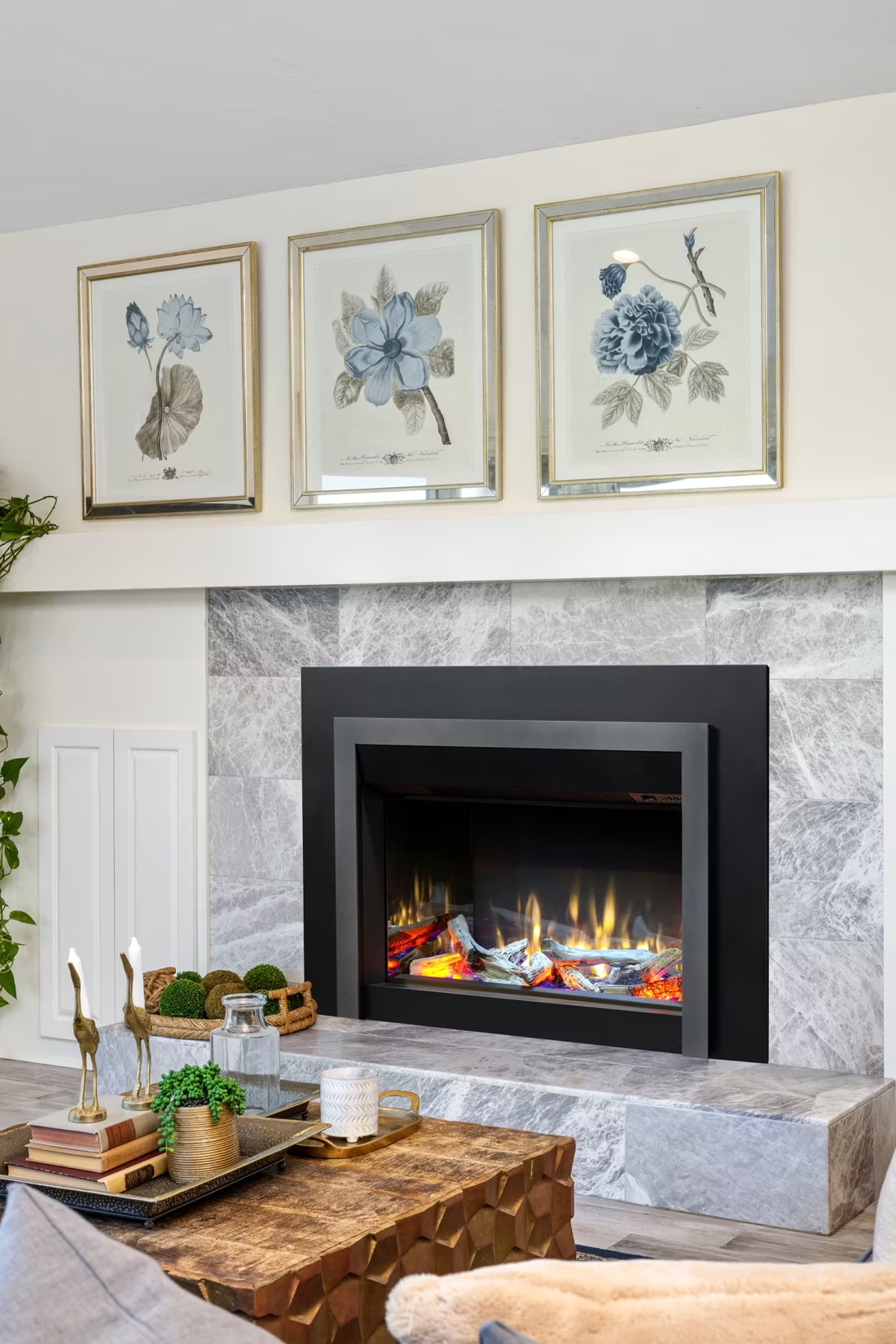
Yes—most put out around 4,800–5,000 BTUs from a standard outlet, which comfortably warms a bedroom, office, or den as a comfort-zone heater. What they won't do is carry a whole house the way wood, gas, or pellet can. Think of electric as ambiance-first with honest supplemental heat: flames on with no heat in July, flames plus warmth in January.
Can a fireplace actually lower my heating bill?
Yes—by creating a comfort zone. A furnace heats every square foot of the house just to warm the one room you're in; a gas fireplace on low burns roughly a sixth of the gas a typical furnace does. Set the furnace around 55–60 degrees as a baseline, then heat the rooms your family actually uses. Families who heat this way commonly save $20–$60 a month.
Does a fireplace add value to my home?
On average, a fireplace adds back to the home about the same amount you spent installing it. Add the monthly savings from heating the rooms you actually use instead of the whole house—often hundreds of dollars a year—and the value case is strong before you even count what a fire does for how your family uses the room.
Nearby Dealers
Hearth shops serving Bend and the surrounding area. Every listing shows whether it is a WhyFire partner, a dealer we have verified as authorized for the brands we recommend, or a local business carrying hearth products. No manufacturer pays for placement. How we verify dealers →
Brilliant Environmental Products
Creative Fire
Diversified Heating And Cooling
Bend Spa And Hearth
Cascade Chimney Service
Emerald Pool & Patio
Master's Touch
Sticks And Stones
Quality Heating
Countryside Stove And Chimney
Electric Service in Bend
An electric fireplace's heater draws about 1,500 watts—pennies per hour at local rates.
Find your electric fireplace in Bend.
Tell us a bit about your space and we'll put together a free Project Guide & Parts List—the right electric fireplace or insert for your room, the exact parts you'll need, and a trusted local Bend dealer to install it.
Find Your Fireplace →