
Clean, instant heat for Baker County's long, cold winters.
Baker County's 11,869 residents spread across Baker City, Halfway, Richland, and the ranches and forest lots between them see winter lows averaging 20°F and 6,655 heating degree days—a season on par with Helena, MT. Most homes here lean on wood or propane to carry that load, but a well-placed electric fireplace or insert adds instant, no-venting heat to a bonus room, a manufactured home addition, or a space where running a flue just isn't practical. I'll match you with a trusted local dealer who knows which units actually hold up to daily use here.
Every Project Starts From One of These Five Situations
Where propane and wood carry the load, electric fills the gaps.
Baker County covers roughly 3,000 square miles of northeastern Oregon high desert and mountain terrain, bordered by the Wallowa-Whitman and Malheur National Forests and BLM Vale District land. At 3,443 feet in Baker City and higher in outlying areas like Sumpter and Halfway, winters run long: 6,655 heating degree days and a 20°F average winter low put the county in the same cold-climate bracket as Helena, MT. With no natural gas main serving the county, most households heat primarily with propane or with wood cut from nearby national forest land—ponderosa pine, lodgepole pine, and juniper are the go-to species, and a Wallowa-Whitman or Malheur cutting permit runs as little as $20 per four cords. Electric fireplaces don't compete with that as a whole-home heat source in a climate this cold, but they've become a common add-on: a zone heater for a converted garage or bonus room, a no-flue option for a rental or manufactured home, or simply a fireplace look in a room where running a chimney isn't realistic.
That absence of combustion is worth noting given Baker County's wildfire smoke seasons—summers when regional fires push particulate levels up and homeowners are already managing indoor air quality. An electric fireplace or insert adds zero indoor emissions and doesn't need a chimney sweep, a cutting permit, or a hookup to propane delivery. Most plug-in units run on a standard 120-volt outlet with no permit required; larger built-in wall units pulling more amperage may need a dedicated 240-volt circuit run by a licensed electrician and signed off through Baker County's building department. Either way, it's the fastest and least disruptive fireplace project available in the county—part of why local dealers see steady demand for it even in a market dominated by wood and propane.
Three steps. No salesperson until you're ready.
Tell us about your project
Your zip code, your situation, and the fuel you're leaning toward—or let the answers point you to one.
See what's actually available
The brands dealers within 100 miles genuinely carry—real options, never a catalog mirage.
Get your dealer & Project Guide
A trusted local dealer, plus the free Project Guide & Parts List that names every component of the job.
Frequently Asked Questions
How much does it cost to install an electric fireplace in Baker County?
Costs here run from a couple hundred dollars for a plug-in freestanding or wall-mounted unit up to roughly $1,500–$2,000 for a built-in electric insert or a linear wall unit that needs a dedicated 240-volt circuit. Because there's no venting, chimney, or gas line involved, the bulk of the cost difference comes down to the unit itself and whether an electrician needs to add a circuit—a straightforward job for local electricians used to wiring shop buildings and outbuildings across the county's rural properties.
Can an electric fireplace actually heat my home through a Baker County winter?
Not as a primary system, not at 6,655 heating degree days and winter lows averaging 20°F. Most electric units top out around 5,000–9,000 BTU (roughly 1,500 watts), enough to comfortably heat a single room or small addition but not a whole house through a stretch of single-digit nights. Around Baker County, electric fireplaces are almost always installed as supplemental or zone heat—warming a converted sunroom, a detached office, or a bedroom—while propane, wood, or a central furnace carries the rest of the house.
Do I need a permit for an electric fireplace in Baker County?
A plug-in freestanding or wall-mounted unit that runs off an existing outlet typically doesn't require a permit. If you're installing a built-in electric fireplace or insert that needs new wiring or a dedicated circuit, that electrical work does require a permit through Baker County's building department, and it should be done by a licensed electrician—especially important on older rural properties around Halfway or Richland where panel capacity can be limited.
What happens to my electric fireplace during a power outage?
It stops working, full stop—electric fireplaces have no battery backup and no standalone burn like a wood stove or a gas unit with a millivolt pilot. That matters in Baker County, where winter storms and downed lines in outlying areas served by Idaho Power can mean outages lasting hours or longer. Most households that rely on electric heat in any capacity also keep a wood stove or propane heater as backup, which is part of why electric fireplaces here tend to be a secondary comfort feature rather than a home's sole heat source.
Electric vs. wood—which makes more sense for my Baker County home?
Wood remains the backbone fuel for a lot of rural Baker County households, especially with Wallowa-Whitman and Malheur National Forest cutting permits running as low as $20 per four cords and BLM Vale District permits at $10 per cord. Wood also keeps working without power, which matters given the county's exposure to winter storms. Electric wins on convenience and cleanliness—no ash, no chimney sweep, no wildfire-smoke-season air quality tradeoffs—but it needs the grid to run and won't replace a wood stove as your primary heat source in a climate this cold. Many homes here run both: wood or propane for the bulk of the heating season, electric for a room a wood stove doesn't reach.
Electric vs. pellet stove—which is the better fit?
Pellet stoves, running on regional brands like Bear Mountain, Lignetics, and Pacific Pellet, put out real heat—enough to serve as a primary or near-primary source in a Baker County home—but they need electricity to run the auger and blower, plus a pellet supply and periodic ash cleanout. Electric fireplaces need no fuel storage and no maintenance beyond dusting, but they're supplemental heaters, not primary systems. If you want one appliance to meaningfully cut your propane or wood use, pellet is the closer match; if you want a clean, no-hassle heat source for a single room, electric is simpler.
Does wildfire smoke affect whether I should choose electric?
It's one of the better arguments for it. Baker County sees wildfire smoke drift into the valley some summers, and on those days homeowners are already trying to limit anything that adds particulates indoors. An electric fireplace produces zero combustion byproducts, so it doesn't affect indoor air quality the way a wood stove can if a chimney isn't drawing well or the flue needs cleaning. It's not a summer-heat argument, obviously, but for households sensitive to smoke, electric is the one fireplace fuel that never competes with air quality.
What styles of electric fireplace work best in Baker County homes?
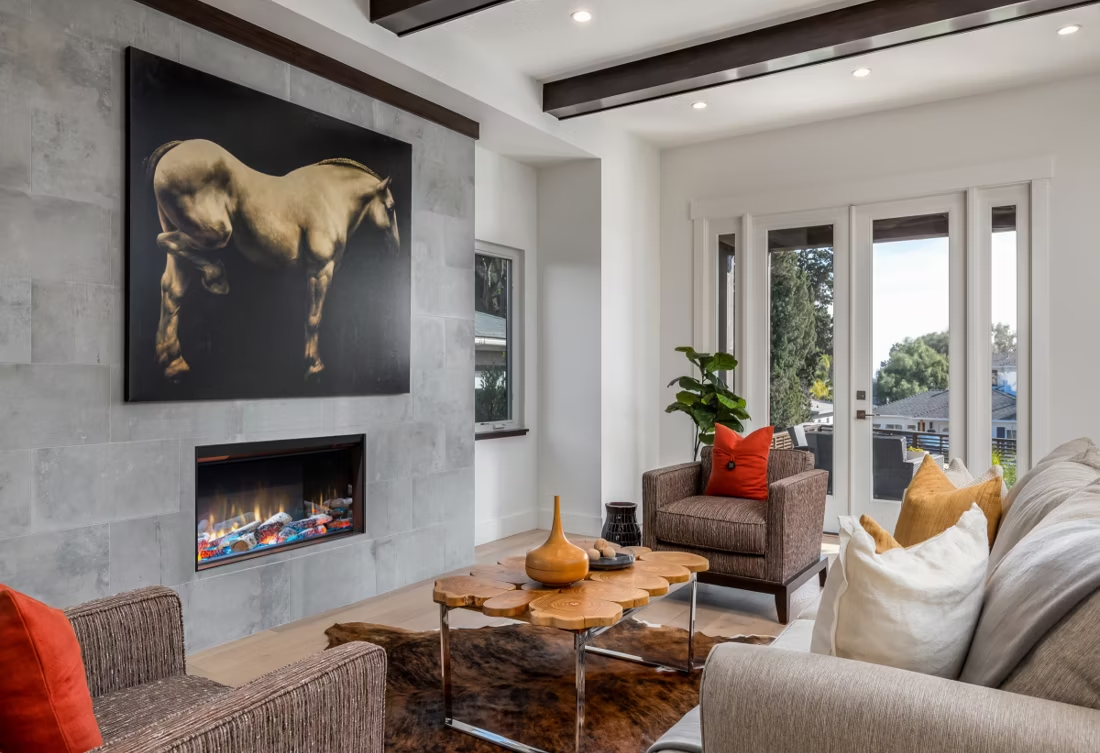
Wall-mounted linear units are popular in newer Baker City builds and remodels for a clean, low-profile look. Freestanding cabinet-style electric stoves work well in older farmhouses and manufactured homes around Richland and Halfway where there's no existing chimney to convert. Electric inserts that drop into an existing masonry firebox are a common choice for homeowners with an old, unused wood fireplace who want the look and some heat without dealing with cutting permits or chimney maintenance. A local dealer can walk your space and tell you which configuration fits the wiring and the room.
How much maintenance does an electric fireplace need?
Very little compared to wood or gas. There's no chimney to sweep, no gas line to inspect, and no ash to haul. Plan on occasionally dusting the unit and cleaning the glass front, and expect the LED ember or flame bulbs to need replacement every several years of regular use. That low-maintenance profile is a real selling point in a county where wood stove owners are budgeting for an annual sweep and propane households are scheduling tank deliveries.
Can I put a TV above my fireplace?
Yes—with an asterisk. Fireplaces are hot and TVs don't like heat. Either put a mantel between them to deflect rising warmth, or choose a fireplace with heat-management technology that creates a cool zone on the wall above—the wall stays around 125 degrees, barely warm, while the room still gets full heat. If you like clean lines and don't want a mantel, heat management is the answer.
Does an electric fireplace need a vent or chimney?
No—that's its superpower. An electric fireplace needs a wall and an outlet, period. No vent pipe, no gas line, no clearances to design around, which is why it works in bedrooms, offices, apartments, and walls where venting a gas or wood unit would be impractical or impossible. Installation is typically the simplest and least expensive of any fireplace type.
What is an in-home preview and do I need one?
It's a visit where a hearth professional measures your space, confirms the model you picked actually works in your home, and walks the specs—framing, gas line, venting, finish work—before anything is ordered. Some details you just can't know until you see the house. Never make a down payment without one; it's the single most-skipped step that burns buyers.
Does a fireplace add value to my home?
On average, a fireplace adds back to the home about the same amount you spent installing it. Add the monthly savings from heating the rooms you actually use instead of the whole house—often hundreds of dollars a year—and the value case is strong before you even count what a fire does for how your family uses the room.
Stove and Fireplace Dealers in Baker County
Get your free Project Guide & Parts List for an electric fireplace in Baker County.
Tell me about your home and what you want the fireplace to do—supplemental heat, ambiance, a no-vent option for a manufactured home—and I'll match you with a trusted local Baker County dealer and send a free Project Guide & Parts List with the exact unit and any electrical work needed.
Find Your Fireplace →