
Keep Your Family Warm and Safe—No Matter What
With winter lows averaging around -6.7°C and Enbridge Gas already heating most homes, wood in Toronto is usually about ambiance, backup heat, and good sugar maple or red oak burning clean in a certified stove. We'll help you find a trusted local dealer who knows the WETT and CSA B365 requirements cold.
Every Project Starts From One of These Five Situations
Wood heat here is about ambiance and backup, not survival heating.
Toronto sits in climate zone 5A at a modest 528 feet, and its winters are genuinely mild compared to the rest of Ontario—colder than the Golden Horseshoe suburbs feel some years, but nowhere near what Sudbury or Thunder Bay deal with further north. An average winter low around -6.7°C means most Toronto homes rely on Enbridge Gas-fed furnaces for day-to-day heat. That changes the role wood plays here: it's less a primary heat source and more a design feature, a supplemental heat source in an older home, or a reliable backup for the ice storms that periodically take down Toronto Hydro and Alectra Utilities lines across the city.
What Toronto has going for it is wood quality. Central and eastern Ontario carry a dense hardwood supply—sugar maple, red oak, white ash, and yellow birch are the species you'll most often see stacked in Leslieville and East York backyards, and all four burn hot and long compared to softer western species. Most homeowners here buy seasoned cords from a local supplier rather than cut their own, since Toronto proper has no Crown land access; the Ontario Ministry of Natural Resources cutting permits, free for up to 10 cubic metres per household per year, apply to Northern Boreal and Managed Forest zones favoured by cottage owners heading north, not to city lots. Any new install still needs a permit through your local municipal building department, has to meet CSA B365 code, and typically needs a WETT inspection before an insurer will sign off—non-negotiable steps a good dealer handles as routine paperwork, not hurdles.
Firewood Cutting Permits Near Toronto
Ontario Ministry Of Natural Resources
Three steps. No salesperson until you're ready.
Tell us about your project
Your postal code, your situation, and the fuel you're leaning toward—or let the answers point you to one.
See what's actually available
The brands dealers within 100 miles genuinely carry—real options, never a catalog mirage.
Get your dealer & Project Guide
A trusted local dealer, plus the free Project Guide & Parts List that names every component of the job.
Frequently Asked Questions
How much does a wood stove or insert installation cost in Toronto?
Most installs in Toronto run $6,000 to $12,000 CAD. Older homes in neighbourhoods like Cabbagetown, Riverdale, or the Beaches often already have a working masonry chimney, so slotting in a certified insert with a stainless liner tends to land toward the lower end. Newer builds or additions without an existing flue need a full Class A chimney run through the roof, which pushes the project toward the top of that range. Either way, your municipal building department permit and the CSA B365-compliant install are part of the quote, not an add-on surprise.
What size wood stove makes sense for a Toronto home?
Because winter lows here average around -6.7°C rather than the deep cold further north, few Toronto homeowners need a stove sized to run 24/7 as primary heat. A small to mid-size unit rated for 800 to 1,500 square feet suits most semis and townhomes, especially if the stove is backing up a gas furnace rather than replacing it. Detached homes with open-concept main floors, or anyone planning to lean on wood heat during Toronto Hydro outages, generally do better stepping up to a mid-size stove that can hold a longer, slower burn overnight.
Do I need a permit and a WETT inspection to install a wood stove in Toronto?
Yes to both. New installations require a permit through your local municipal building department, and the work has to meet CSA B365, the national installation code for wood-burning appliances. Separately, most home insurers in the Toronto area will ask for a WETT inspection before they'll cover a wood-burning appliance, and some won't renew a policy without one on file. Reputable dealers who install in Toronto arrange both the permit and the WETT sign-off as a standard part of the job.
What kind of firewood burns best in a Toronto stove?
Sugar maple and red oak are the two everyone asks for, and for good reason—they're dense, split clean, and throw serious heat once properly seasoned. White ash is nearly as good and easier to find some years depending on supply. Yellow birch burns hot but a bit faster, so it's a nice companion species for kindling a fire before loading maple or oak for the long burn. All four are common through central and eastern Ontario's dense hardwood supply, so a good local firewood dealer should have no trouble keeping you stocked through the season.
Can I cut my own firewood near Toronto, or do I need to buy it?
Almost everyone in Toronto buys seasoned cords from a local supplier rather than cutting their own. The Ontario Ministry of Natural Resources does issue free cutting permits for up to 10 cubic metres, or about 4 cords, per household per year, but that access applies to Northern Boreal and Managed Forest zones well outside the city—the kind of arrangement a cottage owner near Muskoka or Haliburton might use, not a practical option for a Toronto lot. Budget for purchased hardwood and make sure whatever you buy has had at least six to twelve months to season before it goes in the stove.
Does my wood stove need to be a certified model in Toronto?
In most cases, yes. Some Toronto-area municipalities require certified low-emission appliances in new construction, and CSA B365 installation code assumes a certified unit regardless. Beyond the code requirement, a certified stove burns noticeably cleaner and more efficiently than an old uncertified model, which matters in a dense urban setting where a neighbour's chimney smoke is easy to notice. If you're replacing an older stove, moving to a certified model is also usually a condition your insurer will want to see before approving the WETT inspection.
Does it make sense to install wood heat when my house already has gas?
It's one of the most common setups in Toronto. With Enbridge Gas serving the vast majority of the city, most homes already run a gas furnace for daily heat, so a wood stove or insert is typically added for ambiance, for zone heat in a family room or basement, or as backup during the ice storms that have knocked out Toronto Hydro and Alectra Utilities service for days at a time in past winters. A wood appliance needs no electricity to run, which is the practical case a lot of homeowners make even when gas already covers the bulk of their heating.
How often should my chimney be swept in Toronto?
An annual inspection and sweep before the burning season starts, typically in September or October, is the standard recommendation, and it's also usually a condition of maintaining your WETT documentation for insurance purposes. Because most Toronto households are burning wood as supplemental or backup heat rather than around the clock, a single seasonal sweep is usually enough—homes burning several cords a winter as their main heat source should have a WETT-certified technician check mid-season as well, particularly if the wood wasn't fully seasoned.
Wood stove vs. pellet stove—which is the better fit for a Toronto home?
Wood wins on outage resilience: no electricity needed, and it pairs naturally with the dense hardwood supply of sugar maple and red oak available through local suppliers. Pellet stoves, using regional brands like Lacwood or Energex at roughly $400 to $575 CAD a ton, burn cleaner and are easier to load and regulate day to day, but the auger and blower need power, so they go quiet in the same ice storm outages that wood heat rides through. In a city where most homes already have Enbridge Gas as their main heat source, the choice usually comes down to whether you want backup independence from the grid (wood) or daily convenience (pellet).
Why do fireplace quotes vary so much?
Because a fireplace is an iceberg—there's more behind the wall than in front of it. A low quote often covers only the unit; the full scope includes vent pipe, gas line or electrical, framing, and the tile or stone that has to come off and go back on. Make every bidder price the whole job. If a dealer can't speak to the full scope with confidence, that's your signal to keep looking.
Louvered or clean face—which fireplace front is better?
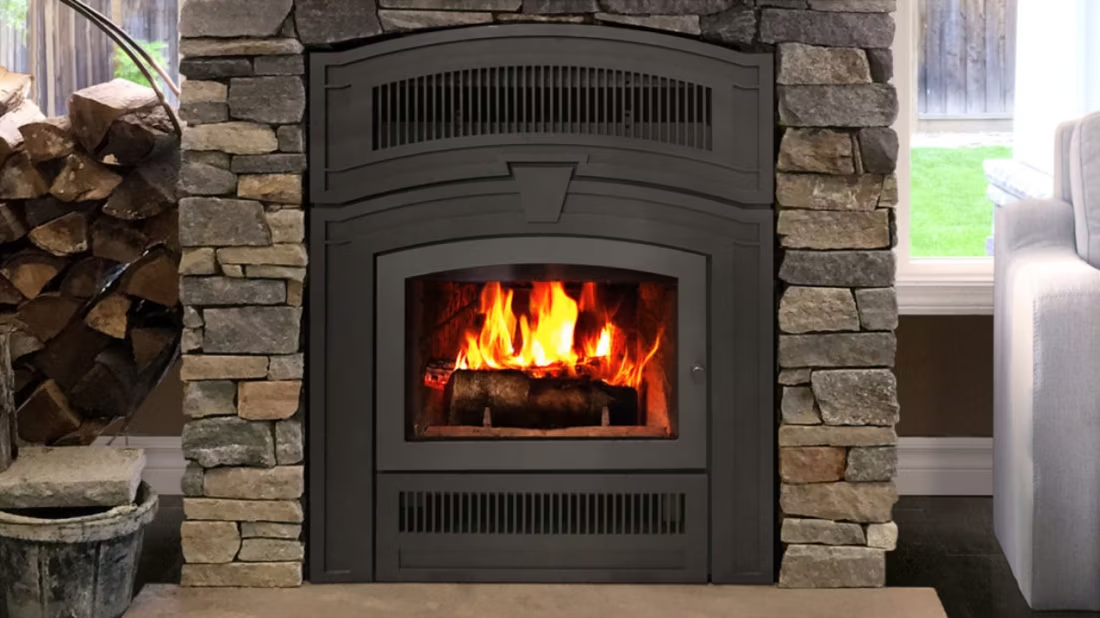
Louvered fronts have grill work above and below the glass for airflow, move heat a little better with a fan, and suit traditional mantels. Clean face designs drop the louvers entirely so finish work runs to the fire's edge—they fit both modern and traditional rooms. When we did our own home we chose clean face: a big viewing area beat a little extra airflow. It depends on your room, not on a rulebook.
Why is a fireplace insert so efficient?
An insert does two things: it seals the chimney completely, so you stop losing air you already paid to heat, and it radiates warmth into the room through the firebox and glass. Most add a heat-exchange fan that pulls cool room air underneath, wraps it around the hot firebox, and pushes it back out warm. Your home is more efficient before you've even lit the first fire.
Why won't my new wood stove get going like my old one?
New wood stoves are 70%+ efficient, so far less heat goes up the flue—which also means less draft to get a fire established. The rule: build a genuinely hot fire for about 45 minutes before you choke it down. Skip that and you get smoke in the room, creosote in the chimney, and a fire that never takes off. Most performance complaints trace straight back to this.
Preferred Dealer in Toronto
Marked Preferred because they run on WhyFire's software—so they can show you real pricing and book your appointment right here. No manufacturer pays for placement. How we verify dealers →
Classic Fireplace And Bbq Store
Get your free Project Guide & Parts List for a Toronto wood fireplace project.
Tell us about your home—existing masonry chimney or not, main floor or basement install—and we'll help you find a trusted local dealer and send a free Project Guide & Parts List with the exact vent kit, WETT-ready installation plan, and parts your project needs.
Find Your Fireplace →